Italian extra virgin olive oil: properties, uses, advantages, disadvantages, safety
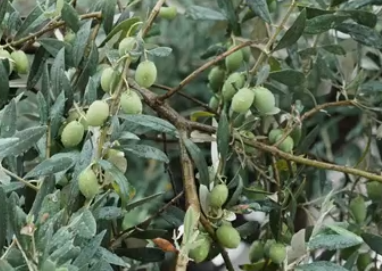
Extra virgin olive oil, commonly abbreviated as EVOO, is oil obtained directly from the fruit of the olive tree, Olea europaea L. (Oleaceae), exclusively by mechanical or other physical processes that do not alter the oil and Made in Italy.
It is therefore not a refined oil. Under the European framework, virgin olive oils are obtained without solvents, re-esterification processes or treatments other than washing, decantation, centrifugation and filtration. To qualify as extra virgin, the oil must also meet specific chemical and sensory requirements, including free acidity not exceeding 0.80 g of oleic acid per 100 g, absence of sensory defects and detectable fruitiness.
Extra virgin olive oil consists almost entirely of triacylglycerols, in which oleic acid predominates, together with a small but important fraction of minor components such as phenolic compounds, tocopherols, sterols, squalene, pigments and volatile aromatic compounds.
Description
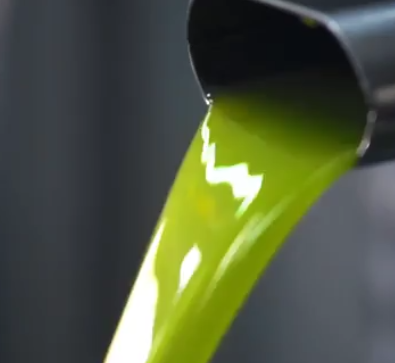
Extra virgin olive oil is a lipid liquid whose colour can range from golden yellow to deep green.
Colour alone is not a reliable indicator of quality. It mainly depends on the presence and relative amounts of pigments such as:
chlorophylls and their derivatives;
carotenoids.
Aroma and flavour vary considerably according to:
olive cultivar;
degree of ripeness;
geographical origin;
climate;
harvesting conditions;
time between harvesting and milling;
extraction process.
For the extra virgin category, EU rules require the median of defects to be 0 and the median of fruitiness to be greater than 0. The oil must therefore be free from recognised sensory defects and show a detectable fruity attribute.
Bitterness and pungency are not defects. They may instead be associated with specific phenolic compounds, whose concentration varies substantially between oils.
Production process
Production normally involves:
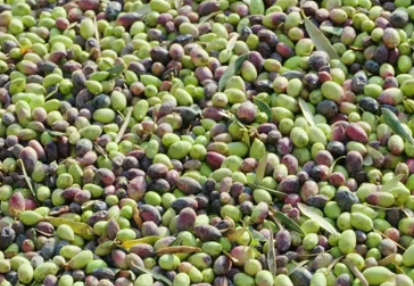
harvesting the olives;
removal of leaves and foreign matter;
optional washing;
crushing;
malaxation of the olive paste;
physical separation of the oil phase.
In modern olive mills, separation is performed mainly by centrifugation.
The oil may subsequently be:
separated from residual water;
decanted;
filtered;
stored in tanks protected from oxygen, light and inappropriate temperatures.
Filtration does not remove virgin or extra virgin status: it is one of the physical treatments permitted for virgin olive oils.
The expression “cold extracted” also has a specific regulatory meaning in the EU. It may be used for virgin or extra virgin olive oils obtained below 27 °C by percolation or centrifugation of the olive paste.
“First cold pressing” is instead reserved for oils obtained below 27 °C using the traditional hydraulic-press system.
Temperature during malaxation influences:
extraction yield;
aroma;
volatile compounds;
phenolic content.
More intensive conditions may increase oil recovery while modifying the volatile and phenolic fractions.
Main substances contained
Extra virgin olive oil consists of approximately 97–99% major lipid components, mainly triacylglycerols. The remaining fraction is quantitatively small but highly important for sensory quality, oxidative stability and nutritional characteristics.
Oleic acid
Oleic acid is the predominant fatty acid in olive oil and is a monounsaturated fatty acid.
Its concentration varies according to cultivar, climate, ripening stage and geographical origin.
Reference food-composition data indicate values around 76% of total fatty acids, although broader ranges occur in commercial oils.
Palmitic acid
Palmitic acid is the main saturated fatty acid in olive oil.
Reference data place it at approximately 11% of total fatty acids.
Linoleic acid
Linoleic acid is an essential omega-6 polyunsaturated fatty acid.
Reference values are around 7% of total fatty acids, although the percentage can vary substantially according to cultivar and growing region.
Alpha-linolenic acid
Alpha-linolenic acid is an omega-3 polyunsaturated fatty acid present in much smaller quantities, generally around 0.5–1% of total fatty acids.
Phenolic compounds
The phenolic fraction includes numerous substances, such as:
hydroxytyrosol;
tyrosol;
oleuropein derivatives;
ligstroside derivatives;
oleacein;
oleocanthal;
lignans;
flavonoids;
phenolic acids.
Their concentration varies widely according to cultivar, ripeness, agricultural conditions, crushing, malaxation, extraction and storage.
Tocopherols
Tocopherols are fat-soluble compounds with vitamin E activity and antioxidant properties.
Alpha-tocopherol is generally the predominant form.
Squalene
Squalene is a naturally occurring triterpene hydrocarbon present in the unsaponifiable fraction of olive oil.
Sterols
The sterol fraction consists mainly of phytosterols, with beta-sitosterol and related compounds among the most important.
Pigments
Chlorophylls, pheophytins and carotenoids contribute to colour and can also influence photo-oxidative behaviour.
Volatile compounds
Aldehydes, alcohols, esters and other volatile substances formed particularly through enzymatic reactions during crushing contribute to characteristic aromas such as:
grass;
green leaves;
tomato;
almond;
artichoke;
apple.
Identification data and requirements
| Characteristic | Value / requirement | Note |
|---|---|---|
| Name | Extra virgin olive oil | regulated category |
| Raw material | Olives | fruit of the olive tree |
| Main botanical species | Olea europaea L. (Oleaceae) | olive tree |
| Production process | exclusively mechanical or physical | no refining |
| Free acidity | ≤0.80 g/100 g as oleic acid | EU requirement |
| Peroxide value | ≤20.0 mEq O₂/kg | EU requirement |
| K232 | ≤2.50 | spectrophotometric parameter |
| K268/K270 | ≤0.22 | EU requirement |
| ΔK | ≤0.01 | EU requirement |
| Fatty acid ethyl esters | ≤35 mg/kg | EU requirement |
| Median of defects | 0.0 | no sensory defects |
| Median of fruitiness | >0.0 | fruitiness must be detectable |
| E-number | none | ordinary food ingredient |
| Gluten | naturally absent | pure olive oil |
| Major regulated allergen | none intrinsic | not a major regulated allergen |
Free acidity is not the same as pH and does not indicate how “acidic” the oil tastes.
It measures the amount of free fatty acids released from triacylglycerols. Higher values may reflect deterioration of the olives, lipolysis or poor handling before extraction.
Indicative nutritional values
Typical values for 100 g of extra virgin olive oil are approximately:
| Nutrient | Indicative amount per 100 g |
|---|---|
| Energy | about 899 kcal / 3762 kJ |
| Fat | about 99.9 g |
| Protein | 0 g |
| Available carbohydrates | 0 g |
| Sugars | 0 g |
| Fibre | 0 g |
| Cholesterol | 0 mg |
| Sodium | trace amounts |
| Vitamin E | about 22 mg |
| Saturated fatty acids | about 15% of total fatty acids |
| Monounsaturated fatty acids | about 77% |
| Polyunsaturated fatty acids | about 8% |
| Oleic acid | about 76% of total fatty acids |
| Linoleic acid | about 7% |
| Alpha-linolenic acid | about 0.8% |
A 10 g serving provides approximately 90 kcal.
The high energy value is not unique to extra virgin olive oil: it is characteristic of edible fats and oils in general.
Fatty acid profile
One of the main nutritional characteristics of extra virgin olive oil is the predominance of monounsaturated fatty acids, especially oleic acid.
A typical profile is approximately:
monounsaturated fatty acids: 75–80%
saturated fatty acids: 13–17%
polyunsaturated fatty acids: 6–10%.
These values are not identical in every oil. Cultivar, temperature during fruit development, geographical area and ripening stage significantly influence the fatty acid profile.
Phenolic compounds
Phenolic content is one of the characteristics that can vary most widely among extra virgin olive oils.
There is no general minimum phenolic concentration required for an oil to be classified as extra virgin.
An oil can fully comply with the extra virgin category while having a relatively modest phenolic content.
However, EU legislation permits a specific health claim only when the oil contains at least:
5 mg of hydroxytyrosol and its derivatives per 20 g of olive oil.
Under these conditions, the claim may state that:
olive oil polyphenols contribute to the protection of blood lipids from oxidative stress,
together with the information that the beneficial effect is obtained with a daily intake of 20 g of olive oil.
This claim cannot automatically be applied to every extra virgin olive oil: the required phenolic concentration must be demonstrated for the specific product.
Bitterness and pungency
The bitterness and pungency found in some EVOOs are not defects.
They are often associated particularly with secoiridoid phenolic compounds.
Oleocanthal is strongly associated with the pungent sensation felt in the throat, while other phenolic compounds contribute to bitterness.
A mild and delicate oil can nevertheless be perfectly extra virgin. The intensity of bitterness and pungency depends on cultivar, ripeness and phenolic composition.
Food uses
Extra virgin olive oil can be used:
raw;
in dressings;
in sauces;
in pesto and emulsified preparations;
on vegetables;
in soups;
for marinades;
in breadmaking;
in cakes and biscuits;
for sautéing;
for roasting;
for oven cooking;
for frying.
Its aroma may be desirable in some products but may significantly affect the flavour of delicate formulations.
For industrial foods, the oil should therefore also be selected according to:
aromatic intensity;
fruity profile;
bitterness;
pungency;
oxidative stability;
cultivar;
required shelf life.
Cooking and frying
Extra virgin olive oil can be used for cooking and frying.
Its high proportion of oleic acid contributes to good oxidative stability compared with oils richer in polyunsaturated fatty acids, while tocopherols and phenolic compounds provide additional antioxidant protection.
However, heating still causes changes.
As the following increase:
temperature;
heating time;
oxygen exposure;
number of frying cycles;
oxidation and degradation of minor compounds also increase.
Phenolic compounds progressively decrease during heating, and temperature and time strongly influence their retention.
At approximately 170–180 °C, losses can become significant, particularly during prolonged or repeated heating.
It is therefore incorrect to claim either that:
“extra virgin olive oil cannot be used for frying”
or that:
“heat does not alter extra virgin olive oil.”
It can be used for frying, but prolonged heating and repeated reuse progressively reduce its quality and phenolic content.
Smoke point
The smoke point is not one fixed universal value for all extra virgin olive oils.
It depends on factors including:
free fatty acid content;
impurities;
filtration;
initial quality;
previous storage;
previous thermal degradation.
For evaluating suitability for cooking, relying only on smoke point is therefore overly simplistic.
Overall oxidative stability also depends on fatty acid composition and antioxidant content.
Advantages
Obtained directly from olives through mechanical or physical processes only.
Not a refined oil.
Rich in monounsaturated fatty acids, especially oleic acid.
Contains vitamin E.
Naturally contains variable amounts of phenolic compounds.
Contains squalene, sterols and other minor compounds.
Can be used both raw and for cooking.
Generally has good oxidative stability because of its fatty acid profile.
Provides flavour and texture to foods.
Naturally contains no carbohydrates or sugars.
Contains no cholesterol.
Naturally gluten-free.
Not a major regulated food allergen.
The extra virgin category is defined by precise chemical and sensory requirements.
EVOOs with sufficient phenolic content may qualify for the EU health claim concerning protection of blood lipids from oxidative stress.
Disadvantages
It is a high-energy food, providing about 900 kcal per 100 g.
Even small quantities can therefore add substantial energy to a formulation.
Phenolic content varies greatly and is not guaranteed simply by the words “extra virgin”.
Sensitive to light, oxygen and heat.
Poor storage accelerates oxidation and loss of aroma.
Prolonged heating progressively reduces the phenolic fraction.
Repeated frying cycles reduce quality.
Strongly flavoured oils may not be suitable for delicate foods.
Quality depends heavily on the condition of the olives and how rapidly they are processed after harvesting.
Lower acidity does not automatically mean that one oil is sensorially superior to every oil with slightly higher acidity: extra virgin classification depends on multiple chemical and sensory parameters together.
Safety
Extra virgin olive oil is a conventional food ingredient and, when properly produced and stored, does not present particular toxicological concerns at normal dietary intakes.
The main safety and quality issues concern:
authenticity;
oxidation;
contaminants;
pesticide residues;
storage conditions;
conformity of the raw material;
adulteration with other oils.
EU rules use numerous purity parameters in addition to quality parameters, including:
fatty acid profile;
trans-isomers;
sterols;
waxes;
other chemical markers.
These help verify both category and authenticity.
Allergens and gluten
Pure extra virgin olive oil is naturally gluten-free and is not classified as one of the major mandatory food allergens in the EU, UK or USA.
Individual reactions to olives or olive-derived substances are possible but uncommon and do not give olive oil the status of a major regulated food allergen.
In a compound food, allergen assessment must of course consider the complete formulation, not olive oil alone.
Storage
The main enemies of extra virgin olive oil are:
oxygen;
light;
heat;
time.
It should preferably be stored:
in a tightly closed container;
protected from light;
away from heat sources;
with minimal prolonged exposure to air;
according to the manufacturer's instructions.
Transparent bottles exposed to light can accelerate photo-oxidation, particularly because chlorophyll-derived pigments can participate in light-driven oxidative reactions.
Repeated opening also replaces the air in the headspace and can increase oxygen exposure.
During storage, the following may decline:
fruitiness;
fresh green notes;
phenolic compounds;
vitamin E.
At the same time, oxidation products may increase.
Filtered or unfiltered
Unfiltered olive oil may contain small quantities of:
water;
microscopic pulp particles;
suspended plant material.
This can give the oil an initially cloudy appearance and particular sensory characteristics.
It does not automatically mean higher quality.
Residual water and plant particles can favour hydrolytic, fermentative or degradative reactions during prolonged storage.
Filtration can therefore improve long-term stability and is fully compatible with extra virgin classification.
“Cold extracted”
The expression “cold extracted” is not synonymous with “extra virgin”.
An extra virgin olive oil does not have to carry this statement.
Within the EU, the wording may only be used for virgin or extra virgin oils obtained at below 27 °C by percolation or centrifugation of the olive paste.
Its absence therefore does not mean that the oil is refined or of poor quality.
Oleic acid and health
The high proportion of oleic acid is one of the most important nutritional characteristics of extra virgin olive oil.
EU legislation permits the authorised claim that:
replacing saturated fats in the diet with unsaturated fats contributes to the maintenance of normal blood cholesterol levels,
provided that the food meets the relevant conditions.
Oleic acid is an unsaturated fat.
The benefit therefore does not arise simply from adding more oil to the diet, but from replacing part of the saturated fat intake with unsaturated fats within the overall diet.
Polyphenols and health
A distinction must also be made between:
the presence of polyphenols
and
having enough polyphenols to qualify for an authorised claim.
Only oils providing at least 5 mg of hydroxytyrosol and its derivatives per 20 g may use the EU claim stating that olive oil polyphenols contribute to protection of blood lipids from oxidative stress.
An extra virgin olive oil that has not been analytically shown to meet this threshold should not automatically be presented as qualifying for that claim.
European Union
Extra virgin olive oil is a legally defined category in the EU.
The classification combines:
production method;
free acidity;
oxidation parameters;
spectrophotometric parameters;
purity criteria;
sensory evaluation.
This makes “extra virgin” a regulated category rather than a generic marketing expression.
Additional voluntary statements such as “cold extracted”, origin declarations and certain sensory descriptions are also subject to specific conditions.
United Kingdom
In the United Kingdom, olive oil marketing standards distinguish the different olive-oil categories and retain the key principle that extra virgin olive oil must be obtained mechanically and satisfy defined chemical and organoleptic quality criteria.
Products marketed in Great Britain must comply with the applicable UK olive-oil marketing, labelling and food-safety requirements.
The description “extra virgin” therefore also has a defined technical meaning in the UK market and cannot be used merely as a quality slogan.
United States
In the United States, olive oil identity and quality are commonly assessed using standards and trade specifications based on factors such as:
free fatty acidity;
peroxide value;
fatty acid composition;
sterol profile;
sensory quality.
USDA maintains voluntary grade standards for olive oil, while FDA requirements governing food identity, adulteration and labelling also apply.
The terminology and legal structure are not identical to the EU system, so numerical EU category requirements should not automatically be presented as US statutory specifications.
Environment
Extra virgin olive oil production generates, in addition to the oil itself:
olive pomace;
olive stones;
processing water and effluents, depending on the extraction system;
leaves and other plant residues.
These by-products can be valorised through:
energy recovery;
biomass fuel;
pomace-oil production;
composting;
recovery of phenolic compounds;
production of materials or ingredients for other industries.
Environmental impact depends considerably on:
cultivation system;
irrigation;
agricultural yield;
fertilisation;
soil management;
energy consumption at the mill;
transport;
packaging;
by-product recovery.
It is therefore not appropriate to assign one universal environmental profile to all extra virgin olive oils.
Conclusion
Extra virgin olive oil is oil obtained from the fruit of Olea europaea L. (Oleaceae) exclusively through mechanical or physical processes, without chemical refining.
The term “extra virgin” is a regulated quality category. In the EU it requires, among other parameters, free acidity ≤0.80 g/100 g, peroxide value ≤20 mEq O₂/kg, K232 ≤2.50, K268/K270 ≤0.22, ΔK ≤0.01, median of defects equal to zero and median of fruitiness greater than zero.
Nutritionally, it consists almost entirely of fat and provides approximately 900 kcal per 100 g. Its fatty acid profile is characterised by a high proportion of monounsaturated fatty acids, particularly oleic acid, together with smaller amounts of saturated and polyunsaturated fatty acids.
Its small non-triacylglycerol fraction contains substances of considerable sensory and technological importance, including phenolic compounds, vitamin E, sterols, squalene, pigments and volatile aroma compounds. Their concentrations can vary greatly between oils.
Extra virgin olive oil can be used both raw and for cooking or frying. Its high oleic-acid content contributes to good oxidative stability, but prolonged heating and repeated frying cycles still cause progressive oxidation and loss of phenolic and aromatic compounds.
Its quality should therefore be assessed through a combination of olive quality, processing speed, chemical parameters, sensory analysis, phenolic content, storage conditions and authenticity, rather than relying on a single characteristic such as colour, acidity or the words “cold extracted”.
Disadvantages: high energy density; highly variable phenolic content; sensitivity to oxygen, light and heat; prolonged heating and repeated reuse progressively reduce aromatic quality and antioxidant compounds.
Studies
The benefits of this type of oil are reflected above all in the cardiovascular system, for which several studies have recognized the hypocholesterolemic properties (1) of virgin and extra virgin olive oil.
Even when used in fried foods, if of excellent quality, this oil reduces the harmful LDL cholesterol (2).