



Vit. B6: properties, uses, advantages, disadvantages, safety
Vit. B6, or vitamin B6, is a water-soluble vitamin belonging to the B-vitamin group. When the abbreviation “Vit. B6” appears in the ingredient list of a beverage, fortified food or food supplement, it does not necessarily identify one single chemical substance. Instead, it indicates that the product has been supplied with a compound providing vitamin B6 activity.
Vitamin B6 occurs naturally in foods in several chemical forms. However, when it is deliberately added during industrial food production, the source is normally a purified vitamin preparation manufactured industrially, rather than vitamin B6 simply extracted from a naturally vitamin-rich food.
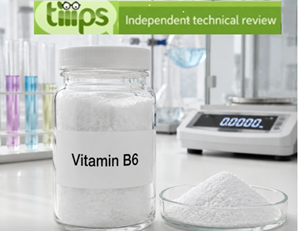
In the European Union, the forms specifically authorised for the addition of vitamin B6 to foods include pyridoxine hydrochloride, pyridoxine 5′-phosphate and pyridoxine dipalmitate. Therefore, if an ingredient list states only “Vit. B6”, the exact chemical form cannot be identified without the manufacturer's technical specification.
Description
Vitamin B6 is a collective nutritional term, rather than the name of one single molecule.
The US National Institutes of Health defines vitamin B6 as the generic name for six related compounds, or vitamers, with vitamin B6 activity:
pyridoxine;
pyridoxal;
pyridoxamine;
pyridoxine 5′-phosphate;
pyridoxal 5′-phosphate;
pyridoxamine 5′-phosphate.
Pyridoxal 5′-phosphate (PLP) and pyridoxamine 5′-phosphate (PMP) are biologically active coenzyme forms.
In natural foods, these compounds occur as part of the food matrix. Vitamin B6 is naturally found in foods such as fish, meat, poultry, potatoes, other starchy vegetables, pulses, cereals and some fruits. Plant foods may also contain glycosylated forms with somewhat lower bioavailability.
When a beverage, breakfast cereal or other processed food lists “Vit. B6” as an ingredient, it normally indicates deliberate fortification.
The distinction is therefore:
Naturally occurring vitamin B6
→ already present in the original food ingredients.
Added Vit. B6
→ deliberately incorporated as an industrially produced and purified vitamin source.
For this reason, an added “Vit. B6” ingredient should not automatically be described as natural vitamin B6.
A more technically accurate description is:
industrially produced vitamin B6 added for nutritional fortification.
Production process
Because Vit. B6 does not identify a single chemical substance, there is no universal manufacturing process applicable to all forms.
Industrial vitamin B6 preparations consist of chemically defined compounds produced and purified to the quality required for food use.
One of the most common forms is pyridoxine hydrochloride, particularly because of its stability and suitability for food and supplement formulations. NIH identifies pyridoxine hydrochloride as the most commonly used form of vitamin B6 in dietary supplements.
Industrial manufacture may include, depending on the form:
chemical production of the vitamin compound;
purification;
conversion into the required salt, phosphate or ester form;
crystallisation;
drying;
purity testing;
standardisation;
incorporation into a vitamin premix;
protection against light, moisture and other degrading factors.
In food manufacturing, very small amounts of vitamin are often incorporated through a premix. A premix allows milligram quantities of vitamin to be distributed evenly throughout a much larger quantity of beverage or food.
Such premixes may contain carriers or technological ingredients, but these cannot be inferred from the simple declaration “Vit. B6”. They must be verified from the raw-material specification.
Main substances contained
The expression “main substances contained” requires special interpretation for Vit. B6 because the ingredient name does not identify one fixed chemical composition.
If a label states only “Vit. B6”, the active vitamin source may be one of the permitted forms.
Pyridoxine hydrochloride
A widely used industrial form of vitamin B6.
It is the hydrochloride salt of pyridoxine and is commonly used because it is chemically well characterised and relatively stable.
Pyridoxine 5′-phosphate
A phosphorylated form of pyridoxine authorised in the EU as a source of vitamin B6 in fortified foods.
Pyridoxine dipalmitate
An esterified derivative of pyridoxine, also listed among the EU-authorised sources for addition of vitamin B6 to foods.
It is therefore not technically correct to assign one molecular formula, CAS number or molecular weight to “Vit. B6” itself.
Those identifiers apply to the individual vitamin source actually used.
Identification data and specifications
| Characteristic | Value | Note |
|---|---|---|
| Ingredient name | Vit. B6 | nutritional designation |
| Full name | Vitamin B6 | collective term |
| Category | Water-soluble vitamin | B-complex vitamin |
| Nature when listed as an ingredient | Added nutrient | normally used for fortification |
| Single chemical substance | No | several vitamers provide B6 activity |
| EU-authorised forms for addition to foods | Pyridoxine hydrochloride, pyridoxine 5′-phosphate, pyridoxine dipalmitate | Regulation (EC) No 1925/2006 |
| Common industrial form | Pyridoxine hydrochloride | widely used in supplements and fortified products |
| Molecular formula | Not unique | depends on the actual form |
| EU/UK labelling NRV | 1.4 mg/day | adult nutrition-labelling reference value |
| US Daily Value | 1.7 mg/day | adults and children aged 4+ |
| Nutritional category | Essential micronutrient | required in small amounts |
| Energy contribution | Negligible | used at mg levels |
| Major regulated allergen | No | pure vitamin is not a major food allergen |
| Gluten | Intrinsically absent | commercial premix should still be checked |
| E-number | None | vitamin nutrient, not an E-number food additive |
EU legislation specifically permits vitamin B6 to be added to foods and lists the authorised chemical forms.
In the United States, the FDA Daily Value for vitamin B6 is 1.7 mg for adults and children aged 4 years and older.
Nutritional and biological properties
Vitamin B6 is required for a large number of metabolic reactions.
Its coenzyme forms participate in more than 100 enzyme reactions, particularly those involving amino-acid and protein metabolism. They also participate in carbohydrate and lipid metabolism and in reactions involving one-carbon compounds.
Vitamin B6 is involved in:
amino-acid metabolism;
protein metabolism;
glycogen metabolism;
neurotransmitter synthesis;
haemoglobin formation;
immune function;
homocysteine metabolism;
normal nervous-system function;
energy-yielding metabolism.
PLP is particularly important as a coenzyme in many of these reactions.
Food use and evaluation
| Aspect | Evaluation |
|---|---|
| Main purpose in foods | Nutritional fortification |
| Main technological function | None comparable with preservatives, acidifiers or emulsifiers |
| Energy drinks | Added to increase vitamin B6 content |
| Functional beverages | Often included in vitamin premixes |
| Breakfast cereals | Frequently used for B-vitamin fortification |
| Fortified foods | Used to increase declared B6 content |
| Food supplements | Used alone or as part of B-complex formulations |
| Exact chemical form | Must be confirmed from the raw-material specification |
| EU/UK labelling NRV | 1.4 mg |
| US Daily Value | 1.7 mg |
| Main safety issue at excessive chronic intake | Peripheral neuropathy |
| Current EFSA adult UL | 12 mg/day after rounding of the risk-based reference value |
| Gluten | Intrinsically absent |
| Major allergens | None intrinsic |
Food sources
Vitamin B6 is naturally present in a broad range of foods, including:
fish;
poultry;
meat;
liver and other organ meats;
potatoes;
starchy vegetables;
chickpeas and other pulses;
cereals;
bananas and other non-citrus fruits.
In the United States, fortified cereals are also an important dietary source of vitamin B6.
This illustrates the difference between naturally occurring B6 and added B6.
A food can contain both at the same time: a portion may originate naturally from its raw ingredients and an additional amount may have been incorporated through fortification.
Vit. B6 in energy drinks
Vitamin B6 is frequently added to energy drinks and other fortified beverages together with nutrients such as niacin, riboflavin and vitamin B12.
Its role should not be confused with that of caffeine.
Vitamin B6 is not a stimulant in the same immediate pharmacological sense as caffeine. Its purpose in these products is primarily nutritional fortification and support of normal metabolic functions.
Therefore, in a formulation such as:
caffeine + taurine + niacin + Vit. B6 + riboflavin + vitamin B12
the different ingredients perform very different roles.
The presence of B6 does not by itself make the beverage an “energy stimulant” nor does it compensate nutritionally for high sugar or caffeine content.
Natural or industrially produced?
This is particularly important when evaluating the ingredient name Vit. B6.
Vitamin B6 occurs naturally in foods, but when it is deliberately added as a separate ingredient, it is normally supplied as an industrially manufactured, purified vitamin compound or premix.
The commonly used pyridoxine hydrochloride is a chemically defined vitamin source. NIH identifies pyridoxine hydrochloride as the most common supplemental form of vitamin B6.
Therefore, for an ingredient list stating only “Vit. B6”, it is more accurate to write:
added vitamin B6
or:
industrially produced vitamin B6 used for fortification.
It should not automatically be called:
natural vitamin B6.
At the same time, it would also be too precise to write:
pyridoxine hydrochloride
unless the manufacturer's documentation confirms that this is the form actually used.
Advantages
Vitamin B6 is an essential micronutrient.
It participates in more than 100 enzyme reactions.
It contributes to normal protein and amino-acid metabolism.
It supports normal nervous-system function.
It participates in haemoglobin formation.
It contributes to normal immune function.
It is involved in glycogen metabolism.
It participates in neurotransmitter synthesis.
Only small quantities are required.
It can be accurately added through standardised vitamin premixes.
Industrial forms allow precise control of vitamin concentration in a finished food.
Permitted sources for food fortification are specifically defined in EU legislation.
Pure vitamin B6 is intrinsically gluten-free.
Vitamin B6 itself is not a major regulated food allergen.
Disadvantages
“Vit. B6” is chemically imprecise.
The abbreviation alone does not reveal which vitamin B6 compound has been added.
A molecular formula or CAS number cannot correctly be assigned without knowing the actual form.
Added B6 should not automatically be described as natural.
The presence of vitamin B6 does not make an otherwise nutritionally poor food intrinsically healthy.
High long-term intakes can cause neurological adverse effects.
Because it is water-soluble, it is sometimes incorrectly assumed to be harmless at any dose.
Intake from fortified foods and supplements can accumulate.
Vitamin premixes may contain carriers or processing aids that are not identifiable from the term “Vit. B6” alone.
Safety
At the quantities normally present in conventional foods, vitamin B6 is an essential nutrient and generally presents no safety concern.
The principal concern arises from high and prolonged exposure, particularly from high-dose supplements or heavily fortified products.
The critical adverse effect used by EFSA for setting an upper intake level is peripheral neuropathy, involving damage to peripheral nerves. Symptoms may include:
tingling;
numbness;
altered sensation;
burning sensations;
coordination problems in more severe cases.
The EFSA reassessment published in 2023 used peripheral neuropathy as the critical endpoint and established a substantially lower adult upper intake level than the older European value. The final rounded UL is 12 mg/day for adults, including pregnant and lactating women.
This safety value must be distinguished from the nutrition-labelling reference value.
EU/UK NRV: 1.4 mg/day
→ labelling reference value.
EFSA UL: 12 mg/day
→ tolerable upper intake level for chronic total intake.
These figures serve completely different purposes.
The United States uses different reference values. The FDA Daily Value is 1.7 mg, while the US Food and Nutrition Board historically established a considerably higher adult UL of 100 mg/day. NIH notes, however, that EFSA adopted the much lower European UL after reviewing evidence relating vitamin B6 intake to peripheral neuropathy.
Regulatory status
European Union
Vitamin B6 is included among the vitamins that may be added to foods under Regulation (EC) No 1925/2006.
For ordinary fortified foods, the listed sources include:
pyridoxine hydrochloride;
pyridoxine 5′-phosphate;
pyridoxine dipalmitate.
This confirms that the term Vitamin B6 on a food label may represent more than one permitted chemical source.
United Kingdom
UK rules similarly regulate the vitamin forms that may be used in food supplements and fortified-food systems. Pyridoxine hydrochloride is among the recognised vitamin B6 sources, with other authorised forms depending on the specific regulatory category.
For nutrition labelling, the commonly used UK reference value remains 1.4 mg vitamin B6.
United States
In the United States, vitamin B6 is declared in nutrition labelling as a nutrient rather than as a food additive identified by an E-number.
FDA's current Daily Value is 1.7 mg for adults and children aged 4 years and older. NIH notes that when vitamin B6 has been added to a food, its amount is required to be declared in the Nutrition Facts framework.
Pyridoxine hydrochloride is widely used as the added vitamin source in US fortified products and dietary supplements.
Allergens and gluten
Pure vitamin B6 compounds are not inherently sources of gluten and are not major regulated food allergens in the EU, UK or US.
However, when the vitamin is supplied as part of a commercial premix, the complete preparation should be assessed.
A premix may contain:
carriers;
stabilisers;
encapsulating materials;
anticaking agents;
processing aids.
Therefore, allergen and gluten status should be based on the supplier specification for the actual commercial preparation, rather than inferred solely from the term “Vit. B6”.
Stability
Vitamin B6 stability depends on the exact form and the food matrix.
Relevant factors can include:
light;
temperature;
pH;
oxygen;
moisture;
heat processing;
storage time;
interactions with other ingredients.
This is one reason why industrial formulations frequently use a selected vitamin form or protected premix rather than adding an unstandardised vitamin material directly.
The most appropriate form may differ between:
acidic beverages;
dry powders;
cereal products;
baked foods;
supplements;
thermally processed foods.
Storage of the vitamin preparation
Industrial vitamin B6 preparations should normally be stored:
in tightly closed containers;
protected from moisture;
protected from excessive heat;
protected from light where required;
according to the supplier's technical specification.
Because food formulations often require only very small quantities, accurate weighing and homogeneous distribution are important.
Premixes are therefore commonly used to simplify industrial dosing.
Environment
The environmental impact associated with added Vit. B6 comes primarily from:
industrial manufacture of the vitamin compound;
raw materials and chemical reagents;
energy consumption;
purification;
drying;
manufacture of premixes;
packaging;
transport.
The word “vitamin” should not be interpreted as meaning that the added ingredient is necessarily extracted directly from a natural food source.
In fortified foods, Vit. B6 is usually a highly purified industrially produced micronutrient preparation.
Conclusion
Vit. B6 is the nutritional designation for vitamin B6, a water-soluble essential vitamin represented by several chemically related compounds rather than one single substance.
Vitamin B6 can occur naturally in foods such as fish, meat, poultry, vegetables, cereals and fruit. When “Vit. B6” appears separately in the ingredient list of a fortified food or beverage, however, it normally represents an industrially produced and purified vitamin preparation added intentionally for nutritional fortification.
For fortified foods in the European Union, authorised forms include pyridoxine hydrochloride, pyridoxine 5′-phosphate and pyridoxine dipalmitate. Therefore, a label stating only “Vit. B6” does not provide enough information to determine the actual chemical form used.
Pyridoxine hydrochloride is one of the most commonly used forms and is also identified by NIH as the predominant form in many vitamin supplements. Nevertheless, it should not automatically be assigned to a product unless the manufacturer's specification confirms it.
From a nutritional perspective, vitamin B6 participates in more than 100 enzyme reactions, particularly those associated with amino-acid and protein metabolism, and also contributes to nervous-system function, haemoglobin formation, immune function and carbohydrate metabolism.
For labelling purposes, the EU/UK reference value is 1.4 mg/day, while the US FDA Daily Value is 1.7 mg/day. Excessive chronic intake is a different matter: EFSA's current risk assessment identifies peripheral neuropathy as the critical adverse effect and establishes an adult UL of approximately 12 mg/day.
Therefore, in a beverage whose ingredients state, for example, “vitamins (niacin, Vit. B6, riboflavin, B12)”, the technically correct interpretation is added vitamin B6 used as a nutritional fortificant. It should neither be automatically described as naturally occurring vitamin B6 nor assigned a specific chemical identity until the manufacturer's documentation identifies the actual vitamin source.

