



Type 0 soft wheat flour: properties, uses, advantages, disadvantages, safety
Type 0 soft wheat flour is a flour obtained from soft wheat (Triticum aestivum) by milling followed by sifting. It is one of the most widely used wheat flours in Italy for making bread, pizza, focaccia and many other baked products. The designation “type 0” belongs to the Italian classification system for soft wheat flours and identifies specific compositional characteristics, particularly regarding moisture, ash and protein content.
Description
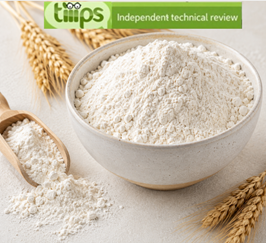
Type 0 soft wheat flour normally appears as a fine, cream-white powder, with a mild characteristic cereal aroma.
The legislation defines soft wheat flour as the product obtained by milling and subsequent sifting of soft wheat after removal of foreign matter and impurities.
Sifting progressively separates the outer fractions of the grain from the floury parts rich in endosperm. Type 0 flour is therefore a refined flour, but it has a slightly higher maximum ash content than type 00 flour: 0.65% compared with 0.55% on a dry-matter basis. Type 1, type 2 and wholemeal flours retain progressively greater quantities of the outer portions of the grain.
It is important not to confuse the flour type with its technological strength. The designation “type 0” does not automatically mean that a flour is weak, medium-strength, strong, or suitable for long fermentation. Parameters such as W, P/L, dough stability and water absorption capacity depend on the wheat varieties used, protein composition and the characteristics of the individual product. The legislation defining type 0 sets limits for moisture, ash and protein, but does not associate the designation “0” with a specific W value.
Production process
Production begins with the selection and cleaning of soft wheat, removing dust, stones, foreign seeds, metallic particles and other impurities.
The grain is generally subjected to conditioning or tempering, adjusting its water content before milling. This operation facilitates separation of the outer layers of the kernel from the endosperm.
In modern flour mills, the wheat is then passed through a sequence of break and reduction rollers and sieving systems.
Through successive milling and sieving stages, different fractions are separated:
- floury endosperm;
- bran;
- fine bran and other intermediate fractions;
- germ;
- flours obtained from the different milling passages.
The flour fractions are then selected and, where necessary, blended to obtain a product with the characteristics required for type 0 flour.
The degree of refinement directly affects the final composition: removal of part of the outer layers of the kernel reduces mainly dietary fibre and certain micronutrients, while proportionally increasing the contribution of the starch-rich endosperm.
Main substances contained
Type 0 soft wheat flour is not a single chemical substance but a complex food matrix naturally composed of numerous constituents of the wheat kernel.
The main substances actually present are:
- Starch: the quantitatively predominant component. CREA composition tables report approximately 61.5 g per 100 g of type 0 flour.
- Proteins: approximately 11.5 g per 100 g in the CREA reference sample. An important fraction consists of wheat proteins involved in the formation of gluten when flour is hydrated and kneaded.
- Water: approximately 14.2 g per 100 g according to CREA data; actual moisture may vary within the limits permitted for marketing.
- Dietary fibre: approximately 2.9 g per 100 g, higher than that reported for the corresponding type 00 flour in the CREA database but considerably lower than in wholemeal flour.
- Lipids: present in relatively small quantities, approximately 1 g per 100 g.
- Soluble sugars: naturally present in small amounts, approximately 1.8 g per 100 g.
- Minerals: particularly phosphorus and potassium, together with smaller quantities of calcium, iron, sodium and other elements.
- B-group vitamins: including thiamine, riboflavin and niacin, although their concentrations are lower than in the outer layers and germ of the grain.
These figures are average compositional values and must not be interpreted as a mandatory formulation for all type 0 flours. Wheat variety, climate, soil, grain blends, milling process and extraction rate can alter the composition.
Identification data and specifications
| Characteristic | Value | Note |
|---|---|---|
| Designation | Type 0 soft wheat flour | Italian designation |
| Raw material | Soft wheat | cereal |
| Botanical name | Triticum aestivum | species reported by CREA |
| Food category | Cereals and cereal products | flour |
| Fundamental process | Milling and sifting | after removal of foreign matter and impurities |
| Maximum moisture | 14.50% | parameter established by Italian Presidential Decree No. 187/2001 |
| Maximum ash | 0.65% on dry matter | distinguishing parameter for type 0 |
| Minimum protein | 11.00% on dry matter | nitrogen × 5.70 according to the statutory specification |
| Moisture permitted up to | 15.50% | allowed with the specific label declaration required by law |
| Allergen | Wheat / gluten | gluten-containing cereal |
| Food additive | No | food ingredient obtained by milling cereal grain |
| Nutrient | Indicative amount per 100 g | Note |
|---|---|---|
| Energy | 321 kcal / 1345 kJ | CREA value |
| Water | 14.2 g | average analysed value |
| Protein | 11.5 g | CREA calculation, N × 6.25 |
| Available carbohydrates | 69.5 g | main energy-yielding component |
| Starch | 61.5 g | principal component of the flour |
| Soluble sugars | 1.8 g | naturally present |
| Fat | 1.0 g | low content |
| Total dietary fibre | 2.9 g | 1.07 g soluble and 1.86 g insoluble |
| Sodium | 2 mg | naturally very low |
| Potassium | 140 mg | mineral |
| Calcium | 18 mg | mineral |
| Phosphorus | 160 mg | mineral |
| Iron | 0.9 mg | mineral |
| Thiamine | 0.25 mg | vitamin B1 |
| Riboflavin | 0.04 mg | vitamin B2 |
| Niacin | 1.20 mg | vitamin B3 |
The values shown are those reported for type 0 wheat flour in the CREA Food Composition Tables and should be regarded as indicative. Actual commercial products may differ.
The protein value in the CREA nutritional table should not be compared directly with the statutory minimum of 11% without considering the different method of expression. Italian legislation calculates protein on a dry-matter basis using nitrogen × 5.70, whereas the CREA nutritional table reports the value for the food as consumed using N × 6.25.
Nutritional and technological properties
From a nutritional perspective, type 0 flour is primarily a source of complex carbohydrates, mainly starch. It also provides a significant amount of protein and much smaller quantities of fat.
Wheat proteins are particularly important technologically because, when water is added and the dough is mechanically worked, they contribute to the formation of the gluten network capable of retaining gases generated during fermentation.
This behaviour makes it possible to obtain doughs that are:
- elastic;
- extensible;
- capable of absorbing water;
- capable of retaining carbon dioxide produced during fermentation;
- suitable for developing volume in leavened baked products.
Actual performance, however, depends on protein quality as well as protein quantity. Two flours both classified as type 0 can therefore behave very differently during mixing and fermentation.
From the standpoint of protein quality, CREA identifies lysine as the limiting amino acid in type 0 flour proteins. Wheat protein alone should therefore not be considered nutritionally equivalent to a protein source with a more complete amino-acid profile.
Food uses
Type 0 soft wheat flour is one of the fundamental ingredients of Italian cooking and the food industry.
Depending on the strength and rheological characteristics of the specific flour, it may be used for:
- bread;
- pizza;
- focaccia;
- rolls;
- breadsticks;
- crackers;
- savoury baked products;
- cakes and biscuits;
- fresh pasta;
- batters;
- culinary preparations;
- sauces and creams in which flour is used as a thickening agent.
Soft wheat flours are therefore highly versatile ingredients for both sweet and savoury baked products.
For specific applications, however, the technological parameters declared by the mill are more informative than the classification “type 0” alone. A type 0 flour intended for biscuits may have very different properties from a type 0 flour designed for pizza with long fermentation.
Advantages
- It is a simple and traditional food ingredient, obtained mainly through physical milling and separation processes.
- It is highly versatile and suitable for many preparations.
- It has a high starch content, useful both for structure and energy supply.
- It contains proteins capable of forming gluten, an important technological property in breadmaking.
- It is naturally low in fat.
- It naturally contains very little sodium.
- Compared with type 00 flour, it may retain a slightly larger proportion of mineral-containing grain fractions, consistent with the higher permitted ash content for type 0.
- It is commercially available with a wide range of technological characteristics, from relatively weak flours to flours designed for long fermentation.
Disadvantages
- It is a refined flour and contains less fibre than type 1, type 2 and particularly wholemeal flour. CREA reports approximately 2.9 g of fibre per 100 g for type 0 flour compared with 8.4 g per 100 g for wholemeal flour.
- Part of the minerals, vitamins and other compounds located in the outer layers of the grain are removed during refining.
- It contains wheat and gluten and is therefore not suitable for the normal diet of people with coeliac disease.
- It must be avoided by people with wheat allergy according to individual medical advice.
- Protein quantity alone does not completely predict its behaviour during dough preparation.
- The designation “type 0” does not guarantee a particular W value or suitability for long fermentation.
- Wheat proteins have lysine as a limiting amino acid.
- Like other raw flours, it should not automatically be regarded as microbiologically sterile.
Safety, allergens, regulations and storage
The main allergenic consideration is wheat.
Regulation (EU) No 1169/2011 includes cereals containing gluten, explicitly including wheat and wheat products, among substances or products causing allergies or intolerances, subject to the specific exemptions provided by the legislation.
In compound foods, the presence of wheat must therefore be managed in accordance with European rules on allergen information.
Conventional type 0 soft wheat flour contains gluten. In the European Union, the claim “gluten-free” may only be used when the food as sold to the final consumer contains no more than 20 mg/kg of gluten. The statement “very low gluten” is subject to a limit of 100 mg/kg and to the additional conditions laid down in Commission Implementing Regulation (EU) No 828/2014.
Another frequently overlooked aspect concerns raw flour. Milling is not necessarily a sterilisation process. Grain can become contaminated during cultivation, harvesting, transport or processing, and raw flour has been involved in outbreaks associated with Salmonella and pathogenic Escherichia coli. For this reason, ordinary flour and doughs intended to be cooked should not normally be consumed raw.
Cereals and cereal products must also comply with European maximum levels for food contaminants. Regulation (EU) 2023/915 covers, among other contaminants of particular relevance to cereals, several mycotoxins.
For commercial flour, the following should therefore be controlled in accordance with food-safety management systems and applicable legislation:
- quality and origin of the wheat;
- moisture;
- pests;
- microbiological contamination;
- mycotoxins;
- other contaminants;
- relevant residues;
- allergens and cross-contamination;
- hygienic conditions during milling and storage.
Flour should be stored in a cool, dry and clean place, protected from moisture, foreign odours and pests. After opening, the package should be kept tightly closed or the flour transferred to a suitable food-contact container.
An increase in moisture during storage can reduce product stability and promote spoilage, mould growth or insect infestation.
Environment
Soft wheat flour is an agricultural product, and its environmental impact arises mainly from wheat cultivation, production and use of agricultural inputs, grain handling, milling, energy consumption at the mill, packaging and transport.
Milling also generates fractions such as bran, germ and intermediate fractions. These materials do not necessarily have to be regarded as waste: they can be used in human food, animal feed or as raw materials for further applications. The valorisation of agro-food by-products is one of the approaches investigated within the fields of bioeconomy and circular economy.
Conclusion
Type 0 soft wheat flour is a refined flour obtained from Triticum aestivum through milling and sifting. In Italy, the designation is defined by specific criteria: for type 0 flour intended for breadmaking, legislation establishes a maximum moisture content of 14.50%, maximum ash content of 0.65% on a dry-matter basis and minimum protein content of 11.00% on a dry-matter basis, calculated according to the prescribed method.
The main substances contained are primarily starch, proteins, water, a relatively modest amount of dietary fibre and smaller quantities of lipids, sugars, minerals and vitamins. According to CREA tables, 100 g provide approximately 321 kcal, 69.5 g of available carbohydrates, 11.5 g of protein, 2.9 g of fibre and 1 g of fat.
From a technological standpoint, it is a fundamental raw material for bread, pizza, focaccia and numerous other baked products, but the designation “type 0” alone does not indicate flour strength. Rheological characteristics and the producer's technical specifications must also be considered when determining suitability for a particular application.
Nutritionally, it is primarily a source of complex carbohydrates and also provides protein, but it contains less fibre and fewer components from the peripheral layers of the grain than type 1, type 2 and wholemeal flours.
The main point requiring attention is the presence of wheat and gluten. Conventional type 0 flour is therefore unsuitable for people with coeliac disease and must be correctly managed as an allergenic ingredient in foods. Flour is also a raw agricultural-derived ingredient, so preparations intended for cooking should not normally be eaten raw.
Overall, type 0 soft wheat flour is a versatile, well-standardised and technologically important food ingredient. A proper assessment of its quality and intended use should consider together the flour type, protein content, rheological characteristics, nutritional values, allergens, storage conditions and compliance with food legislation.

