



Egg blend: properties, uses, pros, cons, safety
Definition
Egg blend (also often referred to as liquid whole egg, whole egg, or whole-egg egg product) is a food ingredient obtained by breaking/shelling eggs, mixing egg white and yolk in their natural proportions, followed by technological processing steps, especially filtration and, in most professional uses, pasteurization.
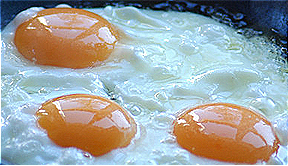
It is therefore an egg product that is practical and standardizable, widely used in the food industry and foodservice because it improves batch consistency, microbiological safety (if pasteurized), processing speed, and operational handling compared with shell eggs.
From a nutritional standpoint, egg blend retains the typical profile of whole egg: high-biological-value proteins, lipids (concentrated in the yolk), vitamins, and minerals. Actual composition may vary slightly depending on the raw material, formulation (e.g., added salt/sugar in certain specific semi-finished products), and process.
For more information: Eggs
Production process
The industrial process for egg blend generally includes:
Selection and inspection of incoming eggs.
External washing/sanitation (when provided for by the process and supply chain).
Mechanical shell breaking.
Non-selective separation and collection of egg white + yolk (whole egg).
Filtration to remove shell fragments, membranes, and coarse impurities.
Homogenization/mixing to standardize the mass.
Pasteurization (in most egg products intended for consumption or industry).
Rapid cooling.
Packaging (refrigerated liquid, frozen, or sometimes intended for drying into whole egg powder).
Key controls include temperature, microbiological load, pasteurization effectiveness, absence of Salmonella according to applicable control plans, pH, viscosity (where relevant), package integrity, and cold chain management.
Key constituents
Egg blend is a complex biological matrix. The main components are:
Proteins (egg white + yolk): represent an important nutritional and technological function (coagulation, structure, and partly emulsification through yolk components).
Favorable aspect: high protein quality and excellent technological utility in bakery, pasta, and ready meals.
Less favorable aspect: proteins are sensitive to heat and process parameters (undesired denaturation/coagulation).Lipids (mainly in the yolk): include triglycerides and phospholipids.
Favorable aspect: contribute to texture, sensory richness, and technological functionality.
Less favorable aspect: greater sensitivity to oxidation and development of sensory defects if temperature/oxygen management is poor.Phospholipids (e.g., lecithins): especially important for yolk behavior.
Favorable aspect: support emulsification and stability of certain preparations.
Less favorable aspect: practical effect depends on matrix, pH, salt, sugars, and heat treatment.Water: the main component of the liquid product.
Favorable aspect: makes the product easy to dose and mix.
Less favorable aspect: requires strict refrigeration and microbiological control.Vitamins (A, D, E, B12, folates, and others in variable amounts): contribute to nutritional value.
Favorable aspect: improve the micronutrient profile of the finished product.
Less favorable aspect: some vitamins may decrease with processing and prolonged storage.Minerals (e.g., phosphorus, selenium, iron in variable amounts): present mainly due to the yolk fraction.
Favorable aspect: interesting micronutrient contribution.
Less favorable aspect: practical impact depends on the portion actually consumed.Cholesterol (in the yolk): natural component of egg.
Favorable aspect: part of the yolk’s natural lipid matrix.
Less favorable aspect: may require attention in specific formulations or dietary plans, depending on the overall nutritional context.
Identification data and specifications
| Parameter | Value | Note |
|---|---|---|
| Ingredient name | Egg blend | Also: liquid whole egg, whole-egg egg product |
| Origin | Hen eggs (Gallus gallus domesticus) | Animal-derived raw material |
| Part/derivation | Egg white + yolk mixed | In natural whole-egg proportions |
| Nature | Liquid egg product (or frozen) | May be pasteurized |
| Key components | Water, proteins, lipids, phospholipids, vitamins, minerals | Complex biological matrix |
| Allergen | Yes (egg) | Major allergen; mandatory declaration under applicable regulations |
| Caloric value | Indicatively ~130–160 kcal/100 g | Variable depending on composition and any additions |
| Typical treatment | Pasteurization (often) | Essential for safety and shelf-life of the liquid product |
Indicative physicochemical properties
| Parameter | Indicative value | Note |
|---|---|---|
| Physical state | Liquid (sometimes frozen) | May be pumpable/dosable |
| Color | Yellow → yellow-orange | Depends on hen diet and natural yolk proportion |
| Odor | Typical egg odor | Off-odors may indicate possible deterioration |
| pH | Variable (near-neutral range, depends on freshness/process) | Important for stability and technological performance |
| Viscosity | Variable | Influenced by temperature, homogenization, and heat treatment |
| Solubility in water | Not properly “soluble” | It is a complex biological dispersion/emulsion |
| Stability | Good if refrigerated and properly packaged | Critical: cold chain |
| Heat sensitivity | High (protein coagulation) | Key process driver |
| Typical issues | Undesired coagulation, separation, microbiological contamination if temperature abuse occurs | Depend on process and storage |
Main uses
Food use
Egg blend is widely used as an ingredient in:
Bakery and pastry (cakes, biscuits, shortcrusts, doughs, cooked creams).
Fresh pasta and egg-based specialties.
Sauces and emulsified preparations (where formulation allows).
Ready meals, fillings, breaded preparations, industrial omelets, and culinary bases.
Professional foodservice and catering, where the pasteurized version improves practicality and standardization.
Compared with shell eggs, egg blend facilitates dosing, processing speed, reduced shelling waste, and greater uniformity.
Industrial use
The main industrial drivers are:
quality standardization,
microbiological safety (with a suitable process),
ease of dosing and pumping,
time reduction on the line,
compatibility with continuous and semi-automatic processes.
Nutrition and health
Egg blend provides complete proteins and a nutritionally dense matrix of micronutrients. In many applications, it improves the nutritional value of the finished product compared with bases lacking animal protein ingredients.
From a health standpoint, the assessment depends on context:
in simple products and appropriate portions, it can be a nutritionally useful ingredient;
in products high in salt, added fats, or highly processed, the final profile depends mainly on the overall recipe.
Pros
High-biological-value proteins.
Excellent technological functionality (coagulation, structure, emulsification).
High practicality in professional settings.
Potentially improved safety compared with raw egg use, if the product is pasteurized and properly handled.
Good batch consistency for industrial production.
Cons
Major allergen (egg).
Requires strict cold chain management (if refrigerated liquid).
Sensitive to temperature abuse and poor handling (quality/microbiological risks).
Cholesterol and yolk lipids may require attention in some formulations/specific diets.
Shelf-life generally shorter than dry ingredients.
Portion note
Portion should be evaluated based on the finished product (e.g., pasta, dessert, sauce, ready meal), considering:
amount of egg blend used in the recipe,
presence of other ingredients (salt, fats, sugars),
consumption frequency.
Safety (allergens, contraindications)
Egg blend is an ingredient with well-known safety critical points that can be managed with a proper supply chain and process.
Allergens: contains egg, a major allergen; labeling must be clear and compliant.
Microbiological risk: management of pasteurization and refrigeration is central to reducing microbiological risk.
Raw / undercooked use: in preparations not subjected to further cooking, it is preferable to use only pasteurized product.
Contraindications: individuals allergic to egg must avoid it; caution also applies to diets with specific restrictions set by a healthcare professional.
Storage and shelf-life
For liquid egg blend:
store under refrigeration according to the manufacturer’s instructions;
maintain the cold chain without interruption;
close the container properly after use;
avoid cross-contamination during dispensing.
For frozen product, follow storage temperature requirements and controlled thawing procedures. Shelf-life depends on format, treatment (pasteurized/frozen), and packaging.
Labelling
On the label, it may appear as:
egg blend
liquid whole egg
pasteurized whole-egg egg product (or equivalent wording)
Key elements to report/evaluate:
presence of the egg allergen,
possible indication of pasteurization,
storage conditions (refrigerated/frozen),
best-before date or use-by date according to product category.
Functional role and rationale for use
Egg blend is widely used because it combines:
nutritional value (proteins, micronutrients),
technological functions (structure, coagulation, emulsification),
practical handling.
It is often chosen when a versatile and standardizable ingredient is needed, with good performance across multiple applications, from pastry to industrial foodservice.
Formulation compatibility
In formulation, the main points are:
temperature: heat must be managed to avoid premature coagulation;
pH and matrix composition: influence stability and protein behavior;
presence of salt and sugars: can modify viscosity and heat response;
order of addition and mixing: important for emulsions, creams, and doughs.
In cooked products, egg blend contributes to structure and setting; in emulsified products, behavior depends mainly on yolk proportion and the overall formulation.
Safety, regulation, and quality
Industrial management requires GMP/HACCP with focus on:
supplier qualification and raw material,
pasteurization process control,
microbiology (including Salmonella according to applicable plans),
storage and transport time/temperature,
traceability and lot management.
For quality, relevant factors include homogeneity, absence of foreign bodies (shell/membranes), color/odor stability, and consistent performance in recipes.
Conclusion
Egg blend is an egg product with high practical and technological value, very useful in the food industry and foodservice. It offers high-quality proteins, good versatility, and standardization, but requires strict management of allergens, cold chain, and microbiological safety.
The choice of product (pasteurized liquid, frozen, technical specification) should be made according to application, shelf-life, process, and finished-product safety requirements.
Mini-glossary
Egg product: product obtained from the processing of eggs or their components (egg white, yolk, whole egg), in liquid, frozen, or dried form.
Pasteurization: controlled heat treatment that reduces microbial load and improves safety, without sterilizing.
Protein coagulation: aggregation of proteins induced by heat, responsible for the setting of creams, omelets, and doughs.
Emulsion: system in which fat and water are stably dispersed thanks to emulsifying components (e.g., yolk phospholipids).
GMP/HACCP: good manufacturing practices and food safety self-control system.

