



Tongkat ali extract: properties, uses, pros, cons, safety, alternatives
Tongkat ali (Eurycoma longifolia Jack), also known as “long jack” or “Malaysian ginseng,” is a slow-growing evergreen tree in the Simaroubaceae family, native to Southeast Asia. The most used part is the root, traditionally prepared as decoctions or aqueous extracts and, in modern practice, as standardised extracts in supplements.
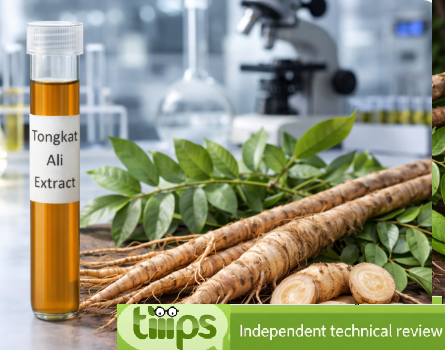
Botanical framework
Kingdom: plantae
Order: sapindales
Family: simaroubaceae
Genus: eurycoma
Species: eurycoma longifolia
Plant characteristics
Habit: small tree or large shrub, evergreen, slow-growing.
Key plant part: woody, bitter roots used as the main raw material for extracts.
Habitat: tropical forests and tropical environments in Southeast Asia, often on well-drained soils.
Technical note: commercial products most commonly use dried aqueous extracts in powder form, frequently standardised to specific markers.
Chemical composition and structure
Tongkat ali phytochemistry is complex and varies with botanical origin, plant part, and extraction process. The most relevant classes include quassinoids, alkaloids, and polar glycosaponin-rich fractions.
Quassinoids: eurycomanone, eurycomalactone, eurycomanols, eurycomalactones, chaparrinone, 13-α-21-epoxyeurycomanone.
Canthin-6-one alkaloids: canthin-6-one, 9-methoxycanthin-6-one, 9-hydroxycanthin-6-one, canthin-6-one-9-O-β-D-glucopyranoside.
β-carboline alkaloids: 7-hydroxy-β-carboline-1-propionic acid, β-carboline-1-propionic acid, 1-methoxymethyl-β-carboline, 7-methoxy-β-carboline-1-propionic acid.
Coumarins: scopoletin, isoscopoletin.
Glycosaponins and polar fractions: a glycosaponin-rich fraction is often described as prominent in standardised extracts; polysaccharides and proteins are also reported in aqueous extracts.
Triterpenes: triterpenes described as squalene-type and tirucallane-type have been reported in root/extract profiling.
Uses and benefits
Traditional use: root use is traditionally associated with support for vitality, male well-being, and broader ethnomedicinal uses in different contexts.
Modern supplement use: products are often marketed for supporting testosterone and physical performance; available clinical studies report variable effects depending on preparation and standardisation.
Quality and standardisation: industrial extracts are frequently standardised to eurycomanone and to a glycosaponin fraction.
Applications
Dietary supplements: root extracts in capsules or powders, often standardised to chemical markers.
Phytochemical research: isolation and quantification of quassinoids and alkaloids for quality control and biological activity research.
Cosmetics: occasional use as a botanical extract in formulations, more as a “botanical” ingredient than as a regulatorily consolidated active.
Cultivation
Environment: tropical climate, grown in open field or agroforestry systems in Southeast Asia.
Soil and management: preference for well-drained soils; slow growth with long timelines to obtain roots suitable for processing.
Raw material variability: root quality can vary with origin, plant age, and harvesting practices.
Environmental and safety considerations
Regulatory safety in the EU: an EFSA assessment on a specific standardised aqueous extract proposed as a novel food identified genotoxicity concerns and concluded that safety was not established under the assessed conditions of use.
Liver: isolated cases of liver injury have been reported in association with tongkat ali products; causality may be complicated by multi-ingredient products and co-exposures.
Dose and tolerability: at “traditional” doses, adverse effects are described as uncommon, while market products may use higher doses; possible gastrointestinal discomfort, headache, and rash have been reported.
Interactions: potential effects on drug-metabolising enzymes have been investigated, with possible relevance for interactions in individuals on chronic therapy.
Good practice: prefer products with analytical controls and traceability; avoid use during pregnancy and breastfeeding; caution in liver disease or when taking medications.
Alternatives
| Option | Product type | Why it can be an alternative |
|---|---|---|
| Panax ginseng | Herbal “adaptogen” | Commonly used to support perceived energy and performance; broad traditional use (watch for interactions with anticoagulants/stimulants). |
| Withania somnifera (ashwagandha) | Adaptogen / stress-support | More stress-and-recovery oriented; may support well-being and vitality in some people (caution with thyroid issues, sedatives, pregnancy). |
| Lepidium meyenii (maca) | Food-like root | Often used for libido and general wellness; generally well tolerated (consider caution in hormone-sensitive conditions). |
Synonyms
tongkat ali
long jack
Malaysian ginseng
eurycoma longifolia Jack

