Enoteina B (Oenothein B): cos’è, a cosa serve, benefici, usi e sicurezza
Descrizione
L’Enoteina B è un polifenolo naturale appartenente alla famiglia degli ellagitannini, isolato principalmente da specie del genere Epilobium (famiglia Onagraceae) nel 1990. È una molecola di elevato interesse fitoterapico, nutraceutico e cosmetico per le sue documentate proprietà antiossidanti, antinfiammatorie e modulatrici dell’attività enzimatica, in particolare a livello cutaneo e del cuoio capelluto.
Processo di produzione
L’Enoteina B viene ottenuta tramite estrazione selettiva da parti aeree di piante di Epilobium (foglie e sommità fiorite), e da altre piante (1) previamente essiccate e stabilizzate.
Il processo prevede una estrazione idroalcolica o acquosa, seguita da filtrazione, concentrazione e purificazione mediante tecniche cromatografiche o frazionamento selettivo, finalizzate all’arricchimento in ellagitannini e alla rimozione di composti indesiderati.
Il prodotto finale può essere standardizzato in Enoteina B e presentato come estratto secco o frazione purificata, con controllo di residui di solventi, metalli pesanti e carica microbica, secondo criteri GMP e HACCP.
Dal punto di vista salutistico, il processo preserva l’elevato contenuto di polifenoli bioattivi; eventuali componenti critici sono limitati a tracce vegetali intrinseche e vengono gestiti tramite controlli di qualità.
Proprietà fisiche
L’Enoteina B si presenta generalmente come polvere fine di colore beige–bruno chiaro, con:
buona solubilità in miscele idroalcoliche;
solubilità limitata in solventi apolari;
elevata stabilità chimica se protetta da luce, calore e umidità;
natura igroscopica moderata, tipica dei polifenoli ad alto peso molecolare.
Proprietà sensoriali e tecnologiche
Dal punto di vista sensoriale, l’Enoteina B ha sapore astringente, caratteristico dei tannini.
Sul piano tecnologico:
contribuisce alla stabilità ossidativa delle formulazioni;
svolge funzione antiossidante naturale;
può interagire con proteine e enzimi, modulandone l’attività;
risulta adatta a formulazioni idroalcoliche, gel, sieri e emulsioni leggere;
richiede dosaggi controllati per evitare eccessiva astringenza sensoriale.
Impieghi alimentari
L’Enoteina B non è comunemente utilizzata come ingrediente alimentare diretto, ma può essere presente come:
componente bioattivo di estratti vegetali impiegati in integratori alimentari;
costituente funzionale in prodotti nutraceutici a supporto del benessere urinario, prostatico e antinfiammatorio;
frazione caratterizzante di estratti di Epilobium utilizzati in preparazioni fitoterapiche.
L’uso alimentare è subordinato alla forma estrattiva, al dosaggio e al quadro regolatorio applicabile.
Nutrizione e salute
Dal punto di vista biologico, l’Enoteina B è oggetto di numerosi studi per:
attività antiossidante ad elevata capacità di scavenging dei radicali liberi;
effetto antinfiammatorio attraverso la modulazione di mediatori pro-infiammatori;
inibizione enzimatica (es. 5α-reduttasi), rilevante per applicazioni su cute, cuoio capelluto e benessere prostatico;
potenziale attività antimicrobica e lenitiva.
Non apporta valore calorico significativo ed è utilizzata per il suo ruolo funzionale, non nutrizionale.
Nota porzione
Non esiste una porzione alimentare standard. Nei integratori, il dosaggio dipende dalla standardizzazione dell’estratto e dall’indicazione d’uso, secondo le raccomandazioni del produttore e del professionista sanitario.
Allergeni e intolleranze
L’Enoteina B:
non rientra tra gli allergeni maggiori riconosciuti;
è generalmente ben tollerata;
può causare fastidi gastrointestinali lievi a dosaggi elevati, tipici dei tannini;
è sconsigliata, in forma concentrata, in soggetti con ipersensibilità ai polifenoli o in caso di terapie specifiche, salvo parere medico.
Conservazione e shelf-life
L’Enoteina B deve essere conservata:
in ambiente fresco e asciutto;
al riparo da luce, calore e ossigeno;
in contenitori ermetici e opachi.
Se correttamente conservata, la shelf-life tipica è di 24–36 mesi, con mantenimento dell’attività polifenolica.
Sicurezza e regolatorio
L’Enoteina B, come componente di estratti vegetali, rientra nel quadro normativo degli ingredienti botanici. La sua sicurezza è valutata in base a:
origine vegetale e tracciabilità;
metodo di estrazione e grado di purificazione;
assenza di contaminanti chimici e microbiologici;
rispetto delle buone pratiche di fabbricazione (GMP).
L’uso in integratori e cosmetici deve rispettare le normative vigenti nel Paese di commercializzazione.
Etichettatura
In etichetta, l’Enoteina B può essere indicata come:
estratto di Epilobium standardizzato in Enoteina B;
denominazione botanica della pianta seguita dal titolo in principio attivo;
nei cosmetici, secondo la denominazione INCI dell’estratto.
Eventuali claim devono essere supportati e non attribuire proprietà medicinali.
Troubleshooting
Instabilità in formula: verificare pH e compatibilità con elettroliti; preferire sistemi leggermente acidi.
Astringenza eccessiva: ridurre il dosaggio o combinare con attivi lenitivi.
Precipitazione: migliorare la solubilizzazione o utilizzare veicoli idroalcolici adeguati.
Colorazione indesiderata: valutare il grado di purificazione dell’estratto.
Principali funzioni INCI (cosmesi)
Negli ingredienti cosmetici derivati da Epilobium, l’Enoteina B contribuisce alle seguenti funzioni INCI:
Antioxidant
Skin conditioning
Soothing
Anti-inflammatory
Sebum regulating (indiretto, tramite modulazione enzimatica)
Hair conditioning (in prodotti per il cuoio capelluto)
Conclusione
L’Enoteina B rappresenta un principio attivo vegetale ad alto valore funzionale, con solide basi scientifiche a supporto delle sue proprietà antiossidanti, antinfiammatorie e modulatrici dell’attività enzimatica. È particolarmente interessante per applicazioni nutraceutiche e cosmetiche, soprattutto nei prodotti dedicati a pelle sensibile, cuoio capelluto e benessere maschile. Una corretta standardizzazione e gestione formulativa consente di valorizzarne appieno il potenziale.
Mini-glossario
Ellagitannini: polifenoli ad alto peso molecolare con spiccata attività antiossidante.
Enoteina B: ellagitannino caratteristico del genere Epilobium.
Polifenoli: composti vegetali con attività antiossidante e modulatrice biologica.
5α-reduttasi: enzima coinvolto nel metabolismo degli androgeni.
Astringenza: sensazione di secchezza dovuta all’interazione dei tannini con le proteine.
GMP: Good Manufacturing Practice.
HACCP: Hazard Analysis and Critical Control Points.
Bibliografia__________________________________________________________________________
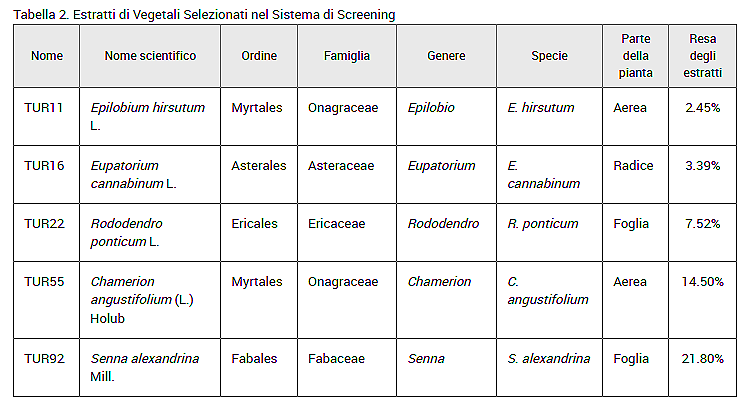
(1) Tahara Y, Fujita M, Zhang T, Wang D, Tateishi H, Togami A, Nyame P, Terasawa H, Monde N, Appiah-Kubi J, Amesimeku WO, Alsaadi DHM, Wada M, Sugimura K, Gezici S, Ciftci H, Karahan F, Sekeroglu N, Otsuka M, Sawa T, Maeda Y, Watanabe T, Monde K. Turkish Plants, Including Quercetin and Oenothein B, Inhibit the HIV-1 Release and Accelerate Cell Apoptosis. Biol Pharm Bull. 2023;46(11):1535-1547. doi: 10.1248/bpb.b23-00328.
Yoshida T, Yoshimura M, Amakura Y. Chemical and Biological Significance of Oenothein B and Related Ellagitannin Oligomers with Macrocyclic Structure. Molecules. 2018 Mar 2;23(3):552. doi: 10.3390/molecules23030552.
Abstract. In 1990, Okuda et al. reported the first isolation and characterization of oenothein B, a unique ellagitannin dimer with a macrocyclic structure, from the Oenothera erythrosepala leaves. Since then, a variety of macrocyclic analogs, including trimeric-heptameric oligomers have been isolated from various medicinal plants belonging to Onagraceae, Lythraceae, and Myrtaceae. Among notable in vitro and in vivo biological activities reported for oenothein B are antioxidant, anti-inflammatory, enzyme inhibitory, antitumor, antimicrobial, and immunomodulatory activities. Oenothein B and related oligomers, and/or plant extracts containing them have thus attracted increasing interest as promising targets for the development of chemopreventive agents of life-related diseases associated with oxygen stress in human health. In order to better understand the significance of this type of ellagitannin in medicinal plants, this review summarizes (1) the structural characteristics of oenothein B and related dimers; (2) the oxidative metabolites of oenothein B up to heptameric oligomers; (3) the distribution of oenotheins and other macrocyclic analogs in the plant kingdom; and (4) the pharmacological activities hitherto documented for oenothein B, including those recently found by our laboratory.
Pei X, Xiao J, Wei G, Zhang Y, Lin F, Xiong Z, Lu L, Wang X, Pang G, Jiang Y, Jiang L. Oenothein B inhibits human non-small cell lung cancer A549 cell proliferation by ROS-mediated PI3K/Akt/NF-κB signaling pathway. Chem Biol Interact. 2019 Jan 25;298:112-120. doi: 10.1016/j.cbi.2018.09.021.
Abstract. Oenothein B has a wide range of biological activities. The present study probed into the underlying mechanism on how Oenothein B inhibits the proliferation of a lung cancer line A549. Our results showed that Oenothein B effectively inhibited the proliferation of A549 cells by inducing apoptosis and arresting cells at G1 stage. Furthermore, Oenothein B not only increased the level of intracellular reactive oxygen species (ROS), but also induced the upregulation of intracellular apoptotic triggers (cleavage caspase-3, PARP, cytochrome c level in the cytosol, Bax). Moreover, ROS inhibitor (N-acetyl-L-cystein, NAC) and PI3K agonist (Insulin-like growth factor 1, IGF-1) could resist cell proliferation inhibition induced by Oenothein B, respectively. ROS inhibitor significantly abrogated the activation of caspase 3/7 and 9 in the presence of Oenothein B. Additionally, suppression of p-PI3K and p-Akt, p-NF-κB by Oenothein B could be compensated by treatment with ROS inhibitor. To summarize, these results demonstrated that Oenothein B was able to prevent cell proliferation probably via ROS-mediated PI3K/Akt/NF-κB signaling pathway.
Luo MH, He Y, Li H, Chen TX, Lei S, Zhang JJ, Wang L. Oenothein B inhibits proliferation and migration of breast cancer cells by regulating P53. Zhongguo Zhong Yao Za Zhi. 2023 Jul;48(14):3904-3912. doi: 10.19540/j.cnki.cjcmm.20230413.702.
Abstract. The effects of oenothein B(OEB) on the proliferation, apoptosis, invasion, and migration of breast cancer MCF-7 and MDA-MB-231 cells were investigated by cell culture in vitro, network pharmacology, and molecular docking. In vitro cell experiments revealed that OEB inhibited the proliferation and colony formation ability, and promoted the apoptosis and formation of apoptotic bodies in breast cancer cells, as well as inhibited the invasion and migration of breast cancer cells. The targets of OEB were obtained using SwissTargetPrediction database and breast cancer targets were obtained from GeneCards. The targets of OEB and breast cancer were entered separately in Venny 2.1 software to obtain the Venn diagram of common targets of OEB and breast cancer. The common targets of OEB and breast cancer were input into STRING database to construct a protein-protein interaction(PPI) network, which was entered into Cytoscape 3.7.2 software for network topology analysis. Key targets were screened according to protein association strength, and analyzed for KEGG pathway enrichment. Molecular docking of OEB to key targets using AutoDock software revealed that OEB stably bound to the active pocket of P53, while OEB promoted the expression of P53 protein. MCF-7 and MDA-MB-231 cell viability and migration ability increased after silencing P53, and this change was reversed after treatment with OEB. Therefore, this study showed that OEB inhibited the proliferation, migration, and invasion of breast cancer MCF-7 and MDA-MB-231 cells, and promoted the apoptosis of breast cancer MCF-7 and MDA-MB-231 cells, which may be related to the targeted regulation of P53.
Schepetkin IA, Kirpotina LN, Jakiw L, Khlebnikov AI, Blaskovich CL, Jutila MA, Quinn MT. Immunomodulatory activity of oenothein B isolated from Epilobium angustifolium. J Immunol. 2009 Nov 15;183(10):6754-66. doi: 10.4049/jimmunol.0901827.
Abstract. Epilobium angustifolium has been traditionally used to treat of a number of diseases; however, not much is known regarding its effect on innate immune cells. In this study, we report that extracts of E. angustifolium activated functional responses in neutrophils and monocyte/macrophages. Activity-guided fractionation, followed by mass spectroscopy and NMR analysis, resulted in the identification of oenothein B as the primary component responsible for phagocyte activation. Oenothein B, a dimeric hydrolysable tannin, dose-dependently induced a number of phagocyte functions in vitro, including intracellular Ca(2+) flux, production of reactive oxygen species, chemotaxis, NF-kappaB activation, and proinflammatory cytokine production. Furthermore, oenothein B was active in vivo, inducing keratinocyte chemoattractant production and neutrophil recruitment to the peritoneum after intraperitoneal administration. Biological activity required the full oenothein B structure, as substructures of oenothein B (pyrocatechol, gallic acid, pyrogallol, 3,4-dihydroxybenzoic acid) were all inactive. The ability of oenothein B to modulate phagocyte functions in vitro and in vivo suggests that this compound is responsible for at least part of the therapeutic properties of E. angustifolium extracts.