



Malted whole wheat, Triticum aestivum (Poaceae)
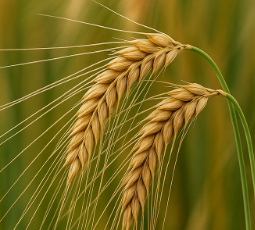
Malted whole wheat, produced through the controlled germination of Triticum aestivum kernels, is a key ingredient in numerous food and fermentation processes. Malting transforms the wheat grain into a product rich in active enzymes capable of modifying starch and proteins, thereby improving digestibility, aroma development, and technological functionality. The species, belonging to the family Poaceae, is one of the most globally important crops due to its versatility and high yield.
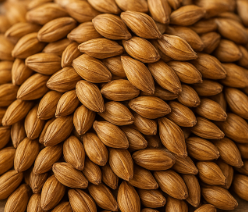 |  |
Morphologically, malted whole wheat retains the structure of the original kernel but becomes more friable, with a colour ranging from golden yellow to brown, depending on kilning time and temperature. Its aroma is more pronounced than that of raw wheat, with toasted, sweet, and slightly caramel-like notes.
From a phytochemical standpoint, malted wheat is characterised by increased levels of hydrolytic enzymes, essential for converting starches into fermentable sugars. It contains variable amounts of maltose, dextrins, free amino acids, and aromatic compounds formed during kilning. Malting can also enhance the bioavailability of certain nutrients while reducing antinutritional factors such as phytic acid.
Nutritionally, malted wheat offers a combination of modified carbohydrates, partially predigested proteins, fibre, B vitamins, and minerals. The rise in simple sugars makes it an energy-rich, easily assimilated ingredient. Enzymatic activity developed during germination contributes to improved digestibility, making malted wheat valuable in specialised dietary applications and formulations targeting enhanced nutrient absorption.
Technologically, malted wheat is essential in:
– brewing, where it contributes to the production of fermentable wort;
– baking, improving leavening capacity, crust colour, and aroma;
– the production of malt extracts, used as natural sweeteners or functional ingredients;
– infant foods and dietary preparations, due to its increased digestibility.
The selected degree of malting (light, medium, or dark) greatly influences the sensory and functional characteristics of the final food product.
Botanical classification (APG IV system)
| Category | Data |
|---|---|
| Common name | malted wheat; wheat malt |
| Botanical name | Triticum aestivum L. |
| Kingdom | Plantae |
| Clade | Angiosperms → monocots |
| Order | Poales |
| Family | Poaceae |
| Genus | Triticum |
| Species | Triticum aestivum L. |
Indicative nutritional values per 100 g (dried, unmilled malted wheat)
Average values refer to wheat grains subjected to controlled germination and subsequent drying. Values may vary according to cultivar, malt modification level, and residual moisture.
| Component | Approximate value per 100 g |
|---|---|
| Energy | ~ 350–365 kcal |
| Water | ~ 6–8 g |
| Total carbohydrates | ~ 72–74 g |
| — of which sugars (increased due to enzymatic conversion during germination) | ~ 8–12 g |
| Dietary fiber | ~ 10–12 g |
| Protein | ~ 10–12 g |
| Total lipids | ~ 1.5–2 g |
| — saturated fatty acids (SFA) | ~ 0.3 g |
| — monounsaturated fatty acids (MUFA) | ~ 0.2–0.3 g |
| — polyunsaturated fatty acids (PUFA) | ~ 0.7–0.8 g |
| Sodium | ~ 5 mg |
| Main minerals | phosphorus (≈ 250–300 mg), magnesium (≈ 100 mg), potassium (≈ 300 mg), iron, zinc |
| Relevant vitamins | B-vitamins (B1, B3, B6), small amounts of vitamin E |
Nutritional considerations
Malting activates amylolytic enzymes that increase simple sugars, giving malted wheat a sweeter taste and making it more digestible than ungerminated wheat.
Moderately energy-dense, rich in complex carbohydrates, with part of the starch converted into sugars during germination.
Good content of dietary fiber and plant protein.
Low fat content, with minimal amounts of SFA, MUFA, and PUFA.
Used in baking, brewing, breakfast cereal blends, and confectionery to enhance natural sweetness, aroma, and leavening properties.
Production process
Malted wheat is obtained from carefully selected wheat kernels with good germination capacity. After cleaning to remove straw, stones and foreign seeds, the grain is subjected to steeping, where it is soaked in water (often in alternating immersion and aeration cycles) until it reaches the moisture level required to trigger germination.
The moistened kernels are then transferred to the germination stage and kept for several days under controlled temperature and humidity. During this phase, enzymatic activity increases (especially amylases and proteases), and part of the starch is converted into simpler sugars, while the protein matrix begins to be modified. When the desired degree of modification and enzyme development is reached, germination is stopped by kilning (drying/toasting in a kiln). The temperature profile and duration of kilning determine the colour (from pale to amber/dark) and the aromatic intensity (bready, biscuity, toasted or caramel-like notes).
The dried malted wheat can be marketed as whole kernels, ground malt, malted wheat flakes, or further processed into malt extract (liquid or dry), depending on the final use.
Applications
Malted wheat is used mainly in baking, brewing and breakfast/snack products.
In baking, it improves fermentation, loaf volume, crust colour and flavour. Diastatic malted wheat (with active enzymes) supports yeast activity and crust browning, while non-diastatic malt and malt extracts contribute mainly flavour, colour and a mild natural sweetness. Bakers often add small amounts of malted wheat flour or extract to bread, rolls, crackers and “rustic” baked goods to obtain a warm golden colour and fuller aroma.
In brewing, wheat malt can be used on its own or with barley malt in certain wheat beers and specialty beers. It provides fermentable sugars, contributes to body and mouthfeel, and can improve foam stability, as well as adding characteristic aromatic notes.
In breakfast cereals and snacks, malted wheat extract is used as a natural sweetener and flavouring in breakfast flakes, puffed cereals, bars and biscuits, while malted wheat flakes or grits appear in muesli and granola mixes to add crunch and a toasted flavour.
In animal feed, suitable by-products or lower-grade malts may be used as ingredients in compound feeds, mainly as a source of energy and some protein.
Nutrition & health
From a nutritional standpoint, malted wheat is broadly similar to unmalted wheat in terms of macronutrients, with an energy content generally around 330–380 kcal per 100 g of dry product (exact values depend on form and processing). During malting, part of the starch is hydrolysed into simple sugars such as maltose and glucose, leading to a somewhat sweeter taste and a fraction of more readily fermentable carbohydrates.
Protein and fibre contents remain in a range comparable to that of the original grain, while the main difference lies in enzyme activity and the presence of additional flavour and colour compounds formed during kilning.
In bread and baked goods, malted wheat is used in relatively small amounts. It helps to improve fermentation performance, crust colour and flavour, rather than significantly changing the nutritional profile of the final product. From the perspective of human nutrition, malted wheat should therefore be seen primarily as a functional ingredient rather than a major nutrient source on its own.
Portion note
There is no standard household “portion” of malted wheat consumed alone. In typical bread or bakery recipes, malted wheat (as flour or extract) often represents about 0.5–5% of the flour weight, so its specific contribution to the calorie content of a serving is modest and must be considered within the finished product as a whole.
Allergens and intolerances
Malted wheat is still wheat and therefore contains gluten. It is not suitable for people with coeliac disease, wheat allergy or non-coeliac gluten sensitivity.
Because malted wheat and its extracts can appear in a wide range of baked goods, breakfast cereals, snacks and beers, individuals who must avoid gluten or wheat proteins should check labels very carefully. Malted wheat may be listed under terms such as “malted wheat”, “wheat malt”, “wheat malt extract” or “malted wheat flour”.
Storage and shelf-life
The stability of malted wheat depends on its physical form.
Malted wheat grain or ground malt should be stored in a cool, dry, well-ventilated place, away from light and heat. Excess moisture increases the risk of mould formation and spoilage, and grain products must be protected from insects and pests. Under suitable conditions, they typically keep good quality for several months, according to manufacturer specifications.
Dry malt extract (powder) is generally more stable, provided it is kept in sealed containers protected from humidity and heat. Commercial shelf-life is often in the range of 12–24 months.
Liquid malt extract or malt syrup should be stored in tightly closed containers, in a cool and dry environment. After opening, it should be used within the period indicated on the label, carefully re-closing the container after each use and avoiding contamination.
Safety and regulatory aspects
Malted wheat is classified as a traditional cereal product and must comply with regulations applicable to cereals and cereal-derived ingredients. It is subject to:
Limits for contaminants such as mycotoxins, heavy metals and pesticide residues.
Requirements for hygiene and microbiological quality throughout production and storage.
Implementation of GMP (Good Manufacturing Practices) and HACCP-based safety management systems.
In baked goods, beer and other processed foods, the presence of malted wheat counts toward the declaration of gluten-containing cereals and must be reflected in allergen labelling. Any nutrition or health claims relating to fibre, vitamins or minerals are usually associated with the finished product rather than the malt ingredient itself and must comply with nutrition and health-claims legislation.
Labeling
On ingredient lists, malted wheat may appear under various names such as:
“malted wheat” / “wheat malt”
“wheat malt extract”
“malted wheat flour”
Because it is derived from wheat, it falls under the obligation to highlight the presence of gluten-containing cereals. In many labelling systems this is done by emphasising the word “wheat” (or its translated equivalent) with bold type or other formatting. In beer and bakery products, malted wheat is often listed alongside other malts (e.g. barley malt) with each cereal source clearly indicated.
Main INCI functions (cosmetics)
When used in cosmetics under INCI names such as Malted Wheat Extract, Hydrolyzed Malted Wheat or similar, malted wheat acts primarily as a conditioning and humectant ingredient. Its main INCI functions include:
Skin conditioning: helps improve the softness, feel and general appearance of the skin, contributing to a smoother and more comfortable skin surface.
Humectant: supports moisture retention in the upper layers of the skin, helping to maintain hydration.
Hair conditioning: can enhance combability and the tactile feel of hair, particularly in leave-in treatments and products for dry or treated hair.
Film forming: may contribute to the formation of a light surface film that reduces transepidermal water loss and improves the sensorial profile of emulsions and gels.
Nutrient source (secondary role): provides malt-derived components (sugars, peptides, amino acids) that can support product texture and a subjective feeling of comfort on skin and hair.
As with food use, people with wheat allergy or who must strictly avoid wheat derivatives should pay attention to cosmetic ingredient lists where malted wheat extracts are present.
Conclusion
Malted wheat is a versatile functional ingredient in baking, brewing and cereal-based products, where it enhances fermentation, colour, flavour and structure through the enzymatic and chemical changes induced during malting. Nutritionally, it behaves like a transformed form of wheat with a predominance of carbohydrates and a somewhat higher proportion of simple sugars, but its main role in the diet is technological and sensory rather than as a stand-alone nutrient source.
Because malted wheat contains gluten and retains the allergenic potential of wheat proteins, accurate labelling and consumer awareness are essential for individuals with coeliac disease, gluten sensitivity or wheat allergy. When produced and stored under good conditions, malted wheat provides a stable, safe and effective tool for improving the quality and sensory profile of a wide range of foods and some cosmetic formulations.
Mini-glossary
SFA: saturated fatty acids. Excess in the diet can raise LDL cholesterol; in wheat they are present mainly in the germ and at moderate levels.
MUFA: monounsaturated fatty acids, such as oleic acid; generally favourable for cardiovascular health when they replace saturated fats.
PUFA: polyunsaturated fatty acids; in wheat, omega-6 (linoleic acid) predominates, with small amounts of omega-3 (α-linolenic acid). A good n-6/n-3 balance is important for modulating inflammatory processes.
TFA: trans fatty acids. Natural TFAs in wheat are only present in traces; the main nutritional concern is industrial TFAs from hydrogenated fats.
GMP/HACCP: good manufacturing practices / hazard analysis and critical control points, management systems designed to ensure hygiene and food safety along the supply chain.
Glycaemic index (GI): measure of how quickly a carbohydrate-containing food raises blood glucose; whole grain wheat products usually have a lower GI than their refined counterparts when eaten in mixed meals.
References____________________________________________________________________
(1) Ann J Slade, Cate McGuire, Dayna Loeffler, Jessica Mullenberg, Wayne Skinner, Gia Fazio, Aaron Holm, Kali M Brandt, Michael N Steine, John F Goodstal, Vic C Knauf Development of high amylose wheat through TILLING BMC Plant Biol. 2012; 12: 69. Published online 2012 May 14. doi: 10.1186/1471-2229-12-69
Abstract Background: Wheat (Triticum spp.) is an important source of food worldwide and the focus of considerable efforts to identify new combinations of genetic diversity for crop improvement. In particular, wheat starch composition is a major target for changes that could benefit human health. Starches with increased levels of amylose are of interest because of the correlation between higher amylose content and elevated levels of resistant starch, which has been shown to have beneficial effects on health for combating obesity and diabetes. TILLING (Targeting Induced Local Lesions in Genomes) is a means to identify novel genetic variation without the need for direct selection of phenotypes. Results: Using TILLING to identify novel genetic variation in each of the A and B genomes in tetraploid durum wheat and the A, B and D genomes in hexaploid bread wheat, we have identified mutations in the form of single nucleotide polymorphisms (SNPs) in starch branching enzyme IIa genes (SBEIIa). Combining these new alleles of SBEIIa through breeding resulted in the development of high amylose durum and bread wheat varieties containing 47-55% amylose and having elevated resistant starch levels compared to wild-type wheat. High amylose lines also had reduced expression of SBEIIa RNA, changes in starch granule morphology and altered starch granule protein profiles as evaluated by mass spectrometry. Conclusions: We report the use of TILLING to develop new traits in crops with complex genomes without the use of transgenic modifications. Combined mutations in SBEIIa in durum and bread wheat varieties resulted in lines with significantly increased amylose and resistant starch contents.
(2) Englyst HN, Macfarlane GT. Breakdown of resistant and readily digestible starch by human gut bacteria. J Sci Food Agric. 1986;37:699–706.
Abstract. Cooking and processing of starch-containing foodstuffs results in a portion of the starch becoming resistant to hydrolytic enzymes secreted in the small intestine of man. In order to determine whether this resistant starch (RS) was degraded in the colon, samples of RS and readily digestible starch (RDS) for comparisons were incubated with (a) cell-free supernatants from faecal suspensions and (b) washed faecal bacterial cell suspensions. The data obtained showed that, whereas pancreatic amylase and faecal supernatants hydrolysed RDS, with the production of oligosaccharides, RS totally resisted breakdown. In contrast, both RS and RDS were completely degraded by the washed bacterial cells with the generation of volatile fatty acids (VFA) and organic acids. Hydrolysis and fermentation of RDS was extremely rapid and, as a consequence, oligosaccharides and lactate initially accumulated in the culture medium. RS was broken down more slowly, howevér, and oligosaccharides and lactate never accumulated. The rate of polysaccharide hydrolysis had a significant effect on the quantities of VFA produced, in that 54% of carbohydrate was fermented to VFA in cultures incubated with RDS as sole carbon source as compared to only 30% in cultures incubated with RS. However no qualitative difference was observed in the VFA produced by fermentation of RDS or RS.
(3) Robertson MD, Currie JM, Morgan LM, Jewell DP, Frayn KN. Prior short-term consumption of resistant starch enhances postprandial insulin sensitivity in healthy subjects. Diabetologia. 2003;46:659–665.
(4) Jiang, F., Du, C., Jiang, W., Wang, L., & Du, S. K. (2020). The preparation, formation, fermentability, and applications of resistant starch. International Journal of Biological Macromolecules, 150, 1155-1161.

