



Wheat flour
Description
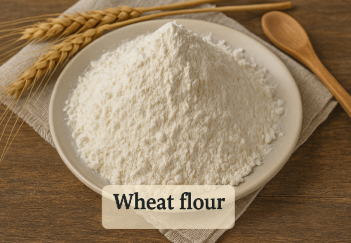
Wheat flour is the product obtained from the milling of wheat (Triticum aestivum for soft wheat, Triticum durum for durum wheat). It appears as a fine or slightly coarse powder, white to straw-yellow in colour, depending on wheat variety, degree of refinement and ash content. It is one of the key ingredients of Mediterranean diets and is used for bread, pasta, bakery products, desserts, sauces and coatings.
Indicative nutritional values per 100 g (soft wheat flour, type 00)
Energy: 340–360 kcal
Water: ≤ 14%
Carbohydrates: 70–75 g
of which sugars: 0.5–1 g
Protein: 9–12 g
Total fat: 1–2 g
SFA (saturated fatty acids; excessive intake in the overall diet is linked to cardiovascular risk): ≈ 0.2 g
MUFA (monounsaturated fatty acids; generally favourable for lipid profile): ≈ 0.1 g
PUFA (polyunsaturated fatty acids; important for membranes and anti-inflammatory functions): ≈ 0.7 g
Dietary fibre: 2–3 g (higher in wholemeal flours: 9–12 g)
Minerals (ash): typically 0.45–1.7% depending on flour type
B-group vitamins (B1, B3, B6), more concentrated in wholemeal flour
Key constituents
Starch (main component).
Gluten proteins (gliadin and glutenin in soft wheat).
Other soluble proteins and albumins.
Lipids (mainly polyunsaturated, in small amounts).
Dietary fibre (cellulose, hemicelluloses, arabinoxylans), especially in less-refined flours.
Minerals: iron, zinc, selenium, phosphorus, magnesium.
B vitamins: thiamine, niacin, pyridoxine.
Natural phenolic antioxidants (e.g. ferulic acid), more abundant in wholemeal flour.
Production process
Cleaning of wheat
Removal of impurities (straw, stones, dust).
Possible washing and pre-conditioning.
Conditioning / tempering
Controlled addition of water to make the grain more elastic and improve separation of bran and endosperm.
Milling
Gradual size reduction through roller mills.
Progressive separation of:
Endosperm → flour
Bran → fibre fraction
Germ → lipid-rich fraction
Sifting
Classification into different flour types (e.g. 00, 0, 1, 2, wholemeal) according to ash and particle size.
Optional improvement or enrichment (industrial flours)
Addition of enzymes, ascorbic acid, malted flour or other bread improvers where permitted.
Packaging
In paper bags or other food-grade materials.
Physical properties
Colour: bright white (00) → cream (0/1) → brownish (wholemeal).
Particle size: fine (00), medium (0/1), coarser (type 2, wholemeal).
Maximum legal moisture: around 14–14.5% (depending on local legislation).
Bulk density varies with type and fineness.
Highly hygroscopic: easily absorbs moisture and odours.
Sensory and technological properties
Gluten-forming capacity in soft wheat flours is crucial for dough elasticity and gas retention.
Flour strength (W value):
< 170 → weak flours for biscuits, shortcrust pastry
180–260 → medium-strength flours for standard bread and pizza
300 → strong flours for long-leavened products (e.g. panettone, brioche-type doughs)
Water absorption: higher in protein-rich and wholemeal flours.
Baking behaviour:
gives structure and volume to bread, focaccia and leavened products;
starch contributes to thickening of sauces, creams and roux;
wholemeal flour yields more rustic, dense and aromatic products.
Food applications
Bread and bakery products: white and wholemeal breads, focaccia, pizza, flatbreads.
Pastry and confectionery: biscuits, cakes, shortcrust pastry, sponge cakes.
Fresh pasta and gnocchi.
Roux, béchamel and other thickened sauces.
Coatings and batters for frying.
Extruded products (breadsticks, crackers, snacks), often in combination with other flours.
Nutrition & health
Major energy source due to its high carbohydrate content.
Proteins contain gluten, essential for dough structure but unsuitable for people with coeliac disease or medically diagnosed gluten-related disorders.
Less-refined and wholemeal flours provide more fibre, minerals and antioxidants than highly refined flours.
Wholemeal flours contribute to intestinal health, better satiety and improved glycaemic control within a balanced diet.
Refined flours generally have a medium–high glycaemic index.
Portion note
For baked products, a typical flour contribution is around:
40–60 g flour per serving of bread or pizza.
10–20 g flour per serving of sauce (e.g. béchamel).
Allergens and intolerances
Contains gluten: all wheat flours are unsuitable for coeliac individuals and for people diagnosed with wheat allergy or gluten-related disorders.
May contain traces of soy, mustard or other cereals depending on the production line and cross-contact; this must be indicated on the label when relevant.
Storage and shelf-life
Store in a cool, dry place, away from light and strong odours.
Refined flours: about 6–12 months shelf-life.
Wholemeal flours: about 3–6 months, as wheat germ lipids are more prone to oxidation and rancidity.
Freezing flour can extend shelf-life and help prevent insect infestation.
Safety and regulatory aspects
Routine controls on:
pesticide residues (MRL, Maximum Residue Levels);
mycotoxins (e.g. DON, aflatoxins);
heavy metals;
insect and rodent contamination.
Mills must operate under GMP (Good Manufacturing Practices) and HACCP systems.
Legal classification according to ash content, protein level and other technological criteria (varies by country).
Labelling
Name: e.g. “soft wheat flour” (types 00, 0, 1, 2, wholemeal) or “durum wheat semolina/flour” as applicable.
Mandatory indication of wheat and presence of gluten (where required by local law, often via allergen declaration).
Nutrition declaration, country of origin, lot code.
Storage instructions (e.g. “store in a cool, dry place”).
Troubleshooting
Rancid or stale odour → lipid oxidation, especially in wholemeal flours or old stocks.
Insect presence (moths, weevils) → improper storage; requires disposal and improvement of storage conditions.
Poor dough rise → flour too weak, too old or with low protein/gluten quality.
Dry, dense baked products → excessive protein for the formulation, insufficient hydration or over-baking.
Sustainability and supply chain
Environmental impact depends on farming practices: lower impact is associated with integrated or organic wheat production, reduced inputs and good crop rotation.
Milling by-products (bran, germ) can be valorised in animal feed, functional foods or nutraceuticals.
Packaging is usually recyclable paper, sometimes with an internal barrier layer.
Short and local supply chains can reduce transport-related emissions and improve product freshness.
Main INCI functions (cosmetics)
Wheat-derived ingredients used in cosmetics include:
Triticum Vulgare (Wheat) Flour: absorbent, thickening and texturising agent.
Hydrolyzed Wheat Protein / Wheat Amino Acids: skin and hair-conditioning agents, film-forming and moisturising.
Triticum Vulgare (Wheat) Starch: mattifying, bulking and texturising agent in powders and emulsions.
Conclusion
Wheat flour is a cornerstone ingredient in food processing and everyday cooking. Thanks to its unique rheological and structural properties, it is essential for leavened products, pasta, baked goods and many other preparations. Choosing among flour types (00, 0, 1, 2 or wholemeal) allows modulation of sensory, nutritional and technological characteristics. Proper storage and strict quality control along the supply chain are crucial to ensure safety, performance and nutritional value.
Mini-glossary
SFA – Saturated fatty acids; dietary fats that should be moderated due to their association with increased cardiovascular risk.
MUFA – Monounsaturated fatty acids; generally beneficial for blood lipid profile.
PUFA – Polyunsaturated fatty acids; important for cell membranes and anti-inflammatory functions.
MRL – Maximum Residue Level; legal limit for pesticide residues and certain contaminants in foodstuffs.
GMP – Good Manufacturing Practices; operational standards to ensure hygienic, correct production.
HACCP – Hazard Analysis and Critical Control Points; preventive system for identifying and controlling food-safety hazards.

