



Lovage (Levisticum officinale)
Description
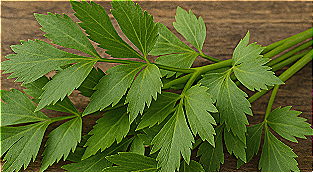
Lovage (Levisticum officinale, family Apiaceae) is a perennial herb that looks similar to large celery, with a robust hollow stem that can exceed 1.5–2 m in height. The leaves are large, deeply divided, dark green and highly aromatic; small yellow-green flowers are grouped in umbels. All parts of the plant (leaves, petioles, seeds and roots) are edible and have a very intense flavour reminiscent of celery and parsley, with warm, spicy notes. It is used as a culinary herb especially in soups, broths, potato dishes, meat stews and traditional preparations in Central and Northern Europe.
Indicative nutritional values per 100 g (fresh leaves)
Energy: ≈ 45–60 kcal
Water: ≈ 80–85%
Carbohydrates: 6–8 g
of which sugars: 1–2 g
Protein: 3–4 g
Total fat: 0.5–1 g
SFA (saturated fatty acids; should be limited in the overall diet): traces
MUFA (monounsaturated fatty acids; generally favourable to lipid profile): traces
PUFA (polyunsaturated fatty acids; involved in cellular and anti-inflammatory functions): traces
Dietary fibre: 3–5 g
Vitamins: vitamin C, provitamin A (β-carotene), vitamin K, some B-group vitamins
Minerals: potassium, calcium, iron, magnesium, manganese
Values depend on variety, soil, climate and harvest stage.
Key constituents
Essential oil (in leaves, seeds and roots): phthalides (e.g. ligustilide), coumarins, α-terpineol, eugenol and other aromatic components.
Polyphenols: flavonoids (e.g. quercetin, rutin derivatives), phenolic acids.
Carotenoids: β-carotene and related pigments with provitamin A activity.
Water-soluble vitamins: vitamin C, some B vitamins.
Minerals: especially potassium, with relevant amounts of calcium and iron.
Bitter and aromatic compounds responsible for the characteristic “intense celery-like” flavour.
Production process
Cultivation:
propagation by seed or by splitting rhizomes in spring;
grown in fertile, moist, well-drained soils, in full sun or partial shade.
Crop management: regular irrigation, weed control and preferably organic fertilisation; the plant is perennial and re-sprouts each year.
Harvest:
leaves and petioles cut several times during the growing season;
seeds collected at the end of summer when umbels are mature;
roots harvested in autumn from 2–3-year-old plants.
Post-harvest handling: careful sorting, washing and gentle removal of surface moisture.
Processing:
use as fresh herb;
drying of leaves and seeds;
freezing;
extraction of essential oils and oleoresins;
production of seasoning blends, broths and bouillon cubes.
Packaging: bunches, punnets, dried herb sachets or spice containers.
Physical properties
Morphology: erect clump, with glossy pinnate leaves of medium thickness.
Colour: deep green aerial parts; roots pale yellowish-white.
Odour: strong, characteristic, reminiscent of concentrated celery and stock.
Low density due to high water content in fresh leaves and petioles.
Leaves wilt and darken easily if dehydrated, bruised or improperly stored.
Sensory and technological properties
Aroma: powerful, herbaceous and spicy, with “broth-like” notes.
Taste: intense, savoury-aromatic, slightly bitter when used in excess.
Behaviour in cooking:
leaves withstand simmering in soups and broths reasonably well;
essential-oil aroma is partly volatile, so late addition is preferred for delicate dishes;
performs well in freezing and drying for herb blends;
seeds are aromatic and suitable for flavouring bread, cheeses, cured meats and liqueurs.
Food applications
Fresh leaves in soups, stews, broths and legume dishes.
Flavouring for potato dishes, vegetable sautés, sauces and savoury fillings.
Seeds used as a spice in bread, sausages, cheeses and some spirits.
Roots used in traditional recipes as a flavourful vegetable in soups and stews.
Ingredient in bouillon cubes, soup powders and savoury seasoning mixes.
Nutrition & health
Provides antioxidant compounds (polyphenols, carotenoids, vitamin C) that contribute to protection against oxidative stress within a balanced diet.
The potassium content can support electrolyte balance when total dietary intake is appropriate.
Traditional herbal medicine attributes digestive, carminative and mild diuretic properties to lovage; such uses should be considered with caution and do not replace medical advice.
Low energy density with an interesting profile of micronutrients and phytochemicals.
Portion note
In cooking, a typical portion of fresh lovage leaves/petioles is about 2–5 g per serving, finely chopped (usually less than parsley, given its much stronger flavour).
Allergens and intolerances
Lovage is not listed among the major allergens in EU legislation.
As an Apiaceae species (like celery and parsley), it may induce cross-reactions in individuals allergic to celery or other umbellifers.
The presence of coumarins and phthalides suggests caution with concentrated preparations in individuals under specific therapies or with photosensitivity; medical or professional herbal advice is recommended in such cases.
Storage and shelf-life
Fresh product:
in the refrigerator at 4–8 °C: about 2–4 days for loose leaves when protected against dehydration;
whole stems, kept in perforated packaging or in a small amount of water, may last a few days longer.
Dried:
dried leaves and seeds remain usable for several months if stored in well-sealed containers away from light, heat and humidity.
Frozen:
chopped leaves or petioles, possibly mixed with oil or butter, maintain good quality for 6–12 months.
Safety and regulatory aspects
As a culinary herb, lovage must comply with EU rules on:
pesticide-residue limits (MRL),
contaminants (heavy metals, mycotoxins),
hygiene in primary production and post-harvest operations.
Facilities handling washing, cutting and packing must operate under GMP and HACCP systems.
Extracts and essential oils used in food supplements or herbal products are subject to specific regulations, including limits for potentially critical aromatic compounds such as certain coumarins.
Labelling
For lovage marketed as food/herb:
Name: “lovage” or “Levisticum officinale (culinary herb)”.
Country of origin.
Lot code and packing date; best-before date, especially for fresh-cut or dried products.
Storage instructions (e.g. “keep refrigerated” or “store in a cool, dry place”).
For dried or processed products: full ingredient list, nutritional declaration where required, net quantity and any usage warnings.
Troubleshooting
Wilted, floppy leaves → dehydration or storage at too high a temperature; improve packaging and cold-chain management.
Leaf browning → mechanical damage, temperature shock or excess moisture leading to oxidation and decay.
Loss of aroma → overly long storage time, exposure to light or heat, or suboptimal drying conditions.
Excessive bitterness → use of overly large amounts in recipes or harvesting of very old leaves.
Sustainability and supply chain
Lovage is robust and can be grown with low-impact techniques, including organic farming, due to its perennial nature and relatively modest input requirements.
Local and short supply chains reduce transport distances and improve freshness.
Plant residues are fully compostable and suitable for organic-waste streams.
Increasing use of recyclable or biodegradable packaging (cardboard, recyclable plastics, bioplastics) can further reduce environmental impact.
Main INCI functions (cosmetics)
Extracts and essential oils from Levisticum officinale may be used in cosmetic products with the following typical functions:
Antioxidant (due to polyphenols and aromatic compounds).
Soothing and mildly relaxing sensory effect in aromatherapy-inspired cosmetics.
Deodorant/purifying action linked to its intense aromatic profile.
Skin-conditioning agent in creams and lotions formulated with herbal extracts.
Use in cosmetics must respect safety limits for potentially sensitising fragrance components.
Conclusion
Lovage is a powerful and versatile culinary herb with a pronounced sensory profile and a long tradition of use in European cuisine and herbal practice. Despite its modest energy contribution, it offers a rich array of micronutrients and bioactive compounds, particularly antioxidants. Because of its intensity, it should be dosed carefully to avoid overpowering dishes, but when properly balanced it can significantly enrich recipes, industrial seasonings and, to some extent, natural-inspired cosmetic formulations.
Mini-glossary
SFA – Saturated fatty acids; dietary fats that should be moderated due to their association with increased cardiovascular risk.
MUFA – Monounsaturated fatty acids; generally considered beneficial for blood-lipid profile.
PUFA – Polyunsaturated fatty acids; important for cell membranes and anti-inflammatory processes.
MRL – Maximum Residue Level; legal limit for pesticide residues in foods.
GMP – Good Manufacturing Practices; set of rules ensuring correct and hygienic production.
HACCP – Hazard Analysis and Critical Control Points; preventive system for identifying and controlling food-safety hazards.

