Cavolo cinese
(Da Brassica rapa subsp. pekinensis e Brassica rapa subsp. chinensis, famiglia Brassicaceae)
(Nota: con “cavolo cinese” si indicano comunemente sia il cavolo Napa – pekinensis – sia il bok choy / pak choi – chinensis. La scheda considera entrambi, con specifiche dove necessario.)
Descrizione
Il cavolo cinese comprende diverse varietà di Brassica rapa tipiche dell’Asia orientale.
Le due tipologie più diffuse sono:
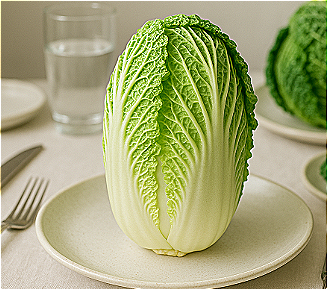
Cavolo Napa (Brassica rapa subsp. pekinensis): forma allungata, foglie morbide verde chiaro, costa bianca croccante.
Pak Choi / Bok Choy (Brassica rapa subsp. chinensis): cespo aperto, foglie verde scuro con coste bianche e spesse.
Il sapore è delicato, leggermente dolce e poco pungente, meno solforato rispetto ai cavoli europei.
Viene consumato crudo, saltato, stufato, in zuppe e fermentato (kimchi).
Valori nutrizionali indicativi per 100 g
(cavolo cinese crudo, valori medi indicativi)
Energia: 12–20 kcal
Carboidrati: 2–4 g
Fibre: 1–2 g
Proteine: 1–1,5 g
Lipidi: 0,1–0,3 g
Vitamine: vitamina C, vitamina K, vitamina A (soprattutto nel pak choi), folati
Minerali: calcio, potassio, magnesio; piccole quantità di ferro
Il contenuto di vitamina A è particolarmente elevato nel pak choi.
Principali sostanze contenute
Glucosinolati
Vitamine: C, K, A, folati
Carotenoidi: luteina, beta-carotene (soprattutto nel pak choi)
Fibre alimentari
Flavonoidi e composti fenolici
Minerali: Ca, K, Mg, Fe in tracce
Processo di produzione
Coltivazione
specie tipica di climi freschi; coltivazione diffusa in Asia, ma comune anche in Europa.
crescita rapida (45–70 giorni).
Raccolta
Cernita e pulizia
Taglio / lavorazioni
intero, a metà, a listarelle o cubetti.
prodotti IV gamma: lavaggio, asciugatura, ATM.
Trasformazioni industriali:
surgelazione (sbollentatura → raffreddamento → surgelazione rapida).
fermentazione (per kimchi).
pastorizzazione in zuppe e piatti pronti.
Confezionamento
Produzione sempre secondo GMP/HACCP.
Proprietà fisiche
Napa: foglie morbide, costa bianca croccante, testa allungata.
Pak Choi: foglie verdi scure e lucide, coste bianche e spesse.
Umidità: 93–95%.
Texture: croccante da crudo, tenera dopo cottura breve.
Proprietà sensoriali e tecnologiche
Sapore: dolce, erbaceo, molto delicato.
Aroma: tenue, leggermente vegetale.
Tecnologia:
ottima resistenza alla cottura breve (wok, vapore);
ideale per zuppe e minestroni asiatici;
perfetto per fermentazione (kimchi);
imbrunisce poco rispetto ai cavoli europei;
bassa produzione di odori solforati durante la cottura.
Impieghi alimentari
Cucina asiatica: wok, ramen, zuppe, bao ripieni, piatti saltati.
Cucina occidentale: insalate miste, contorni saltati, zuppe leggere.
Trasformati: kimchi, mix di verdure surgelate, preparazioni IV gamma.
Industria alimentare: ripieni, basi vegetali, zuppe pronte, pasti salutistici.
Nutrizione e salute
Molto basso contenuto calorico.
Ricco di vitamina C, vitamina A (pak choi), vitamina K e folati.
Contiene glucosinolati, caratteristici delle Brassicaceae.
Fonte di minerali (Ca, K, Mg).
Può sostenere un’alimentazione leggera e ricca di micronutrienti.
Possibile fastidio in soggetti sensibili ai FODMAP o ai composti solforati, ma generalmente meno rispetto ad altri cavoli.
Nota porzione
Allergeni e intolleranze
Non è un allergene maggiore.
Possibili reazioni in soggetti allergici ad altre Brassicaceae.
Possibile fastidio in caso di sensibilità ai FODMAP.
Conservazione e shelf-life
Intero fresco: 7–14 giorni a 0–4 °C (alta umidità).
Tagliato / IV gamma: 3–6 giorni in ATM.
Surgelato: 12–24 mesi a –18 °C.
Kimchi:
Sicurezza e regolatorio
Etichettatura
Denominazioni comuni:
“cavolo cinese”,
“cavolo Napa”,
“pak choi” / “bok choy”.
Ingredienti aggiuntivi (sale, spezie, acidificanti) devono essere dichiarati.
Nei mix di verdure: elencato in ordine decrescente di peso.
Troubleshooting
Appassimento e macchie acquose: temperatura troppo alta → conservare a 0–4 °C con umidità elevata.
Cattivo odore: deterioramento microbiologico → assicurare corretta igiene e catena del freddo.
Imbrunimento delle coste: ossidazione → ridurre l’esposizione all’aria, usare ATM.
Perdita di croccantezza: eccesso di umidità nelle confezioni → migliorare drenaggio e ventilazione.
Sostenibilità e filiera
Coltura a crescita rapida, richiede meno input rispetto ad altri cavoli.
Impatti principali: irrigazione, uso di fitofarmaci.
Buona resa per ettaro → efficienza agricola elevata.
Scarti di foglie valorizzabili come compost, mangimi, biomassa.
Gestione dei reflui di lavorazione monitorata tramite indicatori BOD/COD.
Principali funzioni INCI (cosmesi)
(come “Brassica Rapa Leaf Extract” o “Brassica Rapa Root Extract”)
Conclusione
Il cavolo cinese è un ingrediente versatile, leggero e nutriente, apprezzato sia nella cucina asiatica sia in quella occidentale.
Grazie alla sua morbidezza, alta resa culinaria e gusto delicato, è adatto a un’ampia gamma di preparazioni.
Inserito in filiere controllate secondo GMP/HACCP, rappresenta un ingrediente sicuro, stabile e di alta qualità per industria alimentare, ristorazione e consumo domestico.
Mini-glossario
SFA – Saturated Fatty Acids (acidi grassi saturi): da limitare; nel cavolo cinese presenti in quantità trascurabili.
MUFA – acidi grassi monoinsaturi: tracce.
PUFA – acidi grassi polinsaturi: tracce.
TFA – acidi grassi trans: assenti in natura.
GMP/HACCP – sistemi per qualità e sicurezza alimentare.
BOD/COD – indicatori del carico organico e chimico delle acque reflue.
FODMAP – carboidrati fermentabili che possono causare disturbi in soggetti sensibili.
Bibliografia__________________________________________________________________________
Shim, J. Y., Kim, D. G., Park, J. T., Kandpal, L. M., Hong, S. J., Cho, B. K., & Lee, W. H. (2016). Physicochemical quality changes in Chinese cabbage with storage period and temperature: A review. Journal of Biosystems Engineering, 41(4), 373-388.
Abstract. Background: Recent inquiries into high-quality foods have discussed the importance of the functional aspects of foods, in addition to traditional quality indicators such as color, firmness, weight, trimming loss, respiration rate, texture, and soluble solid content. Recently, functional Chinese cabbage, which makes up a large portion of the vegetables consumed in Korea, has been identified as an anticancer treatment. However, the investigation of practical issues, such as the effects of storage conditions on quality indicators (including functional compounds), is still limited. Purpose: We reviewed various studies on variations in the quality indicators and functional compounds of Chinese cabbage in response to different storage environments, focusing on storage temperature and storage period. In particular, we emphasized the effect of storage temperature and storage period on glucosinolate (GSL) levels, in order to provide guidelines for optimizing storage environments to maximize GSLs. Additionally, we used response surface methodology to propose experimental designs for future studies exploring the optimal storage conditions for enhancing GSL contents. Review: Large variations in quality indicators were observed depending on the cultivar, the type of storage, the storage conditions, and the harvest time. In particular, GSL content varied with storage conditions, indicating that either low temperatures or adequate air composition by controlled atmospheric storage may preserve GSL levels, as well as prolonging shelf life. Even though genetic and biochemical approaches are preferred for developing functional Chinese cabbage, it is important to establish a practical method for preserving quality for marketability; a prospective study into optimal storage conditions for preserving functional compounds (which can be applied in farms), is required. This may be achievable with the comprehensive meta-analysis of currently published data introduced in this review, or by conducting newly designed experiments investigating the relationship between storage conditions and the levels of functional compounds.
Pokluda, R. (2008). Nutritional quality of Chinese cabbage from integrated culture. Horticultural Science, 35(4), 145-150.
Abstract. The evaluation of nutritional quality of Chinese cabbage and the effects of cultivar, weed incidence, plant density and growing season were observed in integrated cultivation system. Mean contents of analysed compounds were as follows: 6% of dry matter, 10% of crude fibre, (in mg/kg of f.m.): 2,199 mg K, 289 mg Ca, 146 mg Mg, 111 mg Na, and 316 mg of vitamin C. Mean content of nitrates reached the value of 647 mg/kg. A significant effect of cultivar on the content of all observed substances in cabbage heads excluding magnesium was thus confirmed; however, a decrease of nitrates was found in the treatment with higher plant density. Weed cultivation caused slightly (insignificantly) higher nitrates content in cabbage heads by 100 mg/kg. Growing season showed a significant effect on content of some evaluated compounds. Integrated cultivation of Chinese cabbage could be an adequate approach to ensure nutritionally valuable products with low nitrates content.
Seong, G. U., Hwang, I. W., & Chung, S. K. (2016). Antioxidant capacities and polyphenolics of Chinese cabbage (Brassica rapa L. ssp. Pekinensis) leaves. Food Chemistry, 199, 612-618.
Abstract. Chinese cabbage (Brassica rapa L. ssp. Pekinensis) is a green leafy vegetable used mainly in kimchi, salted and fermented dishes. Consumer preference for the leaf portion differs according to the type of dishes. In this study, Chinese cabbage was divided into three parts, and their antioxidant activities were investigated through in vitro assays. The total phenolic contents (TPC), total flavonoid contents (TFC), and vitamin C contents were also determined as indicators of antioxidant contents. The phenolic acids and flavonoids were separated and identified using high performance liquid chromatography (HPLC) and liquid chromatography/mass spectrometry (LC/MS). The outer leaf had the strongest antioxidant activity with the maximum antioxidant contents, followed by the mid- and inner leaves. Principal component analysis (PCA) revealed that outer leaf is positively related to caffeic acid, p-coumaric acid, ferulic acid, and myricetin contents, whereas the mid- and inner leaves are negatively related to sinapic acid contents.
Gupta, R. K., Khurana, D. S., & Singh, H. (2017). Chinese cabbage. Vegetable crop science (pp. 299-310). CRC Press.
Abstract. Chinese cabbage is closely related to turnip and swede than cabbage. It is grown for its edible leaves on large scale in Southeast Asia. Chinese cabbage is rich source of vitamins containing vitamin C content higher than lettuce. Chinese cabbage is a leafy green or purple biennial plant, grown as an annual vegetable crop for its dense leaved heads. Chinese cabbage containing high calcium and potassium and low sodium content regulates blood pressure and blood sugar, supports cardiovascular system and healthy brain function and relieves hypertension. Chinese cabbage is a shallow-rooted crop. Most of the roots remain in top 30 cm soil layer, while some penetrate to the depth of 60-70 cm. High quality Saag can be prepared from leafy type Chinese cabbage due to its tender and succulent leaves. The yield of Chinese cabbage is influenced by several factors such as variety, soil type, soil fertility, growing conditions and the cultural practices followed during the course of cultivation.
Shi, L., Zheng, W., Lei, T., Liu, X., & Hui, M. (2021). The effect of different soil amendments on soil properties and on the morphological and physiological characteristics of Chinese cabbage. Journal of Soil Science and Plant Nutrition, 21(2), 1500-1510.
Abstract. Excessive fertilization is one of the major challenges in Chinese cabbage production. Although various soil ameliorants have been widely applied in agricultural production, their underlying mechanisms of action remain unknown. Five fertilization treatments were tested under field conditions, including chemical fertilization (CK) and reduced chemical fertilization applied in combination with biochar (T1), microbial agents (T2), organic fertilizer (T3) and silicon-calcium-magnesium-potassium (SiCaMgK) fertilizer (T4). The growth, yield, root properties and physiological quality of two varieties of Chinese cabbage and their rhizosphere soil properties were measured to determine the effect of each amendment. Although biochar and other amendments had no significant impact on cabbage yield, the physiological analyses revealed that compared with CK, biochar application enhanced the vitamin c (VC) contents and soil urease and invertase activities by 25.34%–49.58%, 3.75%–10.08%, 42.71%–103.19% and respectively, in the two varieties of Chinese cabbage. Compared with CK, organic fertilizer application significantly increased peroxidase (POD) activity and soluble sugar and soluble protein accumulation and decreased the malondialdehyde (MDA) content in the two varieties of Chinese cabbage. The yield of Chinese cabbage was affected mainly by soil urease activity, superoxide dismutase (SOD) activity and MDA content. The VC content may have been regulated by the soil invertase activity and the root morphological parameters of the plants. We conclude that biochar and organic fertilizer can improve root development and soil urease, invertase and SOD activities and decrease MDA content, which are factors related to cabbage yield and quality.
Lee, Min-Ki, et al. Variation of glucosinolates in 62 varieties of Chinese cabbage (Brassica rapa L. ssp. pekinensis) and their antioxidant activity. LWT-Food Science and Technology 58.1 (2014): 93-101.
Abstract. Glucosinolate (GSL) and antioxidant activity in 62 varieties of Chinese cabbage (Brassica rapa L. ssp. pekinensis) were determined by HPLC and DPPH, HRSA, and FRAP assays. Five aliphatic GSLs: progoitrin, sinigrin, glucoalyssin, gluconapin, and glucobrassicanapin; four indolyl GSLs: 4-hydroxyglucobrassicin, glucobrassicin, 4-methoxyglucobrassicin, and neoglucobrassicin; one aromatic GSL: gluconasturtiin were identified. Glucobrassicanapin and gluconapin documented the most abundant (average 4.52 and 3.72 μmol/g DW, respectively). The contents of total GSLs varied extensively among 62 varieties (range from 2.83 to 48.53 μmol/g DW). Comprehensive differences in total and individual GSL contents have also been observed among different varieties. Indolyl and aromatic GSL together accounted 26% of the total GSLs; but there are few differences among varieties. FC7 and FI17 could be good candidates for future breeding programs since they had a high quantity of glucobrassicin (2.10 and 1.66 μmol/g DW, respectively). Most of the Chinese cabbage varieties showed significant antioxidant activities when compare with positive control. However, three antioxidant assays were not significantly correlated with total GSLs. The presence of significant quantities of glucobrassicin in some varieties should be studied more extensively, since GSL is the precursor of indole-3-carbinol, a potent anticancer isothiocyanate.




