Spice Extractive, Estratto di spezie
(miscela concentrata di composti aromatici naturali derivati da spezie intere o macinate)
Descrizione
• Ingrediente alimentare ottenuto dall’estrazione selettiva di componenti aromatici e funzionali da spezie come pepe, paprika, curcuma, chiodi di garofano, noce moscata, coriandolo, cannella, zenzero, e altre.
• Gli estratti possono essere oleoresine (in solvente organico o CO₂ supercritica), estratti acquosi o alcolici, oppure polveri spray-dry derivate da emulsioni concentrate.
• Rispetto alla spezia intera, offrono aroma più stabile, dosaggio preciso, uniformità sensoriale e migliore distribuzione nel prodotto finito.
Valori nutrizionali indicativi (per 100 g di estratto concentrato)
• Energia: 180–350 kcal
• Carboidrati totali: 5–25 g (prevalentemente polisaccaridi residui)
• Grassi: 10–25 g (in oleoresine lipidiche)
• Proteine: 3–10 g
• Ceneri: 3–8 g
• Umidità: <10%
• Sodio: 20–150 mg
• Elevata concentrazione di composti bioattivi come capsaicinoidi, curcuminoidi, piperina, gingeroli, eugenolo, a seconda della spezia d’origine.
Principali sostanze contenute
• Oli essenziali: frazioni volatili responsabili dell’aroma (monoterpeni, sesquiterpeni, aldeidi, fenoli, esteri).
• Oleoresine: combinazione di oli essenziali e pigmenti lipofili (es. capsantina, curcumina).
• Composti fenolici: eugenolo, cuminaldeide, cinnamaldeide, vanillina, piperina, zingerone.
• Pigmenti naturali: carotenoidi, curcuminoidi, antociani (secondo la matrice).
• Antiossidanti naturali: tocoferoli, flavonoidi, acidi fenolici.
Processo di produzione
• Selezione e pulizia delle spezie.
• Macinazione controllata per aumentare la superficie estrattiva.
• Estrazione con solventi alimentari (es. etanolo, acetato di etile) o CO₂ supercritica per ottenere oleoresine concentrate.
• Separazione/filtrazione per eliminare residui solidi.
• Concentrazione sotto vuoto o spray-drying per estratti in polvere.
• Standardizzazione del contenuto di olio essenziale o principi attivi per garantire costanza aromatica.
Proprietà fisiche
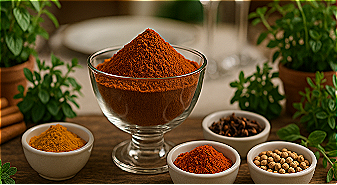
• Aspetto: liquido viscoso o polvere fine, colore variabile (giallo, rosso, marrone, secondo la spezia).
• Odore e sapore: tipici della spezia d’origine, più intensi e persistenti.
• Solubilità: oleoresine liposolubili; estratti alcolici o acquosi idrosolubili.
• pH: 4,0–6,5 (nei sistemi acquosi).
Proprietà sensoriali e tecnologiche
• Conferiscono aroma naturale intenso anche a basse dosi.
• Permettono di controllare la nota pungente, dolce o balsamica del prodotto.
• Migliorano la stabilità ossidativa e il colore naturale.
• Favoriscono la distribuzione uniforme dell’aroma in emulsioni, salse e impasti.
Impieghi alimentari
• Carni e salumi: per aromatizzare salsicce, wurstel, insaccati e marinature.
• Prodotti da forno e snack: per condimenti aromatici o polveri gusto-speziato.
• Piatti pronti, zuppe, salse e sughi: per uniformità aromatica e colorazione naturale.
• Bevande e infusi funzionali: estratti di cannella, chiodi di garofano, zenzero, pepe.
• Preparati vegetali e plant-based: per simulare note carnee o affumicate.
Nutrizione e salute
Gli estratti di spezie sono una fonte concentrata di composti bioattivi con potenziale effetto antiossidante, antinfiammatorio e digestivo.
• Curcumina, capsaicina, piperina, gingeroli ed eugenolo sono tra le molecole più studiate per la loro capacità di neutralizzare radicali liberi e modulare enzimi infiammatori.
• Alcuni estratti (es. zenzero, cannella) favoriscono la digestione e la motilità gastrica.
• L’impiego alimentare, a dosi standard, è sicuro; a dosi elevate o isolate può aumentare il rischio di irritazioni gastriche o interazioni farmacologiche (es. capsaicina, curcumina).
• I benefici dipendono dal tipo di spezia, dal metodo di estrazione e dalla biodisponibilità dei principi attivi.
Nota porzione: tipico dosaggio 0,05–0,5% del peso della formulazione finale (da 0,5 a 5 g per kg di prodotto).
Qualità e specifiche (temi tipici)
• Concentrazione di principi attivi: capsaicina, curcumina, piperina, eugenolo, gingerolo (mg/g).
• Indice colore (ASTA per paprika, curcuma).
• Umidità <10%; ceneri totali <8%.
• Residui solventi: conformi a limiti UE.
• Carica microbica: <10³ UFC/g; patogeni assenti/25 g.
• Ossidazione: perossidi <5 meq/kg.
Conservazione e shelf-life
• Conservare in contenitori ermetici, al riparo da luce, calore e umidità.
• Temperatura consigliata: 15–25 °C.
• Shelf-life: 12–24 mesi in imballo integro.
• Le polveri spray-dry sono più stabili rispetto alle oleoresine liquide.
Sicurezza e regolatorio
• Gli estratti di spezie sono ingredienti naturali conformi al Reg. (CE) n. 1334/2008 sugli aromi e ai limiti di residui di solventi (Reg. (CE) n. 231/2012).
• Ammessi come ingredienti aromatizzanti o coloranti naturali secondo la composizione.
• Prodotto sotto GMP/HACCP con tracciabilità della materia prima e assenza di contaminanti (micotossine, metalli pesanti).
Alcune spezie possono causare allergie e la dizione "Estratto di Spezie" è talmente generica che non pone il consumatore al riparo da eventuali controindicazioni salutari.
Etichettatura
• Denominazione: “estratto di spezie” o “oleoresina di [nome spezia]”.
• Indicare eventuali solventi o supporti (olio vegetale, maltodestrina).
• Specificare la funzione: “per conferire aroma” o “per conferire colore naturale”.
Troubleshooting
• Perdita di aroma → ossidazione → aggiungere antiossidanti naturali (es. tocoferoli, acido ascorbico).
• Sedimentazione in emulsioni → scarsa solubilità → usare emulsionanti o estratti microincapsulati.
• Viraggio di colore → pH o calore eccessivo → stabilizzare con acido citrico o controllo T < 70 °C.
• Sapore troppo pungente o amaro → sovradosaggio → ridurre concentrazione o bilanciare con componenti dolci/acide.
Sostenibilità e filiera
• Gli estratti permettono di ridurre i consumi di spezie intere e i costi di trasporto, mantenendo l’aroma.
• CO₂ supercritica è il metodo più sostenibile, privo di solventi e a basso impatto.
• Possibilità di utilizzo di spezie da agricoltura biologica e tracciabilità completa della filiera.
• In impianto: recupero solventi, abbattimento reflui secondo target BOD/COD, e utilizzo di pack riciclabili.
Principali funzioni INCI (cosmesi)
• Spice Extracts (var.) — funzioni antiossidante, fragrance, masking, skin-conditioning.
• Esempi: Curcuma Longa (Turmeric) Root Extract, Zingiber Officinale (Ginger) Root Extract, Cinnamomum Zeylanicum Bark Extract, Capsicum Frutescens Fruit Extract.
• Utilizzati in creme, scrub e prodotti per la cura della pelle e dei capelli per le loro proprietà tonificanti e riscaldanti.
Conclusione
L’estratto di spezie è un ingrediente naturale, concentrato e versatile, che unisce aroma, colore e funzionalità antiossidante. Garantisce standardizzazione sensoriale, stabilità e sicurezza d’uso rispetto alle spezie grezze, favorendo prodotti alimentari più costanti, profumati e puliti in etichetta.
Mini-glossario
• Oleoresina — estratto concentrato che combina olio essenziale e resine non volatili della spezia.
• CO₂ supercritica — tecnologia estrattiva “green” che utilizza anidride carbonica ad alta pressione senza residui solventi.
• ASTA — American Spice Trade Association; indice di colore per paprika, curcuma, ecc.
• Curcuminoidi — pigmenti gialli bioattivi della curcuma, con proprietà antiossidanti.
• Capsaicinoidi — composti piccanti del peperoncino.
• BOD/COD — biochemical/chemical oxygen demand, indicatori dell’impatto ambientale dei reflui.
• GMP/HACCP — sistemi di buona fabbricazione e analisi dei rischi igienici.
Bibliografia__________________________________________________________________________
Jiang TA. Health Benefits of Culinary Herbs and Spices. J AOAC Int. 2019 Mar 1;102(2):395-411. doi: 10.5740/jaoacint.18-0418.
Abstract. Spices and herbs have been in use for centuries both for culinary and medicinal purposes. Spices not only enhance the flavor, aroma, and color of food and beverages, but they can also protect from acute and chronic diseases. More Americans are considering the use of spices and herbs for medicinal and therapeutic/remedy use, especially for various chronic conditions. There is now ample evidence that spices and herbs possess antioxidant, anti-inflammatory, antitumorigenic, anticarcinogenic, and glucose- and cholesterol-lowering activities as well as properties that affect cognition and mood. Research over the past decade has reported on the diverse range of health properties that they possess via their bioactive constituents, including sulfur-containing compounds, tannins, alkaloids, phenolic diterpenes, and vitamins, especially flavonoids and polyphenols. Spices and herbs such as clove, rosemary, sage, oregano, and cinnamon are excellent sources of antioxidants with their high content of phenolic compounds. It is evident that frequent consumption of spicy foods was also linked to a lower risk of death from cancer and ischemic heart and respiratory system diseases. However, the actual role of spices and herbs in the maintenance of health, specifically with regards to protecting against the development of chronic, noncommunicable diseases, is currently unclear. This review highlights potential health benefits of commonly used spices and herbs such as chili pepper, cinnamon, ginger, black pepper, turmeric, fenugreek, rosemary, and garlic.
Moneret-Vautrin DA, Morisset M, Lemerdy P, Croizier A, Kanny G. Food allergy and IgE sensitization caused by spices: CICBAA data (based on 589 cases of food allergy). Allerg Immunol (Paris). 2002 Apr;34(4):135-40.
Abstract. Background: Spices originate in various botanical families: Apiaceae, Lamiaceae, Lauraceae, Leguminosae, Liliaceae, Myristicaceae, Myrtaceae, Piperaceae, Solanaceae, Zingiberaceae.... Methodology: Prick-tests to native spices have been carried out in patients suspected of food allergies to spices. The CICBAA data bank includes 589 cases of food allergies, a part of which has benefited from investigations for spices. Data about the rate of sensitization and food allergy are available. Results: Frequent sensitization to Apiaceae is observed: coriander, caraway, fennel, celery: 32% of prick-tests in children, 23% of prick-tests in adults. Sensitization to Liliaceae: garlic, onion, chive, is observed in 4.6% of prick-tests in children, 7.7% of prick-tests in adults. Rare cases of sensitization to paprika and saffron are recorded. Prick-tests to nutmeg, ginger and clove are currently negative. 10 food allergies related to the mugwort-celery-spices syndrome are reported: coriander: 1, caraway: 2, fennel: 3, garlic: 3, onion: 1. Food allergy to spices is unfrequent: 2% of the totality of food allergies. However, only adults are allergic to spices and allergy to spices accounts for 6.4% of food allergies in adults. Tiny amount of proteins are usually ingested. Patients at risk of spice allergy are young adults sensitized to mugwort and birch allergens, sharing cross-sensitization with various food vegetal allergens. The clinical suspicion raises from frequent post-prandial systemic reactions. Other allergens of vegetal origin have to be cleared. Diagnosis can be established by DBPCFC using powdered spices in capsules.
Mackonochie M, Rodriguez-Mateos A, Mills S, Rolfe V. A Scoping Review of the Clinical Evidence for the Health Benefits of Culinary Doses of Herbs and Spices for the Prevention and Treatment of Metabolic Syndrome. Nutrients. 2023 Nov 22;15(23):4867. doi: 10.3390/nu15234867.
Abstract. Metabolic syndrome (MetS) is a growing global health problem. Evidence suggests that diets rich in phytochemical-containing herbs and spices can contribute to reducing the risk of chronic diseases. This review assesses the scope of evidence supporting the use of herbs and spices in the diet for the prevention or treatment of MetS and its associated health conditions. A search of the PubMed, Scopus and Google Scholar databases was carried out to assess the available clinical evidence for culinary doses of commonly used herbs and spices. Trials that were measuring health factors related to metabolic disorders in healthy individuals, or the health of individuals with MetS or associated diseases, were included. Out of a total of 1738 papers identified, there were 142 relevant studies on black pepper, chilli, cardamom, cinnamon, coriander, cumin, fennel, fenugreek, garlic, ginger, nigella seed, rosemary, sage and turmeric. No relevant research was found for cloves, mint, oregano, parsley or thyme. Cinnamon, fenugreek and ginger were the herbs/spices with the most published trials on them and that showed promise for glycaemic control. Cardamom appears to have potential to reduce inflammatory markers, and cinnamon, ginger and turmeric to reduce blood lipids. Patients with type 2 diabetes were the population most likely to be included in studies, but the preventative benefits of herbs/spices in healthy populations were also investigated, particularly for chilli, ginger and cinnamon. There is evidence for the beneficial effect of culinary doses of many common herbs/spices in the prevention and treatment of MetS and associated disorders.
Tapsell LC, Hemphill I, Cobiac L, Patch CS, Sullivan DR, Fenech M, Roodenrys S, Keogh JB, Clifton PM, Williams PG, Fazio VA, Inge KE. Health benefits of herbs and spices: the past, the present, the future. Med J Aust. 2006 Aug 21;185(S4):S1-S24. doi: 10.5694/j.1326-5377.2006.tb00548.x.
Abstract. Herbs and spices have a traditional history of use, with strong roles in cultural heritage, and in the appreciation of food and its links to health. Demonstrating the benefits of foods by scientific means remains a challenge, particularly when compared with standards applied for assessing pharmaceutical agents. Pharmaceuticals are small-molecular-weight compounds consumed in a purified and concentrated form. Food is eaten in combinations, in relatively large, unmeasured quantities under highly socialised conditions. The real challenge lies not in proving whether foods, such as herbs and spices, have health benefits, but in defining what these benefits are and developing the methods to expose them by scientific means. Cultural aspects: The place of herbs and spices in the diet needs to be considered in reviewing health benefits. This includes definitions of the food category and the way in which benefits might be viewed, and therefore researched. Research may focus on identifying bioactive substances in herbs and spices, or on their properties as a whole food, and/or be set in the context of a dietary cuisine. The role of herbs and spices in health: The antioxidant properties of herbs and spices are of particular interest in view of the impact of oxidative modification of low-density lipoprotein cholesterol in the development of atherosclerosis. There is level III-3 evidence (National Health and Medical Research Council [NHMRC] levels of evidence) that consuming a half to one clove of garlic (or equivalent) daily may have a cholesterol-lowering effect of up to 9%. There is level III-1 evidence that 7.2 g of aged garlic extract has been associated with anticlotting (in-vivo studies), as well as modest reductions in blood pressure (an approximate 5.5% decrease in systolic blood pressure). A range of bioactive compounds in herbs and spices have been studied for anticarcinogenic properties in animals, but the challenge lies in integrating this knowledge to ascertain whether any effects can be observed in humans, and within defined cuisines. Research on the effects of herbs and spices on mental health should distinguish between cognitive decline associated with ageing and the acute effects of psychological and cognitive function. There is level I and II evidence for the effect of some herbal supplements on psychological and cognitive function. There is very limited scientific evidence for the effects of herbs and spices on type 2 diabetes mellitus, with the best evidence being available for the effect of ginseng on glycaemia, albeit based on four studies. More research is required, particularly examining the effects of chronic consumption patterns. With increasing interest in alternatives to non-steroidal anti-inflammatory agents in the management of chronic inflammation, research is emerging on the use of food extracts. There is level II evidence for the use of ginger in ameliorating arthritic knee pain; however, the improvement is modest and the efficacy of ginger treatment is ranked below that of ibuprofen. More definitive research is required. Public health and dietary implications: Recommendations for intakes of food in the Australian guide to healthy eating do not yet include suggested intakes of herbs and spices. Future consideration should be given to including more explicit recommendations about their place in a healthy diet. In addition to delivering antioxidant and other properties, herbs and spices can be used in recipes to partially or wholly replace less desirable ingredients such as salt, sugar and added saturated fat in, for example, marinades and dressings, stir-fry dishes, casseroles, soups, curries and Mediterranean-style cooking. Vegetable dishes and vegetarian options may be more appetising when prepared with herbs and spices. Future directions: As several metabolic diseases and age-related degenerative disorders are closely associated with oxidative processes in the body, the use of herbs and spices as a source of antioxidants to combat oxidation warrants further attention. Immediate studies should focus on validating the antioxidant capacity of herbs and spices after harvest, as well as testing their effects on markers of oxidation. This will work in parallel with clinical trials that are aiming to establish antioxidants as mediators of disease prevention. From a dietary perspective, the functionality of herbs and spices will be exposed through consideration of their properties as foods. As with most foods, the real benefits of including them in the diet are likely to emerge with a better understanding of the attributes of health that are best supported by food, and in methodological developments addressing the evidence base for their effects. These developments are well underway through evidence-based frameworks for substantiating health claims related to foods. At present, recommendations are warranted to support the consumption of foods rich in bioactive components, such as herbs and spices. With time, we can expect to see a greater body of scientific evidence supporting the benefits of herbs and spices in the overall maintenance of health and protection from disease.
van den Akker TW, Roesyanto-Mahadi ID, van Toorenenbergen AW, van Joost T. Contact allergy to spices. Contact Dermatitis. 1990 May;22(5):267-72. doi: 10.1111/j.1600-0536.1990.tb01594.x.
Abstract. A group of 103 patients suspected of contact allergy was tested with the European standard series, wood tars and spices: paprika, cinnamon, laurel, celery seed, nutmeg, curry, black pepper, cloves, white pepper, coriander, cacao and garlic. 32 patients (Group I) were selected on the basis of positive tests to one or more of possible indicators for allergy to spices: colophony, balsam of Peru, fragrance-mix and/or wood tars. 71 patients (Group II) showed no response to these indicators. In Group I (n = 32) a statistically significantly higher % of patients (47%) showed positive reactions to 1 or more spices, compared with 15% in Group II (N = 71). Among the spices, the highest numbers of reactions were found to nutmeg (28%), paprika (19%) and cloves (12%) in the indicator-positive Group I. Fragrance-mix turned out to be a particularly important indicator allergen, especially for paprika, nutmeg and cloves. The contact allergy in 11 out of 32 (Group I) and 7 out of 25 patch-tested patients (recruited from Group II) appeared to be directed mainly against the ether-extractable volatile fractions of the spices.




