Carne di scottona
(femmina bovina giovane, mai gravida; Bos taurus — tagli freschi o maturati/frollati)
Descrizione
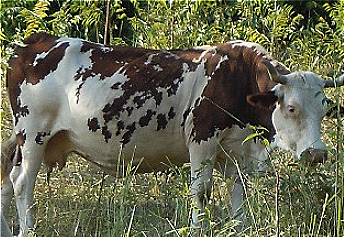
• Termine commerciale che indica carne di femmina giovane (in genere 15–24 mesi), mai andata a parto, con marezzatura (marbling) moderata e tenerezza superiore rispetto a bovini più adulti o maschi interi.
• Offerta in tagli da bistecca (controfiletto, costata, filetto), arrosto (scamone, fesone), brasato/stufato (cappello del prete, reale) e macinato; spesso proposta frollata (dry/wet aging) per 10–30+ giorni per sviluppare aromi e morbidezza.
Valori nutrizionali indicativi (per 100 g crudi, tagli magri/medi; intervalli tipici)
• Energia: 120–190 kcal
• Proteine: 20–22 g (profilo EAA completo; leucina elevata)
• Grassi: 4–12 g — SFA (acidi grassi saturi) ~1,5–5 g; MUFA ~1,5–5 g; PUFA ~0,2–0,6 g
• Carboidrati: 0 g
• Colesterolo: ~60–75 mg
• Sodio: ~50–70 mg (intrinseco; ↑ con salamoie/condimenti)
• Micronutrienti (per 100 g): ferro eme ~1,8–2,7 mg; zinco ~3–5 mg; selenio ~7–12 µg; vitamine B (B12 ~1,5–2,5 µg; B3 ~5–9 mg; B6 ~0,4–0,6 mg)
Principali sostanze contenute
• Proteine miofibrillari (actina, miosina) e sarcoplasmatiche; collagene relativamente basso e meno reticolato (tenerezza).
• Lipidi intramuscolari (marezzatura) con prevalenza di MUFA rispetto ai PUFA; SFA da modulare nella dieta complessiva.
• Pigmenti emici (mioglobina) responsabili del colore rosso e dell’elevata capacità antiossidante vs ossidazioni lipidiche.
• Minerali (Fe, Zn, Se, P) e vitamine del gruppo B.
Processo di produzione
• Allevamento con piani nutrizionali e benessere; macellazione in impianti autorizzati.
• Raffreddamento e maturazione del carcass per attivare la frollatura (proteolisi endogena).
• Sezionamento in tagli primari/secondari → disosso → frollatura (sottovuoto o a secco) → confezionamento sottovuoto/MAP e distribuzione a freddo.
Proprietà fisiche
• pH finale tipico 5,4–5,7; aw elevata.
• Colore Lab*: rosso vivo da crudo; brunimento in cottura per ossidazione dell’eme.
• WHC (capacità di ritenzione idrica) buona; tenerezza associata a basso collagene reticolato e alla frollatura.
• DFD (dark, firm, dry) possibile in caso di stress pre-macello → colore scuro, minore shelf-life.
Proprietà sensoriali e tecnologiche
• Marezzatura → succosità e sapidità; reazioni di Maillard e di lipossidazione controllata generano note arrosto/carne.
• Cotture: alta T per bistecche (searing), sous-vide per controllo della tenerezza, lente/umide per tagli ricchi di connettivo.
• Frollatura estende complessità aromatica (nocciolato, burroso) e riduce forza di taglio.
Impieghi alimentari
• Ristorazione e retail: tagliata, costata/entrecôte, filetto, roast-beef, brasati/stufati, burger di qualità.
• Industria: ready-to-cook/ready-to-eat, affettati cotti, sughi pronti, piatti refrigerati/surgelati.
Nutrizione e salute
La carne di scottona offre proteine ad alto valore biologico e ferro eme ad alta biodisponibilità, utili per fabbisogni di massa muscolare e ematopoiesi. Fornisce anche zinco, selenio e vitamine B (B12, niacina, B6). La quota lipidica varia per taglio e marezzatura: i saturi (sfa) sono presenti e vanno bilanciati nel contesto della dieta (scegliendo tagli più magri e metodi di cottura asciutti si riducono grassi e calorie del piatto).
Il colesterolo è moderato; la sodicità è bassa salvo aggiunte in ricetta. Per la sicurezza microbiologica, le bistecche intere possono essere servite al sangue se esternamente ben rosolate (la contaminazione è superficiale), mentre macinati/tartare/carpacci richiedono filiera controllata, igiene elevata e, per i soggetti vulnerabili (gravidanza, anziani, immunodepressi), è prudente evitare il crudo o cuocere al cuore ≥70 °C.
Dal punto di vista cardiometabolico, inserire la carne rossa in porzioni adeguate e con frequenza moderata, privilegiando contorni vegetali ricchi di fibra e metodi che limitino la formazione di composti di cottura (cotture non eccessivamente prolungate/abbrustolite; marinature con erbe, spezie, acidi).
Nota porzione: porzione tipica 120–180 g cotti (≈ 170–250 g crudi) per bistecca/arrosto; 100–120 g cotti per piatti in salsa o brasati.
Qualità e specifiche (temi tipici)
• Categoria commerciale “scottona” (sesso/età); grado di marezzatura; pH; colore; forza di taglio; resa in cottura.
• Microbiologia: cariche totali contenute; patogeni assenti/25 g; shelf-life in vuoto/MAP a specifica.
• Residui/contaminanti: conformità a limiti per farmaci veterinari/metalli.
• Confezionamento: sottovuoto/MAP (O₂/CO₂/N₂) per colore/stabilità; integrità sigilli e catena del freddo documentata.
• Frollatura: tempi/condizioni (T/UR/aria) dichiarati; assenza di difetti (ossidazioni rancide, “brown edge”).
Conservazione e shelf-life
• Refrigerata: 0–4 °C; in sottovuoto 10–28 giorni secondo taglio/frollatura; in MAP tipicamente 6–12 giorni.
• Surgelata: ≤ −18 °C; shelf-life 8–12 mesi; scongelare in frigorifero o sottovuoto in acqua fredda; non ricongelare.
• Evitare fluttuazioni termiche e luce/O₂ prolungati (ossidazione colore/aromi).
Sicurezza e regolatorio
• Prodotto soggetto a norme igienico-sanitarie per carni bovine e tracciabilità completa (nato/allevato/macellato).
• GMP/HACCP in produzione; rispetto di criteri microbiologici e residui.
• Allergeni: nessuno intrinseco; gestire cross-contact in stabilimento.
Etichettatura
• Denominazione: “carne bovina – scottona” con taglio, stato fisico (fresco/surgelato), origine (Paese di nascita/allevamento/macellazione), lotto, T di conservazione, istruzioni di cottura dove utili.
• Per prodotti maturati: indicare frollatura (dry/wet, giorni). Per preparazioni (es. burger): elenco ingredienti/additivi e % sale.
Troubleshooting
• Bistecca dura/asciutta → sovracottura o frollatura insufficiente → scegliere tagli adeguati, alta T breve + riposo, valutare sous-vide.
• Colore scuro/DFD → pH alto → ridotta shelf-life e resa → ruotare i lotti, evitare esposizioni prolungate, usare marinature acide.
• Imbrunimento metallico/ossidato → esposizione a O₂/luce → preferire sottovuoto, ridurre tempo a banco.
• Eccesso di purge in cottura → temperatura pan troppo bassa/sovraffollamento → preriscaldare bene e cuocere per lotti.
• Note amare/bruciate → fiamma eccessiva/fiammate da grasso → controllare calore, evitare flare-up.
Sostenibilità e filiera
• La carne bovina ha impronta GHG superiore ad altre proteine; miglioramenti tramite benessere animale, gestione razioni/foraggi (efficienza metanica), letami (biogas), riduzione sprechi e valorizzazione sottoprodotti.
• In impianto: recupero calore/acqua, gestione reflui verso target BOD/COD, pack riciclabile e ottimizzazione logistica; audit e tracciabilità fino all’allevamento.
Conclusione
La carne di scottona combina tenerezza, succosità e aromaticità grazie a giovane età e marezzatura moderata. La riuscita dipende da frollatura, taglio e cottura adeguati, da una catena del freddo rigorosa e da porzioni e frequenze coerenti con un’alimentazione equilibrata.
Mini-glossario
• SFA/MUFA/PUFA: acidi grassi saturi/mono/polinsaturi — i saturi vanno contenuti nella dieta complessiva.
• Frollatura: maturazione della carne a T controllata che migliora tenerezza e aroma.
• Marezzatura (marbling): grasso intramuscolare che aumenta succosità/sapore.
• WHC: water holding capacity — capacità di trattenere acqua in lavorazione/cottura.
• MAP: modified atmosphere packaging — confezionamento in atmosfera protettiva.
• DFD: dark, firm, dry — difetto da pH alto, colore scuro e resa ridotta.
• GMP/HACCP: buone pratiche/manutenzione igienico-preventiva e controllo dei punti critici.
• BOD/COD: metriche per il carico inquinante dei reflui e guida al trattamento.
Bibliografia__________________________________________________________________________
Johnston BC, Zeraatkar D, Han MA, Vernooij RWM, Valli C, El Dib R, Marshall C, Stover PJ, Fairweather-Taitt S, Wójcik G, Bhatia F, de Souza R, Brotons C, Meerpohl JJ, Patel CJ, Djulbegovic B, Alonso-Coello P, Bala MM, Guyatt GH. Unprocessed Red Meat and Processed Meat Consumption: Dietary Guideline Recommendations From the Nutritional Recommendations (NutriRECS) Consortium. Ann Intern Med. 2019 Nov 19;171(10):756-764. doi: 10.7326/M19-1621.
Abstract. This article has been corrected. The original version (PDF) is appended to this article as a Supplement. Description: Dietary guideline recommendations require consideration of the certainty in the evidence, the magnitude of potential benefits and harms, and explicit consideration of people's values and preferences. A set of recommendations on red meat and processed meat consumption was developed on the basis of 5 de novo systematic reviews that considered all of these issues. Methods: The recommendations were developed by using the Nutritional Recommendations (NutriRECS) guideline development process, which includes rigorous systematic review methodology, and GRADE methods to rate the certainty of evidence for each outcome and to move from evidence to recommendations. A panel of 14 members, including 3 community members, from 7 countries voted on the final recommendations. Strict criteria limited the conflicts of interest among panel members. Considerations of environmental impact or animal welfare did not bear on the recommendations. Four systematic reviews addressed the health effects associated with red meat and processed meat consumption, and 1 systematic review addressed people's health-related values and preferences regarding meat consumption. Recommendations: The panel suggests that adults continue current unprocessed red meat consumption (weak recommendation, low-certainty evidence). Similarly, the panel suggests adults continue current processed meat consumption (weak recommendation, low-certainty evidence).
Battaglia Richi E, Baumer B, Conrad B, Darioli R, Schmid A, Keller U. Health Risks Associated with Meat Consumption: A Review of Epidemiological Studies. Int J Vitam Nutr Res. 2015;85(1-2):70-8. doi: 10.1024/0300-9831/a000224.
Abstract. Recent evidence from large prospective US and European cohort studies and from meta-analyses of epidemiological studies indicates that the long-term consumption of increasing amounts of red meat and particularly of processed meat is associated with an increased risk of total mortality, cardiovascular disease, colorectal cancer and type 2 diabetes, in both men and women. The association persists after inclusion of known confounding factors, such as age, race, BMI, history, smoking, blood pressure, lipids, physical activity and multiple nutritional parameters in multivariate analysis. The association has not always been noted with red meat, and it has been absent with white meat. There is evidence of several mechanisms for the observed adverse effects that might be involved, however, their individual role is not defined at present. It is concluded that recommendations for the consumption of unprocessed red meat and particularly of processed red meat should be more restrictive than existing recommendations. Restrictive recommendations should not be applied to subjects above about 70 years of age, as the studies quoted herein did not examine this age group, and the inclusion of sufficient protein supply (e. g. in the form of meat) is particularly important in the elderly.
Paul TL, Fleming SA. Dietary consumption of beef and red meat: a scoping review and evidence map on cognitive outcomes across the lifespan. Public Health Nutr. 2023 Dec;26(12):2912-2926. doi: 10.1017/S1368980023001933.
Abstract. Objective: Mixed evidence exists on the impact of beef consumption on cognition. The goal was to create an evidence map capturing studies assessing beef consumption and cognition to reveal gaps and opportunities in the body of literature. Design: A scoping review was conducted to locate studies up to March 2022 using PubMed and backwards citation screening. Data were extracted by two independent reviewers with conflict resolution, and a database was created and made publicly available. Setting: Intervention and observational studies. Participants: Humans of any age, sex and/or health status, without moderate to severe cognitive impairment and/or abnormalities. Results: Twenty-two studies were identified that quantified beef or red meat intake and assessed cognition. Six studies assessed beef intake, with the remaining studies describing intake of red meat that may or may not include beef. Nine articles described randomised controlled trials (RCT), mostly conducted in children. Thirteen described observational studies, primarily conducted on adults and seniors. The most common cognitive domains measured included intelligence and general cognition, and memory. The majority of controlled studies were rated with high risk of bias, with the majority of observational trials rated with serious or greater risk of bias. Conclusions: Red meat and beef intake and cognition is largely understudied. There is a significant lack of replication across study designs, populations, exposures and outcomes measured. The quality of the research would be considerably enhanced by focused assessments of beef intake (and not red meat in general) and specific cognitive domains, along with improved adherence to reporting standards.
Elias Masiques N, De Vrieze J, Hemeryck LY, Vanhaecke L, De Smet S, Van Hecke T. Dietary fiber mitigates the differential impact of beef and chicken meat consumption on rat intestinal health. Food Funct. 2025 May 19;16(10):3949-3962. doi: 10.1039/d5fo00900f.
Abstract. In this rat feeding study, it was hypothesized that the impact of red (vs. white) meat consumption on gut health is more pronounced in fiber-deprived diets, whereas fiber-rich diets may attenuate meat-related differences. For this purpose, rats were fed a red (beef) or white (chicken) meat diet with and without fructo-oligosaccharides (FOS) for three weeks. Gut health was assessed through colonic microbiota, fermentation metabolites, oxidative stress, inflammation, DNA adducts and histology. In rats on the fiber-deprived diets, beef consumption resulted in higher abundance of mucin-degrading bacteria Akkermansia and lower blood glutathione levels compared to chicken-fed rats. Adding FOS to the meat diets modulated the gut microbiota and fermentation metabolites, affected oxidative stress and inflammation markers in tissues and blood, increased colon length, and reduced fat deposition and liver weight. Thus, results showed that the dietary context should be considered when evaluating the impact of red meat consumption on gut health.
Valli C, Rabassa M, Johnston BC, Kuijpers R, Prokop-Dorner A, Zajac J, Storman D, Storman M, Bala MM, Solà I, Zeraatkar D, Han MA, Vernooij RWM, Guyatt GH, Alonso-Coello P; NutriRECS Working Group. Health-Related Values and Preferences Regarding Meat Consumption: A Mixed-Methods Systematic Review. Ann Intern Med. 2019 Nov 19;171(10):742-755. doi: 10.7326/M19-1326.
Abstract. This article has been corrected. The original version (PDF) is appended to this article as a Supplement. Background: A person's meat consumption is often determined by their values and preferences. Purpose: To identify and evaluate evidence addressing health-related values and preferences regarding meat consumption. Data sources: MEDLINE, EMBASE, Web of Science, Centre for Agriculture and Biosciences Abstracts, International System for Agricultural Science and Technology, and Food Science and Technology Abstracts were searched from inception to July 2018 without language restrictions. Study selection: Pairs of reviewers independently screened search results and included quantitative and qualitative studies reporting adults' health-related values and preferences regarding meat consumption. Data extraction: Pairs of reviewers independently extracted data and assessed risk of bias. Data synthesis: Data were synthesized into narrative form, and summaries were tabulated and certainty of evidence was assessed using the GRADE (Grading of Recommendations Assessment, Development and Evaluation) approach. Of 19 172 initial citations, 41 quantitative studies (38 addressed reasons for meat consumption and 5 addressed willingness to reduce meat consumption) and 13 qualitative studies (10 addressed reasons for meat consumption and 4 addressed willingness to reduce meat consumption) were eligible for inclusion. Thirteen studies reported that omnivores enjoy eating meat, 18 reported that these persons consider meat an essential component of a healthy diet, and 7 reported that they believe they lack the skills needed to prepare satisfactory meals without meat. Omnivores are generally unwilling to change their meat consumption. The certainty of evidence was low for both "reasons for meat consumption" and "willingness to reduce meat consumption in the face of undesirable health effects." Limitation: Limited generalizability of findings to lower-income countries, low-certainty evidence for willingness to reduce meat consumption, and limited applicability to specific types of meat (red and processed meat). Conclusion: Low-certainty evidence suggests that omnivores are attached to meat and are unwilling to change this behavior when faced with potentially undesirable health effects.
Tesson V, Federighi M, Cummins E, de Oliveira Mota J, Guillou S, Boué G. A Systematic Review of Beef Meat Quantitative Microbial Risk Assessment Models. Int J Environ Res Public Health. 2020 Jan 21;17(3):688. doi: 10.3390/ijerph17030688.
Abstract. Each year in Europe, meat is associated with 2.3 million foodborne illnesses, with a high contribution from beef meat. Many of these illnesses are attributed to pathogenic bacterial contamination and inadequate operations leading to growth and/or insufficient inactivation occurring along the whole farm-to-fork chain. To ensure consumer health, decision-making processes in food safety rely on Quantitative Microbiological Risk Assessment (QMRA) with many applications in recent decades. The present study aims to conduct a critical analysis of beef QMRAs and to identify future challenges. A systematic approach, the Preferred Reporting Items for Systematic Reviews and Meta-Analyses (PRISMA) guidelines, was used to collate beef QMRA models, identify steps of the farm-to-fork chain considered, and analyze inputs and outputs included as well as modelling methods. A total of 2343 articles were collected and 67 were selected. These studies focused mainly on western countries and considered Escherichia coli (EHEC) and Salmonella spp. pathogens. Future challenges were identified and included the need of whole-chain assessments, centralization of data collection processes, and improvement of model interoperability through harmonization. The present analysis can serve as a source of data and information to inform QMRA framework for beef meat and will help the scientific community and food safety authorities to identify specific monitoring and research needs.
Lescinsky H, Afshin A, Ashbaugh C, Bisignano C, Brauer M, Ferrara G, Hay SI, He J, Iannucci V, Marczak LB, McLaughlin SA, Mullany EC, Parent MC, Serfes AL, Sorensen RJD, Aravkin AY, Zheng P, Murray CJL. Health effects associated with consumption of unprocessed red meat: a Burden of Proof study. Nat Med. 2022 Oct;28(10):2075-2082. doi: 10.1038/s41591-022-01968-z. Epub 2022 Oct 10. PMID: 36216940; PMCID: PMC9556326.
Shi W, Huang X, Schooling CM, Zhao JV. Red meat consumption, cardiovascular diseases, and diabetes: a systematic review and meta-analysis. Eur Heart J. 2023 Jul 21;44(28):2626-2635. doi: 10.1093/eurheartj/ehad336.




