



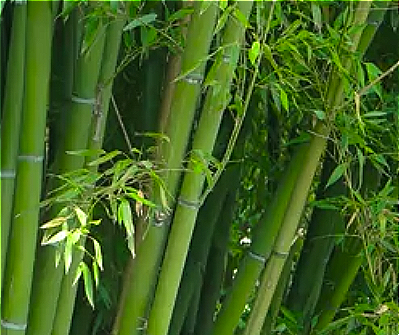
Bamboo (Bambusa, Dendrocalamus, Phyllostachys spp.)
(primarily edible shoots; family Poaceae)
Description
• Group of fast-growing grasses; in food use the young shoots are most common (fresh, pre-cooked, brined, or fermented). Leaves are used for infusions, and bamboo fiber appears as a technological ingredient.
• Sensory profile: delicate flavor with herbaceous/woody notes; pronounced crunch when properly processed.
Indicative nutrition values (shoots, per 100 g drained; typical ranges)
• Energy: ~20–35 kcal
• Carbohydrate: ~3–6 g (sugars <2 g)
• Dietary fiber: ~2–4 g (mainly insoluble)
• Protein: ~2–3 g
• Fat: ~0.2–0.5 g — SFA, MUFA, PUFA all negligible
• Sodium: very low in fresh; can increase in brined products
• Minerals: contains potassium and manganese; trace silica naturally associated with tissues
Key constituents
• Dietary fibers (cellulose, hemicelluloses, lignin); non-starch polysaccharides.
• Phytochemicals: phenolic acids and low-level flavonoids; volatile aroma constituents in leaves.
• Cyanogenic glycosides (e.g., taxiphyllin) in raw shoots → inactivated by adequate boiling/cooking.
• Silica (biogenic) associated with tissues; “bamboo powder” standardized in silica is used in some cosmetic/supplement contexts.
Production process
• Harvest very young shoots (size/age critical for tenderness) → defoliation and peeling.
• Boiling/blanching to reduce cyanogenic glycosides and bitterness → cutting (slices/strips/cubes).
• Destinations: chilled ready-to-cook, brined/canned, frozen, or lactic-fermented traditional products.
• For bamboo fiber: select insoluble fraction from culms or shoots → drying and micronization.
• Manufactured under GMP/HACCP and commercial specifications.
Physical properties
• Appearance: layered texture; ivory to pale yellow (darker in fermented items).
• Consistency: crisp when properly blanched; may be fibrous if over-mature.
• pH: ~5.5–6.5 (fresh); lower in fermented forms.
• Stability: risk of browning/oxidation in raw state; cooking/acidification mitigates it.
Sensory and technological properties
• Texture retention in stir-fries and wok cooking; good cut resistance in ready-meal assemblies.
• Low energy, high volume → useful as bulking vegetable.
• Bamboo fiber: moderate water binding, improves structure in bakery/fillings, reduces syneresis in fillings.
Food applications
• Asian cuisines: stir-fries, curries, ramen/pho, spring rolls, dumplings; pickled/fermented as a side.
• Soups/sauces: crisp texturizer.
• Ready meals and chilled/fifth-range products: pre-cooked strips/cubes.
• Bakery & plant-based meats: bamboo fiber for structure and water holding.
Nutrition & health
Bamboo shoots are low-calorie, water-rich, and a source of fiber; fats—including sfa, mufa, and pufa—are trivial. They contribute to satiety and can help lower dish energy density.
Safety: Raw shoots may contain cyanogenic glycosides (taxiphyllin) that release HCN; boiling (e.g., 20–30 minutes with a water change) or industrial pre-cooking renders them safe. Brined products are already detoxified but may deliver sodium. Hypersensitivity is uncommon; individuals with IBS may tolerate insoluble fiber less well. For leaf infusions, nutritional contribution is modest; prioritize raw-material quality.
Portion note: As a side within a recipe, 80–120 g drained shoots per serving. For bamboo fiber in bakery, 1–3% on flour weight (optimize in trials).
Quality and specifications (typical topics)
• Raw material: shoot age (avoid woody pieces); uniform color; fresh, non-fermentative odor (unless fermentation is intended).
• Parameters: moisture and drained solids, sodium (for brined items), pH, fiber content (for bamboo fiber), metals within limits.
• Microbiology: low counts; pathogens absent/25 g; for fermented products, lactic species control.
• Residues: pesticides ≤ MRL; heavy metals within limits; free of foreign matter.
Storage and shelf-life
• Fresh pre-cooked: chill at 0–4 °C, use within a few days.
• Brined/canned: ambient; once opened refrigerate in clean brine and consume within 3–4 days.
• Frozen: ≤ −18 °C.
• Bamboo fiber: store dry and dark in barrier packaging.
Safety and regulatory
• Bamboo shoots and derivatives are permitted foods; processing under GMP/HACCP; meet process limits for cyanogens.
• For fermented products: comply with hygiene and labeling (pH, salt).
• Allergens: none intrinsic; manage cross-contact risks.
Labeling
• Names: “bamboo shoots” (fresh/pre-cooked/brined/fermented); “bamboo fiber” for the dry ingredient.
• Declare covering liquid and salt for brined goods; provide rinsing/cooking instructions where helpful.
Troubleshooting
• Bitter/pungent taste → insufficient boiling of fresh → extend cook and change water.
• Woody texture → over-mature shoots → source younger material; increase cook time.
• Over-salty flavor (brined) → brine carryover → rinse and/or parboil before use.
• Loss of crunch → overcooking or prolonged hot holding → add near end of cook; reduce holding time.
Sustainability and supply chain
• Bamboo grows rapidly, needs low inputs, and contributes to CO₂ sequestration; by-products (leaves/culms) can be valorized for fiber or energy.
• In-plant: water/heat recovery, wastewater to BOD/COD targets, recyclable packaging, optimized logistics.
• Supplier traceability and audits per GMP/HACCP.
INCI functions (cosmetics)
• Bambusa Arundinacea Stem Extract/Powder, Bambusa Vulgaris Leaf/Stem Extract, Bamboo Charcoal Powder: absorbent/opacifying, skin-conditioning, light sebum-regulating, purifying (charcoal). Use per cosmetic regulations and tolerability assessments.
Conclusion
Bamboo (especially shoots) is a light, crunchy, versatile ingredient. Proper thermal detoxification, sound raw-material selection, and managing salt and cook time determine safety, flavor, and texture. Bamboo fiber broadens technological applications in bakery and ready meals.
Mini-glossary
• SFA: Saturated fatty acids — Keep overall intake low to support LDL control; bamboo shoots contribute negligible amounts.
• MUFA: Monounsaturated fatty acids — Generally favorable when replacing saturates.
• PUFA: Polyunsaturated fatty acids — Beneficial when balanced and protected from oxidation.
• GMP/HACCP: Good manufacturing practice / hazard analysis and critical control points — Preventive hygiene and process-control systems.
• MRL: Maximum residue limits — Legal limits for pesticide residues.
• BOD/COD: Biochemical/chemical oxygen demand — Wastewater metrics guiding treatment.
• Syneresis: Serum weeping from gels/fillings due to network contraction.

