



Plantaggine, Piantaggine (Plantago spp.)
(foglie e sommità di Plantago major L. e Plantago lanceolata L.; famiglia Plantaginaceae)
Descrizione
• Pianta erbacea perenne/spontanea; le foglie (intere, taglio tisana o polvere) sono impiegate come ingrediente botanico in infusi, sciroppi, estratti e alimenti funzionali.
• Profilo sensoriale erbaceo–astringente con lieve nota amaricante; le forme commerciali comprendono droga essiccata, estratti acquosi/idroalcolici, tinture e succhi (pressati a freddo).
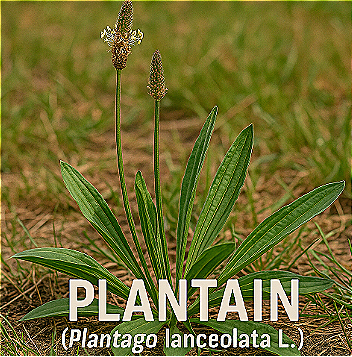
Valori nutrizionali indicativi (foglia essiccata, per 100 g; l’uso tipico è a basso dosaggio)
• Energia: ~230–310 kcal
• Carboidrati: ~35–55 g (zuccheri <5 g)
• Fibre totali: ~30–45 g (quota solubile pectine/mucillagini; quota insolubile emicellulose/cellulosa)
• Proteine: ~12–20 g
• Grassi: ~3–6 g — SFA (acidi grassi saturi, da mantenere contenuti a livello dietetico generale) <1,5 g
• Minerali: contiene potassio, calcio, magnesio; sodio basso
• Nota: in infusione o in estratto l’apporto calorico e di nutrienti risulta modesto.
Principali sostanze contenute
• Mucillagini (polisaccaridi eterogenei: arabinosio, xiloso, ramnosio, galatturonico) responsabili dell’effetto emolliente.
• Iridoidi (aucubina, catalpolo) con azione lenitiva e astringente.
• Polifenoli/flavonoidi (baicaleina, luteolina, apigenina glicosidi) con attività antiossidante.
• Acidi fenolici (caffeico, clorogenico), tannini condensati, tracce di oli essenziali; minerali (K, Ca, Mg), silice.
• Distinzione d’uso: i semi di Plantago ovata (psyllium) sono un ingrediente distinto ad alto contenuto di mucillagini per funzione fibre.
Processo di produzione
• Raccolta delle foglie/sommità in fioritura precoce → essiccazione a bassa T in aria forzata → defoliazione/taglio → setacciatura.
• Per estratti: macerazione o percolazione acquosa/idroalcolica → filtrazione, concentrazione a bassa T → standardizzazione a marcatori (es. aucubina, polifenoli).
• Confezionamento in ambienti controllati e tracciabilità secondo GMP/HACCP.
Proprietà fisiche
• Aspetto: foglie verdi/bruno-verdastre (taglio tisana) o polvere verde-oliva; estratti liquidi bruno-ambra.
• Solubilità: droga insolubile; le mucillagini si rigonfiano in acqua formando soluzioni viscose.
• Umidità: tip. ≤10%; ceneri totali in range botanico; odore erbaceo tenue.
Proprietà sensoriali e tecnologiche
• Astringenza e lieve amaro utili in tisane e sciroppi balsamici; contribuisce corpo/viscosità grazie alle mucillagini.
• In alimenti/gelatine di frutta e sciroppi funge da stabilizzante naturale a basso dosaggio.
• In prodotti da forno/barre può fornire frazione fibra e note verdi se dosata con cautela.
Impieghi alimentari
• Infusi/tisane funzionali, sciroppi e caramelle balsamiche, miscele herbal per bevande.
• Estratti per bevande analcoliche, integratori alimentari, mieli aromatizzati.
• Confetture/salse: come coadiuvante di texture (per la componente mucillaginosa).
Nutrizione e salute
La plantaggine contiene fibre (mucillagini) che possono ammorbidire e lenire le mucose oro-faringee e modulare lievemente la motilità intestinale; i tannini e gli iridoidi sostengono un effetto astringente e lenitivo locale. I polifenoli contribuiscono ad attività antiossidante. In genere è ben tollerata alle dosi d’uso tradizionali in tisane/estratti.
Attenzioni: possibili ipersensibilità in soggetti allergici a pollini di Plantago; rare reazioni crociate con psyllium (P. ovata). Evitare impiego in caso di ostruzioni intestinali note o subito prima/dopo farmaci a basso indice terapeutico (le mucillagini possono interferire con l’assorbimento: distanziare di 1–2 ore). In gravidanza/allattamento attenersi ai dosaggi alimentari e al parere del professionista.
Dal punto di vista dietetico, l’apporto di grassi e SFA è trascurabile; l’interesse è legato alla frazione fibra e ai fitocomposti.
Qualità e specifiche (temi tipici)
• Identità botanica (P. major/P. lanceolata), assenza di parti estranee/infestanti, umidità ≤10%, ceneri totali/insolubili in specifica.
• Marcatori: aucubina/totale iridoidi, polifenoli totali, mucillagini (metodi gravimetrici).
• Contaminanti: pesticidi ≤ MRL, metalli (Pb, Cd, Hg, As) nei limiti, micotossine assenti; carica microbica bassa/patogeni assenti/25 g.
• Residui di solventi (per estratti) conformi; corpi estranei assenti.
Conservazione e shelf-life
• Conservare al buio, asciutto, a T <25 °C in pack barriera all’umidità/ossigeno; evitare assorbimento odori.
• Shelf-life tipica: 24–36 mesi (droga essiccata) se ben confezionata; estratti secondo specifica (spesso 12–24 mesi).
Sicurezza e regolatorio
• Ingrediente botanico ammesso in alimenti/bevande secondo uso tradizionale; per integratori attenersi agli elenchi nazionali/UE e ai limiti di costituenti.
• Produzione e confezionamento in regime GMP/HACCP; per export possono essere richiesti residui pesticidi estesi e metalli stretti.
Etichettatura
• Denominazione: “plantaggine” / “foglie di Plantago major/lanceolata” secondo materia prima; indicare parte usata, origine, forma (taglio tisana/polvere/estratto) e istruzioni d’uso.
• In integratori: indicare tenori di marcatori (es. aucubina, polifenoli) e avvertenze d’impiego.
Troubleshooting
• Perdita di colore/aroma → luce/ossigeno → utilizzare pack opachi/barriera e atmosfera ridotta.
• Torbidità eccessiva in bevanda → dosaggio alto/macerazione lunga → ridurre dose/tempo, chiarificare a freddo.
• Sedimento in sciroppi → filtrazione insufficiente → migliorare filtro o chiarifica.
• Variabilità gusto tra lotti → differenze botaniche/raccolta → adottare standardizzazione a marcatori.
Sostenibilità e filiera
• Materia prima spontanea/coltivata con basso input; favorire raccolta sostenibile, rotazioni e difesa integrata.
• In impianto: recupero acqua/calore, gestione reflui verso target BOD/COD, packaging riciclabile e logistica ottimizzata.
• Qualifica fornitori con tracciabilità territoriale e controlli residui periodici.
Principali funzioni INCI (cosmesi)
• Plantago Major Leaf Extract / Plantago Lanceolata Leaf Extract: lenitivo, astringente, antiossidante, skin conditioning; impiego in tonici, sieri e creme secondo normativa cosmetica e profili di tollerabilità.
Conclusione
La plantaggine è un ingrediente botanico versatile che fornisce mucillagini, iridoidi e polifenoli utili per applicazioni lenitive/astringenti in bevande, sciroppi ed estratti. La buona resa richiede identità botanica certa, standardizzazione dei marcatori, protezione da luce/umidità e corretta formulazione per gestire astringenza e torbidità.
Mini-glossario
• SFA: acidi grassi saturi — Grassi alimentari da limitare a favore del profilo lipidico; nella plantaggine sono trascurabili.
• Mucillagini: polisaccaridi che assorbono acqua e formano soluzioni viscose, con effetto emolliente.
• Iridoidi: glicosidi monoterpenici (es. aucubina) con attività lenitiva/astringente.
• Marcatori: composti caratteristici impiegati per standardizzare un estratto (es. aucubina, polifenoli).
• GMP/HACCP: good manufacturing practice / hazard analysis and critical control points — Sistemi igienico-preventivi e di controllo processo.
• BOD/COD: biochemical/chemical oxygen demand — Metriche del carico inquinante dei reflui e guida al trattamento.

