Coscia di tacchino cotta
(da Meleagris gallopavo; carne scura, cotta al forno/piastra/sous-vide, con o senza pelle)
Descrizione
• Taglio ricco di sapore e naturalmente più succoso rispetto al petto grazie a maggiore contenuto di mioglobina e collagene; disponibile intera, a fette o sfilacciata (pulled), in versione nature, marinata o affumicata.
• Prodotto RTE/RTC (ready-to-eat/ready-to-cook) confezionato sottovuoto o in MAP; comune l’impiego di cotture lente o sous-vide per ammorbidire il tessuto connettivo.
Valori nutrizionali indicativi (per 100 g, senza pelle; prodotto cotto semplice, non in salamoia)
• Energia: 170–200 kcal
• Proteine: 24–28 g
• Grassi: 6–10 g — SFA (acidi grassi saturi; mantenerli contenuti favorisce il profilo LDL) 2–3 g; MUFA 2–4 g; PUFA 1–3 g
• Carboidrati: 0 g
• Sodio: 60–120 mg (può salire a 200–500 mg se marinato/salato)
• Micronutrienti: ferro eme e zinco > petto; selenio, fosforo, vitamine B (B3, B6)
Principali sostanze contenute
• Proteine miofibrillari (actina/miosina) e collagene (più che nel petto; gelatinizza con cotture lente).
• Lipidi moderati, con prevalenza relativa di mono e polinsaturi sulla quota satura.
• Pigmenti emici (mio/emoglobina) responsabili di colore più scuro; minerali (Fe, Zn, Se).
Processo di produzione
• Selezione del taglio (con/ senza pelle, con/ senza osso) → eventuale salamoia/marinatura (sale, zuccheri, aromi; talvolta fosfati/citrati secondo norma) → cottura (forno, arrosto, vapore, affumicatura, sous-vide).
• Raffreddamento rapido a ≤4 °C, porzionatura e confezionamento sottovuoto/MAP → catena del freddo.
• Controlli in GMP/HACCP: temperatura al cuore raggiunta, resa di cottura, microbiologia e integrità pack.
Proprietà fisiche
• pH post-cottura ~5,9–6,2; aw elevata.
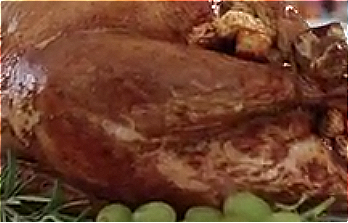
• Colore: bruno-dorato in superficie; interno da chiaro a lievemente rosato (pH/ossidoriduzioni; non indicatore affidabile di sicurezza).
• Texture: da tenero a sfilacciabile con cotture lente grazie alla gelatinizzazione del collagene.
Proprietà sensoriali e tecnologiche
• Succosità elevata se cottura controllata; shelf-life estesa in sous-vide per ridotte perdite e protezione da O₂.
• Versatilità aromatica: erbe, spezie, agrumi, affumicatura; buona resa a freddo per affettati/insalate.
• Rischio warmed-over flavor (note ossidate al riscaldo) → mitigare con antiossidanti culinari (erbe, spezie) e pack barriera.
Impieghi alimentari
• Affettati cotti e tranci per gastronomia; pulled turkey per panini e piatti pronti.
• Secondi e insalate proteiche, bowls, ripieni; cubetti/straccetti per sughi e ready meal.
• Snack/proteici e baby food (formulazioni a sale controllato).
Nutrizione e salute
La coscia cotta fornisce proteine complete con grassi moderati e quota satura contenuta; il profilo lipidico dipende da pelle e metodo di cottura (la pelle aumenta calorie e saturi). Buona fonte di ferro eme e zinco rispetto al petto. Il sodio è naturalmente moderato ma può aumentare sensibilmente con salamoie e condimenti; utile verificare l’etichetta in diete iposodiche.
Sicurezza: prodotto pronto da consumo solo se pastorizzato; in caso di rigenerazione domestica, riscaldare a ≥74–75 °C al cuore e mantenere 4–60 °C il meno possibile (zona di pericolo). Refrigerare ≤4 °C entro 2 ore dal servizio e consumare gli avanzi entro 48–72 ore.
Nota porzione: porzione cotta 120–160 g (≈ 180–220 g cruda senza pelle) apporta ~28–40 g di proteine e 8–14 g di grassi, variabili per pelle/condimenti.
Qualità e specifiche (temi tipici)
• Titolo proteico su tal quale, grassi e umidità; resa di cottura e perdite (drip/purge).
• pH, colore Lab*, texture (forza di taglio).
• Microbiologia: patogeni assenti su unità campionarie; per RTE controllo Listeria.
• Sodio totale (se marinato), allergeni da ricetta; assenza di corpi estranei.
• Confezione: vuoto/MAP (O₂/CO₂/N₂) in specifica; integrità sigillo.
Conservazione e shelf-life
• Refrigerato: 0–4 °C; tipicamente 10–21 giorni in vuoto/MAP (spec-dipendente).
• Surgelato: ≤ −18 °C; scongelare in frigo o sottovuoto in acqua fredda; non ricongelare.
• Evitare sbalzi di temperatura; conservare al riparo da luce/ossigeno per limitare ossidazione.
Sicurezza e regolatorio
• Produzione conforme a GMP/HACCP e norme igieniche per carni avicole cotte.
• Etichetta con denominazione di vendita “coscia di tacchino cotta”, lista ingredienti (salamoie/additivi ove impiegati), valori nutrizionali, lotto, origine (dove richiesta), T di conservazione e istruzioni di consumo/riscaldo.
• Gestione allergeni (es. latte/glutine/uovo nelle panature o marinade) e % di acqua aggiunta dove previsto.
Etichettatura
• Evidenziare “senza pelle” / “con pelle”, “affumicata”, “sous-vide” se applicabile; indicare sale totale per porzione e per 100 g.
• Per claim a basso contenuto di sodio/grassi, verificare le soglie legali sul prodotto finito.
Troubleshooting
• Secchezza/fibrosità → sovracottura o raffreddamento lento → cottura a T controllata, sous-vide o bassa T, raffreddamento rapido; usare salamoie 1–2%.
• Colore rosato a cottura completa → fenomeni di pinking da mioglobina → verificare T al cuore più che il colore.
• Warmed-over flavor (note riscaldate) → ossidazione → ridurre O₂, impiegare erbe/antiossidanti, preferire rigenerazioni brevi.
• Purge in confezione elevato → pH/resa non ottimali o fluttuazioni T → stabilizzare processo, migliorare vuoto e catena del freddo.
Sostenibilità e filiera
• Filiera avicola con FCR favorevole e impronta GHG inferiore ai ruminanti; focus su benessere animale, uso responsabile di antibiotici, recupero acqua/calore e reflui verso target BOD/COD.
• Preferire packaging riciclabile/leggero e fornitori con tracciabilità fino all’allevamento.
Conclusione
La coscia di tacchino cotta è una soluzione sapida, succosa e versatile per gastronomia e industria, con proteine di qualità e grassi moderati. La resa dipende da progetto di cottura, gestione del collagene, sodio in ricetta e packaging che preservi qualità e sicurezza.
Mini-glossario
• SFA: acidi grassi saturi — Eccessi associati a LDL più alto; nella coscia cotta sono moderati e dipendono da pelle/cottura.
• MUFA: acidi grassi monoinsaturi — In genere favorevoli quando sostituiscono i saturi.
• PUFA: acidi grassi polinsaturi — Famiglie n-6/n-3; utili se bilanciati e protetti da ossidazione.
• MAP: modified atmosphere packaging — Confezionamento in atmosfera protettiva.
• GMP/HACCP: good manufacturing practice / hazard analysis and critical control points — Sistemi igienico-preventivi.
• BOD/COD: domanda biochimica/chimica di ossigeno — Metriche per gestione dei reflui.
• RTE/RTC: ready-to-eat/ready-to-cook — Pronto al consumo/pronto alla cottura.
Bibliografia__________________________________________________________________________
Soglia F, Baldi G, Laghi L, Mudalal S, Cavani C, Petracci M. Effect of white striping on turkey breast meat quality. Animal. 2018 Oct;12(10):2198-2204. doi: 10.1017/S1751731117003469.
Abstract. In the past decades, the intense selection practices carried out in order to develop fast growing and high breast-yield turkey hybrids profoundly modified the muscle physiology leading to the development of growth-related alterations and muscular abnormalities. White striations of variable thickness have been particularly observed on the ventral surface of Pectoralis major muscle belonging from heavy male turkeys since several years. However, although the effects of white striping (WS) have been extensively studied on broilers, this condition was not considered as a main quality issue by both turkey producers and meat industry. Thus, this study aimed at evaluating whether the occurrence of WS in heavy male turkeys affects the quality traits and technological properties of meat to the same extent previously observed for broilers. In two replications, 72 Pectoralis major muscles were classified as: normal (NORM), moderate WS (MOD) and severe WS (SEV) cases. The whole muscle was weighed and cut in order to assess colour, ultimate pH, water holding (drip and cooking losses) and binding (marinade uptake) capacities, NMR relaxation properties, shear force as well as proximate composition of meat. The Pectoralis major muscles affected by WS (both moderate and severe cases) exhibited a one-fifth increased weight in comparison with their NORM counterpart. However, the occurrence of WS only partially affected the proximate composition of the meat. In detail, although moisture, collagen and protein contents did not differ among the groups, if compared with NORM, higher lipid levels were found in SEV muscles, whereas MOD had intermediate values. On the other hand, both MOD and SEV exhibited lower ash content. Despite these variations in proximate composition, both water holding and binding capacities of turkey breast meat were not affected by WS. Indeed, quality traits of raw (pH, colour, cooking losses and shear force) and marinated (uptake, cooking losses and shear force) meat as well as water distribution within the muscle tissue did not differ between NORM and WS cases. Overall, if compared with broilers, WS only marginally affected quality traits of turkey breast meat. It might thus be hypothesised a diverse specie-specific physiological response to the pressure in muscle tissue induced by the selection in turkeys that, although analogously led to the occurrence of WS, results in limited effects on meat quality.
Kilic B, Cassens RG, Borchert LL. Influence of turkey meat on residual nitrite in cured meat products. J Food Prot. 2001 Feb;64(2):235-9. doi: 10.4315/0362-028x-64.2.235.
Abstract. A response surface experimental design was employed to estimate residual nitrite level at various initial nitrite concentrations, percent turkey meat in the formula, and heat quantity (F) values using a typical wiener as the test system. Pork and mechanically separated turkey were used as the meat ingredients. Residual nitrite and pH were measured at day 1, 7 days, 14 days, and 49 days after processing. Protein, fat, salt, moisture, and CIE (L*a*b*) color values were also determined. Results showed that the effect of turkey meat on residual nitrite level was significant (P < 0.01). An increased amount of turkey meat in the formula resulted in lower residual nitrite levels at a fixed pH. The residual nitrite level was initially proportional to initial nitrite concentration, but it became a nonsignificant factor during longer storage time. Differences in heat quantity had a significant effect (P < 0.05) on residual nitrite level initially. Greater heat quantity decreased residual nitrite level in finished cured meat products at a fixed pH. However, this effect became nonsignificant during longer storage. Reduction of residual nitrite in wieners because of turkey meat addition at a fixed pH was due to characteristics of the turkey tissue, but the mechanism of action remains unknown. It was also established that commercial wieners had a higher pH if poultry meat was included in the formulation.
Gálvez F, Domínguez R, Pateiro M, Carballo J, Tomasevic I, Lorenzo JM. Effect of gender on breast and thigh turkey meat quality. Br Poult Sci. 2018 Aug;59(4):408-415. doi: 10.1080/00071668.2018.1465177.
Abstract. 1. The influence of gender on chemical composition, physicochemical parameters, fatty acid profile, amino acid and mineral composition of turkey breast and thigh meat was studied in order to assess nutrient requirements. 2. Chemical composition showed that only intramuscular fat in breast meat was significantly affected by gender (p < 0.05). The results showed a higher percentage of intramuscular fat in male samples, almost double the amount found in females (0.73% vs. 0.38%). 3.For meat colour parameters, only a* showed different results between sexes, with male samples (breast: p < 0.01; thigh: p < 0.001) having the highest values. 4. Fatty acid profiles showed that medium chain unsaturated fatty acids were the most abundant. The significant differences (p < 0.05) found in both breast and thigh muscle could be linked to a difference in metabolism between males and females. 5.There were higher levels of C16:1n-7 in females (breast: p < 0.001; thigh: p < 0.01) compared with male muscle sample (5.05 vs. 2.67 g/100 g in breast and 4.95 vs. 3.27 g/100 g in thigh). Nutritional indices (n-6/n-3 and thrombogenic index) were more favourable in female samples demonstrating that female turkeys had better fatty acid profile than the others. 6. Turkey meat is an important source of dietary amino acids, and female samples had the highest contents both of essential and non-essential amino acids. Furthermore, gender had a numeric effect (p > 0.05) on amino acid composition. 7. Mineral composition showed that Na, Zn and Fe were the minerals most affected by turkey gender.
Mielche MM. Development of warmed-over flavour in ground turkey, chicken and pork meat during chill storage. A model of the effects of heating temperature and storage time. Z Lebensm Unters Forsch. 1995 Mar;200(3):186-9. doi: 10.1007/BF01190491.
Abstract. The susceptibility towards development of warmed-over flavour (WOF) was investigated in meat from turkey and chicken breast and thigh, and from pork longissiums dorsi muscle. Ground meat samples from these five sources were heated for 30 min in a water bath at 60, 70 or 80C, and the samples were stored at 5C for 0-4 days. During storage, WOF was quantified by measurement of thiobarbituric-acid reactive substances (TBARS) and by sensory evaluations. The increase in TBARS was modelled for each type of meat at the different heating temperatures by a first-order reaction, and it was shown that a common rate constant could be used for all types of meat. The estimated maximum levels of TBARS in meat samples decreased in the following order: turkey thigh > chicken thigh > turkey breast > chicken breast > port. For each type of meat, the estimated maximum level of TBARS rose when the heating temperature increased in the range 60-80C. This temperature effect was particularly obvious for the chicken samples. Thus thigh and breast meat from chicken heated to 60C was almost stable against oxidation during storage. Results obtained by measurement of TBARS were in good agreement with the sensory evaluations.
Al Masri S, Kattanek M, Richardson KC, Hafez HM, Plendl J, Hünigen H. Comparative Quantitative Studies on the Microvasculature of the Heart of a Highly Selected Meat-Type and a Wild-Type Turkey Line. PLoS One. 2017 Jan 24;12(1):e0170858. doi: 10.1371/journal.pone.0170858.
Abstract. In this study the macroscopic and microscopic structure of the heart of a fast growing, meat-type turkey line (British United turkeys BUT Big 6) and a wild-type turkey line (Canadian Wild turkey) were compared. At 8 and 16 weeks of age, 10 birds of each genotype and sex were sampled. The body mass and heart mass of the meat-type turkey both increased at a faster rate than those of the wild-type turkey. However in both turkey lines, the relative heart mass decreased slightly with age, the decrease was statistically significant only in the male turkeys. Furthermore meat-type turkeys had a significantly (p < 0.01) lower relative heart mass and relative thickness of the left ventricle compared to the wild-type turkeys of the same age. The wild-type turkeys showed no significant change in the size of cardiomyocytes (cross sectional area and diameter) from 8 weeks to 16 weeks. In contrast, the size of cardiomyocytes increased significantly (p < 0.001) with age in the meat-type turkeys. The number of capillaries in the left ventricular wall increased significantly (p < 0.001) in wild-type turkeys from 2351 per mm2 at the age of 8 weeks to 2843 per mm2 at 16 weeks. However, in the meat-type turkeys there were no significant changes, capillary numbers being 2989 per mm2 at age 8 weeks and 2915 per mm2 at age 16 weeks. Correspondingly the area occupied by capillaries in the myocardium increased in wild-type turkeys from 8.59% at the age of 8 weeks to 9.15% at 16 weeks, whereas in meat-type turkeys this area decreased from 10.4% at 8 weeks to 9.95% at 16 weeks. Our results indicate a mismatch in development between body mass and heart mass and a compromised cardiac capillary density and architecture in the meat-type turkeys in comparison to the wild-type turkeys.
Kurt Ş, Kilinççeker O. Mixture optimization of beef, turkey, and chicken meat for some of the physical, chemical, and sensory properties of meat patties. Poult Sci. 2011 Aug;90(8):1809-16. doi: 10.3382/ps.2010-01306.
Abstract. To determine the optimum meat mixture combination, the effects of different meat sources on physical, chemical, and sensory properties of cooked or stored meat patties were investigated using a response surface methodology mixture design. Meat patties were prepared using chicken, turkey, beef, and beef back fat. They were divided 2 groups, with 1 group cooked and 1 group stored. The first part was cooked with a preheated grill, and the second part was stored at -20°C for 2 mo. The effects of the meat mixtures on pH, proximate composition, cooking yield, dimension reduction, thiobarbituric acid, free fatty acid, proteolysis, and sensory properties of patties were studied. The influence of beef, turkey, and chicken meat on patties was found to be significant (P < 0.01). The interaction effects of beef and chicken meat on the sensory properties of patties were also found to be significant (P < 0.01). Meat mixtures improved physical, chemical, and sensory qualities of patties. The optimum combination of beef, turkey, and chicken was found to be 34.87, 12.23, and 52.89%, respectively.




