Description
Spice obtained by milling dried fruits of Capsicum annuum (Solanaceae), typically sweet or low-pungency.
Main types: sweet (mild), semi-sweet/sweet-bitter, hot (light heat), smoked (wood-smoked, “pimentón” style).
Sensory profile: sweet, fruity notes with herbaceous/earthy accents; smoked versions add woody/caramel nuances. Pungency is generally low (reduced capsaicinoids).
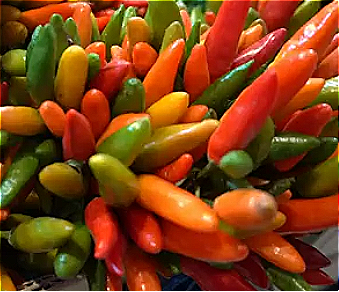
Common name: Paprika
Kingdom: Plantae
Clade: Angiosperms
Clade: Eudicots
Order: Solanales
Family: Solanaceae
Genus: Capsicum
Species: Capsicum annuum L.
Note: Paprika is obtained by grinding the dried fruits of sweet or mildly pungent varieties of Capsicum annuum.
Cultivation and growing conditions
Climate: Prefers warm, sunny climates; sensitive to low temperatures and frost.
Exposure: Requires full sun to develop color, aroma and carotenoid content.
Soil: Thrives in fertile, well-drained, medium-textured soils with slightly acidic to neutral pH. Avoid waterlogged conditions.
Watering: Regular but not excessive; soil should remain moist without becoming saturated. Insufficient water can reduce fruit size and yield.
Temperature: Optimal growth between 20 and 30 °C; growth slows significantly below 12–14 °C.
Fertilization: Phosphorus and potassium are important to support flowering and fruit set; nitrogen should be applied moderately to avoid excessive vegetative growth.
Crop management: Weed control is important in the early stages; staking may be useful to support heavily loaded plants.
Harvest: Fruits for paprika are harvested when fully ripe and deep red.
Drying and processing: Fruits are dried (in the sun or in dryers) and then ground to obtain a fine powder.
Propagation: By seed, usually started in nursery trays or seedbeds and transplanted outdoors once temperatures are consistently mild.
Caloric value (per 100 g of product)
Dry powder: ~280–320 kcal; total carbohydrates ~50–60 g (of which fiber ~30–35 g), protein ~12–15 g, fat ~10–15 g.
Per typical use (0.5–5 g): modest energy; micronutrients (e.g., vitamin A from carotenoids) are meaningful relative to serving size.
Key constituents
Carotenoids: capsanthin, capsorubin, zeaxanthin, β-carotene (drive color from orange to deep red).
Capsaicinoids: low levels in sweet paprika (mild SHU).
Polyphenols and minor aroma compounds; dietary fiber (celluloses/hemicelluloses), natural sugars, organic acids.
Minerals/vitamins: potassium, iron; vitamin E (tocopherols) and vitamin B6 in trace–moderate amounts.
Lipids: modest share, with predominance of PUFA (polyunsaturated fatty acids; potentially beneficial yet more oxidation-prone), presence of MUFA (monounsaturated fatty acids; often neutral/beneficial), and minimal SFA (saturated fatty acids; moderate in the overall diet).
Production process
Raw material: selected varieties; destemming/seeding to target pungency; controlled drying (warm air; for smoked, exposure to wood smoke).
Milling: low-temperature grinding to preserve color and aroma; optional sieving for particle size.
Blending: cross-lot blending to standardize color (ASTA), granulometry, and pungency.
Controls: moisture (≈8–12%), ASTA color, particle size, pesticide/metal residues, microbiology (low aw), foreign matter absence.
Sensory and technological properties
Effective natural colorant at low doses (hues from amber-yellow to red-orange).
Stability is sensitive to light, oxygen, and prolonged heat → prefer barrier packaging and late addition when feasible.
Dispersibility: excellent in fatty matrices; in aqueous systems improve with pre-dispersion in oil or suitable emulsifiers.
Smoked paprika adds smoky character; dose carefully in delicate recipes.
Culinary uses
Processed meats and sausages, marinades, sauces/gravies, snacks, seasonings, cheese spreads/melts, savory bakery.
Traditional cuisines: Hungarian (goulash), Iberian (pimentón), Balkan, and Middle Eastern.
Everyday cooking: dry rubs, sautés, hummus/dips, toppings for eggs and potatoes, oil-based emulsions.
Nutrition and health
Moderate energy density, but small portions; provides carotenoids with potential antioxidant activity.
High fiber on a dry basis; sodium negligible in the spice itself (recipe-dependent).
Tolerability: generally low heat; individuals with GERD or spice sensitivity should adjust dose.
Fat profile
Modest total lipids for a spice; composition leans to PUFA (polyunsaturated fatty acids, supportive when balanced but more oxidizable), with MUFA (monounsaturated fatty acids) and minimal SFA (saturated fatty acids). To limit oxidation: reduce light/air exposure, consider natural antioxidants, and use barrier packs.
Quality and specifications (typical topics)
ASTA color, moisture, particle size, ash, pungency/SHU (if declared).
Microbiology: pathogen-free; low total counts (low aw).
Contaminants: pesticides/metals within limits; mycotoxins (e.g., aflatoxins) compliant.
Uniformity of aroma/color across lots; foreign matter-free and defect-free.
Storage and shelf life
Store dark, dry, and cool (≈5–20 °C) in barrier containers tightly closed; avoid heat, humidity, and air.
Typical shelf life 12–24 months depending on grade, ASTA, and antioxidant protection; reclose promptly after use.
Allergens and safety
Naturally gluten-free; not among major allergens. Possible cross-contamination in facilities (verify supplier).
Stains equipment and fabrics; handle carefully.
Production under GMP/HACCP with CCP on mycotoxins, foreign bodies, hygiene, and traceability.
INCI functions in cosmetics
Possible names: Capsicum Annuum Fruit Powder, Capsicum Annuum Extract, Paprika Powder.
Roles: natural colorant (orange-red tones), mild secondary antioxidant, light skin-conditioning. Evaluate skin staining and stability; use at low levels with compatibility testing.
Troubleshooting
Fading during cooking: decrease time/temperature, dose late, limit light/air exposure.
Bitter/oxidized notes: check freshness and ASTA, employ barrier packaging, consider natural antioxidants.
Lumping in dry mixes: optimize particle size and moisture; sieve and pre-disperse in oil.
Uneven color: improve blending, verify dispersibility in the matrix.
Sustainability and supply chain
Agricultural origin: promote responsible farming, robust traceability, and compliant residue/mycotoxin control.
Processing: energy efficiency, recyclable packaging; manage effluents toward BOD/COD targets.
Operate under GMP/HACCP with defined CCP; audit suppliers and post-milling distribution.
Conclusion
Paprika delivers warm color, rounded aroma, and versatility with restrained heat. Proper type selection (sweet/smoked/hot), careful management of light/oxygen/temperature, and good dispersibility ensure stability, uniformity, and sensory consistency across a wide range of food and cosmetic applications.
Mini-glossary
ASTA — American Spice Trade Association color units: measure of coloring strength.
SHU — Scoville heat units: measure of perceived pungency (higher = hotter).
PUFA — Polyunsaturated fatty acids: may support cardiometabolic health; more prone to oxidation.
MUFA — Monounsaturated fatty acids: often neutral/beneficial for lipid profile.
SFA — Saturated fatty acids: advisable to limit in overall diet.
GMP/HACCP — Good Manufacturing Practice / Hazard Analysis and Critical Control Points: preventive hygiene systems with validated CCPs.
CCP — Critical control point: step requiring strict control (e.g., mycotoxins, foreign bodies).
BOD/COD — Biochemical/Chemical Oxygen Demand: indicators of effluent impact on wastewater treatment.
aw — Water activity: index of available water for microbial growth; low in spices.
Studies
Paprika is rich in antioxidants (1), vitamins and minerals, especially vitamin C (2). It also has anti-inflammatory properties and can help promote heart health. It is used in traditional medicine to treat acne, joint inflammation and indigestion (3).
It should be enjoyed in moderation!
References_____________________________________________________________________
(1) Batiha GE, Alqahtani A, Ojo OA, Shaheen HM, Wasef L, Elzeiny M, Ismail M, Shalaby M, Murata T, Zaragoza-Bastida A, Rivero-Perez N, Magdy Beshbishy A, Kasozi KI, Jeandet P, Hetta HF. Biological Properties, Bioactive Constituents, and Pharmacokinetics of Some Capsicum spp. and Capsaicinoids. Int J Mol Sci. 2020 Jul 22;21(15):5179. doi: 10.3390/ijms21155179. PMID: 32707790; PMCID: PMC7432674.
Abstract. Pepper originated from the Capsicum genus, which is recognized as one of the most predominant and globally distributed genera of the Solanaceae family. It is a diverse genus, consisting of more than 31 different species including five domesticated species, Capsicum baccatum, C. annuum, C. pubescen, C. frutescens, and C. chinense. Pepper is the most widely used spice in the world and is highly valued due to its pungency and unique flavor. Pepper is a good source of provitamin A; vitamins E and C; carotenoids; and phenolic compounds such as capsaicinoids, luteolin, and quercetin. All of these compounds are associated with their antioxidant as well as other biological activities. Interestingly, Capsicum fruits have been used as food additives in the treatment of toothache, parasitic infections, coughs, wound healing, sore throat, and rheumatism. Moreover, it possesses antimicrobial, antiseptic, anticancer, counterirritant, appetite stimulator, antioxidant, and immunomodulator activities. Capsaicin and Capsicum creams are accessible in numerous ways and have been utilized in HIV-linked neuropathy and intractable pain.
(2) Zaki, N., Hakmaoui, A., Ouatmane, A., & Fernandez-Trujillo, J. P. (2013). Quality characteristics of Moroccan sweet paprika (Capsicum annuum L.) at different sampling times. Food Science and Technology, 33, 577-585.
Abstract. "La Niora" is a red pepper variety cultivated in Tadla Region (Morocco) which is used for manufacturing paprika after sun drying. The paprika quality (nutritional, chemical and microbiological) was evaluated immediately after milling, from September to December. Sampling time mainly affected paprika color and the total capsaicinoid and vitamin C contents. The commercial quality was acceptable and no aflatoxins were found, but the microbial load sometimes exceeded permitted levels.
(3) Meghvansi, M. K., Siddiqui, S., Khan, M. H., Gupta, V. K., Vairale, M. G., Gogoi, H. K., & Singh, L. (2010). Naga chilli: a potential source of capsaicinoids with broad-spectrum ethnopharmacological applications. Journal of ethnopharmacology, 132(1), 1-14.
Abstract. Capsicum species are not only cultivated as vegetable and condiment crops but are also incorporated into a number of medicinal preparations in the ancient literature around the world. ‘Naga chilli’ or ‘Bhoot Jolokia’ (Capsicum chinense Jacq.) is a chilli variety indigenous to the northeast region of India and has been recognized as the hottest chilli in the world. It has also been used conventionally in treating various human ailments since time immemorial by the indigenous people of the northeast India. Despite being an important crop of the northeast India, the information on the biology and cultivation of Naga chilli is very scanty and scattered. The present article reviews the scientific literature on above aspects with particular emphasis on identifying the key regional issues which need to be addressed urgently by the policy makers in order to harness its potential as an important source of capsaicinoids. Further, an attempt has been made to collate the potential of capsaicinoids in various ethnopharmacological applications such as pain therapy, body temperature regulation, anti-obesity treatments, anticancer therapy and as antioxidant and antimicrobial agent. We anticipate that this literature analysis of traditional medicinal uses and experimental trials of Capsicum using modern scientific approaches shall provide a basis for suggesting important areas where sincere research efforts are warranted to bridge the gap between traditional medicinal knowledge and modern biomedical knowledge.




