



Arrowroot starch (Maranta arundinacea)
Descrizione
Arrowroot starch o semplicemente Arrowroot è l’amido ricavato dai rizomi della pianta tropicale perenne Maranta arundinacea, originaria delle zone umide dell’America centrale e meridionale e attualmente coltivata in molte regioni tropicali del mondo. La pianta è un’erbacea alta fino a circa un metro e mezzo, con foglie ovali e rizomi carnosi color bianco-crema particolarmente ricchi di amido facilmente digeribile. Con il termine “arrowroot” si indica comunemente la farina di amido purificato, una polvere bianca molto fine e dal sapore neutro, impiegata come addensante naturale, come ingrediente nei prodotti da forno e come alternativa priva di glutine ad altri amidi più comuni. Storicamente arrowroot è stato usato anche nella medicina tradizionale per lenire disturbi gastrointestinali e irritazioni cutanee grazie alla sua elevata tollerabilità. Nell’industria alimentare moderna è considerato un ingrediente “clean label”, apprezzato per la sua origine naturale, l’elevata digeribilità e la capacità addensante delicata ma efficace senza ricorrere a modificazioni chimiche.
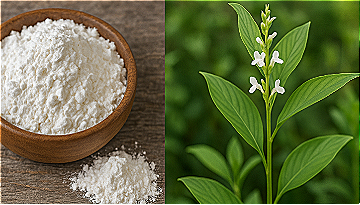
Classificazione botanica
Nome comune: arrowroot, maranta, fecola di arrowroot
Nome scientifico: Maranta arundinacea
Famiglia: Marantaceae
Genere: Maranta
Origine: America centrale e meridionale tropicale
Portamento: pianta erbacea perenne rizomatosa, alta in genere 0,5–1,0 m, coltivata per i suoi rizomi ricchi di amido
Coltivazione e condizioni di crescita
Clima
Specie tipicamente tropicale e subtropicale, amante del caldo e dell’umidità.
Non tollera il gelo: temperature prossime a 0 °C possono danneggiare seriamente la parte aerea e i rizomi.
Si adatta bene in zone con piogge regolari o con irrigazione disponibile per gran parte dell’anno.
Esposizione
Preferisce luce abbondante diffusa o mezz’ombra luminosa.
In pieno sole tropicale può soffrire per eccesso di radiazione, soprattutto se il suolo tende ad asciugare.
In ombra troppo fitta la crescita rallenta e la produzione di rizomi diminuisce.
Terreno
Richiede suoli profondi, soffici, ben drenati ma freschi, ricchi di sostanza organica.
Si sviluppa bene in terreni da leggermente acidi a neutri.
Evitare suoli pesanti, molto compatti o soggetti a ristagni, che favoriscono marciumi dei rizomi.
Una buona lavorazione profonda prima dell’impianto è importante per permettere l’ingrossamento dei rizomi.
Irrigazione
Ama una umidità costante del suolo, senza forti sbalzi tra secco e bagnato.
In coltivazione intensiva è frequente l’uso di irrigazioni regolari, specialmente nei periodi asciutti.
I ristagni prolungati, tuttavia, sono da evitare perché aumentano il rischio di malattie fungine a carico dei rizomi.
Temperatura
Crescita ottimale in un intervallo di circa 22–30 °C.
Temperature inferiori a 15 °C rallentano sensibilmente lo sviluppo.
Non è adatta a climi con inverni freddi non mitigati o senza possibilità di coltivazione protetta.
Concimazione
Richiede una buona dotazione di sostanza organica e nutrienti, in particolare per sostenere la formazione dei rizomi.
In pre–impianto si consiglia l’apporto di compost o letame ben maturo, integrato eventualmente da un concime completo (NPK).
L’azoto va fornito in modo equilibrato: eccessi favoriscono molta vegetazione a scapito dell’accumulo di amido nei rizomi.
Cure colturali
È importante mantenere il terreno pulito dalle infestanti, soprattutto nelle fasi iniziali di crescita.
Sarchiature leggere aiutano ad aerare il suolo e a contenere le malerbe.
Nelle coltivazioni più intensive si possono usare pacciamature organiche per limitare l’evaporazione e la crescita delle infestanti.
Controllare la presenza di parassiti del suolo e di eventuali marciumi radicali in condizioni di umidità elevata.
Raccolta
I rizomi si raccolgono in genere diversi mesi dopo l’impianto, quando le foglie iniziano ad ingiallire e la pianta entra in fase di maturazione (spesso 9–12 mesi in clima tropicale).
I rizomi vengono estirpati, puliti dal terreno e selezionati:
quelli migliori sono destinati all’estrazione dell’amido (fecola di arrowroot),
una parte può essere conservata per il reimpianto.
Dopo la raccolta, per la trasformazione in fecola, i rizomi si lavano, si grattugiano o macinano e l’amido si separa con lavaggi e decantazione.
Moltiplicazione
Avviene quasi esclusivamente per divisione dei rizomi o delle ceppaie.
Si scelgono porzioni sane, con gemme ben formate, che vengono ripiantate in buche o solchi preparati in precedenza.
La semina da seme è rara in coltivazione pratica, data la variabilità e la lentezza del processo.
Valori nutrizionali indicativi per 100 g
Energia: ~350–360 kcal
Acqua: ~10–12 g
Proteine: ~0,3 g
Carboidrati totali: ~88 g
Amido: ~84–86 g
Fibre: ~3–4 g
Zuccheri: trascurabili
Grassi totali: ~0,1 g
Prima occorrenza di acronimi lipidici: SFA (saturated fatty acids, possibili effetti negativi se consumati in eccesso), MUFA (monounsaturated fatty acids, associati a buoni profili metabolici), PUFA (polyunsaturated fatty acids, coinvolti nella salute cardiovascolare); nei successivi riferimenti gli acronimi non saranno in grassetto.
SFA/MUFA/PUFA: tracce
Sodio: ~2–3 mg
Potassio: ~10–15 mg
Calcio: ~15–20 mg
Ferro: ~0,3 mg
Principali sostanze contenute
Amido (frazione principale)
Amilosio
Amilopectina
Fibre alimentari
Tracce minerali (calcio, ferro, potassio)
Composti volatili minimi responsabili della sensorialità neutra
Tracce proteiche residue
Processo di produzione
Raccolta dei rizomi maturi di Maranta arundinacea.
Lavaggio e rimozione delle impurità.
Grattugiatura e macinazione a umido.
Filtrazione per separare la fibra dall’amido.
Sedimentazione dell’amido in sospensione.
Risciacquo ripetuto per ottenere un prodotto molto puro.
Asciugatura controllata.
Macinazione fine e setacciatura.
Confezionamento in atmosfera protetta o in sacchi multi-strato.
Proprietà fisiche
Aspetto: polvere bianca finissima.
Solubilità: insolubile in acqua fredda, forma gel trasparente in acqua calda.
Punto di gelatinizzazione: relativamente basso (~65–75 °C).
Densità apparente: bassa.
Stabilità termica: buona in cottura breve e media.
Proprietà sensoriali e tecnologiche
Sapore: neutro.
Odore: quasi assente.
Testura apportata: gel e salse di consistenza morbida e lucida.
Capacità addensante: alta, ma delicata rispetto ad amidi come mais o patata.
Stabilità del gel: buona in ambiente acido.
Formazione di grumi: poco probabile se disperso a freddo.
Comportamento al congelamento/scongelamento: buona resistenza alla sineresi.
Impieghi alimentari
Addensante in salse, zuppe, creme.
Prodotti da forno (biscotti, crackers, dolci).
Alternative per formulazioni senza glutine.
Prodotti per l’infanzia grazie all’elevata digeribilità.
Gastronomia “clean label” e ricette a bassa acidità.
Gelati e dessert per migliorare texture e corpo.
Nutrizione e salute
Elevata digeribilità dell’amido, utile per persone con digestione delicata.
Privo di glutine, adatto a diete per celiaci o sensibili al glutine.
Contenuto di grassi molto basso e presenza di SFA, MUFA e PUFA solo in tracce (senza impatto clinicamente significativo).
Basso contenuto di sodio.
Valore energetico elevato, utile come fonte di carboidrati facilmente assimilabili.
Non contiene antinutrienti importanti.
Nota porzione
Porzione indicativa consigliata negli usi culinari: 10–20 g come addensante; 30–50 g in ricette da forno (per 500 g di mix).
Allergeni e intolleranze
Naturalmente privo di glutine.
Non sono comuni allergie specifiche ad arrowroot.
Possibili contaminazioni crociate se prodotto in stabilimenti con cereali contenenti glutine.
Conservazione e shelf-life
Conservare in luogo fresco e asciutto, lontano dall’umidità.
Shelf-life tipica: 24–36 mesi se confezionato correttamente.
Sensibile all’assorbimento di odori esterni.
Sicurezza e regolatorio
Considerato sicuro come ingrediente alimentare nella maggior parte delle normative internazionali.
Non richiede dichiarazioni di additivi, trattandosi di amido fisico non modificato.
Accettato in regolamenti “clean label”.
Etichettatura
Denominazione: “amido di arrowroot” o “farina di arrowroot”.
Per prodotti senza glutine: può essere indicata l’assenza se certificata.
Origine della pianta consigliata (es. “da Maranta arundinacea”).
Troubleshooting
Gel troppo liquido → dosaggio insufficiente o cottura troppo breve.
Aspetto opaco → eccesso di temperatura o mescolamento insufficiente.
Formazione di grumi → aggiungere a freddo o sciogliere in poca acqua prima dell’uso.
Perdita di potere addensante → umidità assorbita durante la conservazione.
Sostenibilità e filiera
Coltivazione a basso impatto, richiede fertilizzazione moderata.
La pianta può crescere in sistemi agroforestali tropicali, favorendo biodiversità.
Processi di estrazione principalmente meccanici, con uso ridotto di reagenti.
Completa biodegradabilità del prodotto finito.
Principali funzioni INCI (cosmesi)
Assorbente
Addensante
Opacizzante
Antiagglomerante
Texture enhancer in polveri e creme naturali
Conclusione
Arrowroot è un ingrediente naturale, versatile e facilmente digeribile, apprezzato sia nell’alimentazione quotidiana sia nelle formulazioni senza glutine e nelle ricette “clean label”. La sua capacità addensante delicata, il sapore neutro, la buona stabilità e la purezza lo rendono una scelta tecnica e sensoriale di alto livello. È inoltre sicuro, sostenibile e dotato di un profilo semplice da etichettare, con applicazioni che spaziano dall’alimentare alla cosmesi naturale.
Studi
L'amido di arrowroot offre diversi benefici per la salute grazie al suo basso contenuto di glutine e alla facilità di digestione. È anche noto per la sua capacità di aiutare nella gestione della diarrea e in altre questioni digestive grazie alle sue proprietà calmanti.
Indice Glicemico L'amido di arrowroot ha un indice glicemico relativamente alto, quindi il suo consumo dovrebbe essere monitorato da coloro che gestiscono i livelli di zucchero nel sangue.
Allergie È un'alternativa sicura per la maggior parte delle persone con allergie o sensibilità al glutine.
Bibliografia__________________________________________________________________________
Tarique J, Zainudin ES, Sapuan SM, Ilyas RA, Khalina A. Physical, Mechanical, and Morphological Performances of Arrowroot (Maranta arundinacea) Fiber Reinforced Arrowroot Starch Biopolymer Composites. Polymers (Basel). 2022 Jan 19;14(3):388. doi: 10.3390/polym14030388.
Abstract. This research is driven by stringent environmental legislation requiring the consumption and use of environmentally friendly materials. In this context, this paper is concerned with the development and characterization of thermoplastic arrowroot starch (TPAS) based biocomposite films by incorporating arrowroot fiber (AF) (0-10%) into a glycerol plasticized matrix by using the solution casting method. Developed TPAS/AF composite films were investigated, such as physical, morphological (FESEM), tensile, and tear strength characteristics. The tensile and tear strengths of TPAS/AF composites were increased significantly from 4.77 to 15.22 MPa and 0.87 to 1.28 MPa, respectively, as compared to the control TPAS films, which were 2.42 MPa and 0.83 MPa, respectively, while elongation was significantly decreased from 25.57 to 6.21% compared to control TPAS film, which was 46.62%. The findings revealed that after the fiber was reinforced, the mechanical properties were enhanced, and the optimum filler content was 10%. Regardless of fiber loadings, the results of water absorption testing revealed that the composite films immersed in seawater and rainwater absorbed more water than distilled water. Overall, the results of this research focus on providing information on biopolymer composite film and revealing the great potential it has for the food packaging industry.
Kumalasari ID, Harmayani E, Lestari LA, Raharjo S, Asmara W, Nishi K, Sugahara T. Evaluation of immunostimulatory effect of the arrowroot (Maranta arundinacea. L) in vitro and in vivo. Cytotechnology. 2012 Mar;64(2):131-7. doi: 10.1007/s10616-011-9403-4.
Abstract. Arrowroot (Maranta arundinacea. L) is an underutilized local crop potentially to be developed as carbohydrate source and functional food in Indonesia. The objectives of this research are to evaluate the immunostimulatory effects of arrowroot extracts in vitro by using animal cell culture techniques, and in vivo by using BALB/c mice. The arrowroot tuber extracts were prepared by heat-treatment at 121 °C for 20 min in distilled water. The IgM production stimulatory activity of arrowroot tuber extracts against human hybridoma HB4C5 cells and mouse splenocytes was assessed. The result indicated that the arrowroot tuber extract stimulated IgM production by HB4C5 cells and immunoglobulin (IgG, IgA and IgM) production by splenocytes in vitro. In addition, the arrowroot tuber extracts strongly enhanced interferon γ production by splenocytes. In vivo study indicated that the diet containing arrowroot extracts increased the serum IgG, IgA and IgM levels in mice. These results revealed that the arrowroot tuber extracts have immunostimulatory effects in vivo as well as in vitro.
Cooke C, Carr I, Abrams K, Mayberry J. Arrowroot as a treatment for diarrhoea in irritable bowel syndrome patients: a pilot study. Arq Gastroenterol. 2000 Jan-Mar;37(1):20-4. doi: 10.1590/s0004-28032000000100005.
Abstract. Objectives: Arrowroot is an old-fashioned remedy for diarrhoea, but no clinical studies have been done to evaluate its effectiveness. The aim of this pilot study was to assess its efficacy as a treatment for diarrhoea in 11 patients, all of whom had irritable bowel syndrome with diarrhoea as a feature. Methods: The patients were interviewed and a questionnaire completed on entry into the trial. They then took 10 mL arrowroot powder three times a day for one month and discontinued the treatment for the subsequent month. Questionnaires were completed after one month on treatment and at the end of the trial after one month off treatment. Results: Arrowroot reduced diarrhoea and had a long-term effect on constipation. It also eased abdominal pain. Conclusion: Arrowroot is an effective treatment for diarrhoea. Its action could be explained by several theories which relate to an increase in faecal bulk and thus a more efficient bowel action. The number of patients was small, and further studies are needed to substantiate preliminary results.
Kim S, Fung DY. Antibacterial effect of crude water-soluble arrowroot (Puerariae radix) tea extracts on food-borne pathogens in liquid medium. Lett Appl Microbiol. 2004;39(4):319-25. doi: 10.1111/j.1472-765X.2004.01582.x.
Abstract. Aims: To evaluate the effect of crude water-soluble arrowroot tea extracts on microbial growth of food-borne pathogens in liquid medium and to confirm the damage to bacterial cells using Transmission Electronic Microscopy (TEM). Methods and results: Inhibition of growth of Escherichia coli O157:H7, Salmonella enterica serovar Enteritidis, Listeria monocytogenes and Staphylococcus aureus was investigated using Brain Heart Infusion (BHI) broth containing 0 (control), 0.63, 1.25, 2.5 and 5.0% (w/v) arrowroot tea. Bacterial cell counts were performed on specific selective agar on days 0, 1, 3 and 5. BHI containing 5.0% arrowroot tea extract showed a 6-7 log suppression of growth for all test strains on days 3 and 5, compared with the control. Even 0.63% arrowroot tea effectively inhibited microbial growth of all test strains on day 5. TEM images of the samples treated with 5.0% arrowroot tea revealed the rupture of cell walls and nonhomogeneous disposition of cytoplasmic materials within treated bacteria. Conclusions: Crude water-soluble arrowroot tea extract strongly inhibited microbial growth of all test pathogens in liquid medium. Significance and impact of the study: Water-soluble arrowroot tea extract has the potential to be used directly on foods or as a spray on the surfaces of food handling and processing facilities in order to prevent microbial growth of both Gram-negative and Gram-positive bacteria.
Pérez E, Lares M. Chemical composition, mineral profile, and functional properties of Canna (Canna edulis) and Arrowroot (Maranta spp.) starches. Plant Foods Hum Nutr. 2005 Sep;60(3):113-6. doi: 10.1007/s11130-005-6838-9.
Abstract. The aim of the present study was to evaluate some chemical and mineral characteristics and functional and rheological properties of Canna and Arrowroot starches produced in the Venezuelan Andes. Canna starch showed a higher (P < 0.05) moisture, ash, and crude protein content than arrowroot starch, while crude fiber, crude fat, and amylose content of this starch were higher (P < 0.05). Starches of both rhizomes own phosphorus, sodium, potassium, magnesium, iron, calcium, and zinc in their composition. Phosphorus, sodium, and potassium are the higher in both starches. Water absorption, swelling power, and solubility values revealed weak bonding forces in Canna starch granules; this explained the lower gelatinization temperature and the substantial viscosity development of Canna starch during heating. Arrowroot starch showed a higher gelatinization temperature measure by DSC, than Canna starch and exhibited a lower value of DeltaH. Both starches show negative syneresis. The apparent viscosity of Canna starch was higher (P < 0.05) than the Arrowroot starch values. The size (wide and large) of Canna starch granules was higher than arrowroot starch. From the previous results, it can be concluded that Canna and Arrowroot starches could become interesting alternatives for food developers, depending on their characteristics and functional properties.
Shintu, P. V., Radhakrishnan, V. V., & Mohanan, K. V. (2015). Pharmacognostic standardisation of Maranta arundinacea L.-An important ethnomedicine. Journal of pharmacognosy and phytochemistry, 4(3), 242.
Abstract .Plants are said to be medicinal when they are used to promote health beyond basic nutrition. Various bioactive compounds present in the plant are responsible for the medicinal properties of the plant. The present study aims to establish pharmacognostic standardization such as macro and microscopic standards, physico-chemical analysis, powder analysis and preliminary phytochemical screening of rhizome of Maranta arundinacea L. Phytochemical screening was carried out with petroleum ether, chloroform, methanol and distilled water respectively. The study revealed the presence of bio-active compounds such as alkaloids, carbohydrate, cardiac glycosides, aminoacids, phenolic compounds, terpenoids, saponins, flavones and gum. Histochemical studies showed the presence of innumerable starch grains. Physicochemical parameters like moisture content (6.6%), total ash (2.5%), extractive values of alcohol (1.8%) and water (25.1%) were also evaluated. The above parameters are significant towards establishing the pharmacognostic standards for future identification and authentication of genuine plant material.
Brito, Vitor, et al. "Arrowroot (Maranta arundinacea L.): Botany, horticulture, and uses." Horticultural reviews 48 (2021): 233-274.
Abstract. Arrowroot (Maranta arundinacea L.) is a monocotyledon in the order Zingiberales, family Marantaceae. It is an important medicinal spice, mainly known for the quality of its starch and for its applications since times immemorial. It is associated with diets in Asia and the Americas, where specific gel and starch paste rheologies are required. In addition, it is a highly digestible product. This review has gathered information on the botanical and horticultural aspects as well as uses of arrowroot, including its contributions to the development of higher value-added products and the special properties of its starch. Moreover, it aimed to clarify some of its medicinal properties. The neotropical dispersion of the genus and evidence from archaeological studies confirm the origin of the species. Potential medicinal use is based on compounds with immunostimulatory and antioxidant activity. However, production and commercialization data of arrowroot and its starch are poorly defined, as the cultivation is largely carried out informally in small-scale and traditional agriculture. Information about genetic improvement is also scarce, mainly due to the difficulty in controlling flowering and in challenges relating to sexual recombination. Accessions have evolved from unconscious selection based on subjective criteria and are generally known by their popular or regional names. Starch quality, as well as the taxonomy, genetic diversity, horticultural management practices, pests and diseases, and postharvest processing methods, are subjects addressed in this review.
Fidianingsih I, Aryandono T, Widyarini S, Herwiyanti S, Sunarti S. Chemopreventive Effect of Dietary Maranta arundinacea L. Against DMBA-Induced Mammary Cancer in Sprague Dawley Rats Through the Regulation of Autophagy Expression. Asian Pac J Cancer Prev. 2022 Mar 1;23(3):985-993. doi: 10.31557/APJCP.2022.23.3.985.
Abstract. Background: Breast cancer prevention still needs to be improved. Calorie restriction is thought to prevent breast cancer through the induction of autophagy. Maranta arundinacea L. (MA) has the potential for calorie restriction because it contains high fiber. This research aimed to observe the effect of dietary MA against dimethylbenz(a)anthracene (DMBA)-induced mammary cancer in Sprague Dawley rats related to autophagy. Methods: Twenty-five Sprague Dawley rats were randomly divided into five groups: 1) control group without DMBA-induced with a standard diet, 2) 20 mg/kg BW of DMBA two times a week for five weeks with a standard diet, 3) DMBA and diet modification with 30% of MA, 4) DMBA and diet modification with 45% of MA, and 5) DMBA and diet modification with 60% of MA. Examination of the nodule was conducted once every week for 22 weeks. Breast tissue/tumor examination underwent histology examination with hematoxylin-eosin. Examinations of immunohistochemical staining against Beclin1, LC3B, and SQSTM1 were conducted to reveal autophagy. The difference of autophagy protein expression was analyzed using One way ANOVA with 95% confidence level and significance set as p<0.05. Results: Cancer was detected in four rats of DMBA standard diet, two rats of 30% MA, one rat of 45% MA. No cancer was detected in the rats of control and rats with 60% of MA group. The Beclin1 expressions showed that the 60% of MA group had the highest score (2.5±0.52) followed by the 45% of MA group (1.87±0.49), control group (1.77±0.11), 30% of MA group (1.28±0.75), and DMBA with standard diet had the lowest score (1.28±0.91). The difference of Beclin1 expressions was statistically significant (p-value=0.03). However, the difference of the LC3B expressions (p-value=0.11) and SQSTM1 expressions (p-value=0.225) were not statistically significant. Conclusion: Dietary modifications with MA potentially prevent breast cancer and induce initiation of autophagy.
Lestari LA, Huriyati E, Marsono Y. The development of low glycemic index cookie bars from foxtail millet (Setaria italica), arrowroot (Maranta arundinacea) flour, and kidney beans (Phaseolus vulgaris). J Food Sci Technol. 2017 May;54(6):1406-1413. doi: 10.1007/s13197-017-2552-5.
Abstract. Wholegrain foods are becoming increasingly popular as a high fiber dietary supplement recommended for people with diabetes. In Indonesia, the incidence of diabetes mellitus has almost doubled recently and poses a significant health risk with the high prevalence of obesity and cardiovascular diseases. The present research aimed to develop cookie bars from foxtail millet, arrowroot flour, and kidney beans. The physical, chemical, and sensory properties were evaluated by selecting the best formula to test the glycemic index. Three formulae of cookie bars, which had different percentages of foxtail millet, kidney beans, and arrowroot flour were evaluated. The results showed that the three formulae (F1, F2, F3) had °Hue values of 53.77, 58.46, and 58.31, and breaking force of 8.37, 10.12, and 5.87 N, respectively. While all other nutritional content were significantly different between formulae, the total crude fat was not. The F2 cookie bar was selected and evaluated for the glycemic index because it has the best sensory properties, lowest total sugar and available carbohydrate content. F2 cookie bars that contain 15% foxtail millet, 15% arrowroot flour, and 30% of kidney beans have a glycemic index of 37.6 hence it could be classified as a low glycemic index cookie bar. In conclusion, our findings indicated that F2 cookie bars can be further developed as a suitable diabetic food since it has the best physico-chemical properties, sensory properties, and low glycemic index.

