Pinto beans (Phaseolus vulgaris)
Description
Dried legume seeds with a beige mottled seed coat marked by reddish-brown streaks; during cooking they turn pinkish and become creamy.
Sensory profile: sweet–earthy, lightly nutty flavor; very creamy flesh with medium-to-good shape retention (ideal for purées/refried beans).
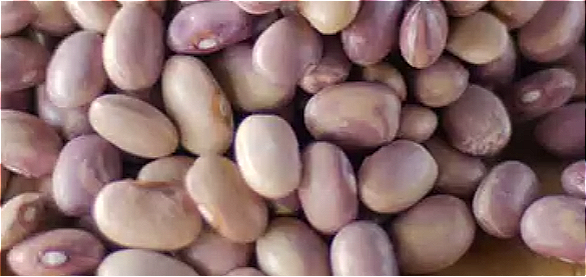
Common name: Pinto bean
Kingdom: Plantae
Clade: Angiosperms
Clade: Eudicots
Order: Fabales
Family: Fabaceae
Genus: Phaseolus
Species: Phaseolus vulgaris L.
Note: Pinto beans are cultivars of Phaseolus vulgaris with cream–beige seeds mottled with brown, widely used in Mexican and South American cuisine (e.g. refried beans).
Cultivation and growing conditions
Climate:
Prefers warm, temperate climates.
Sensitive to cold: damaged by late frosts and low temperatures at germination.
Generally grown as a spring–summer crop, when the soil is well warmed.
Exposure:
Soil:
Thrives in medium-textured, well-drained, deep soils with good organic matter.
Prefers slightly acidic to neutral pH.
Does not tolerate waterlogging, which promotes root rot and fungal diseases.
Watering:
Needs a regular water supply, especially during flowering and seed filling.
Avoid strong alternation between drought and excess water, which can cause pod splitting and increase disease problems.
Temperature:
Optimal germination when soil temperature is around 15–20 °C.
Optimal growth roughly between 18 and 28 °C.
Excessive heat combined with drought during flowering can reduce pod set and yield.
Fertilization:
As a legume, it can fix atmospheric nitrogen through root rhizobia; high inputs of mineral nitrogen are usually unnecessary.
Phosphorus, potassium and micronutrients are more important to support flowering, pod development and seed filling.
Incorporation of compost or well-rotted manure before sowing is beneficial.
Crop management:
Early weed control is essential while the plants are still small and non-competitive.
Climbing or semi-climbing types need supports (canes, nets, wires); dwarf types do not.
Avoid excessive soil compaction, which limits root development.
Crop rotation:
Propagation:
Caloric value (per 100 g)
Dry (as sold): ~335–360 kcal.
Cooked in water, unsalted: ~135–150 kcal, protein 8–9.5 g, carbohydrates 24–27 g (of which fiber 7–9 g), fat 0.5–1.0 g.
Canned (drained): similar to cooked; sodium varies (rinsing lowers Na).
Key constituents
Complex carbohydrates: starch with a share of resistant starch that increases after cooling.
Proteins ~20–23% d.b. (globulins phaseolin/legumin); sulfur amino acids are limiting → pair with cereals.
Dietary fiber (soluble/insoluble: pectins, hemicelluloses).
Oligosaccharides (raffinose, stachyose; FODMAP).
Phytochemicals: polyphenols (proanthocyanidins, phenolic acids) and phytates; minerals (potassium, magnesium, iron, phosphorus) and B-vitamins (folate, thiamin).
Production process
Selection, cleaning, sizing, and controlled drying of seeds → barrier packaging for dry beans.
Ready-to-eat: soaking (or quick hydration), boiling/pressure cooking to tenderness; for canned: brining, filling, retort sterilization.
Milled/semiprocessed forms: milling (optionally cryogenic) with heat treatments to inactivate inhibitors.
Sensory and technological properties
High purée-ability (creams, refried beans), and body/viscosity contribution to soups and sauces.
Post-cook cooling increases RS3 (retrograded resistant starch), giving a slightly firmer set.
Seed coat color tends to fade during cooking, lightly tinting the broth.
Food applications
Mexican/Southwestern cuisines: frijoles de la olla, refried beans, burritos/tacos, chili.
Soups/stews/warm salads, rice & beans, purées/spreads; veg burgers and fillings.
Flour for pasta or extruded snacks to boost protein/fiber.
Nutrition and health
High fiber supports satiety and regularity; notable folate and minerals.
Glycaemic index is low–moderate, further attenuated by cooling (↑ RS3) and by eating with fat/protein.
Antinutrients (phytates, lectins, enzyme inhibitors) are reduced by soaking + cooking (preferably pressure cooking) and by fermentation/sprouting, which improves mineral bioavailability.
FODMAP: oligosaccharides can cause bloating; discard soak water and rinse canned beans to lower content.
Fat profile
Low total fat; residual lipids are mainly PUFA — polyunsaturated fatty acids (e.g., linoleic n-6; potentially beneficial when balanced but more oxidation-prone) and MUFA — monounsaturated fatty acids (e.g., oleic n-9; often neutral/beneficial), with minimal SFA — saturated fatty acids (best moderated in the overall diet). TFA negligible; MCT not significant.
Quality and specifications (typical topics)
Dry beans: moisture ≤ 14–16%, pest-free, uniform size, low breaks/foreign matter.
Canned: drained weight on spec, uniform texture (avoid overcook), declared sodium; optional CaCl₂ as a firming agent.
Microbiology: category-appropriate (commercial sterility for canned; pathogens absent/25 g).
Residues: pesticides/heavy metals within limits; no foreign bodies.
Storage and shelf life
Dry: store cool/dry/dark; avoid high temperature/humidity to prevent hard-to-cook phenomenon.
Cooked/refrigerated: ≤4 °C, 3–4 days; freezeable after cooking and draining.
Allergens and safety
Gluten-free naturally; verify cross-contact in mixed facilities.
Lectins: as with other Phaseolus, require adequate boiling; avoid undercooking and low-temp slow cookers without pre-boil.
Possible cross-reactivity in individuals allergic to soy/peanut.
INCI functions in cosmetics
Possible INCI: Phaseolus Vulgaris (Bean) Extract / Seed Extract / Seed Flour.
Roles: skin conditioning, antioxidant, absorbent/texturizer in niche applications (use limited and subject to safety/claim evaluation).
Troubleshooting
Endless cook/firm texture: aged/HTC lots → soak 8–12 h (optionally lightly salted), pressure cook; a small baking soda 0.1–0.2% can help.
Skins peeling: thermal shocks/alkalinity → keep a gentle boil, salt during/after; minimal CaCl₂ for extra firmness.
Bloating/flatulence: discard soak water, rinse well, increase portion gradually; add carminative herbs (bay, fennel).
Flat flavor: balance with salt, acidity (lime/vinegar), and good fats (olive oil).
Sustainability and supply chain
Nitrogen-fixing legume: lowers synthetic fertilizer needs; GHG footprint is lower than animal proteins.
Improve via crop rotations, efficient water/energy use in soaking/cooking, effluent management toward BOD/COD targets; recyclable packaging; full traceability under GMP/HACCP.
Labelling
Names: “pinto beans” (distinct from borlotti/cranberry beans, which are related but different).
For canned: declare drained weight, salt, and any CaCl₂. Possible claims (e.g., source of fiber) when thresholds are met.
Conclusion
Pinto beans combine creaminess, versatility, and nutritional value (fiber, protein, folate), making them ideal for soups, stews, refried beans, and fillings. Proper preparation (soaking and vigorous boiling/pressure cooking) maximizes safety, digestibility, and sensory appeal.
Mini-glossary
GI — glycaemic index: Measure of blood-glucose response; lowered by fiber, fat, and cooling (↑ RS3).
RS3 — retrograded resistant starch: Less digestible starch formed on cooling that can blunt glucose spikes.
FODMAP — fermentable oligo-, di-, mono-saccharides and polyols: May cause bloating; soaking/rinsing reduces them.
SFA — saturated fatty acids: Low share here; moderate in overall diet.
MUFA — monounsaturated fatty acids: E.g., oleic n-9; often neutral/beneficial.
PUFA — polyunsaturated fatty acids: E.g., linoleic n-6; beneficial when balanced, more oxidation-prone.
GMP/HACCP — good manufacturing practice / hazard analysis and critical control points: Preventive hygiene systems with validated CCPs.
BOD/COD — biochemical/chemical oxygen demand: Indicators of wastewater impact along the supply chain.
References__________________________________________________________________________
Xu B, Chang SK. Total Phenolic, Phenolic Acid, Anthocyanin, Flavan-3-ol, and Flavonol Profiles and Antioxidant Properties of Pinto and Black Beans ( Phaseolus vulgaris L.) as Affected by Thermal Processing. J Agric Food Chem. 2009 Jun 10;57(11):4754-4764. doi: 10.1021/jf900695s.
Abstract. The effects of boiling and steaming processes at atmospheric and high pressures on the phenolic components and antioxidant properties of pinto and black beans were investigated. In comparison to the original raw beans, all processing methods caused significant (p < 0.05) decreases in total phenolic content (TPC), total flavonoid content (TFC), condensed tannin content (CTC), monomeric anthocyanin content (MAC), DPPH free-radical scavenging activity (DPPH), ferric-reducing antioxidant power (FRAP), and oxygen radical absorbing capacity (ORAC) values in both pinto and black beans. Steaming processing resulted in a greater retention of TPC, DPPH, FRAP, and ORAC values than the boiling processes in both pinto and black beans. To further investigate how thermal processing affected phenolic compositions and to elucidate the contribution of individual phenolic compounds to antioxidant properties, phenolic acids, anthocyanins, flavan-3-ols, and flavonols were quantitatively analyzed by high-performance liquid chromatography (HPLC). All thermal processing significantly (p < 0.05) affected individual phenolic acids, anthocyanins, flavan-3-ols, and flavonols, significantly (p < 0.05) reduced total phenolic acid contents in both pinto and black beans and total flavonol contents in pinto beans, and dramatically reduced anthocyanin contents in black beans. Phenolic acids and flavonols may play important roles on the overall antioxidant activities of pinto beans, while anthocyanins, flavan-3-ols, and flavonols may play important roles on the overall antioxidant activities of black beans.
Winham DM, Hutchins AM, Johnston CS. Pinto bean consumption reduces biomarkers for heart disease risk. J Am Coll Nutr. 2007 Jun;26(3):243-9. doi: 10.1080/07315724.2007.10719607.
Abstract. Objective: To determine effects of daily intake of 1/2 cup pinto beans, black-eyed peas or carrots (placebo) on risk factors for coronary heart disease (CHD) and diabetes mellitus (DM) in free-living, mildly insulin resistant adults over an 8 week period. Methods: Randomized, crossover 3x3 block design. Sixteen participants (7 men, 9 women) received each treatment for eight-weeks with two-week washouts. Fasting blood samples collected at beginning and end of periods were analyzed for total cholesterol (TC), low density lipoprotein cholesterol (LDL-C), high density lipoprotein cholesterol, triacylglycerols, high-sensitivity C-reactive protein, insulin, glucose, and hemoglobin A1c. Results: A significant treatment-by-time effect impacted serum TC (p = 0.026) and LDL (p = 0.033) after eight weeks. Paired t-tests indicated that pinto beans were responsible for this effect (p = 0.003; p = 0.008). Mean change of serum TC for pinto bean, black-eyed pea and placebo were -19 +/- 5, 2.5 +/- 6, and 1 +/- 5 mg/dL, respectively (p = 0.011). Mean change of serum LDL-C for pinto bean, black-eyed pea and placebo were -14 +/- 4, 4 +/- 5, and 1 +/- 4 mg/dL, in that order (p = 0.013). Pinto beans differed significantly from placebo (p = 0.021). No significant differences were seen with other blood concentrations across the 3 treatment periods.
Saari JT, Reeves PG, Johnson WT, Johnson LK. Pinto beans are a source of highly bioavailable copper in rats. J Nutr. 2006 Dec;136(12):2999-3004. doi: 10.1093/jn/136.12.2999.
Abstract. The trace element copper (Cu) is a required nutrient in the diets of humans. It has been found in animal studies to be essential for efficient iron absorption and oxygen utilization and for aiding free-radical degradation. Dry beans (Phaseolis vulgaris) are potentially good sources of Cu; thus, the objective of this study was to determine the bioavailability of Cu from dry beans using the pinto bean as the source. Dry beans were obtained from a local market, cooked according to package directions, and dried. Weanling male Sprague-Dawley rats (8 groups of 8 rats each) were fed a Cu-deficient diet (AIN-93G) for 4 wk followed by 2 wk of Cu repletion with diets containing 0-6.5 mg Cu/kg diet added as CuSO(4) or with 0.6 and 1.5 mg Cu/kg incorporated into rat diets as pinto beans at 10 and 20%. Standard response curves were developed based on repletion-induced recovery of 10 indices of Cu status, including organ Cu concentrations and Cu-dependent enzyme activities, in response to increasing dietary Cu as CuSO(4). Recovery of these variables in rats fed the pinto bean diets was compared with the standard response curve at similar levels of dietary Cu. Based on the recovery of all 10 variables, the relative bioavailability of Cu from dry beans was at least 100% of that with the highly available CuSO(4). For 3 of the variables, liver and heart Cu concentrations and serum superoxide dismutase 3 activity, estimated bioavailability values of Cu from beans were 138, 140, and 134%, respectively, of those from CuSO(4). We conclude that the dry pinto bean is a good source of dietary Cu with respect to both concentration and bioavailability.
Reddy MB, Chidambaram MV, Fonseca J, Bates GW. Potential role of in vitro iron bioavailability studies in combatting iron deficiency: a study of the effects of phosvitin on iron mobilization from pinto beans. Clin Physiol Biochem. 1986;4(1):78-86.
Abstract. Iron deficiency and iron overload affect one billion people worldwide. Treatment of iron malnutrition can be enhanced by an understanding of iron bioavailability from the diet. We have focused on the development of in vitro methods for determining iron bioavailability in the hopes of providing both an understanding of the chemical basis leading to the inhibition or enhancement of iron absorption and the provision of methodologies which will allow nutritionists around the world to ascertain iron bioavailability of local foods and food combinations. The study reported here focuses on the effects of phosvitin, a suspected inhibitor of iron absorption found in egg yolks, on the chemistry of iron during the in vitro enzymatic digestion of pinto beans. Three basic types of information were obtained. First, the total soluble iron was determined during in vitro enzymatic digestion under simulated oral, gastric (pH 2) and duodenal (pH 6) conditions. Phosvitin was found to have a strong solubilizing effect at pH 6 and pH 2 when in the presence of ascorbate. Pyrophosphate also leads to high iron mobilization. A second approach is to determine the static Fe2+ and Fe3+ concentrations following in vitro enzymatic digestion of pinto beans at pH 2 and pH 6. Ascorbic acid enhanced the total soluble iron at both pH values, however, only at pH 2 was a large proportion of the iron found in the Fe2+ state and then only in the presence of phosvitin but not pyrophosphate. A third approach is to determine the amount of Fe2+ formed in the digestive supernatant during a 10-min incubation with ferrozine
Simons CW, Hunt-Schmidt E, Simsek S, Hall C, Biswas A. Texturized pinto bean protein fortification in straight dough bread formulation. Plant Foods Hum Nutr. 2014 Sep;69(3):235-40. doi: 10.1007/s11130-014-0421-1.
Abstract. Pinto beans were milled and then air-classified to obtain a raw high protein fraction (RHPF) followed by extrusion to texturize the protein fraction. The texturized high protein fraction (THPF) was then milled to obtain flour, and combined with wheat flour at 5, 10, and 15% levels to make bread. The air-classification process produced flour with high concentration of lipids and phytic acid in the protein-rich fraction. However, extrusion significantly reduced hexane extractable lipid and phytic acid. However, the reduction observed may simply indicate a reduction in recovery due to bind with other components. Total protein and lysine contents in composite flours increased significantly as THPF levels increased in composite flour. Bread made with 5% THPF had 48% more lysine than the 100 % wheat flour (control). The THPF helped to maintain dough strength by reducing mixing tolerance index (MTI), maintaining dough stability and increasing departure time on Farinograph. Bread loaf volume was significantly reduced above 5% THPF addition. THPF increased water absorption causing an increase in bread weights by up to 6%. Overall, loaf quality deteriorated at 10 and 15% THPF levels while bread with 5% THPF was not significantly different from the control. These results support the addition of 5% THPF as a means to enhance lysine content of white pan bread.




