

Ciao, Visitatore!


🔍
RECENSIONE

Recensione

Al222
Al222 (26277 pt) • 02-Nov-2025 12:34

Sciroppo di mais disidratato (corn syrup solids; glucose syrup solids)

Descrizione

  • Polveri libero-scorrevoli ottenute per disidratazione di sciroppo di glucosio da amido di mais, impiegate per fornire dolcezza, corpo, bulk e stabilità al congelamento/scongelamento.

  • Classificate per destrosio equivalente (DE): gli sciroppi di glucosio disidratati tipicamente ~20–95; prodotti con DE <20 sono in genere maltodestrine.

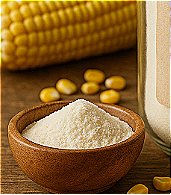
  • Colore bianco/biancastro, odore/gusto neutro; disponibili gradi a solubilità istantanea.
Valore calorico (per 100 g di prodotto)

  • ~360–400 kcal/100 g.

  • Composizione tipica (s.s.): carboidrati ~95–99 g, proteine <0,5 g, grassi <0,5 g, ceneri ~0,1–0,5 g; umidità ≤4–6%.

Principali sostanze contenute

  • D-glucosio (destrosio), maltosio e oligomeri del glucosio (ripartizione dipendente da DE).

  • Fruttosio: nei glucose syrup solids standard può essere minimo; risulta elevato quando il prodotto deriva da sciroppi isomerizzati (HFCS solids) o è miscelato con fruttosio cristallino → verificare sempre scheda tecnica/etichetta.

  • Marcatori di processo: colore (ICUMSA) e **HMF** crescono con il carico termico; **aw** finale bassa.

Processo di produzione

  • Amido di mais → liquefazione (α-amilasi) → saccarificazione (glucoamilasi; opzionale isomerasi se si desidera fruttosio) → raffinazione (decolorazione/deionizzazione) → concentrazione → spray-drying (eventuali carrier) → setacciatura e confezionamento.

  • Gestione qualità sotto **GMP/HACCP** con **CCP** su inattivazione enzimi, microbiologia, umidità e tenuta del sigillo.

Proprietà sensoriali e tecnologiche

  • Dolcezza ↑ con DE; corpo/viscosità ↓ al crescere della frazione zuccherina semplice.

  • Umidità trattenuta e depressione del punto di congelamento aumentano con DE (utile in gelati/dessert congelati).

  • Gradi a bassa igroscopicità per coating/compresse; i gradi ad alto DE sono più igroscopici e imbruniscono più facilmente (Maillard/caramellizzazione).

Impieghi alimentari

  • Prodotti da forno (colore crosta, ritenzione umidità), confetteria (controllo cristallizzazione/masticabilità), gelati e dessert congelati (corpo, anti-cristallizzazione), bevande (dolcezza e solidi), carni/processati (bulking, browning superficiale), mix istantanei, formulazioni infant (specifiche dedicate).

  • Dosaggi indicativi: 2–25% dei solidi di ricetta, tarati su DE e processo.

Nutrizione e salute

  • Zuccheri aggiunti a rapido assorbimento; indice glicemico (GI) in genere alto per DE elevati.

  • Fruttosio: quando presente in quota alta (es. HFCS solids o blend con fruttosio cristallino), un consumo eccessivo di fruttosio libero è dibattuto in relazione a iper-apporto energetico, aumento di peso, rischio cardio-metabolico e diabete tipo 2; i soggetti con intolleranza ereditaria al fruttosio devono evitarlo.
  • Rischio di carie ai denti simile ad altri zuccheri: utile la moderazione della porzione e l’igiene orale.

Qualità e specifiche (temi tipici)

  • DE (es. 28, 42, 63, 90), umidità ≤4–6%, ceneri ≤0,5%, densità apparente, granulometria/scorrevolezza, pH (sol. 10%) ~4,0–6,5, colore (ICUMSA), **HMF**.

  • Microbiologia: cariche basse; patogeni assenti/25 g.

  • Contaminanti: metalli pesanti e micotossine (origine mais) entro limiti; enzimi residui inattivati.

Conservazione e shelf-life

  • Conservare fresco/asciutto, ben sigillato; evitare umidità (caking) e calore (imbrunimento).

  • Shelf-life tipica 12–24 mesi in pack barriera; richiudere prontamente dopo l’uso.

Allergeni e sicurezza

  • Derivato dal mais; senza glutine per processo quando ottenuto da amido di mais su linee dedicate.

  • Possibili tracce di soia/grano/latte da impianti condivisi → dichiarare ove applicabile.

  • Per infant/medical nutrition impiegare solo gradi che rispettino le specifiche pertinenti.

Funzioni INCI in cosmesi

  • INCI correlati: Glucose, Maltodextrin, Hydrolyzed Starch (ruoli: umettante, aumento viscosità, film-forming, masking).

Troubleshooting

  • Caking/grumi: UR alta o stoccaggio caldo → migliorare barriera del pack, inserire essiccante, scegliere grado più grosso/meno igroscopico.

  • Eccesso di imbrunimento in forno: DE troppo alto o T elevata → selezionare DE più basso, ridurre tempo/temperatura, correggere lievitanti.

  • Consistenze troppo morbide in confetteria: quota eccessiva di solidi ad alto DE → ridurre o tagliare con maltodestrina (DE <20).

  • Cristalli di ghiaccio nei congelati: solidi ad alto DE insufficienti → aumentare dose o combinare gradi di DE per ottimizzare la depressione del punto di congelamento.

  • Ambiguità in etichetta sul fruttosio: verificare se il prodotto è glucose syrup solids oppure HFCS solids/blend con fruttosio e dichiarare di conseguenza.

Sostenibilità e filiera

  • Origine maize-based; impatti legati ad agricoltura, uso di enzimi/energia e essiccazione. Migliorare con recupero energetico, riciclo acque e gestione reflui verso target **BOD/COD**; utilizzare imballaggi riciclabili e piena tracciabilità sotto **GMP/HACCP**.

Conclusione
Lo sciroppo di mais disidratato è un carboidrato funzionale versatile; il comportamento dipende da **DE** e storia di processo. La corretta selezione (incluse le quote di fruttosio quando rilevanti) e il controllo di umidità/stoccaggio garantiscono dolcezza, texture e stabilità ripetibili in un ampio spettro di applicazioni.


Mini-glossario

  • **DE** — dextrose equivalent: % di zuccheri riducenti espressi come destrosio; DE ↑ → dolcezza ↑, viscosità ↓, igroscopicità ↑.

  • **HFCS** — high-fructose corn syrup: sciroppo di mais isomerizzato ad alto fruttosio; in forma secca (“HFCS solids”) o in blend aumenta il fruttosio libero.

  • **HMF** — idrossimetilfurfurale: marcatore di degradazione termica/acidica degli zuccheri; cresce con processi/stoccaggi gravosi.

  • **GI** — indice glicemico: risposta glicemica relativa; tende a essere alto per solidi ad DE elevati.

  • **aw** — attività dell’acqua: acqua “libera”; aw bassa migliora la stabilità delle polveri.

  • **GMP/HACCP** — good manufacturing practice / hazard analysis and critical control points: sistemi igienico-preventivi con **CCP** definiti.

  • **CCP** — critical control point: fase in cui un controllo previene/riduce un pericolo (es. kill enzimatico, umidità, sigillo).

  • **BOD/COD** — domanda biochimica/chimica di ossigeno: indicatori dell’impatto dei reflui degli impianti amido-glucosio.

Bibliografia__________________________________________________________________________

Gillespie KM, Kemps E, White MJ, Bartlett SE. The Impact of Free Sugar on Human Health-A Narrative Review. Nutrients. 2023 Feb 10;15(4):889. doi: 10.3390/nu15040889. 

Abstract. The importance of nutrition in human health has been understood for over a century. However, debate is ongoing regarding the role of added and free sugars in physiological and neurological health. In this narrative review, we have addressed several key issues around this debate and the major health conditions previously associated with sugar. We aim to determine the current evidence regarding the role of free sugars in human health, specifically obesity, diabetes, cardiovascular diseases, cognition, and mood. We also present some predominant theories on mechanisms of action. The findings suggest a negative effect of excessive added sugar consumption on human health and wellbeing. Specific class and source of carbohydrate appears to greatly influence the impact of these macronutrients on health. Further research into individual effects of carbohydrate forms in diverse populations is needed to understand the complex relationship between sugar and health.

Stanhope KL. Sugar consumption, metabolic disease and obesity: The state of the controversy. Crit Rev Clin Lab Sci. 2016;53(1):52-67. doi: 10.3109/10408363.2015.1084990.

Abstract. The impact of sugar consumption on health continues to be a controversial topic. The objective of this review is to discuss the evidence and lack of evidence that allows the controversy to continue, and why resolution of the controversy is important. There are plausible mechanisms and research evidence that supports the suggestion that consumption of excess sugar promotes the development of cardiovascular disease (CVD) and type 2 diabetes (T2DM) both directly and indirectly. The direct pathway involves the unregulated hepatic uptake and metabolism of fructose, leading to liver lipid accumulation, dyslipidemia, decreased insulin sensitivity and increased uric acid levels. The epidemiological data suggest that these direct effects of fructose are pertinent to the consumption of the fructose-containing sugars, sucrose and high fructose corn syrup (HFCS), which are the predominant added sugars. Consumption of added sugar is associated with development and/or prevalence of fatty liver, dyslipidemia, insulin resistance, hyperuricemia, CVD and T2DM, often independent of body weight gain or total energy intake. There are diet intervention studies in which human subjects exhibited increased circulating lipids and decreased insulin sensitivity when consuming high sugar compared with control diets. Most recently, our group has reported that supplementing the ad libitum diets of young adults with beverages containing 0%, 10%, 17.5% or 25% of daily energy requirement (Ereq) as HFCS increased lipid/lipoprotein risk factors for CVD and uric acid in a dose-response manner. However, un-confounded studies conducted in healthy humans under a controlled, energy-balanced diet protocol that enables determination of the effects of sugar with diets that do not allow for body weight gain are lacking. Furthermore, recent reports conclude that there are no adverse effects of consuming beverages containing up to 30% Ereq sucrose or HFCS, and the conclusions from several meta-analyses suggest that fructose has no specific adverse effects relative to any other carbohydrate. Consumption of excess sugar may also promote the development of CVD and T2DM indirectly by causing increased body weight and fat gain, but this is also a topic of controversy. Mechanistically, it is plausible that fructose consumption causes increased energy intake and reduced energy expenditure due to its failure to stimulate leptin production. Functional magnetic resonance imaging (fMRI) of the brain demonstrates that the brain responds differently to fructose or fructose-containing sugars compared with glucose or aspartame. Some epidemiological studies show that sugar consumption is associated with body weight gain, and there are intervention studies in which consumption of ad libitum high-sugar diets promoted increased body weight gain compared with consumption of ad libitum low- sugar diets. However, there are no studies in which energy intake and weight gain were compared in subjects consuming high or low sugar, blinded, ad libitum diets formulated to ensure both groups consumed a comparable macronutrient distribution and the same amounts of fiber. There is also little data to determine whether the form in which added sugar is consumed, as beverage or as solid food, affects its potential to promote weight gain. It will be very challenging to obtain the funding to conduct the clinical diet studies needed to address these evidence gaps, especially at the levels of added sugar that are commonly consumed. Yet, filling these evidence gaps may be necessary for supporting the policy changes that will help to turn the food environment into one that does not promote the development of obesity and metabolic disease.

Khorshidian N, Shadnoush M, Zabihzadeh Khajavi M, Sohrabvandi S, Yousefi M, Mortazavian AM. Fructose and high fructose corn syrup: are they a two-edged sword? Int J Food Sci Nutr. 2021 Aug;72(5):592-614. doi: 10.1080/09637486.2020.1862068.

Abstract. High-fructose syrups are used as sugar substitutes due to their physical and functional properties. High fructose corn syrup (HFCS) is used in bakery products, dairy products, breakfast cereals and beverages, but it has been reported that there might be a direct relationship between high fructose intake and adverse health effects such as obesity and the metabolic syndrome. Thus, fructose has recently received much attention, most of which was negative. Although studies have indicated that there might be a correlation between high fructose-rich diet and several adverse effects, however, the results of these studies cannot be certainly generalised to the effects of HFCS; because they have investigated pure fructose at very high concentrations in measurement of metabolic upsets. This review critically considered the advantages and possible disadvantages of HFCS application and consumption in food industry, as a current challenging issue between nutritionists and food technologists.