Pomodori a cubetti (diced tomatoes)
Descrizione
Pomodori maturi (Solanum lycopersicum) tagliati a dadini e confezionati in succo o passata di pomodoro; possibili aggiunte di sale, acido citrico (correttore di acidità) e cloruro di calcio (tenuta del taglio).
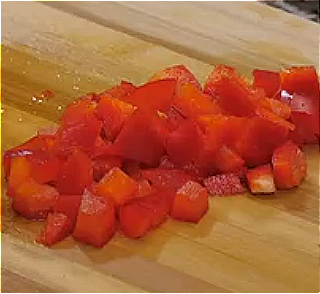
Aspetto rosso vivo con cubetti visibili e integrità variabile (petite/standard/large dice). Profilo dolce–acidulo con naturale umami.
Valore calorico (per 100 g di prodotto)
~15–25 kcal/100 g (tipico ~18–22 kcal).
Medi per 100 g: proteine ~0,8–1,2 g, grassi ~0,1–0,3 g, carboidrati ~3–4 g (zuccheri ~2–3 g), fibre ~1–2 g.
Sodio: variabile (versioni senza sale aggiunto vs. salate).
Principali sostanze contenute
Acidi organici: citrico e malico (governano pH e la nota acidula).
Carotenoidi: licopene prevalente; β-carotene in tracce.
Composti azotati: glutammato e nucleotidi (contributo umami).
Pectine/polisaccaridi: influenzano viscosità e stabilità della nuvolosità.
Minerali: potassio (e magnesio), sodio da sale aggiunto.
Additivi tipici: acido citrico, cloruro di calcio; talvolta acido ascorbico come antiossidante.
Marcatori: °Brix (solidi solubili), pH (tipico 4,0–4,4), peso sgocciolato e colore (L*a*b*).
Processo di produzione
Selezione/lavaggio dei pomodori → scottatura rapida (per pelatura, se prevista) → taglio a dadini con dimensioni standard → riempimento in succo/passata.
Deaerazione per ridurre DO, regolazione pH (acido citrico), eventuale cloruro di calcio per la fermezza.
Trattamento termico (pastorizzazione/sterilizzazione in autoclave) e confezionamento asettico in lattine, vetro o cartoni multistrato (spesso BPA-NI).
Controlli sotto GMP/HACCP con CCP su pH, parametri termici, sigillo e integrità contenitori.
Proprietà sensoriali e tecnologiche
Integrità del cubetto: favorita da cloruro di calcio e da profili hot break; può ridursi in cotture lunghe.
Colore: rosso intenso (licopene); può attenuarsi con ossidazione o processi spinti.
Stabilità: pH acido limita patogeni; rischio principale lieviti/muffe e alteranti termoresistenti se il processo non è ottimale.
Impieghi alimentari
Salse e ragù a pezzi, stufati, chili/curry, pizza topping, bruschette e salse fredde (salsa roja, pico de gallo), zuppe (minestroni/gazpacho).
Consigli: per salse meno acquose sgocciolare prima dell’uso o ridurre il succo in cottura.
Nutrizione e salute
Basso apporto calorico e grassi trascurabili; fonte di potassio e licopene (carotenoide).
Per diete iposodiche scegliere versioni senza sale aggiunto.
La vitamina C diminuisce con calore/stoccaggio; il licopene è relativamente stabile e più disponibile dopo cottura.
Qualità e specifiche (temi tipici)
°Brix del mezzo di governo e pH in specifica; peso sgocciolato conforme allo standard; assenza di difetti (bruciato/metallico).
Microbiologia: patogeni assenti/25 g; lieviti/muffe contenuti; stabilità validata.
Corpi estranei: setacciatura/filtri + metal detector; lattine con orlatura conforme, vetro senza scheggiature.
Conservazione e shelf-life
A temperatura ambiente se adeguatamente processati; una volta aperti, conservare a ≤4 °C e consumare entro 3–4 giorni.
Proteggere da luce e ossigeno; possibile congelare (leggera separazione alla ripresa).
Allergeni e sicurezza
Il pomodoro non è tra gli allergeni maggiori UE; possibili sensibilità individuali.
In stabilimenti misti possibili tracce (es. sedano, glutine): verificare etichetta.
Rischio C. botulinum non credibile a pH <4,6 con processo valido; permane la necessità di buone pratiche igieniche.
Funzioni INCI in cosmesi
Troubleshooting
Salsa troppo acquosa: eccesso di succo → sgocciolare o ridurre in padella; scegliere versioni in passata più concentrata.
Cubetti che si sfaldano: cottura prolungata/acidità bassa → cuocere brevemente o aggiungere i cubetti a fine cottura; preferire prodotti con cloruro di calcio.
Note metalliche: reazione contenitore → usare marchi BPA-NI, preferire vetro/cartone; cuocere con pentole inox.
Colore spento: ossidazione → migliorare deaerazione in ricetta, aggiungere parte fresca a fine cottura.
Sostenibilità e filiera
Upcycling di bucce/semi (olio di semi di pomodoro, fibre); recupero calore/energia; gestione reflui verso BOD/COD target.
Imballaggi riciclabili e tracciabilità completa sotto GMP/HACCP.
Conclusione
I pomodori a cubetti offrono praticità, texture e freschezza in ricetta con basso impatto calorico. Selezione della specifica di taglio, del mezzo di governo e della gestione in cottura determina resa, consistenza e stabilità del piatto finito.
Mini-glossario
°Brix — percentuale in massa di solidi solubili; indica la concentrazione.
pH — misura di acidità/alcalinità; governa stabilità microbica e colore.
DO — dissolved oxygen (ossigeno disciolto): ridurlo limita ossidazioni e perdita di colore/aromi.
BPA-NI — bisfenolo A – non intenzionalmente aggiunto: indicazione per lattine a ridotto rischio di migrazione.
GMP/HACCP — good manufacturing practice / hazard analysis and critical control points: sistemi igienico-preventivi con CCP definiti.
CCP — critical control point: fase in cui un controllo previene/riduce un pericolo (es. pH, trattamento termico, sigillo).
BOD/COD — domanda biochimica/chimica di ossigeno: indicatori dell’impatto dei reflui.
Studi
Il pomodoro è ricco di vitamina A e C e di licopene, il pigmento che produce la caratteristica colorazione rossa e che viene studiato per la prevenzione di molti tipi di tumore, in quanto ha proprietà antiossidanti e svolge un ruolo protettivo per malattie cardiovascolari (1).
E' indicato da molti studi come prevenzione per il tumore alla prostata (2), inibisce la produzione di perossido lipidico sierico migliorando il profilo lipidico (3).
Tuttavia, oltre ai benefici, purtroppo il consumo di pomodoro e dei suoi prodotti derivati può portare ad effetti indesiderati quali la malattia da reflusso gastroesofageo o bruciore di stomaco, allergie, sindrome dell'intestino irritabile, licenodermia, dolori muscolari, artrite e problemi urinari. Questo studio analizza i problemi legati al consumo di pomodori e dei suoi derivati (4).
Contenuto di carotenoidi nel pomodoro

Pomodoro studi
Bibliografia____________________________________________________________________
(1) Przybylska S, Tokarczyk G. Lycopene in the Prevention of Cardiovascular Diseases. Int J Mol Sci. 2022 Feb 10;23(4):1957. doi: 10.3390/ijms23041957. PMID: 35216071; PMCID: PMC8880080.
Abstract. Cardiovascular diseases (CVDs) are the leading cause of human mortality worldwide. Oxidative stress and inflammation are pathophysiological processes involved in the development of CVD. That is why bioactive food ingredients, including lycopene, are so important in their prevention, which seems to be a compound increasingly promoted in the diet of people with cardiovascular problems. Lycopene present in tomatoes and tomato products is responsible not only for their red color but also for health-promoting properties. It is characterized by a high antioxidant potential, the highest among carotenoid pigments. Mainly for this reason, epidemiological studies show a number of favorable properties between the consumption of lycopene in the diet and a reduced risk of cardiovascular disease. While there is also some controversy in research into its protective effects on the cardiovascular system, growing evidence supports its beneficial role for the heart, endothelium, blood vessels, and health. The mechanisms of action of lycopene are now being discovered and may explain some of the contradictions observed in the literature. This review aims to present the current knowledge in recent years on the preventive role of lycopene cardiovascular disorders.
(2) Salem S, Salahi M, Mohseni M, Ahmadi H, Mehrsai A, Jahani Y, Pourmand G. Major dietary factors and prostate cancer risk: a prospective multicenter case-control study. Nutr Cancer. 2011;63(1):21-7. doi: 10.1080/01635581.2010.516875.
Abstract. The association between diet and prostate cancer (PC) risk, although suggestive, still remains largely elusive particularly in the Asian population. This study sought to further evaluate the possible effects of different dietary factors on risk of PC in Iran. Using data from a prospective hospital-based multicenter case-control study, dietary intakes of red meat, fat, garlic, and tomato/tomato products, as well as thorough demographic and medical characteristics, were determined in 194 cases with the newly diagnosed, clinicopathologically confirmed PC and 317 controls, without any malignant disease, admitted to the same network of hospitals. Odds ratios (ORs) and corresponding 95% confidence intervals (CIs) were obtained after adjustment for major potential confounders, including age, body mass index, smoking, alcohol, education, occupation, family history of PC, and total dietary calories. Comparing the highest with the lowest tertile, a significant trend of increasing risk with more frequent consumption was found for dietary fat (OR: 1.79, 95% CI: 1.71-4.51), whereas inverse association was observed for tomato/tomato products (OR: 0.33, 95% CI: 0.16-0.65). A nonsignificant increase in PC risk was revealed for dietary red meat (OR: 1.69, 95% CI: 0.93-3.06). For garlic consumption, a borderline reduction in risk was observed (OR: 0.58, 95% CI: 0.32-1.01; P = 0.05). In conclusion, our study supports the hypothesis that total fat may increase PC risk and tomatoes/tomato products and garlic may protect patients against PC.
(3) Effect of 12-Week Daily Intake of the High-Lycopene Tomato (Solanum Lycopersicum), A Variety Named "PR-7", on Lipid Metabolism: A Randomized, Double-Blind, Placebo-Controlled, Parallel-Group Study. Nishimura M, Tominaga N, Ishikawa-Takano Y, Maeda-Yamamoto M, Nishihira J. Nutrients. 2019 May 25;11(5). pii: E1177. doi: 10.3390/nu11051177.
Abstract. Tomato (Solanum lycopersicum) is a rich source of lycopene, a carotenoid that confers various positive biological effects such as improved lipid metabolism. Here, we conducted a randomized, double-blind, placebo-controlled, parallel-group comparative study to investigate the effects of regular and continuous intake of a new high-lycopene tomato, a variety named PR-7, for 12 weeks, based on 74 healthy Japanese subjects with low-density lipoprotein cholesterol (LDL-C) levels ≥120 to <160 mg/dL. The subjects were randomly assigned to either the high-lycopene tomato or placebo (lycopene-free tomato) group. Each subject in the high-lycopene group ingested 50 g of semidried PR-7 (lycopene, 22.0-27.8 mg/day) each day for 12 weeks, while subjects in the placebo group ingested placebo semidried tomato. Medical interviews were conducted, vital signs were monitored, body composition was determined, and blood and saliva samples were taken at weeks 0 (baseline), 4, 8, and 12. The primary outcome assessed was LDL-C. The intake of high-lycopene tomato increased lycopene levels in this group compared to levels in the placebo group (p < 0.001). In addition, high-lycopene tomato intake improved LDL-C (p = 0.027). The intake of high-lycopene tomato, PR-7, reduced LDL-C and was confirmed to be safe.
(4) Salehi B, Sharifi-Rad R, Sharopov F, Namiesnik J, Roointan A, Kamle M, Kumar P, Martins N, Sharifi-Rad J. Beneficial effects and potential risks of tomato consumption for human health: An overview. Nutrition. 2019 Jun;62:201-208. doi: 10.1016/j.nut.2019.01.012. Epub 2019 Jan 25. PMID: 30925445.
Przybylska S, Tokarczyk G. Lycopene in the Prevention of Cardiovascular Diseases. Int J Mol Sci. 2022 Feb 10;23(4):1957. doi: 10.3390/ijms23041957.
Abstract. Cardiovascular diseases (CVDs) are the leading cause of human mortality worldwide. Oxidative stress and inflammation are pathophysiological processes involved in the development of CVD. That is why bioactive food ingredients, including lycopene, are so important in their prevention, which seems to be a compound increasingly promoted in the diet of people with cardiovascular problems. Lycopene present in tomatoes and tomato products is responsible not only for their red color but also for health-promoting properties. It is characterized by a high antioxidant potential, the highest among carotenoid pigments. Mainly for this reason, epidemiological studies show a number of favorable properties between the consumption of lycopene in the diet and a reduced risk of cardiovascular disease. While there is also some controversy in research into its protective effects on the cardiovascular system, growing evidence supports its beneficial role for the heart, endothelium, blood vessels, and health. The mechanisms of action of lycopene are now being discovered and may explain some of the contradictions observed in the literature. This review aims to present the current knowledge in recent years on the preventive role of lycopene cardiovascular disorders.




