



Celery juice concentrate (Apium graveolens; family Apiaceae)
Description
• Ingredient obtained by vacuum concentration of pressed celery juice, often clarified with pectolytic enzymes and fine filtration.
• Vegetal–herbaceous profile with lightly salty, spicy notes (phthalides, terpenes); intensity varies by cultivar, season, clarification, and target concentration.
• Used as a natural flavoring, a clean-label source of solids, and—in some applications—a natural source of sodium/nitrates (e.g., processed meats, sauces, dressings, ready meals, snacks).
Caloric value (per 100 g)
• Depends on °Brix (soluble solids):
– 40–50 °Brix: ~120–200 kcal.
– 55–65 °Brix: ~200–270 kcal.
– 70 °Brix: ~300 kcal.
• Typical at ~60 °Brix: carbohydrates 50–65 g (mostly sugars), protein ~1–2 g, fat <0.5 g. Sodium variable (can be notable); potassium generally present in good amount.
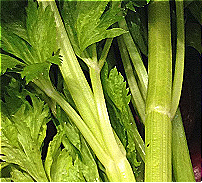
Key constituents
• Sugars: sucrose, glucose, fructose; TSS proportional to °Brix.
• Volatiles: phthalides (e.g., 3-n-butylphthalide), terpenes (limonene, selinene), lactones—drivers of “celery” aroma.
• Nitrates (NO₃⁻): levels depend on variety/season/soil; sometimes leveraged as a “natural” source in meat processing (must meet legal limits).
• Organic acids: malic, citric; typical pH ~4.8–6.0.
• Phenolics/flavonoids in traces (e.g., apigenin glycosides); chlorophyll reduced in clarified fractions.
• Minerals: potassium predominant; sodium variable; traces of calcium and magnesium.
• Analytical markers: °Brix/TSS, volatile profile (GC–MS), nitrates/nitrites (ion chromatography), color L, a, b***, viscosity.
Production process
• Raw material: fresh stalks/ribs, selected and washed; optional peeling/defiberizing.
• Extraction: crushing and pressing; deaeration to limit oxidation/oxidative enzymes.
• Clarification: pectolytic enzymes, flotation/filtration; optional enzyme stabilization.
• Concentration: low-temperature vacuum evaporation or cold (freeze) concentration to target °Brix.
• Finishing: pasteurization and aseptic or hot-fill; barrier packaging with full traceability under GMP/HACCP.
Sensory and technological properties
• Aroma/taste: vegetal–spicy, lightly saline; high concentrations may develop caramelized/Maillard nuances.
• Functionality: adds body and moderate sweetness, enhances umami/savoriness, promotes browning during cooking; can modulate acidity.
• Rheology: viscosity rises with °Brix; aw lower than single-strength juice.
• Compatibility: high doses in dairy/high-protein matrices may yield herbaceous off-notes.
Food uses
• Sauces and condiments, culinary bases, ready meals, soups and fillings.
• Processed meats: as a “natural” nitrate source (use within regulatory and good-practice limits).
• Snacks and savory bakery for aromatic lift and solids contribution.
• Typical inclusion: 0.2–3.0%, to be optimized via pilot trials.
Nutrition and health
• Energy primarily from sugars; fat negligible.
• Sodium/potassium may be significant → consider reduced-sodium targets in formulation.
• Nitrates contribute to dietary intake; ensure compliance with limits and processing to control residual nitrites.
• Any health benefit claims require specific authorization.
Quality and specifications (typical topics)
• °Brix/TSS, pH, density/viscosity in spec; color L, a, b***.
• Nitrates/nitrites within limits; pathogen-free; yeasts/molds controlled.
• Characteristic volatiles (phthalides/terpenes) in range; absence of “sulfidic” or oxidized vegetal notes.
• Pack integrity and validated thermal stability; transparent labeling (nitrates, sodium).
Storage and shelf-life
• Closed aseptic packs: store cool, protected from light/oxygen.
• After opening: refrigerate 0–4 °C and use within a few days.
• Avoid temperature cycling that triggers browning or localized crystallization; apply FIFO.
Allergens and safety
• Celery is a major EU allergen—mandatory labeling; possible cross-reactivity (e.g., birch/mugwort pollen).
• Verify nitrates/nitrites and sodium in recipe; hygiene under HACCP.
• Controls for plant fragments/foreign matter and package integrity.
INCI functions in cosmetics
• Typical entries: Apium Graveolens (Celery) Extract, Apium Graveolens (Celery) Juice (distinct from Apium Graveolens Seed Oil).
• Roles: skin conditioning, natural masking/aromatic; note potential furocoumarins in oily seed fractions (mainly in seed oils).
Troubleshooting
• Browning/dulled green (oxidation/enzymes): deaerate, clarify, use barrier packs, gentle heat curve.
• Herbaceous bitterness: overdosing or fibrous/oxidized raw material → reduce dose, improve clarification/blending.
• Haze/precipitates: insufficient clarification → fine/polish filtration, pectolytic enzymes.
• Unexpected residual nitrites in meat apps: review conversion/fermentation process and pH/time parameters.
• Localized sugar crystallization: temperature oscillations → stable storage, gentle remixing.
Sustainability and supply chain
• Valorize press cake (fiber) in feed/functional ingredients; extract flavones (apigenin) from leaves.
• Manage high-load effluents to BOD/COD targets; heat recovery on evaporators.
• Recyclable packaging and optimized logistics; compliance with GMP/HACCP across the chain.
Conclusion
Celery juice concentrate provides a distinctive aromatic note, contributes to savoriness/umami, and offers technological functions (body, color, browning). Performance and stability hinge on °Brix, raw-material quality, clarification, oxidative control, and proper pasteurization/packaging; tight specifications yield stable, repeatable profiles.
Mini-glossary
• °Brix — Percentage of TSS; guides concentration and perceived sweetness/savoriness.
• TSS — Total soluble solids: sugars, acids, salts; correlates with density and yield.
• pH — Acidity/alkalinity index; impacts aroma, color, and microbiology.
• aw — Water activity: decreases as solids increase; governs microbial stability.
• GC–MS — Gas chromatography–mass spectrometry: volatile profiling technique.
• GMP — Good Manufacturing Practice: hygiene and process-consistency standards.
• HACCP — Hazard Analysis and Critical Control Points: preventive safety system with defined CCP.
• BOD/COD — Biochemical/Chemical Oxygen Demand: effluent load indicators for wastewater impact.
• FIFO — First In, First Out: stock-rotation practice prioritizing older lots.
• CCP — Critical Control Point: process step where a control prevents/reduces a hazard.
Studies
Its seeds have an anti-inflammatory action and positive effects on arterial hypertension (1).
The results of this study confirm that the phenolic compounds and flavonoids present in the celery leaves, such as apigenin and luteolin, exert antioxidant activity (2).
An 8-month study with administration of celery leaf extract has been shown to reduce blood glucose levels, however a lack of association between blood glucose levels and plasma insulin levels in elderly pre-diabetics was found (3).
A mixture of celery and ajowan has been shown to be effective in reducing the frequency and symptoms of dyspepsia (4).
Allergy
The celery is one of the main foods that can trigger allergic reactions (5).

