Honeybush. Tè del Capo (Cyclopia spp.)
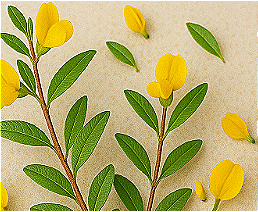
L’honeybush è un gruppo di specie appartenenti al genere Cyclopia, originarie del Sudafrica meridionale, dove crescono principalmente in aree a clima mediterraneo, caratterizzate da estati secche e inverni miti e piovosi. Si tratta di arbusti perenni appartenenti alla famiglia delle Fabaceae, con portamento ramificato, foglie trifogliate o lineari e fiori giallo intenso dall’aroma delicato, che contribuiscono all’aspetto ornamentale delle piante. Le diverse specie del genere si distinguono per morfologia, epoca di fioritura e habitat, pur condividendo caratteristiche botaniche e aromatiche generali.
Dal punto di vista agronomico ed ecologico, l’honeybush tende a svilupparsi in suoli sabbiosi o pietrosi, ben drenati e tendenzialmente acidi, in aree soleggiate e ventilate. È considerato un gruppo di specie relativamente rustiche, adattate a condizioni climatiche variabili e con limitata necessità d’irrigazione; ristagni idrici prolungati, invece, risultano sfavorevoli. Ciclo vegetativo, produzione e qualità finale sono influenzati da specie, altitudine, esposizione, caratteristiche del suolo e condizioni climatiche della stagione.
La composizione delle parti vegetali destinate alla trasformazione comprende una quota significativa di acqua, una frazione di carboidrati, fibre, polifenoli e composti aromatici naturali. Tra le sostanze bioattive sono stati individuati diversi flavonoidi e derivati fenolici, responsabili di parte delle proprietà organolettiche dell’infuso e del profilo aromatico. Sono presenti inoltre quantità variabili di minerali quali potassio, calcio e magnesio, il cui contenuto dipende da specie, suolo e gestione colturale.
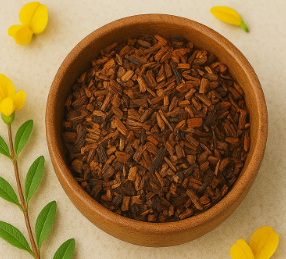
Dal punto di vista alimentare e tecnologico, l’honeybush trova impiego principalmente nella preparazione di infusi e tisane, ottenuti attraverso essiccazione e fermentazione controllata delle parti aeree raccolte. I prodotti derivati si caratterizzano per un aroma dolce, delicato e leggermente mielato, da cui deriva il nome comune, e sono utilizzati anche come base aromatica in miscele, bevande e formulazioni alimentari. Oltre all’uso in infusi, estratti e frazioni vegetali possono essere impiegati in preparazioni tecniche o erboristiche.
La valutazione qualitativa del materiale vegetale destinato alla trasformazione tiene conto di uniformità e integrità delle parti raccolte, colore, carica aromatica, contenuto in polifenoli e assenza di impurità o contaminazioni. Risultano determinanti la corretta selezione delle specie, le modalità di raccolta, le condizioni di essiccazione e gli accorgimenti post–raccolta, al fine di preservare caratteristiche sensoriali e proprietà tecnologiche dell’honeybush.
Classificazione botanica (sistema APG IV)
Nome comune: Honeybush
Nome botanico: Cyclopia spp.
Regno: Plantae
Clade: Angiosperme → Eudicotiledoni → Rosidi → Fabidi
Ordine: Fabales
Famiglia: Fabaceae
Genere: Cyclopia
Specie: diverse specie appartenenti al genere Cyclopia utilizzate per l’infuso
(Il termine “Honeybush” non identifica una singola specie, ma un gruppo di specie del genere Cyclopia.)
Valori nutrizionali indicativi per 100 g (foglie essiccate)
| Componente | Valore medio per 100 g circa* |
|---|
| Energia | ~ 300–330 kcal |
| Carboidrati totali | ~ 60–70 g |
| — di cui zuccheri | ~ 3–5 g |
| Fibra alimentare | ~ 35–45 g |
| Proteine | ~ 8–12 g |
| Lipidi totali | ~ 2–4 g |
| — di cui acidi grassi saturi (SFA) | parte della frazione lipidica |
| Sodio | molto basso |
| Potassio | quantità moderata (variabile tra specie) |
* Valori riferiti a foglie essiccate. I dati possono variare sensibilmente in funzione di specie, terreno, clima, lavorazioni, fermentazione ed essiccazione.
Mini-glossario acronimi
SFA = Saturated Fatty Acids (acidi grassi saturi). Quando prevalgono sui grassi insaturi nella dieta, sono considerati meno favorevoli per l’equilibrio cardiovascolare.
MUFA = acidi grassi monoinsaturi. Generalmente valutati come più benefici se sostituiscono i saturi.
PUFA = acidi grassi polinsaturi. Includono omega-6 e omega-3, essenziali in piccole quantità e coinvolti nella struttura cellulare e nel bilanciamento delle risposte infiammatorie.
Caratteristiche della pianta
Portamento: arbusto perenne sempreverde, alto 1–2,5 m, con numerosi rami sottili e legnosi.
Foglie: trifogliate, lineari o ellittiche, coriacee, senza picciolo, con margine intero e superficie liscia; di colore verde intenso.
Fiori: gialli dorati, profumati, papilionacei tipici delle Fabaceae, riuniti in grappoli terminali; fioritura primaverile.
Frutti: legumi secchi contenenti semi duri, marroni o bruni, che si aprono spontaneamente a maturità.
Radici: fittonante e profonda, adattata a terreni poveri e sabbiosi.
Habitat: pendii soleggiati, sabbiosi o rocciosi, da 200 a 1000 m di altitudine; clima mediterraneo secco.
Composizione chimica (principali costituenti delle foglie e dei rami)
Polifenoli e flavonoidi: mangiferina, isomangiferina, isovitexina, orientina, luteolina, quercetina (attività antiossidante, antinfiammatoria e calmante).
Xantoni: composti fenolici tipici del genere Cyclopia, tra cui la mangiferina, responsabile di parte dell’attività antiossidante e antidiabetica.
Acidi fenolici: acido ferulico, acido caffeico e acido p-cumarico.
Tannini e composti aromatici volatili: contribuiscono al sapore mielato e al colore ambrato dell’infuso.
Assenza di caffeina e teina: bevanda naturalmente priva di stimolanti.
Coltivazione e condizioni di crescita
Clima: mediterraneo, con inverni miti e piogge stagionali; resiste bene alla siccità e ai venti salmastri.
Esposizione: pieno sole, indispensabile per la produzione di composti aromatici.
Suolo: sabbioso, ben drenato, leggermente acido o neutro; povero di nutrienti.
Propagazione: per seme o talea; germinazione migliorata con scarificazione o bagno caldo.
Raccolta: taglio dei rami giovani durante la fioritura per la produzione di tè.
Lavorazione: fermentazione controllata (ossidazione enzimatica) che sviluppa aroma e colore; successiva essiccazione all’aria.
Usi e benefici (tradizionali e supportati da evidenze scientifiche preliminari)
Antiossidante: i polifenoli proteggono le cellule dallo stress ossidativo.
Antinfiammatorio e calmante: utile in stati infiammatori lievi e come bevanda rilassante serale.
Ipoglicemizzante e regolatore metabolico: studi preliminari indicano che la mangiferina può contribuire a migliorare il metabolismo del glucosio.
Digestivo e depurativo: l’infuso favorisce una buona digestione e contribuisce all’equilibrio intestinale.
Tonica e priva di caffeina: ideale per bambini e adulti sensibili agli stimolanti.
Ricerche scientifiche suggeriscono effetti benefici antiossidanti e potenzialmente cardioprotettivi, ma sono necessarie ulteriori conferme cliniche.
Applicazioni
Alimentare: bevanda simile al tè, dolce e aromatica, servita calda o fredda.
Erboristeria: infusi e estratti ricchi di polifenoli per favorire rilassamento e benessere digestivo.
Cosmetica: estratti antiossidanti utilizzati in creme anti-age e prodotti per pelli sensibili (Cyclopia Intermedia Leaf Extract)
Industriale: impiego di residui vegetali per prodotti naturali ricchi in antiossidanti.
Medicina: alcuni studi suggeriscono attività antidiabetica e anti-obesità.
Raccolta e lavorazione
Raccolta: rami e foglie durante la piena fioritura (primavera-estate).
Fermentazione: fase chiave che sviluppa l’aroma mielato e conferisce il tipico colore bruno dorato all’infuso.
Essiccazione: lenta, in luogo ventilato, per preservare i composti aromatici.
Conservazione: in contenitori ermetici al riparo da umidità e luce.
Considerazioni ambientali
Le specie di Cyclopia sono endemiche del fynbos sudafricano, ecosistema di grande biodiversità. La raccolta sostenibile e la coltivazione controllata sono fondamentali per evitare l’erosione genetica e proteggere le popolazioni naturali. La pianta contribuisce alla stabilizzazione del suolo e al mantenimento dell’equilibrio ecologico.
Sicurezza, controindicazioni, interazioni
Generalmente considerata sicura e ben tollerata.
Effetti collaterali: non noti ai dosaggi normali di infusione.
Controindicazioni: nessuna specifica, salvo ipersensibilità individuale.
Gravidanza e allattamento: infuso leggero generalmente considerato sicuro.
Interazioni farmacologiche: non documentate, ma si consiglia prudenza in caso di terapia ipoglicemizzante.
Preparazioni comuni (uso generale, non terapeutico)
- Combinazioni: spesso miscelato con rooibos (Aspalathus linearis) per aromi dolci e bilanciati.
Bibliografia__________________________________________________________________________
Ajuwon OR, Ayeleso AO, Adefolaju GA. The Potential of South African Herbal Tisanes, Rooibos and Honeybush in the Management of Type 2 Diabetes Mellitus. Molecules. 2018 Dec 5;23(12):3207. doi: 10.3390/molecules23123207.
Abstract. Diabetes mellitus is a metabolic disease that can lead to high morbidity, mortality and long-term complications. Available treatment strategies, which are mainly based on treating hyperglycemia, with insulin and other pharmacological agents are not completely efficient and can even lead to development of unwanted side effects. Scientific evidence suggests that bioactive compounds from teas and other plant-based foods, which are known source of natural antioxidants, could be an attractive strategy to preferentially treat and manage type 2 diabetes mellitus (T2DM) and thus, have significant therapeutic implications. In this review, we attempt an in-depth analysis and discussion of the current progress in our understanding of the antidiabetic potential of two commercialized South Africa herbal tisanes-Rooibos and Honeybush and their polyphenols.
Jack BU, Ramharack P, Malherbe C, Gabuza K, Joubert E, Pheiffer C. Cyclopia intermedia (Honeybush) Induces Uncoupling Protein 1 and Peroxisome Proliferator-Activated Receptor Alpha Expression in Obese Diabetic Female db/db Mice. Int J Mol Sci. 2023 Feb 15;24(4):3868. doi: 10.3390/ijms24043868.
Abstract. Previously, we reported that a crude polyphenol-enriched fraction of Cyclopia intermedia (CPEF), a plant consumed as the herbal tea, commonly known as honeybush, reduced lipid content in 3T3-L1 adipocytes and inhibited body weight gain in obese, diabetic female leptin receptor-deficient (db/db) mice. In the current study, the mechanisms underlying decreased body weight gain in db/db mice were further elucidated using western blot analysis and in silico approaches. CPEF induced uncoupling protein 1 (UCP1, 3.4-fold, p < 0.05) and peroxisome proliferator-activated receptor alpha (PPARα, 2.6-fold, p < 0.05) expression in brown adipose tissue. In the liver, CPEF induced PPARα expression (2.2-fold, p < 0.05), which was accompanied by a 31.9% decrease in fat droplets in Hematoxylin and Eosin (H&E)-stained liver sections (p < 0.001). Molecular docking analysis revealed that the CPEF compounds, hesperidin and neoponcirin, had the highest binding affinities for UCP1 and PPARα, respectively. This was validated with stabilising intermolecular interactions within the active sites of UCP1 and PPARα when complexed with these compounds. This study suggests that CPEF may exert its anti-obesity effects by promoting thermogenesis and fatty acid oxidation via inducing UCP1 and PPARα expression, and that hesperidin and neoponcirin may be responsible for these effects. Findings from this study could pave the way for designing target-specific anti-obesity therapeutics from C. intermedia.
Kokotkiewicz A, Luczkiewicz M. Honeybush (Cyclopia sp.) - a rich source of compounds with high antimutagenic properties. Fitoterapia. 2009 Jan;80(1):3-11. doi: 10.1016/j.fitote.2008.11.001.
Abstract. The genus Cyclopia (Fabaceae family) includes a number of shrubs endemic to Cape Fynbos region of South Africa. The most common of these plants is Cyclopia intermedia E. Mey., used together with other Cyclopia species (mainly C. subternata and C. sessiliflora) to manufacture the honeybush herbal tea which has been produced in South Africa roughly since the beginning of the 19th century. Honeybush infusions are gaining popularity due to their characteristic honey-like flavour, low tannin content, absence of caffeine and potential health effects related to their antimutagenic and antioxidant properties. The presented review summarizes information concerning botany, chemistry, biological activity and application of Cyclopia plants.
McKay DL, Blumberg JB. A review of the bioactivity of South African herbal teas: rooibos (Aspalathus linearis) and honeybush (Cyclopia intermedia). Phytother Res. 2007 Jan;21(1):1-16. doi: 10.1002/ptr.1992.
Abstract. Rooibos (Aspalathus linearis) and honeybush (Cyclopia intermedia) are popular tisanes in their native South Africa and have a growing worldwide market. Both herbal teas are used traditionally for medicinal purposes and are rich in polyphenols with rooibos a rare source of the dietary dihydrochalcones, aspalathin and nothofagin. The principal polyphenols in honeybush include the xanthone mangiferin and the flavonones hesperitin and isokuranetin. Despite their divergent phytochemical and nutrient compositions, rooibos and honeybush share potent antioxidant and antimutagenic activities in vitro. Animal model studies indicate both herbal teas possess potent antioxidant, immune-modulating and chemopreventive actions. However, human studies of rooibos are limited and of honeybush are absent. No adverse effects of rooibos or honeybush consumption as tisanes have been reported.
Kamara BI, Brand DJ, Brandt EV, Joubert E. Phenolic metabolites from honeybush tea (Cyclopia subternata). J Agric Food Chem. 2004 Aug 25;52(17):5391-5. doi: 10.1021/jf040097z.
Abstract. Cyclopia subternata is one of the 24 Cyclopia species that are used to brew honeybush tea, a unique South African herbal beverage with a pleasant taste and flavor. It contains various antioxidants, very low tannin content, and no caffeine. Many health properties are associated with regular consumption of the tea. Honeybush infusions have been noted as a tonic for colds and influenza, catarrh, and pulmonic tuberculosis and is becoming well-known for its effectiveness in alleviating menopausal symptoms in women. "Unfermented" leaves of C. subternata contain pinitol, shikimic acid, p-coumaric acid, 4-glucosyltyrosol, epigallocatechin gallate, the isoflavone orobol, the flavanones hesperedin, narirutin, and eriocitrin, a glycosylated flavan, the flavones luteolin, 5-deoxyluteolin, and scolymoside, the xanthone mangiferin, and the flavonol C-6-glucosylkaempferol. The structures were elucidated by spectroscopic and spectrometric analysis.
Im AR, Song JH, Lee MY, Yeon SH, Um KA, Chae S. Anti-wrinkle effects of fermented and non-fermented Cyclopia intermedia in hairless mice. BMC Complement Altern Med. 2014 Oct 29;14:424. doi: 10.1186/1472-6882-14-424.
Abstract. Background: The fermented leaves and stems of Cyclopia intermedia are used to brew honeybush tea, an herbal tea indigenous to South Africa with reported anti-wrinkle effects. Wrinkle formation caused by photoaging clearly involves changes in extracellular matrix components and mechanical properties of the skin. Methods: The inhibitory effects of honeybush extract and fermented honeybush on wrinkle formation were determined by analyzing skin replicas, histologically examining epidermal thickness, and identifying damage to collagen fibers. Results: Honeybush extract and fermented honeybush reduced the length and depth of skin winkles caused by UV irradiation and inhibited thickening of the epidermal layer, in addition to suppressing collagen tissue breakdown reactions, indicating its potential use as a skin wrinkle prevention agent. Conclusions: This in vivo study demonstrates that honeybush produces significant anti-wrinkle effects and is therefore of interest in anti-aging skin care products.
Hering A, Ochocka JR, Baranska H, Cal K, Stefanowicz-Hajduk J. Mangiferin and Hesperidin Transdermal Distribution and Permeability through the Skin from Solutions and Honeybush Extracts (Cyclopia sp.)-A Comparison Ex Vivo Study. Molecules. 2021 Oct 29;26(21):6547. doi: 10.3390/molecules26216547.
Abstract. Polyphenolic compounds-mangiferin and hesperidin-are, among others, the most important secondary metabolites of African shrub Cyclopia sp. (honeybush). The aim of this study was to compare the percutaneous absorption of mangiferin and hesperidin from solutions (water, ethanol 50%, (v/v)) and extracts obtained from green and fermented honeybush (water, ethanol 50%, (v/v)). Research was performed with the Bronaugh cells, on human dorsal skin. The mangiferin and hesperidin distributions in skin layers (stratum corneum, epidermis, and dermis) and in acceptor fluid (in every 2, 4, 6, and 24 h) were evaluated by HPLC-Photodiode Array Coulometric and Coulometric Electrochemical Array Detection. The transdermal distribution of hesperidin was also demonstrated by fluorescence microscopy. Results indicated that mangiferin and hesperidin were able to cross the stratum corneum and penetrate into the epidermis and dermis. An advantage of hesperidin penetration into the skin from the water over ethanol solution was observed (451.02 ± 14.50 vs. 357.39 ± 4.51 ng/cm2), as well as in the mangiferin study (127.56 ± 9.49 vs. 97.23 ± 2.92 ng/cm2). Furthermore, mangiferin penetration was more evident from nonfermented honeybush ethanol extract (189.85 ± 4.11 ng/cm2) than from solutions. The permeation of mangiferin and hesperidin through the skin to the acceptor fluid was observed regardless of whether the solution or the honeybush extract was applied. The highest ability to permeate the skin was demonstrated for the water solution of hesperidin (250.92 ± 16.01 ng/cm2), while the hesperidin occurring in the extracts permeated in a very low capacity. Mangiferin from nonfermented honeybush ethanol extract had the highest ability to permeate to the acceptor fluid within 24 h (152.36 ± 8.57 ng/cm2).