Thyme extract
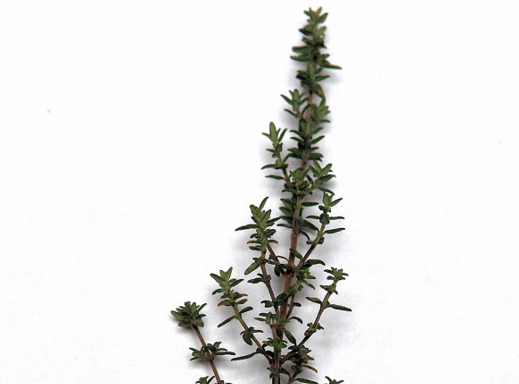
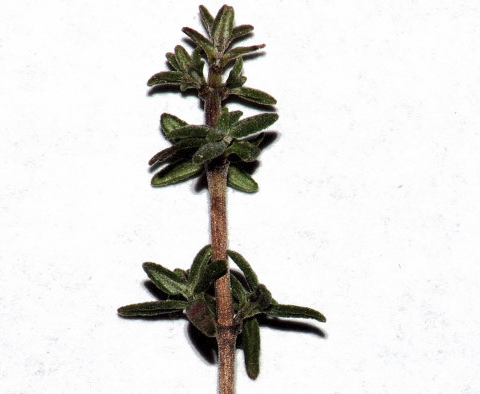
Thyme (Thymus vulgaris) is an aromatic plant that grows in Mediterranean countries and belongs to the botanical family of Lamiaceae.
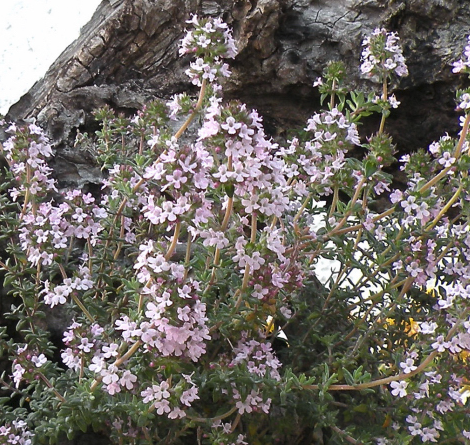
It reaches a height of about 20 cm. The most common species are:
- Thymus Citriodorus Aureus: intense lemon scent.
- Thymus pseudolanuginosus: soft to the touch but without perfume.
- Thymus herba-barona: rather low seedling and cumin scent.
- Thymus zygis
- Thymus mastichina
- Thymus capitatus
- Thymus camphoratus
- Thymus carnosus
- Thymus daenensis
It's an easily grown plant. If you put it in a jar, be careful not to wet it too much.

What it is used for and where
Food
It is used to flavour sauces, roasts, etc.
Medical
Some news on the health aspect.
Thymol is the most abundant phenolic compound of thyme essential oil and has antioxidant properties. while among the flavonoids present, luteolin has anti-inflammatory properties and anti-nociceptive activity (1).
In a comparison between a denture cleaner and a thyme essential oil solution, thyme essential oil has been shown to be more effective in preserving the surface roughness of the base resins for dentures (2).
Among the health-related components, rosmarinic acid is one of the main bioactive components found in Thymus vulgaris with properties of protecting the skin from ultraviolet rays (3).
The proportion of thymol examined by gas chromatography-mass spectrometry analysis showed a significant percentage ranging from 55.35% to 50.53% and a strong antimicrobial and antioxidant activity (4).
The essential oil of two species Thymus camphoratus and Thymus carnosus, used in traditional medicine, have destroyed preformed biofilms of Candida albicans showing antifungal activity (5).
This study evaluated in vivo and in vitro the antitumour effects of a 0.1% and 1% administration of Thymus vulgaris in the diet of rats with breast cancer. Thymus vulgaris demonstrated significant chemopreventive and therapeutic activities against experimental breast cancer (6).
Cosmetics
Skin protectant. It creates a protective barrier on the skin to defend it from harmful substances, irritants, allergens, pathogens that can cause various inflammatory conditions. These products can also improve the natural skin barrier and in most cases more than one is needed to achieve an effective result.
Fragrance. It plays a very important role in the formulation of cosmetic products as it allows perfume to be enhanced, masked or added to the final product, improving its commercial viability. The consumer always expects to find a pleasant scent in a cosmetic product.
Thyme studies
References_______________________________________________________________________
(1) Fan X, Du K, Li N, Zheng Z, Qin Y, Liu J, Sun R, Su Y. Evaluation of Anti-Nociceptive and Anti-Inflammatory Effect of Luteolin in Mice. J Environ Pathol Toxicol Oncol. 2018;37(4):351-364. doi: 10.1615/JEnvironPatholToxicolOncol.2018027666.
Abstract. Flavonoids are polyphenolic compounds that not only impart coloration to plants and fruits, but also protect plants from pathogens, radiation, etc. They serve as a nutrient to plants and possess immense anti-oxidant properties. Research has shown that they exhibit anti-inflammatory, anti-cancer, and neuroprotective properties in both in vitro and in vivo analyses. Luteolin is one such flavonoid belongs to the group of flavones present in herbs such as thyme, chamomile, celery, and green pepper. The epidemiological data on luteolin consumption show that luteolin has anti-inflammatory activity and protects from diseases associated with inflammation. The present study assessed the anti-nociceptive properties of luteolin, a potent anti-inflammatory agent, in mice. The results demonstrated that luteolin produces a significant and dose-dependent increase in hot plate latency and tail withdrawal time. It also reduced the number of abdominal constrictions and paw licking induced by acetic acid and glutamate, respectively. Luteolin inhibited the nociceptive responses in both phases of formalin test. The anti-inflammatory property of luteolin was also confirmed with different anti-inflammatory mice models induced by carrageenan and air pouch. Behavioral changes in luteolin-treated mice were assessed with open-field test to confirm the muscle relaxant property. The results of the current study from various pain and inflammatory models confirms that luteolin possess potent anti-nociceptive and anti-inflammatory properties and can thus be used as a drug in pain management.
(2) Namala BB, Hegde V. Comparative evaluation of the effect of plant extract, Thymus vulgaris and commercially available denture cleanser on the flexural strength and surface roughness of denture base resin. Indian Prosthodont Soc. 2019 Jul-Sep;19(3):261-265. doi: 10.4103/jips.jips_141_19.
Abstract. Aim: This study aims to evaluate and compare the effect of plant extract (thyme essential oil solution) and commercially available denture cleanser on the flexural strength and surface roughness of denture base resin. Settings and design: Comparative In-vitro study. Chemical denture cleansers play a vital role in maintaining the hygiene and serviceability of the dentures. Bacterial resistance to these chemical agents paved way to plant-extracts as novel denture cleansing agents. However, the effect of these plant-extract denture cleansers on the physical and surface characteristics of denture base resins has not been evaluated. Material and methods: A total of 90 heat polymerizing denture base material (Trevalon, Dentsply) samples were fabricated and divided into 3 groups with 30 samples each. Samples from each group were immersed in their respective denture cleanser solution (Group A- Distilled water(control); Group B- Fittydent denture cleanser; Group C- Thyme essential oil solution denture cleanser) for a simulated overnight 8hr immersion for 180 days. The samples were evaluated for increase in surface roughness and flexural strength using Tally-surf Surface Profiler and Instron Universal Testing Machine respectively. Results obtained were statistically analyzed using one-way ANOVA. Statistical analysis used: Oneway ANOVA , Post hoc Tukey's test. Results: Thyme essential oil solution group showed minimal increase in surface roughness (ΔRa) with values comparable to that of the control group which had the least increase in surface roughness and Fittydent group showed significant increase (P < 0.05) in surface roughness. For flexural strength, statistically significant difference (P < 0.05) was observed among the three groups with Fittydent group showing the highest flexural strength followed by control group and Thyme essential oil solution group. However, the decrease in the flexural strength was not of clinical significance. Conclusion: Plant extract - thyme essential oil denture cleanser was superior in preserving the surface roughness of denture base resins compared to commercially available denture cleanser. Clinically significant difference in flexural strength was not observed between the denture cleanser groups.
(3) Sun Z, Park SY, Hwang E, Zhang M, Seo SA, Lin P, Yi TH. Thymus vulgaris alleviates UVB irradiation induced skin damage via inhibition of MAPK/AP-1 and activation of Nrf2-ARE antioxidant system. J Cell Mol Med. 2016 Sep 19. doi: 10.1111/jcmm.12968.
(4) . Gedikoğlu A, Sökmen M, Çivit A. Evaluation of Thymus vulgaris and Thymbra spicata essential oils and plant extracts for chemical composition, antioxidant, and antimicrobial properties Food Sci Nutr. 2019 Apr 2;7(5):1704-1714. doi: 10.1002/fsn3.1007
Abstract. The objectives of this study were (a) to obtain the essential oils (by hydrodistillation [HD] and microwave-assisted extraction [MAE] methods) to determine the effect of the oil extraction method on the chemical composition, oil yield (%), free radical scavenging activity (IC50), ferric reducing antioxidant power (FRAP) value, and antimicrobial properties of Thymus vulgaris (thyme) and Thymbra spicata (zahter); and (b) to determine the effect of different solvents (methanol [80%] and ethanol [80%]) on extraction by means of the phenolic acid composition, total phenolic content, total flavonoid content, IC50, and FRAP value of thyme and zahter. Gas chromatography-mass spectrometry analysis showed that the amount of thymol (55.35%; 50.53%) and p-cymene (11.2%; 11.79%) was found to be highest in thyme, when using HD and MAE, respectively. However, the highest amounts of carvacrol (68.20%; 66.91%) and γ-terpinene (13.25%; 13.94%) were found in zahter, when using HD and MAE, respectively. Thyme essential oil had higher antioxidant capacity for both HD and MAE in comparison with zahter essential oil. Methanol extracts of both thyme and zahter had higher phenolic composition in comparison with their ethanol extracts. Extracts of both plants did not show any antimicrobial properties. However, essential oils of both thyme and zahter showed antimicrobial activity against chosen bacteria. Highest inhibition zone (radius) was shown against Staphylococcus aureus ATCC 9144 by the essential oils.
(5) Alves M, Gonçalves MJ, Zuzarte M, Alves-Silva JM, Cavaleiro C, Cruz MT, Salgueiro L. Unveiling the Antifungal Potential of Two Iberian Thyme Essential Oils: Effect on C. albicans Germ Tube and Preformed Biofilms. Front Pharmacol. 2019 May 2;10:446. doi: 10.3389/fphar.2019.00446
Abstract. Fungal infections remain a burden worldwide, thus underpinning the need for effective new therapeutic approaches. In the present study, the antifungal effect of the essential oils of two thyme species, Thymus camphoratus and Thymus carnosus, used in traditional medicine in Portugal, as well as their major compounds was assessed. A special focus was placed on their effect on Candida albicans virulence factors. Also, the safety profile of the essential oils was assessed on keratinocytes. The essential oils were analyzed by gas chromatography (GC) and gas chromatography/mass spectroscopy (GC/MS). The minimal inhibitory and minimal fungicidal concentrations of the essential oils and their main compounds were assessed on reference and clinical strains. Also, their effect on C. albicans germ tube formation, metabolism, and biofilm disruption were considered. T. camphoratus oil was rich in 1,8-cineole and α-pinene whereas T. carnosus oil showed high amounts of borneol and camphene. Regarding the antifungal effect, both oils were more active against Cryptococcus neoformans and dermatophytes and very effective in inhibiting C. albicans germ tube formation, at doses well below their MIC and in a higher extend than the isolated compounds and fluconazole, an antifungal drug widely used in the clinic. The oils also disrupted preformed C. albicans biofilms. Furthermore, no toxicity was observed at pharmacological relevant concentrations towards keratinocytes. Our study validates the traditional uses ascribed to these Iberian species. Furthermore, it brings new insights on the antifungal potential and mechanism of action of these thyme species, thus paving the way for the development of novel effective antifungal drugs.
(6) Kubatka P, Uramova S, Kello M, Kajo K, Samec M, Jasek K, Vybohova D, Liskova A, Mojzis J, Adamkov M, Zubor P, Smejkal K, Svajdlenka E, Solar P, Samuel SM, Zulli A, Kassayova M, Lasabova Z, Kwon TK, Pec M, Danko J, Büsselberg D. Anticancer Activities of Thymus vulgaris L. in Experimental Breast Carcinoma in Vivo and in Vitro Int J Mol Sci. 2019 Apr 9;20(7). pii: E1749. doi: 10.3390/ijms20071749.
Abstract. Naturally-occurring mixtures of phytochemicals present in plant foods are proposed to possess tumor-suppressive activities. In this work, we aimed to evaluate the antitumor effects of Thymus vulgaris L. in in vivo and in vitro mammary carcinoma models. Dried T. vulgaris (as haulm) was continuously administered at two concentrations of 0.1% and 1% in the diet in a chemically-induced rat mammary carcinomas model and a syngeneic 4T1 mouse model. After autopsy, histopathological and molecular analyses of rodent mammary carcinomas were performed. In addition, in vitro evaluations using MCF-7 and MDA-MB-231 cells were carried out. In mice, T. vulgaris at both doses reduced the volume of 4T1 tumors by 85% (0.1%) and 84% (1%) compared to the control, respectively. Moreover, treated tumors showed a substantial decrease in necrosis/tumor area ratio and mitotic activity index. In the rat model, T. vulgaris (1%) decreased the tumor frequency by 53% compared to the control. Analysis of the mechanisms of anticancer action included well-described and validated diagnostic and prognostic markers that are used in both clinical approach and preclinical research. In this regard, the analyses of treated rat carcinoma cells showed a CD44 and ALDH1A1 expression decrease and Bax expression increase. Malondialdehyde (MDA) levels and VEGFR-2 expression were decreased in rat carcinomas in both the T. vulgaris treated groups. Regarding the evaluations of epigenetic changes in rat tumors, we found a decrease in the lysine methylation status of H3K4me3 in both treated groups (H3K9m3, H4K20m3, and H4K16ac were not changed); up-regulations of miR22, miR34a, and miR210 expressions (only at higher doses); and significant reductions in the methylation status of four gene promoters-ATM serin/threonine kinase, also known as the NPAT gene (ATM); Ras-association domain family 1, isoform A (RASSF1); phosphatase and tensin homolog (PTEN); and tissue inhibitor of metalloproteinase-3 (TIMP3) (the paired-like homeodomain transcription factor (PITX2) promoter was not changed). In vitro study revealed the antiproliferative and proapoptotic effects of essential oils of T. vulgaris in MCF-7 and MDA-MB-231 cells (analyses of 3-(4,5-dimethylthiazol-2-yl)-5-(3-carboxymethoxyphenyl)-2-(4-sulfophenyl)-2H-tetrazolium) (MTS); 5-bromo-20-deoxyuridine (BrdU); cell cycle; annexin V/PI; caspase-3/7; Bcl-2; PARP; and mitochondrial membrane potential). T. vulgaris L. demonstrated significant chemopreventive and therapeutic activities against experimental breast carcinoma.




