Pomelo (Citrus maxima / Citrus grandis)
Il pomelo è un agrume originario del Sud-Est asiatico, antenato del pompelmo (ibrido tra C. maxima e arancio dolce). Si caratterizza per frutti molto grandi, buccia spessa e albedo voluminoso; la polpa può essere gialla, bianca o rosata a seconda della cultivar.
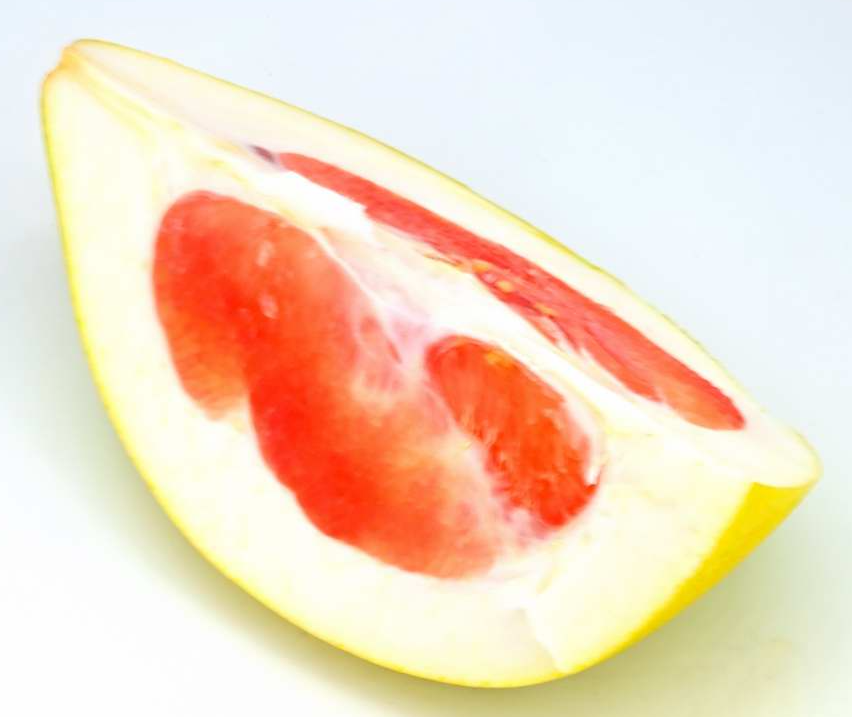
Nome comune: Pomelo (o pummelo)
Pianta di origine: Citrus maxima (Burm.) Merr. / Citrus grandis (L.) Osbeck
(le due denominazioni sono sinonimi botanici)
Regno: Plantae
Clado: Angiosperme
Clado: Eudicotiledoni
Ordine: Sapindales
Famiglia: Rutaceae
Genere: Citrus
Specie: Citrus maxima / Citrus grandis
Coltivazione e condizioni di crescita
Clima:
Il pomelo è una specie tipica dei climi tropicali e subtropicali.
Predilige temperature calde durante tutto l’anno.
Non sopporta il gelo: danni già a 0 °C.
In climi temperato–caldi può crescere se riparato dai venti freddi.
Richiede estati calde e umide e inverni molto miti.
Esposizione:
Richiede piena esposizione solare per garantire:
crescita vegetativa vigorosa,
fioritura regolare,
sviluppo di frutti grandi e ricchi di succo.
In ambienti molto aridi può beneficiare di una leggera ombreggiatura estiva.
Terreno:
Il pomelo cresce meglio in terreni:
ben drenati,
di medio impasto o sabbiosi-limosi,
ricchi di sostanza organica,
con pH leggermente acido o neutro (6,0–7,0).
Soffre in suoli pesanti con ristagni idrici, che favoriscono marciumi radicali e infezioni fungine.
Irrigazione:
Ha un fabbisogno idrico medio-alto, soprattutto durante:
È importante mantenere un’umidità costante senza eccessi. Irrigazioni irregolari causano caduta dei fiori, spaccature della buccia e frutti poco uniformi.
Temperatura:
Crescita ideale: 22–30 °C
Sensibile sotto i 5–7 °C
Teme colpi di calore prolungati oltre 38–40 °C
Umidità relativa elevata favorisce lo sviluppo dei frutti
Concimazione:
Il pomelo risponde bene a fertilizzazioni bilanciate:
Azoto per la crescita vegetativa (senza eccedere).
Fosforo per la fioritura e la salute del sistema radicale.
Potassio per la qualità del frutto, il contenuto zuccherino e la resistenza agli stress.
Ammendanti organici migliorano fertilità e struttura del suolo.
Cure colturali:
Potatura leggera per arieggiare la chioma e mantenere forma equilibrata.
Rimozione dei succhioni basali.
Controllo di parassiti tipici degli agrumi:
cocciniglie,
afidi,
minatore serpentino,
aleurodidi.
Monitoraggio per patologie come mal secco, gommosi e micosi fogliari.
Pacciamatura per mantenere umidità del terreno nelle zone secche.
Raccolta:
La raccolta avviene tra tardo autunno e inverno (variabile secondo cultivar e clima).
I frutti maturi:
raggiungono grandi dimensioni,
presentano buccia spessa e leggermente spugnosa,
hanno polpa gialla, rosata o rossa a seconda della varietà.
Il pomelo non matura ulteriormente dopo la raccolta, quindi va colto solo quando raggiunge piena maturazione sulla pianta.
Moltiplicazione:
Il pomelo si moltiplica principalmente tramite innesto su portainnesti agrumicoli (arancio amaro, Citrus macrophylla, Poncirus trifoliata e ibridi) per migliorare vigoria e resistenza.
La semina è possibile, ma:
Forme commerciali
Frutto fresco intero; spicchi pelati (“peeled segments”) confezionati; succhi e nettari; scorze candite e marmellate; zest essiccato; olio essenziale di scorza per impieghi aromatizzanti.
Valore calorico (polpa edibile, 100 g)
Circa 35–45 kcal per 100 g (tipico ≈ 38–40 kcal/100 g; variabilità legata a cultivar e maturazione).
Composizione media (polpa, 100 g)
Acqua ~88–91 g.
Carboidrati ~8–10 g (prevalentemente zuccheri semplici).
Fibre ~1–2 g.
Proteine ~0,6–0,9 g.
Grassi ~0,1 g (trascurabili).
Minerali e vitamine: potassio ~200–220 mg; magnesio e calcio in tracce; vitamina C ~45–60 mg; folati in piccole quantità.
Fitochimica: flavanoni (naringina, neoesperidina), limonoidi (limonina), furanocumarine (per esempio bergamottina, presenti in misura variabile), polifenoli minori; carotenoidi più evidenti nelle polpe rosate.
Proprietà sensoriali e tecnologiche
Aroma agrumato pulito con note floreali; sapore da dolce-acidulo a leggermente amarognolo (naringina nelle membrane). La buccia spessa protegge il frutto e favorisce una buona conservabilità. Gli spicchi “pelati a vivo” riducono l’amaro nei prodotti ready-to-eat. Lo zest e l’olio essenziale apportano note di limonene e monoterpeni utili in pasticceria e bevande.
Impieghi alimentari
Consumo fresco (spicchi, insalate, poke, carpacci di pesce); spremute e mix beverage; confetture/marmellate e scorze candite; topping per dessert e yogurt; zest per aromatizzare primi piatti, marinature leggere e cocktail analcolici.
Nutrizione e salute
Il pomelo fornisce idratazione, vitamina C e potassio con apporto energetico moderato. Le fibre contribuiscono alla sazietà. La frazione lipidica è trascurabile; in questo contesto gli acronimi lipidici (MUFA, PUFA, SFA) non sono rilevanti sul piano quantitativo, ma si riportano in mini-glossario per coerenza editoriale.
Interazioni, allergeni e sicurezza
Possibili interazioni con farmaci: alcune cultivar contengono furanocumarine (analoghe a quelle del pompelmo) che possono influenzare il metabolismo di farmaci sensibili (soprattutto substrati CYP3A4 e trasportatori); l’entità è variabile per cultivar e processo. In caso di terapie critiche, è prudente consultare un professionista sanitario. Le allergie agli agrumi sono poco frequenti ma documentate; attenzione alle cross-reazioni in soggetti sensibili. Controllare sempre l’integrità del frutto (assenza di muffe, ammaccature profonde).
Qualità e specifiche (temi tipici)
Frutti pesanti per la taglia, buccia tesa e profumata, assenza di macchie o aree mollicce. Grado zuccherino (°Brix) e acidità titolabile determinano il profilo dolce/acidulo. Per prodotti trasformati: pH, torbidità, colore, profilo aromatico e carica microbica conformi alla categoria.
Conservazione e shelf-life
Frutti interi: 10–15 °C, ambiente ventilato e asciutto; evitare stoccaggi troppo caldi che accelerano disidratazione e perdita di aroma. Una volta sbucciato, conservare gli spicchi in frigorifero in contenitore ermetico e consumare entro 2–3 giorni. Proteggere da luce e ossigeno i succhi per limitare imbrunimenti e perdita di vitamina C.
Troubleshooting
Sapore eccessivamente amaro: rimuovere accuratamente le membrane; preferire cultivar più dolci o frutti ben maturi.
Polpa asciutta o fibrosa: indice di frutti vecchi o conservati a temperatura troppo elevata.
Note “cotte” nel succo: possibile sovratrattamento termico; ottimizzare profilo di processo o impiegare HPP dove applicabile.
Scorze candite dure: eccessiva concentrazione rapida; applicare step di osmosi graduali.
Sostenibilità e filiera
Principali aree produttive: Cina, Thailandia, Vietnam, Malesia, Israele e bacino mediterraneo in climi idonei. La robusta buccia riduce danni meccanici e sprechi in logistica. La valorizzazione degli scarti (scorze per canditi/olio essenziale, pellet per mangimi) migliora l’efficienza di filiera.
Conclusione
Il pomelo coniuga grande pezzatura, ottima conservabilità e un profilo sensoriale distintivo, utile dal consumo fresco alla trasformazione. Una corretta gestione di maturazione, sbucciatura e conservazione consente di massimizzarne qualità, sicurezza e resa d’uso in cucina e nell’industria.
Mini-glossario degli acronimi lipidici (in italiano)
MUFA — acidi grassi monoinsaturi: in genere favorevoli per cuore e profilo lipidico (per esempio acido oleico).
PUFA — acidi grassi polinsaturi: includono omega-3 e omega-6; benefici, ma mantenere un buon rapporto omega-6:omega-3.
SFA — acidi grassi saturi: da moderare; l’impatto dipende dal contesto dietetico e dai nutrienti sostitutivi.
ALA/EPA/DHA (omega-3) — acido alfa-linolenico / eicosapentaenoico / docosaesaenoico: supporto a cuore e cervello, con evidenza più solida per EPA/DHA.
TFA — acidi grassi trans: da evitare; associati a rischio cardiovascolare aumentato.
MCT — trigliceridi a media catena: assorbimento rapido; utili in contesti specifici, ma contano nelle calorie totali.
Bibliografia__________________________________________________________________________
Yu X, Meng X, Yan Y, Wang H, Zhang L. Extraction of Naringin from Pomelo and Its Therapeutic Potentials against Hyperlipidemia. Molecules. 2022 Dec 18;27(24):9033. doi: 10.3390/molecules27249033.
Abstract. Pomelo peel is a natural plant product with numerous pharmacological effects and is used in traditional Chinese medicine. In the present study, we extracted naringin from pomelo peel and aimed to decipher its therapeutic potential against hyperlipidemia. We used ultrasonic-assisted extraction to obtain naringin prior to identifying its structure, to evaluate its ability in binding sodium glycine cholate and sodium bovine cholate in vitro by simulating the gastrointestinal environment, so as to evaluate its blood lipid-lowering activity. The hyperlipidemia mouse model was established. Following the intragastric administration of naringin for 5 weeks, we measured the weight change, organ index, high-density lipoprotein cholesterol (HDL-C), serum total cholesterol (TC), serum triglycerides (TG), liver superoxide dismutase (SOD), glutathione peroxidase (GSH-Px), low-density lipoprotein cholesterol (LDL-C) level, malondialdehyde (MDA), alanine aminotransferase (ALT), and aspartate aminotransferase (AST) level of mice in the normal control and high-fat diet groups in addition to the high-, medium-, and low-dose naringin groups. The pathological changes in the liver were observed under a light microscope. The total RNA of the liver was extracted, and the mRNA expression level of lipid metabolism-related factors in mouse liver was detected via a fluorescence quantitative polymerase chain reaction (PCR). Naringin significantly (p < 0.01) reduced the body weight, organ index, serum TG, LDL-C, and TC levels of hyperlipidemic mice, but increased the serum HDL-C levels (p < 0.01). Furthermore, naringin increased GSH Px and SOD activity (p < 0.01), while decreasing MDA, ALT, and AST levels, as well as the liver index (p < 0.01). There was no statistically significant difference in the brain, heart, spleen, kidney, and other indicators (p > 0.05). A histopathological analysis of mouse liver showed that naringin could alleviate the degenerative damage of fatty liver cells in hyperlipidemic mice. Naringin could significantly (p < 0.01) reduce the expression of FAS and SREBP-1c mRNA, and simultaneously increase PPARα mRNA expression. This study shows that naringin has the strong effect of lowering lipids and protecting the liver in hyperlipidemic mice. Our findings underscore the anti-hyperlipidemia potential of naringin and increase the scientific understanding of its anti-hyperlipidemia effects, that may lead to its potential application as a dietary strategy for hyperlipidemia management in the future.
Chen X, Chen J, Peng J, Yu Y, Wu J, Wen J, Kang Z, Wang Y, Xu Y, Li L. Pomelo (Citrus grandis (L.) Osbeck) sponge layers as a potential source of soluble dietary fiber: Evaluation of its physicochemical, structural and functional properties. J Food Drug Anal. 2024 Mar 15;32(1):39-53. doi: 10.38212/2224-6614.3489.
Abstract. Pomelo sponge layer (PSL) had been considered as a potential source of soluble dietary fiber (SDF), while they were mostly disposed of as waste. To promote high-value utilization of pomelo wastes, this study extracted SDF from PSL of six varieties of pomelo, and their physicochemical, structural and functional properties were investigated. Results indicated that all PSL-SDFs showed good physicochemical and functional properties. Among them, PSL-SDF from grapefruit (GRSDF) showed better water holding capacity and swelling capacity, whereas Shatian pomelo PSL-SDF and Guanxi pomelo PSL-SDF had the highest thermal stability and oil holding capacity, respectively. Furthermore, compared with other PSL-SDFs, GRSDF displayed the lowest hydrolysis degree coupled with the best antioxidant and probiotic growth-promoting abilities. Finally, the correlation analysis showed that multiple beneficial effects of PSL-SDFs were markedly associated with their molecular weight and the concentrations of total phenolic, total flavonoids, rhamnose, galacturonic acid, glucose and arabinose. Collectively, these findings contributed to a better understanding of the physicochemical and functional properties of SDFs extracted from different PSLs, which provided a scientific basis for the development of PSL-SDFs into functional foods.
Dahan A, Altman H. Food-drug interaction: grapefruit juice augments drug bioavailability--mechanism, extent and relevance. Eur J Clin Nutr. 2004 Jan;58(1):1-9. doi: 10.1038/sj.ejcn.1601736.
Abstract. More than a decade has passed since it was unintentionally discovered that grapefruit juice interacts with certain drugs. The coadministration of these drugs with grapefruit juice can markedly elevate drug bioavailability, and can alter pharmacokinetic and pharmacodynamic parameters of the drug. The predominant mechanism for this interaction is the inhibition of cytochrome P-450 3A4 in the small intestine, resulting in a significant reduction of drug presystemic metabolism. An additional mechanism is, presumably, the inhibition of P-glycoprotein, a transporter that carries drug from the enterocyte back to the gut lumen, resulting in a further increase in the fraction of drug absorbed. Some calcium channel antagonists, benzodiazepines, HMG-CoA reductase inhibitors and cyclosporine are the most affected drugs. A single exposure to one glass of the juice can usually produce the maximal magnitude of the interaction. The data available so far, concerning this interaction and its clinical implications, are reviewed in this article. It is likely that more information regarding this interaction will accumulate in the future, and awareness of such is necessary for achieving optimal drug therapy.
Lama T A. Grapefruit juice interaction with drugs. Rev Med Chil. 2006 May;134(5):665-6. Spanish. doi: 10.4067/s0034-98872006000500017. Epub 2006 Jun 19. PMID: 16802061.
Palumbo G, Bacchi S, Palumbo P, Primavera LG, Sponta AM. II succo di pompelmo: una potenziale interazione con i farmaci [Grapefruit juice: potential drug interaction]. Clin Ter. 2005 May-Jun;156(3):97-103.
Abstract. More than a decade has passed since it was unintentionally discovered that grapefruit juice interacts with certain drugs. The coadministration of these drugs with grapefruit juice can markedly elevate drug bioavailability, and can alter pharmacokinetic and pharmacodynamic parameters of the drug. The predominant mechanism for this interaction is the inhibition of cytochrome P-450 3A4 in the small intestine, resulting in a significant reduction of drug presystemic metabolism. An additional mechanism is the inhibition of P-glycoprotein, a transporter that carries drug from the enterocyte back to the gut lumen, resulting in a further increase in the fraction of drug absorbed. Some calcium channel antagonists, benzodiazepines, HMG-CoA reductase inhibitors and cyclosporine are the most affected drugs. A single exposure to one glass of the grapefruit juice can usually produce the maximal magnitude of the interaction. The data available so far, concerning this interaction and its clinical implications, are reviewed in this article. It is likely that more information regarding this interaction will accumulate in the future, and awareness of such is necessary for achieving optimal drug therapy.
Tocmo R, Pena-Fronteras J, Calumba KF, Mendoza M, Johnson JJ. Valorization of pomelo (Citrus grandis Osbeck) peel: A review of current utilization, phytochemistry, bioactivities, and mechanisms of action. Compr Rev Food Sci Food Saf. 2020 Jul;19(4):1969-2012. doi: 10.1111/1541-4337.12561. Epub 2020 May 31. PMID: 33337092.
Ni J, Shangguan Y, Jiang L, He C, Ma Y, Xiong H. Pomelo peel dietary fiber ameliorates alterations in obesity-related features and gut microbiota dysbiosis in mice fed on a high-fat diet. Food Chem X. 2023 Nov 14;20:100993. doi: 10.1016/j.fochx.2023.100993. PMID: 38144811; PMCID: PMC10740135.
Godziuk K, Forhan M, Vieira FT, Mota JF, Werle J, Batsis JA, Donini LM, Siervo M, Prado CM. Improving Muscle Function Through a Multimodal Behavioural Intervention for Knee Osteoarthritis and Obesity: The POMELO Trial. J Cachexia Sarcopenia Muscle. 2025 Aug;16(4):e70025. doi: 10.1002/jcsm.70025. PMID: 40746030; PMCID: PMC12314308.
Deng M, Dong L, Jia X, Huang F, Chi J, Muhammad Z, Ma Q, Zhao D, Zhang M, Zhang R. The flavonoid profiles in the pulp of different pomelo (Citrus grandis L. Osbeck) and grapefruit (Citrus paradisi Mcfad) cultivars and their in vitro bioactivity. Food Chem X. 2022 Jun 16;15:100368. doi: 10.1016/j.fochx.2022.100368.




