



DEHA, meglio conosciuto come Diethylhexyl Adipate è un estere derivato dall'acido adipico e dal 2-etilesanolo. È ampiamente utilizzato nei cosmetici e nei prodotti per la cura personale come emolliente, plastificante e solvente. Conosciuto per la sua texture leggera e la capacità di conferire una sensazione liscia e non grassa, migliora la spalmabilità dei prodotti e offre benefici condizionanti per pelle e capelli. La sua versatilità e compatibilità con diverse formulazioni lo rendono un ingrediente prezioso per skincare, make-up e prodotti per la cura dei capelli.
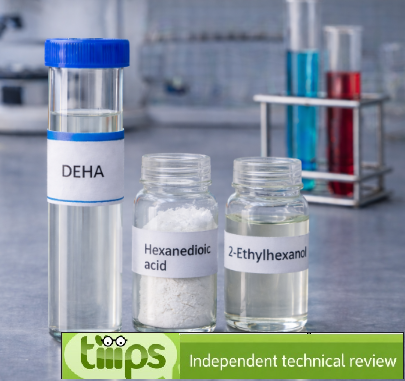
Composizione chimica e struttura
Il Diethylhexyl Adipate è un estere con formula chimica C22H42O4.
- Struttura principale: Derivato dall'acido adipico (un acido dicarbossilico) e da due molecole di 2-etilesanolo (un alcol ramificato).
- Proprietà:
- Idrofobico, che contribuisce alle sue qualità emollienti.
- Aumenta la flessibilità e la morbidezza delle formulazioni.
Proprietà fisico-chimiche
- Aspetto: Liquido limpido e incolore.
- Odore: Neutro, lieve.
- Solubilità: Insolubile in acqua, altamente solubile in oli e solventi organici.
- Viscosità: Bassa, che contribuisce alla sua leggerezza.
- Stabilità: Elevata stabilità termica e ossidativa, adatta a diverse formulazioni cosmetiche.
Processo di produzione
- Esterificazione: L'acido adipico reagisce con il 2-etilesanolo in presenza di un catalizzatore acido per formare il Diethylhexyl Adipate.
- Purificazione: Il prodotto grezzo viene sottoposto a processi di purificazione per rimuovere materiali non reagiti e sottoprodotti, ottenendo un ingrediente cosmetico di alta purezza.
- Controllo qualità: Il prodotto finale viene testato per stabilità, purezza e compatibilità con altri ingredienti.
Applicazioni
Applicazioni mediche
- Utilizzato come solubilizzante e veicolante per ingredienti attivi in formulazioni topiche.
- Presente nei prodotti dermatologici per migliorare l'idratazione della pelle e la texture dell'applicazione.
Cosmetici
Cura della pelle:
- Impiegato in creme, lozioni e sieri come emolliente per ammorbidire e levigare la pelle.
- Migliora la spalmabilità del prodotto, lasciando una finitura leggera e setosa.
Make-up:
- Incluso in fondotinta, primer e rossetti per migliorare la texture, la flessibilità e la durata.
- Garantisce un'applicazione uniforme e una finitura non grassa.
Cura dei capelli:
- Presente in balsami e sieri per capelli per aggiungere morbidezza e lucentezza.
- Riduce il crespo e migliora la gestibilità dei capelli.
Applicazioni industriali
- Utilizzato come plastificante nelle formulazioni per aumentare la flessibilità e ridurre la fragilità in prodotti come smalti per unghie e rivestimenti.
- Fornisce eccellenti proprietà solubilizzanti per ingredienti difficili da dissolvere.
Considerazioni ambientali e di sicurezza
Biodegradabilità:
- Il DEHA è biodegradabile in condizioni controllate, rendendolo una scelta rispettosa dell'ambiente per le formulazioni cosmetiche.
Profilo di sicurezza:
- Considerato sicuro per l'uso cosmetico entro le concentrazioni regolate.
- Basso potenziale di irritazione o sensibilizzazione cutanea, adatto alla maggior parte dei tipi di pelle.
Sostenibilità:
- È consigliabile utilizzare materie prime provenienti da fonti responsabili per minimizzare l'impatto ambientale della produzione.
Alternative
| Opzione (INCI) | Tipo di prodotto | Vantaggi principali |
|---|---|---|
| Coco-Caprylate/Caprate | Emolliente “dry touch” di origine vegetale | Tocco asciutto, buona scorrevolezza, alternativa sensoriale a DEHA |
| Caprylic/Capric Triglyceride (MCT) | Trigliceride leggero e stabile | Scorrevolezza, stabilità ossidativa, ampia compatibilità formulativa |
| Squalane | Emolliente setoso | Non appiccicoso, alto comfort cutaneo, adatto a pelli sensibili |
| Dicaprylyl Carbonate | Ester “dry feel” | Riduce l’untuosità, sensorialità leggera, utile come sostituto di esteri leggeri |
| Isoamyl Laurate | Ester ultra-leggero | Alta spalmabilità, feel “soft”, valido in leave-on e make-up |
| C13-15 Alkane | Emolliente “silicone-like” | Alta scorrevolezza, finish asciutto, utile in solari e primer |
| Neopentyl Glycol Diheptanoate | Ester per dispersione | Migliora dispersione di filtri/polveri, scorrevolezza, supporto alla performance |
| Triethylhexanoin | Ester per compatibilità UV | Migliora stendibilità e compatibilità con filtri UV; preferibili gradi ad alta purezza |
| Ethylhexyl Olivate / Cetearyl Olivate | Esteri derivati da oliva | Emollienza e supporto barriera, utile per posizionamento natural-origin |
Conclusione
Il Diethylhexyl Adipate è un ingrediente multifunzionale e affidabile, apprezzato per le sue proprietà emollienti, plastificanti e solventi. La sua compatibilità con un'ampia gamma di formulazioni cosmetiche, insieme alla capacità di migliorare texture e spalmabilità, lo rende un componente essenziale nei moderni prodotti per skincare, haircare e make-up.
Proprietà chiave
- Struttura chimica: Estere dell'acido adipico e del 2-etilesanolo.
- INCI Functions: Emolliente, Plastificante, Solvente.
- Vantaggi: Leggero, non grasso, migliora texture e spalmabilità, adatto a molteplici applicazioni cosmetiche.
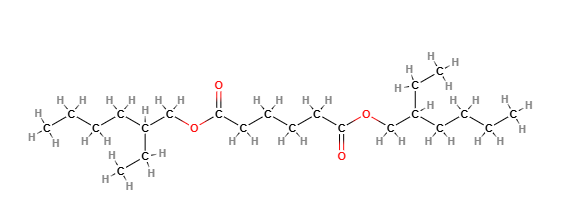 | 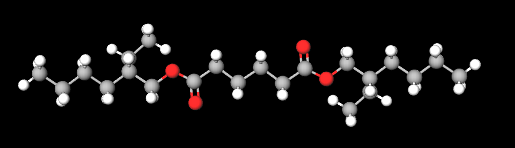 |
Molecular Formula C22H42O4
Molecular Weight 370.6 g/mol
CAS 103-23-1
UNII MBY1SL921L
EC Number 203-090-1
DTXSID0020606
Nikkaji J3.602A
Synonyms:
DEHA
Diethylhexyl adipate

