Cornus officinalis è una specie arborea o arbustiva decidua appartenente alla famiglia delle Cornaceae, tradizionalmente coltivata e utilizzata in Asia orientale. Si presenta come una pianta di taglia medio–piccola, con portamento eretto e chioma espansa; in condizioni favorevoli può raggiungere 4–8 metri di altezza.
Le foglie sono opposte, ovali o ellittiche, con apice acuminato e nervature arcuate ben evidenti, di colore verde intenso nella stagione vegetativa. La fioritura è precoce, spesso antecedente all’emissione delle foglie: i fiori sono piccoli, gialli, riuniti in infiorescenze compatte e poco appariscenti ma abbondanti.
Il frutto è una drupa ovale di colore rosso intenso a maturità, contenente un nocciolo duro; rappresenta la parte di maggiore interesse dal punto di vista erboristico e funzionale.
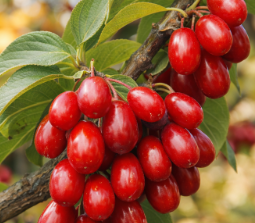 | 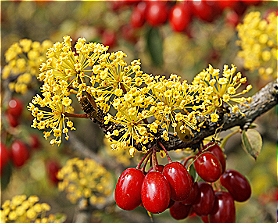 |
Distribuzione, ecologia e aspetti colturali
La specie è originaria di Cina, Corea e Giappone, dove cresce spontaneamente in foreste collinari e montane, ai margini dei boschi e in ambienti con buona disponibilità idrica.
Dal punto di vista ecologico, Cornus officinalis predilige:
climi temperati, con inverni freddi ed estati non eccessivamente calde;
suoli ben drenati, profondi e ricchi di sostanza organica;
esposizioni da soleggiate a mezz’ombra;
buona tolleranza al freddo invernale, mentre risulta meno adatto a condizioni di aridità prolungata.
In coltivazione, la pianta richiede una gestione relativamente semplice. La propagazione può avvenire per seme, talea o innesto. La produzione dei frutti è influenzata da età della pianta, condizioni climatiche della stagione e disponibilità idrica durante la fase di allegagione e maturazione.
Composizione chimica del frutto e caratteristiche funzionali
I frutti di Cornus officinalis sono caratterizzati da una composizione ricca in metaboliti secondari, che ne giustificano l’uso tradizionale. Tra i principali costituenti si segnalano:
iridoidi (come morroniside e loganina), considerati marcatori chimici della specie;
acidi organici (malico, citrico e derivati);
polifenoli e flavonoidi, associati ad attività antiossidante;
tannini, responsabili del gusto astringente del frutto;
zuccheri e polisaccaridi in quantità variabili.
La composizione qualitativa e quantitativa varia in funzione di cultivar, origine geografica, stadio di maturazione e metodi di essiccazione o trasformazione del frutto.
Impieghi tradizionali e applicazioni moderne
Nella medicina tradizionale dell’Asia orientale, i frutti di Cornus officinalis (noti come Shan Zhu Yu nella tradizione cinese) sono utilizzati da secoli come ingrediente di preparazioni erboristiche. Tradizionalmente vengono impiegati per sostenere:
il tono generale dell’organismo;
l’equilibrio funzionale di specifici sistemi fisiologici;
la resistenza allo stress e ai cambiamenti stagionali.
I frutti essiccati sono utilizzati in decotti, estratti e formulazioni complesse, spesso in associazione con altre specie vegetali. In ambito moderno, estratti standardizzati di Cornus officinalis sono oggetto di studi per possibili applicazioni nutraceutiche e funzionali, sempre nel rispetto dei quadri normativi e delle valutazioni di sicurezza.
Valutazione qualitativa del frutto e requisiti per la commercializzazione
La qualità dei frutti destinati all’uso erboristico o funzionale è valutata in base a:
aspetto esterno: colore rosso uniforme, assenza di muffe o danni meccanici;
grado di maturazione, che influisce sul contenuto in iridoidi e polifenoli;
contenuto in umidità residua dopo essiccazione, determinante per la conservabilità;
purezza botanica, con assenza di specie affini o contaminanti vegetali;
profilo chimico (contenuto in composti marcatori);
conformità microbiologica ai requisiti previsti per droghe vegetali.
Una corretta gestione delle fasi di raccolta, essiccazione e stoccaggio è essenziale per preservare la stabilità dei costituenti e garantire la qualità del prodotto finale.
Classificazione Botanica
Regno: Plantae
Clade: Angiosperme
Classe: Eudicotiledoni
Ordine: Cornales
Famiglia: Cornaceae
Genere: Cornus
Specie: C. officinalis
Caratteristiche della Pianta
Cornus officinalis cresce fino a una altezza di 5-10 metri. L'albero è noto per la sua corteccia esfoliante grigio-marrone e foglie opposte, ovali a forma di lance, che si trasformano in un vibrante giallo o rosso durante l'autunno. In primavera, prima che le foglie sboccino, produce abbondanti fiori gialli, seguiti da bacche rosso brillante che maturano alla fine dell'estate o all'inizio dell'autunno.
Composizione Chimica e Struttura
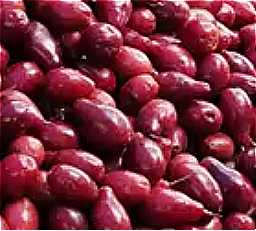
Le bacche di Cornus officinalis sono ricche di vitamine, antiossidanti e composti bioattivi come acidi organici, tannini e flavonoidi. Questi frutti contengono anche cornina, un composto chimico studiato per le sue proprietà antiossidanti e antinfiammatorie.
Come Coltivarlo
- Terreno: Preferisce terreni ben drenati, fertili e leggermente acidi.
- Luce: Cresce meglio in pieno sole o in penombra leggera.
- Acqua: Richiede irrigazioni moderate, mantenendo il terreno uniformemente umido ma non inzuppato.
- Temperatura: Resistente e adattabile, tollera una varietà di condizioni climatiche, ma non estremi di calore o freddo eccessivo.
Usi e Benefici
Le bacche di Cornus officinalis sono tradizionalmente usate per migliorare la funzione renale e epatica, trattare i problemi di vista, e come tonico generale per la salute. Sono note per il loro uso nel trattamento della disfunzione erettile, dell'ipertensione e di vari problemi infiammatori.
Applicazioni
- Medicinale: Le bacche sono utilizzate in decotti, estratti e come parte di integratori per sfruttare le loro proprietà medicinali.
- Ornamentale: L'albero è coltivato per il suo aspetto decorativo, particolarmente attraente durante la fioritura e quando i frutti sono maturi.
- Ricerca: I composti attivi delle bacche sono oggetto di studi per il loro potenziale utilizzo in nuovi trattamenti farmaceutici.
Considerazioni Ambientali e di Sicurezza
La coltivazione di Cornus officinalis è generalmente sicura e non presenta particolari problemi ambientali. Tuttavia, come con tutte le piante mediche, il consumo delle bacche dovrebbe essere fatto sotto la guida di un professionista, in quanto l'auto-medicazione può portare a interazioni medicamentose o effetti collaterali indesiderati. Le pratiche di coltivazione sostenibile aiutano a preservare la salute del suolo e l'ecosistema circostante.
Bibliografia__________________________________________________________________________
Lee SB, Kang JH, Sim EJ, Jung YR, Kim JH, Hillman PF, Nam SJ, Kang TB. Cornus officinalis Seed Extract Inhibits AIM2-Inflammasome Activation and Attenuates Imiquimod-Induced Psoriasis-like Skin Inflammation. Int J Mol Sci. 2023 Mar 15;24(6):5653. doi: 10.3390/ijms24065653.
Abstract. The AIM2 inflammasome is an innate immune system component that defends against cytosolic bacteria and DNA viruses, but its aberrant activation can lead to the progression of various inflammatory diseases, including psoriasis. However, there have been few reports of specific inhibitors of AIM2 inflammasome activation. In this study, we aimed to investigate the inhibitory activity of ethanolic extracts of seeds of Cornus officinalis (CO), a herb and food plant used in traditional medicine, on AIM2-inflammasome activation. We found that CO inhibited the release of IL-1β induced by dsDNA in both BMDMs and HaCaT cells, but that it showed no effect on the release of IL-1β induced by NLRP3 inflammasome triggers, such as nigericin and silica, or the NLRC4 inflammasome trigger flagellin. Furthermore, we demonstrated that CO inhibited the cleavage of caspase-1, an inflammasome activation marker, and an upstream event, the translocation and speck formation of ASC. In addition, further experiments and mechanistic investigations revealed that CO can inhibit AIM2 speck formation induced by dsDNA in AIM2-overexpressing HEK293T cells. To verify the correlation in vivo, we investigated the efficacy of CO in an imiquimod (IMQ)-induced psoriasis model, which has reported associations with the AIM2 inflammasome. We found that topical application of CO alleviated psoriasis-like symptoms, such as erythema, scaling, and epidermal thickening, in a dose-dependent manner. Moreover, CO also significantly decreased IMQ-induced expression of AIM2 inflammasome components, including AIM2, ASC, and caspase-1, and led to the elevation of serum IL-17A. In conclusion, our results suggest that CO may be a valuable candidate for the discovery of AIM2 inhibitors and the regulation of AIM2-related diseases.
Czerwińska ME, Bobińska A, Cichocka K, Buchholz T, Woliński K, Melzig MF. Cornus mas and Cornus officinalis-A Comparison of Antioxidant and Immunomodulatory Activities of Standardized Fruit Extracts in Human Neutrophils and Caco-2 Models. Plants (Basel). 2021 Oct 30;10(11):2347. doi: 10.3390/plants10112347.
Abstract. Fruits of Cornus mas and Cornus officinalis are representative plant materials traditionally used in Europe and Asia, respectively, in the treatment of diabetes and diabetes-related complications, which are often mediated by pathogenic inflammatory agents. Additionally, due to the fact of mutual infiltration of Asian and European medicines, the differentiation as well as standardization of traditional prescriptions seem to be crucial for ensuring the quality of traditional products. The objective of this study was a comparison of biological activity of extracts from fruits of C. mas and C. officinalis by an assessment of their effect on reactive oxygen species (ROS) generation in human neutrophils as well as cytokines secretion both in neutrophils (tumor necrosis factor α, TNF- α; interleukin 8, IL-8; interleukin 1β, IL-1β) and in human colon adenocarcinoma cell line Caco-2 (IL-8). To evaluate the phytochemical differences between the studied extracts as well as to provide a method for standardization procedures, a quantitative analysis of iridoids, such as loganin, sweroside, and loganic acid, found in extracts of Cornus fruits was performed with HPLC-DAD. All standardized extracts significantly inhibited ROS production, whereas the aqueous-alcoholic extracts were particularly active inhibitors of IL-8 secretion by neutrophils. The aqueous-methanolic extract of C. officinalis fruit, decreased IL-8 secretion by neutrophils to 54.64 ± 7.67%, 49.68 ± 6.55%, 50.29 ± 5.87% at concentrations of 5, 50, and 100 µg/mL, respectively, compared to LPS-stimulated control (100%). The aqueous extract of C. officinalis fruit significantly inhibited TNF-α release by neutrophils at concentrations of 50 and 100 µg/mL. On the other hand, the aqueous-ethanolic extract of C. mas fruit showed the propensity to increase TNF-α and IL-1β secretion. The modulatory activity of the Cornus extracts was noted in the case of secretion of IL-8 in Caco-2 cells. The effect was comparable with dexamethasone. The content of loganin in aqueous and aqueous-methanolic extract of C. officinalis fruit was higher than in the aqueous-ethanolic extract of C. mas fruit, which was characterized by a significant quantity of loganic acid. In conclusion, the immunomodulatory effect observed in vitro may partially confirm the traditional use of Cornus fruits through alleviation of the development of diabetes-derived inflammatory complications. Loganin and loganic acid are significant markers for standardization of C. mas and C. officinalis fruit extracts, respectively.
Klymenko S, Kucharska AZ, Sokół-Łętowska A, Piórecki N, Przybylska D, Grygorieva O. Iridoids, Flavonoids, and Antioxidant Capacity of Cornus mas, C. officinalis, and C. mas × C. officinalis Fruits. Biomolecules. 2021 May 21;11(6):776. doi: 10.3390/biom11060776.
Abstract. The fruits of Cornus mas and Cornus officinalis have been known and appreciated in folk medicine for years and have a high biological value, which is mainly connected with their polyphenols and iridoids content. However, hybrids of C. mas × C. officinalis have not been investigated. The aim of this study was to evaluate the iridoids, anthocyanins, and flavonols content, and antioxidant capacity of Cornus mas, Cornus officinalis, and C. mas × C. officinalis. Iridoids and flavonoids were quantified by the High-Performance Liquid Chromatography (HPLC) method. Antioxidant capacity (AC) was measured using 2,2-diphenyl-1-picrylhydrazyl (DPPH•), 2,2'-azino-bis (3-ethyl benzothiazoline-6-sulfonic acid (ABTS•+), and ferric reducing antioxidant power (FRAP) tests. Total phenolic content (TPC) was evaluated using the Folin-Ciocalteu reagent. Among the C. mas cultivars and C. officinalis genotypes, there was considerable variation in the content of iridoids, flavonoids, and AC. Interspecific hybrids C. mas × C. officinalis contained more iridoids than C. mas and more anthocyanins than C. officinalis and additionally had higher AC and TPC than C. officinalis and most C. mas. AC, TPC, and the presence of iridoids, anthocyanins, and flavonols in hybrids C. mas × C. officinalis are reported for the first time. The Cornus species deserve special attention due to their highly biologically active substances, as well as useful medicinal properties.
Huang J, Zhang Y, Dong L, Gao Q, Yin L, Quan H, Chen R, Fu X, Lin D. Ethnopharmacology, phytochemistry, and pharmacology of Cornus officinalis Sieb. et Zucc. J Ethnopharmacol. 2018 Mar 1;213:280-301. doi: 10.1016/j.jep.2017.11.010. Epub 2017 Nov 17. PMID: 29155174.
Li M, Zhang J, Jiang L, Wang W, Feng X, Liu M, Yang D. Neuroprotective effects of morroniside from Cornus officinalis sieb. Et zucc against Parkinson's disease via inhibiting oxidative stress and ferroptosis. BMC Complement Med Ther. 2023 Jul 1;23(1):218. doi: 10.1186/s12906-023-03967-0. PMID: 37393274; PMCID: PMC10314491.
Gao X, Liu Y, An Z, Ni J. Active Components and Pharmacological Effects of Cornus officinalis: Literature Review. Front Pharmacol. 2021 Apr 12;12:633447. doi: 10.3389/fphar.2021.633447.




