Petroselinum crispum, comunemente noto come prezzemolo, è un'erba biennale della famiglia delle Apiaceae, originaria della regione mediterranea centrale (Italia, Algeria e Tunisia). Coltivato ampiamente come erba culinaria e medicinale, il prezzemolo è riconosciuto per le sue foglie verdi brillanti e ricciute, spesso utilizzate come guarnizione o per arricchire il sapore di vari piatti.
Classificazione Botanica
Regno: Plantae
Clade: Angiosperme
Classe: Eudicotiledoni
Ordine: Apiales
Famiglia: Apiaceae
Genere: Petroselinum
Specie: P. crispum
Caratteristiche della Pianta
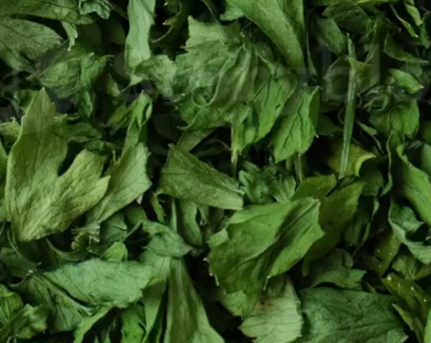
Il prezzemolo cresce fino a circa 30 cm di altezza, presentando foglie verdi brillanti, ricciute o piatte a seconda della varietà. La pianta forma una rosetta di foglie alla base da cui si estendono i fusti, terminando in ombrelle di piccoli fiori giallo-verdi nel suo secondo anno.
Composizione Chimica e Struttura
Il prezzemolo è ricco di vitamine C e K e contiene anche significative quantità di flavonoidi, carotenoidi e oli essenziali come apiolo e miristicina. Questi composti sono noti per le loro proprietà antiossidanti e contribuiscono all'aroma e al sapore distintivi dell'erba.
Come Coltivarlo
Per coltivare con successo il prezzemolo:
- Terreno: Predilige un terreno ricco, limoso e ben drenato con pH neutro.
- Luce: Prospera alla piena luce del sole ma può tollerare la mezz'ombra.
- Acqua: Necessita di umidità costante per mantenere il terreno uniformemente umido, ma non inzuppato.
- Temperatura: Resistente e può tollerare il gelo; si comporta meglio nelle temperature più fresche di primavera e autunno.
Usi e Benefici
Il prezzemolo non è solo un ingrediente fondamentale nel mondo culinario ma possiede anche varie proprietà medicinali. È utilizzato per promuovere la digestione e la salute dei reni, e il suo alto contenuto vitaminico supporta la funzione immunitaria. Inoltre, è impiegato in rimedi tradizionali per le sue proprietà diuretiche e anti-infiammatorie.
Applicazioni
- Culinario: Ampiamente utilizzato fresco nei piatti per il suo sapore o come guarnizione. È essenziale in molti mix di condimenti ed erbe aromatiche.
- Medicinale: Utilizzato nella medicina erboristica per trattare disturbi come ipertensione e allergie.
- Cosmetico: Gli estratti sono usati in prodotti per la cura della pelle per le loro proprietà antiossidanti e schiarenti.
Funzioni INCI:
Agente condizionante della pelle. Rappresenta il perno del trattamento topico della pelle in quanto ha la funzione di ripristinare, aumentare o migliorare la tolleranza cutanea a fattori esterni, compresa la tolleranza dei melanociti. La funzione più importante dell'agente condizionante è prevenire la disidratazione della pelle, ma il tema è piuttosto complesso e coinvolge emollienti ed umettanti che possono essere aggiunti nella formulazione.
Considerazioni Ambientali e di Sicurezza
Il prezzemolo è una pianta a basso impatto ambientale, che richiede un controllo minimo dei parassiti e dei fertilizzanti quando coltivato in condizioni adeguate. È sicuro per la maggior parte delle persone quando consumato nelle quantità tipiche degli alimenti, ma il consumo eccessivo può portare a problemi di salute a causa del suo contenuto di ossalati e dell'olio essenziale di apiolo, che può essere tossico in grandi quantità.
Si raccomandano pratiche di coltivazione sostenibile e biologica per mantenere la salute del suolo e ridurre l'impatto ambientale.
Bibliografia__________________________________________________________________________
Linde GA, Gazim ZC, Cardoso BK, Jorge LF, Tešević V, Glamoćlija J, Soković M, Colauto NB. Antifungal and antibacterial activities of Petroselinum crispum essential oil. Genet Mol Res. 2016 Jul 29;15(3). doi: 10.4238/gmr.15038538. PMID: 27525894.
Abstract. Parsley [Petroselinum crispum (Mill.) Fuss] is regarded as an aromatic, culinary, and medicinal plant and is used in the cosmetic, food, and pharmaceutical industries. However, few studies with conflicting results have been conducted on the antimicrobial activity of parsley essential oil. In addition, there have been no reports of essential oil obtained from parsley aerial parts, except seeds, as an alternative natural antimicrobial agent. Also, microorganism resistance is still a challenge for health and food production. Based on the demand for natural products to control microorganisms, and the re-evaluation of potential medicinal plants for controlling diseases, the objective of this study was to determine the chemical composition and antibacterial and antifungal activities of parsley essential oil against foodborne diseases and opportunistic pathogens. Seven bacteria and eight fungi were tested. The essential oil major compounds were apiol, myristicin, and b-phellandrene. Parsley essential oil had bacteriostatic activity against all tested bacteria, mainly Staphylococcus aureus, Listeria monocytogenes, and Salmonella enterica, at similar or lower concentrations than at least one of the controls, and bactericidal activity against all tested bacteria, mainly S. aureus, at similar or lower concentrations than at least one of the controls. This essential oil also had fungistatic activity against all tested fungi, mainly, Penicillium ochrochloron and Trichoderma viride, at lower concentrations than the ketoconazole control and fungicidal activity against all tested fungi at higher concentrations than the controls. Parsley is used in cooking and medicine, and its essential oil is an effective antimicrobial agent.
Petrolini FV, Lucarini R, de Souza MG, Pires RH, Cunha WR, Martins CH. Evaluation of the antibacterial potential of Petroselinum crispum and Rosmarinus officinalis against bacteria that cause urinary tract infections. Braz J Microbiol. 2013 Dec 17;44(3):829-34. doi: 10.1590/S1517-83822013005000061.
Abstract. In this study we evaluated the antibacterial activity of the crude hydroalcoholic extracts, fractions, and compounds of two plant species, namely Rosmarinus officinalis and Petroselinum crispum, against the bacteria that cause urinary tract infection. The microdilution method was used for determination of the minimum inhibitory concentration (MIC) and minimum bactericidal concentration (MBC). The crude hydroalcoholic extract of R. officinalis displayed in vitro activity against Gram-positive bacteria, with satisfactory MBC for the clinical isolate S. saprophyticus. The fractions and the pure compound rosmarinic acid did not furnish promising results for Gram-negative bacteria, whereas fractions 2, 3, and 4 gave encouraging results for Gram-positive bacteria and acted as bactericide against S. epidermidis as well as E. faecalis (ATCC 29212) and its clinical isolate. R. officinalis led to promising results in the case of Gram-positive bacteria, resulting in a considerable interest in the development of reliable alternatives for the treatment of urinary infections.
Nouioura G, Kettani T, Tourabi M, Elousrouti LT, Al Kamaly O, Alshawwa SZ, Shahat AA, Alhalmi A, Lyoussi B, Derwich E. The Protective Potential of Petroselinum crispum (Mill.) Fuss. on Paracetamol-Induced Hepatio-Renal Toxicity and Antiproteinuric Effect: A Biochemical, Hematological, and Histopathological Study. Medicina (Kaunas). 2023 Oct 12;59(10):1814. doi: 10.3390/medicina59101814.
Abstract. Background and Objectives: Paracetamol overdose is a significant global issue due to its widespread use, which can lead to a lack of awareness regarding its potential side effects. Paracetamol can harm the liver, possibly resulting in liver failure. Conversely, this study employed extracts from Petroselinum crispum (PC), known for its rich content of bioactive compounds, with demonstrated antioxidant properties shown in previous research as well as protective effects against various diseases. The primary objective of this study was to investigate the potential protective effects of Petroselinum crispum on altered hematological and biochemical parameters in the blood of rats exposed to paracetamol. Materials and Methods: The study involved twenty Wistar rats divided into four groups. Different groups of male rats were administered PC extract at 200 mg/kg body weight daily for 15 days, along with a standard reference dose of paracetamol at 200 mg/kg. The study assessed hepatoprotection capacity by analyzing liver enzymes such as aspartate aminotransferase (AST), alanine aminotransferase (ALT), bilirubin, albumin, and lipid profiles. Renal safety was evaluated through creatinine, urea, uric acid, lactate dehydrogenase (LDH), and total protein. Additionally, histopathological examinations of the liver and kidneys were conducted. Results: Following Paracetamol overdose, there were reductions in hemoglobin levels, serum total protein, albumin, and uric acid. Paracetamol overdose also elevated levels of several blood biomarkers, including creatinine, urea, nitrogen, ALT, AST, triglycerides, LDH activity, white blood cell count, and platelet count compared to the control group. However, using an ethanolic extract of Petroselinum crispum significantly mitigated the severity of these alterations and the extent of the effect correlated with the dose administered. Parsley extract helped prevent proteinuria and low hemoglobin, which are common side effects of Paracetamol. Conclusions: Therefore, parsley may hold promise in managing liver and kidney conditions-particularly in addressing proteinuria. Ultimately, these results may have implications for human health by potentially mitigating paracetamol-induced renal, hepatic, and hematological toxicity.
Aissani N, Albouchi F, Sebai H. Anticancer Effect in Human Glioblastoma and Antioxidant Activity of Petroselinum crispum L. Methanol Extract. Nutr Cancer. 2021;73(11-12):2605-2613. doi: 10.1080/01635581.2020.1842894. Epub 2020 Oct 29. PMID: 33121278.
Abstract. Parsley (Petroselinum crispum L.) has been used as food, spices and in folkloric medicine. Several scientific researches have been focalized on anti-inflammatory, anti-proliferative, antioxidant and other pharmacological activities of parsley. The aim of the present study was to evaluate the phytochemical composition, antioxidant and anticancer activity of P. crispum L aqueous and methanol extracts against Human glioblastoma cells U87MG. Adhesion assay was realized on different protein matrices (fibrinogen, fibronectin and poly-L-lysine) and the anti-proliferative effect was performed. Compared to aqueous extract, the methanol extract presented an important level of phenol contents. Five phenolic compounds were found using HPLC-DAD with quinic acid as the most abounded followed by gallic acid, acacetin, protocatechuic acid and Cirsilineol with 120753.07 ± 27450; 190 ± 25; 53.83 ± 10; 13.7 ± 2.5 and 2 ± 0.3 µg/mL respectively.The DPPH, ABTS+, OH radical, Iron (II) chelation and FRAP assays exhibited that methanol extract show a modulate antioxidant activity. The methanol extract shows the highest ability to inhibit cell adhesion to different protein matrices. In addition, it was found as a potential anti-proliferative. These results suggest for the first time that P. crispum methanol extract presents anti-adhesion and anti-proliferative proprieties.




