Rehydrated milk is a dairy product made by reconstituting milk powder or condensed milk with water. This process allows for the creation of a product similar to fresh milk while retaining its nutritional properties. Rehydrated milk is used in many food applications, including ingredients in desserts, sauces, and beverages, and is particularly useful in situations where fresh milk is not available.
Nutritional Composition
- Calories per 100g: Approximately 60–70 kcal (depending on the variety and concentration)
- Fat: 3–4g
- Carbohydrates: 5–7g (of which sugars: 4–5g)
- Protein: 3–4g
- Calcium: Approximately 100–120 mg
Nutritional values may vary based on the type of milk used (whole, skim, etc.).
Chemical Composition
Rehydrated milk contains:
- Water: Comprising the majority of the volume in rehydrated milk.
- Proteins: Mainly casein and whey proteins, providing essential amino acids.
- Fats: Varies depending on the type of milk used; whole milk will have a higher fat content than skim milk.
- Carbohydrates: The primary source of carbohydrates in milk is lactose.
- Minerals: Includes calcium, phosphorus, and potassium, which are vital for bone health.
Physical Properties
- Appearance: A white or creamy liquid, similar to fresh milk.
- Taste: Sweet and creamy flavor, characteristic of milk.
- Solubility: Completely soluble in water, allowing for easy preparation.
Production Process
- Drying: Milk is evaporated to remove most of the water, producing milk powder or concentrated milk.
- Packaging: The milk powder is packaged in airtight containers to preserve freshness.
- Rehydration: To prepare rehydrated milk, milk powder is mixed with water in appropriate proportions (typically 1 part milk powder to 3–4 parts water).
Applications
- Cooking: Used in sauces, soups, and dressings to add creaminess and flavor.
- Baking: Essential in desserts, cakes, and creams for achieving the right texture.
- Beverages: Commonly used in smoothies, flavored milk, and other drinks.
- Infant Nutrition: Can be used to prepare baby food and meals for children.
Environmental and Safety Considerations
Rehydrated milk is generally considered safe for consumption. It is important to store rehydrated milk in the refrigerator once prepared and to consume it within a few days. Individuals with lactose intolerance or milk protein allergies should avoid rehydrated milk unless it is specifically treated to remove lactose.
Storage
Milk powder should be stored in a cool, dry place in an airtight container. Once rehydrated, milk should be refrigerated and consumed within a short period.
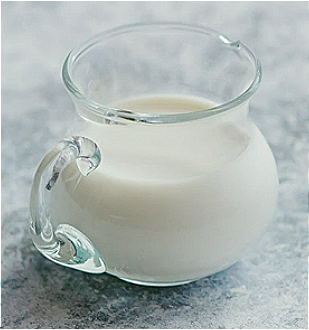
Cow's milk is used in many applications:
- uman nutrition
- animal nutrition
- food industry
- cosmetics
- medicine
Commercial applications
Food. Used in food products where fresh milk isn't available or isn't practical, such as in some bread or dessert preparations.
Beverages. It can be consumed directly as a drink or used in the preparation of smoothies and other beverages.
Dairy Products. Used in the production of yogurt, cheeses, and other dairy products when fresh milk isn't available.
Cooking. Used in recipes that require milk, especially in areas where preserving fresh milk might be a challenge.
Clinical Nutrition. It can be used in specialized foods for patients requiring a controlled diet.
With regard to human nutrition, cow's milk is industrially treated by pasteurisation process to destroy pathogenic bacteria that can cause risks to human health.
We find it on the market as:
- Fresh whole milk 67 kcal/100g
pasteurized within 48 hours of milking
- Fresh pasteurized whole milk 67 kcal/100g
pasteurized several times after 48 hours of milking
degreased
- Partially skimmed milk 48 kcal/100g
Partially degreased
microfiltered
homogenized and preheated to 135 degrees
The industry uses cow’s milk mainly in these forms:
dehydrated
dehydrated
dehydrated
dehydrated
dehydrated and subsequently rehydrated
The most natural form of cow's milk is raw milk, directly harvested after milking, which must be immediately stored in the refrigerator and drunk only after boiling to eliminate microbiological risks.
The advantages (for those who are not allergic) of cow's milk are manifold as cow's milk is a source of carbohydrates, calcium, proteins and other interesting nutrients that can lead to an increase in the concentration of amino acids resulting in improved muscle function (1).
Consumption of 500 mL milk attenuated losses in muscle function following repeated sprinting and jumping and thus may be a valuable recovery intervention for female team-sport athletes following this type of exercise (2).
Milk consumption on bone and fracture incidence: studies on the effects of milk or whey extracts show positive effects on bone health or risk of hip fracture. Nevertheless a few contradictory epidemiological studies showed an increased risk of hip fractures in subjects drinking higher quantities of milk (3).
Rural life is considered a promising system against asthma and allergies. Although this associative mechanism has not been fully clarified, this study presents an up-to-date under standing of the protective effect of raw milk on allergies and asthma (4).
Allergy to cow's milk.
This allergy is widespread especially in childhood and afflicts 2% to 5% of newborns in some countries (5).
Cow's milk studies
Cow's milk allergy studies
References_____________________________________________________________
(1) Rankin P, Lawlor MJ, Hills FA, Bell PG, Stevenson EJ, Cockburn E The effect of milk on recovery from repeat-sprint cycling in female team-sport athletes. Appl Physiol Nutr Metab. 2018 Feb;43(2):113-122. doi: 10.1139/apnm-2017-0275.
Abstract. The consumption of milk following eccentric exercise attenuates the effects of muscle damage in team-sport athletes. However, participation in team sport involves both concentric-eccentric loading and metabolic stress. Therefore, the aim of this study was to investigate the effects of postexercise milk consumption on recovery from a cycling protocol designed to simulate the metabolic demands of team sport. Ten female team-sport athletes participated in a randomised crossover investigation. Upon completion of the protocol participants consumed 500 mL of milk (MILK) or 500 mL of an energy-matched carbohydrate (CHO) drink. Muscle function (peak torque, rate of force development, countermovement jump, 20-m sprint), muscle soreness and tiredness, serum creatine kinase, high-sensitivity C-reactive protein, and measures of oxidative stress (protein carbonyls and reduced glutathione/oxidized glutathione (GSH/GSSG) ratio) were determined at pre-exercise and 24 h, 48 h, and 72 h postexercise. MILK had a possible beneficial effect in attenuating losses in peak torque (180°/s) from baseline to 24 h (3.2% ± 7.8% vs. -6.2% ± 7.5%, MILK vs. CHO) and a possible beneficial effect in minimising soreness (baseline-48 h; baseline-72 h) and tiredness (baseline-24 h; baseline-72 h). There was no change in oxidative stress following the exercise protocol, though a likely benefit of milk was observed for GSH/GSSG ratio at baseline-24 h (0.369 ×/÷ 1.89, 1.103 ×/÷ 3.96, MILK vs. CHO). MILK had an unclear effect on all other variables. Consumption of 500 mL of milk after repeat sprint cycling had little to no benefit in minimising losses in peak torque or minimising increases in soreness and tiredness and had no effect on serum markers of muscle damage and inflammation.
(2) Rankin P, Landy A, Stevenson E, Cockburn E. Milk: An Effective Recovery Drink for Female Athletes. Nutrients. 2018 Feb 17;10(2). pii: E228. doi: 10.3390/nu10020228.
Abstract. Milk has become a popular post-exercise recovery drink. Yet the evidence for its use in this regard comes from a limited number of investigations utilising very specific exercise protocols, and mostly with male participants. Therefore, the aim of this study was to investigate the effects of post-exercise milk consumption on recovery from a sprinting and jumping protocol in female team-sport athletes. Eighteen females participated in an independent-groups design. Upon completion of the protocol participants consumed 500 mL of milk (MILK) or 500 mL of an energy-matched carbohydrate (CHO) drink. Muscle function (peak torque, rate of force development (RFD), countermovement jump (CMJ), reactive strength index (RSI), sprint performance), muscle soreness and tiredness, symptoms of stress, serum creatine kinase (CK) and high-sensitivity C-reactive protein (hsCRP) were determined pre- and 24 h, 48 h and 72 h post-exercise. MILK had a very likely beneficial effect in attenuating losses in peak torque (180○/s) from baseline to 72 h (0.0 ± 10.0% vs. -8.7 ± 3.7%, MILK v CHO), and countermovement jump (-1.1 ± 5.2% vs. -10.4 ± 6.7%) and symptoms of stress (-13.5 ± 7.4% vs. -18.7 ± 11.0%) from baseline to 24 h. MILK had a likely beneficial effect and a possibly beneficial effect on other peak torque measures and 5 m sprint performance at other timepoints but had an unclear effect on 10 and 20 m sprint performance, RSI, muscle soreness and tiredness, CK and hsCRP. In conclusion, consumption of 500 mL milk attenuated losses in muscle function following repeated sprinting and jumping and thus may be a valuable recovery intervention for female team-sport athletes following this type of exercise.
(3) Fardellone P. Aging The effect of milk consumption on bone and fracture incidence, an update. Clin Exp Res. 2019 Jun;31(6):759-764. doi: 10.1007/s40520-019-01192-9.
Abstract. Milk is a major source of high bioavailable calcium in most developed countries with an average calcium content of 1150 mg/L, providing a ready means of meeting the daily requirements. Its content in other minerals, phosphorus, vitamins, iodine, proteins, potassium and various nutrients is supposed to be beneficial for skeleton growth and bone strength. Studies on the effects of milk or whey extracts in animal trials and on surrogate markers in humanlike bone remodeling markers or bone mineral density and many observational studies in large cohorts show positive effects on bone health or risk of hip fracture. Nevertheless, a few contradictory epidemiological studies showed an increased risk of hip fractures in subjects drinking higher quantities of milk. These conflicting results may be due to the large number of confounders and methodological issues as recall bias. Most of the experts state that there are no proven effect of milk consumption on the risk of hip fractures in a way or the other. Of a scientific point of view, there is no reason to remove from the diet of large populations an aliment rich in calcium and other interesting nutrients.
(4) Sozańska B. Raw Cow's Milk and Its Protective Effect on Allergies and Asthma. Nutrients. 2019 Feb 22;11(2). pii: E469. doi: 10.3390/nu11020469. Review.
Abstract. Living on a farm and having contact with rural exposures have been proposed as one of the most promising ways to be protected against allergy and asthma development. There is a significant body of epidemiological evidence that consumption of raw milk in childhood and adulthood in farm but also nonfarm populations can be one of the most effective protective factors. The observation is even more intriguing when considering the fact that milk is one of the most common food allergens in childhood. The exact mechanisms underlying this association are still not well understood, but the role of raw milk ingredients such as proteins, fat and fatty acids, and bacterial components has been recently studied and its influence on the immune function has been documented. In this review, we present the current understanding of the protective effect of raw milk on allergies and asthma.
(5) Alessandro Fiocchi, (Chair), Jan Brozek, Holger Schünemann, (Chair), Sami L. Bahna, Andrea von Berg, Kirsten Beyer, Martin Bozzola, Julia Bradsher, Enrico Compalati, Motohiro Ebisawa, Maria Antonieta Guzman, Haiqi Li, Ralf G. Heine, Paul Keith, Gideon Lack, Massimo Landi, Alberto Martelli, Fabienne Rancé, Hugh Sampson, Airton Stein, Luigi Terracciano, and Stefan Vieths World Allergy Organization (WAO) Diagnosis and Rationale for Action against Cow's Milk Allergy (DRACMA) Guidelines World Allergy Organ J. 2010 Apr; 3(4): 57–161. 10.1097/WOX.0b013e3181defeb9




