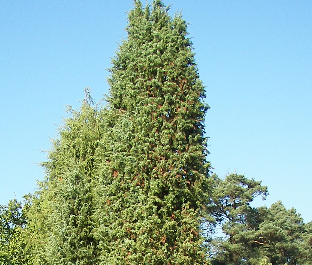
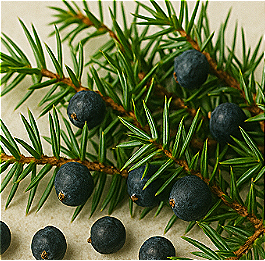
Ginepro (Juniperus communis L.)
Il ginepro è un arbusto sempreverde appartenente al genere Juniperus, diffuso spontaneamente in Europa, Asia settentrionale e Nord America, soprattutto in aree a clima temperato o freddo. Presenta portamento cespuglioso o prostrato, con chioma più o meno densa, rami legnosi e foglie aghiformi, rigide e pungenti, disposte in verticilli. Le strutture riproduttive femminili danno origine alle caratteristiche galbule (comunemente definite “bacche”), di colore verde in fase giovanile e blu–nerastro a maturità, con superficie cerosa e aroma marcatamente resinoso.
Dal punto di vista ecologico e colturale, il ginepro è specie rustica e adattabile, in grado di vegetare su terreni aridi, pietrosi o sabbiosi, spesso poveri di nutrienti, purché ben drenati. Tollera basse temperature, esposizioni soleggiate e venti freddi, mentre è sensibile ai ristagni idrici, che possono favorire l’insorgenza di marciumi radicali. La crescita è lenta e la maturazione delle galbule richiede in genere due o tre stagioni vegetative. Produzione e qualità dei frutti dipendono da esposizione, substrato, disponibilità idrica e fattori climatici della stagione.
La composizione delle galbule di ginepro comprende una quota rilevante di acqua, zuccheri semplici, acidi organici, tannini e fitocomposti fenolici, oltre a tracce di minerali come potassio e calcio. Particolarmente significativo è il contenuto in olio essenziale, localizzato nelle strutture secretorie delle bacche e caratterizzato da monoterpeni quali α-pinene, sabinene, limonene e altri composti responsabili delle note aromatiche, balsamiche e resinose. La qualità e la resa dell’olio variano in relazione a origine geografica, stadio di maturazione, condizioni pedoclimatiche e tecniche estrattive.
Dal punto di vista alimentare e tecnologico, le galbule vengono utilizzate come speziatura e aromatizzante in piatti a base di carne, preparazioni tradizionali e salamoie, conferendo note resinose e balsamiche. Trovano impiego nella produzione di distillati, in particolare il gin, dove rappresentano ingrediente essenziale per l’impronta aromatica. Estratti e frazioni oleose vengono inoltre utilizzati in ambito erboristico e nella formulazione di prodotti tecnici, mentre il legno del ginepro, compatto e aromatico, è talvolta adottato per affumicature e lavorazioni artigianali.
La valutazione qualitativa delle galbule considera dimensioni, uniformità del colore, contenuto aromatico, integrità del frutto e assenza di difetti o contaminazioni. L’attenzione alla provenienza, al metodo di raccolta e alle condizioni di essiccazione è fondamentale per preservare le caratteristiche organolettiche e le proprietà tecnologiche delle bacche.
Classificazione botanica (sistema APG IV)
Nome comune: Ginepro comune
Nome botanico: Juniperus communis L.
Regno: Plantae
Divisione/Phylum: Pinophyta (conifere)
Classe: Pinopsida
Ordine: Pinales
Famiglia: Cupressaceae
Genere: Juniperus
Specie: Juniperus communis L.
Valori nutrizionali indicativi per 100 g (bacche essiccate di ginepro)
| Componente | Valore medio per 100 g circa* |
|---|
| Energia | ~ 360–385 kcal |
| Carboidrati totali | ~ 33–37 g |
| — di cui zuccheri | ~ 7–8 g |
| Fibre alimentari | ~ 12 g |
| Proteine | ~ 19–20 g |
| Grassi totali | ~ 13–15 g |
| — di cui acidi grassi saturi (SFA) | parte della frazione grassa |
| Sale / Sodio | trascurabili (quasi assente) |
* I valori derivano da analisi su bacche essiccate oppure prodotti commerciali a base di bacche di ginepro; i dati possono variare sensibilmente a seconda della maturazione, origine geografica e processo di essiccazione.
Mini-glossario acronimi
SFA = Saturated Fatty Acids (acidi grassi saturi): una quota di grassi considerata “meno favorevole” se prevale su grassi insaturi.
MUFA = MonoUnsaturated Fatty Acids (acidi grassi monoinsaturi). Se presenti, sono generalmente considerati più salutari.
PUFA = PolyUnsaturated Fatty Acids (acidi grassi polinsaturi). In genere desiderabili in quantità moderate per benefici su salute e metabolismo.
Caratteristiche della pianta
Portamento: arbusto sempreverde (0,5–4 m) o piccolo albero con chioma piramidale o irregolare.
Foglie: aghiformi, rigide, acuminate, lunghe 1–2 cm, disposte in verticilli di tre; superficie superiore con banda stomatica bianca.
Fiori: dioici — piante maschili con coni giallastri, piante femminili con coni verdi che evolvono in bacche (galbuli).
Frutti (galbuli): carnosi, globosi (6–10 mm), verdi il primo anno, blu-nerastri e pruinati al secondo anno; maturano in 18–24 mesi.
Radici: profonde, robuste, con grande capacità di ancoraggio e resistenza alla siccità.
Habitat: pendii aridi, brughiere, prati montani e zone rocciose, da 0 a 2500 m di altitudine.
Composizione chimica (principali costituenti delle bacche e dell’olio essenziale)
Olio essenziale (1–2%): α-pinene, sabinene, β-pinene, limonene, myrcene, terpinene-4-olo, borneolo, e cadinene.
Flavonoidi: juniperina, apigenina, rutina — con effetto antiossidante e vasoprotettivo.
Tannini e acidi fenolici: con attività astringente e antinfiammatoria.
Zuccheri e resine aromatiche: responsabili del sapore dolce-resinoso dei frutti maturi.
Vitamina C e composti amari: con azione tonica e immunostimolante.
Coltivazione e condizioni di crescita
Clima: temperato o freddo; tollera gelo, vento e suoli poveri.
Esposizione: pieno sole; cresce anche in mezz’ombra, ma con minore produzione di bacche.
Suolo: preferisce terreni sabbiosi, calcarei o ghiaiosi, ben drenati; evita i suoli argillosi e umidi.
Irrigazione: minima; pianta xerofila adattata alla siccità.
Propagazione: per seme (lenta germinazione) o per talea legnosa.
Raccolta: bacche mature raccolte a mano nel secondo autunno di maturazione.
Potatura: limitata al mantenimento della forma; evitare tagli drastici.
Usi e benefici (tradizionali e supportati da evidenze scientifiche preliminari)
Diuretico e depurativo: stimola la diuresi, favorendo l’eliminazione di liquidi e tossine.
Digestivo e carminativo: facilita la digestione e riduce gonfiori addominali.
Antisettico urinario: impiegato in fitoterapia per contrastare lievi infezioni delle vie urinarie.
Espettorante e balsamico: utile nelle affezioni respiratorie lievi.
Tonico e stimolante: tradizionalmente usato per migliorare la circolazione e l’appetito.
Le evidenze scientifiche confermano l’attività diuretica e antisettica dell’olio essenziale, ma l’uso interno deve essere controllato e di breve durata per evitare irritazioni renali.
Applicazioni
Erboristeria: infusi e decotti di bacche; tinture e estratti fluidi; olio essenziale per uso esterno.
Gastronomia: aromatizzante per piatti di carne (in particolare selvaggina) e per salumi.
Liquoreria: ingrediente principale del gin e di liquori digestivi (es. grappa al ginepro).
Cosmetica: olio essenziale in prodotti tonificanti, antisettici o per massaggi drenanti.
Funzioni INCI
Agente condizionante della pelle. Rappresenta il perno del trattamento topico della pelle in quanto ha la funzione di ripristinare, aumentare o migliorare la tolleranza cutanea a fattori esterni, compresa la tolleranza dei melanociti. La funzione più importante dell'agente condizionante è prevenire la disidratazione della pelle, ma il tema è piuttosto complesso e coinvolge emollienti ed umettanti che possono essere aggiunti nella formulazione.
Raccolta e lavorazione
Raccolta: bacche mature (blu-nerastre) tra settembre e novembre, scuotendo delicatamente i rami sopra teli o reti.
Essiccazione: in luogo ombroso e ventilato per 10–15 giorni.
Distillazione: in corrente di vapore per ottenere l’olio essenziale.
Conservazione: bacche e olio essenziale in contenitori ermetici, al riparo da luce e umidità.
Considerazioni ambientali
Il ginepro è una specie pioniera e rustica, fondamentale per la stabilità dei suoli e la colonizzazione di aree degradate. Offre rifugio e nutrimento alla fauna selvatica (uccelli, piccoli mammiferi). È importante promuovere una raccolta sostenibile dei frutti, evitando il prelievo eccessivo che può compromettere la rigenerazione naturale delle piante.
Sicurezza, controindicazioni, interazioni
L’uso alimentare e aromatizzante è generalmente sicuro.
Uso interno prolungato o in dosi elevate: può irritare i reni e le vie urinarie.
Controindicato in gravidanza, allattamento e patologie renali.
Olio essenziale: da usare solo diluito e per brevi periodi; non applicare su pelle lesa o sensibile.
Interazioni: può potenziare l’effetto di diuretici o farmaci ipoglicemizzanti.
Preparazioni comuni (uso generale, non terapeutico)
Infuso di bacche: 1–2 g in 200 ml di acqua bollente, lasciare in infusione 10 minuti; uso digestivo o depurativo leggero.
Decotto: 2–3 g di bacche in 250 ml d’acqua, bollire 5 minuti; uso esterno come tonico cutaneo.
Olio essenziale: poche gocce diluite in olio vegetale per massaggi o diffusione ambientale.
Condimento: bacche pestate come spezia aromatica per carni o salse.
Bibliografia__________________________________________________________________________
Gonçalves AC, Flores-Félix JD, Coutinho P, Alves G, Silva LR. Zimbro (Juniperus communis L.) as a Promising Source of Bioactive Compounds and Biomedical Activities: A Review on Recent Trends. Int J Mol Sci. 2022 Mar 16;23(6):3197. doi: 10.3390/ijms23063197.
Abstract. Plant-derived products and their extracted compounds have been used in folk medicine since early times. Zimbro or common juniper (Juniperus communis) is traditionally used to treat renal suppression, acute and chronic cystitis, bladder catarrh, albuminuria, leucorrhea, and amenorrhea. These uses are mainly attributed to its bioactive composition, which is very rich in phenolics, terpenoids, organic acids, alkaloids, and volatile compounds. In the last few years, several studies have analyzed the huge potential of this evergreen shrub, describing a wide range of activities with relevance in different biomedical discipline areas, namely antimicrobial potential against human pathogens and foodborne microorganisms, notorious antioxidant and anti-inflammatory activities, antidiabetic, antihypercholesterolemic and antihyperlipidemic effects, and neuroprotective action, as well as antiproliferative ability against cancer cells and the ability to activate inductive hepato-, renal- and gastroprotective mechanisms. Owing to these promising activities, extracts and bioactive compounds of juniper could be useful for the development of new pharmacological applications in the treatment of several acute and chronic human diseases.
Final report on the safety assessment of Juniperus communis Extract, Juniperus oxycedrus Extract, Juniperus oxycedrus Tar, Juniperus phoenicea extract, and Juniperus virginiana Extract. Int J Toxicol. 2001;20 Suppl 2:41-56. doi: 10.1080/10915810160233758.
Abstract. The common juniper is a tree that grows in Europe, Asia, and North America. The ripe fruit of Juniperus communis and Juniperus oxycedrus is alcohol extracted to produce Juniperus Communis Extract and Juniperus Oxycedrus Extract, respectively. Juniperus Oxycedrus Tar is the volatile oil from the wood of J. oxycedrus. Juniperus Phoenicea Extract comes from the gum of Juniperus phoenicea, and Juniperus Virginiana Extract is extracted from the wood of Juniperus virginiana. Although Juniperus Oxycedrus Tar is produced as a by-product of distillation, no information was available on the manufacturing process for any of the Extracts. Oils derived from these varieties of juniper are used solely as fragrance ingredients; they are commonly produced using steam distillation of the source material, but it is not known if that procedure is used to produce extracts. One report does state that the chemical composition of Juniper Communis Oil and Juniperus Communis Extract is similar, each containing a wide variety of terpenoids and aromatic compounds, with the occasional aliphatic alcohols and aldehydes, and, more rarely, alkanes. The principle component of Juniperus Oxycedrus Tar is cadinene, a sesquiterpene, but cresol and guaiacol are also found. No data were available, however, indicating the extent to which there would be variations in composition that may occur as a result of extraction differences or any other factor such as plant growth conditions. Information on the composition of the other ingredients was not available. All of the Extracts function as biological additives in cosmetic formulations, and Juniperus Oxycedrus Tar is used as a hair-conditioning agent and a fragrance component. Most of the available safety test data are from studies using oils derived from the various varieties of juniper. Because of the expected similarity in composition to the extract, these data were considered. Acute studies using animals show little toxicity of the oil or tar. The oils derived from J. communis and J. virginiana and Juniperus Oxycedrus Tar were not skin irritants in animals. The oil from J. virginiana was not a sensitizer, and the oil from J. communis was not phototoxic in animal tests. Juniperus Oxycedrus Tar was genotoxic in several assays. No genotoxicity data were available for any of the extracts. Juniperus Communis Extract did affect fertility and was abortifacient in studies using albino rats. Clinical tests showed no evidence of irritation or sensitization with any of the tested oils, but some evidence of sensitization to the tar. These data were not considered sufficient to assess the safety of these ingredients. Additional data needs include current concentration of use data; function in cosmetics; methods of manufacturing and impurities data, especially pesticides; ultraviolet (UV) absorption data; if absorption occurs in the UVA or UVB range, photosensitization data are needed; dermal reproductive/developmental toxicity data (to include determination of a no-effect level); two genotoxicity assays (one in a mammalian system) for each extract; if positive, a 2-year dermal carcinogenicity assay performed using National Toxicology Program (NTP) methods is needed; a 2-year dermal carcinogenicity assay performed using NTP methods on Juniperus Oxycedrus Tar; and irritation and sensitization data on each extract and the tar (these data are needed because the available data on the oils cannot be extrapolated). Until these data are available, it is concluded that the available data are insufficient to support the safety of these ingredients in cosmetic formulations.
Jegal J, Park SA, Chung K, Chung HY, Lee J, Jeong EJ, Kim KH, Yang MH. Tyrosinase inhibitory flavonoid from Juniperus communis fruits. Biosci Biotechnol Biochem. 2016 Dec;80(12):2311-2317. doi: 10.1080/09168451.2016.1217146.
Abstract. The fruits of Juniperus communis have been traditionally used in the treatment of skin diseases. In our preliminary experiment, the MeOH extract of J. communis effectively suppressed mushroom tyrosinase activity. Three monoflavonoids and five biflavonoids were isolated from J. communis by bioassay-guided isolation and their inhibitory effect against tyrosinase was evaluated. According to the results of all isolates, hypolaetin 7-O-β-xylopyranoside isolated from J. communis exhibited most potent effect of decreasing mushroom tyrosinase activity with an IC50 value of 45.15 μM. Further study provided direct experimental evidence for hypolaetin 7-O-β-D-xylopyranoside-attenuated tyrosinase activity in α-MSH-stimulated B16F10 murine melanoma cell. Hypolaetin 7-O-β-D-xylopyranoside from the EtOAc fraction of J. communis was also effective at suppressing α-MSH-induced melanin synthesis. This is the first report of the enzyme tyrosinase inhibition by J. communis and its constituent. Therapeutic attempts with J. communis and its active component, hypolaetin 7-O-β-D-xylopyranoside, might be useful in treating melanin pigmentary disorders.
Benzina S, Harquail J, Jean S, Beauregard AP, Colquhoun CD, Carroll M, Bos A, Gray CA, Robichaud GA. Deoxypodophyllotoxin isolated from Juniperus communis induces apoptosis in breast cancer cells. Anticancer Agents Med Chem. 2015;15(1):79-88. doi: 10.2174/1871520614666140608150448.
Abstract. The study of anticancer properties from natural products has regained popularity as natural molecules provide a high diversity of chemical structures with specific biological and medicinal activity. Based on a documented library of the most common medicinal plants used by the indigenous people of North America, we screened and isolated compounds with anti-breast cancer properties from Juniperus communis (common Juniper). Using bioassay-guided fractionation of a crude plant extract, we identified the diterpene isocupressic acid and the aryltetralin lignan deoxypodophyllotoxin (DPT) as potent inducers of caspase-dependent programmed cell death (apoptosis) in malignant MB231 breast cancer cells. Further elucidation revealed that DPT, in contrast to isocupressic acid, also concomitantly inhibited cell survival pathways mediated by the MAPK/ERK and NFκB signaling pathways within hours of treatment. Our findings emphasize the potential and importance of natural product screening for new chemical entities with novel anticancer activities. Natural products research complemented with the wealth of information available through the ethnobotanical and ethnopharmacological knowledge of the indigenous peoples of North America can provide new candidate entities with desirable bioactivities to develop new cancer therapies.
Çavuş İ, Özel Y, Tunalı V, Kayalar H, Yereli K, Özbilgin A. Investigation of Antiparasitic Effect of Juniperus communis L. Fruits Extracts. Turkiye Parazitol Derg. 2025 Sep 8;49(3):115-119. doi: 10.4274/tpd.galenos.2025.27928.
Abstract. Objective: Juniperus communis (J. communis) (common juniper) is a plant that has been used for medicinal purposes for centuries. This study aims to evaluate the antiparasitic effects of ethanol, methanol, chloroform, and water extracts of J. communis fruits against Plasmodium falciparum, Leishmania tropica, Trichomonas vaginalis, and Blastocystis. Methods: The antiparasitic activities of fruit extracts prepared at room temperature using the shaking maceration method were tested against Plasmodium falciparum using the ring stage survival test, and against Leishmania tropica, Trichomonas vaginalis, and Blastocystis using the broth microdilution method. Results: The chloroform extract of J. communis fruits was found to be effective on Plasmodium falciparum, Leishmania tropica, Trichomonas vaginalis, and Blastocystis parasites at concentrations of 15, 10, 30 and 30 µg/mL, respectively. Conclusion: The chloroform extract of J. communis fruits has shown strong antiparasitic activity against the investigated parasite species. These findings support the plant's antiparasitic potential and hold promise for future medical applications. Especially its effectiveness against metronidazole-resistant Trichomonas vaginalis strains is important for the development of alternative treatment options. This study highlights the potential use of J. communis as a medicinal plant and will contribute to the literature on research related to the isolation and structural determination of its active compounds.
Gao HW, Huang XF, Yang TP, Chang KF, Yeh LW, Hsieh MC, Weng JC, Tsai NM. Juniperus communis Suppresses Melanoma Tumorigenesis by Inhibiting Tumor Growth and Inducing Apoptosis. Am J Chin Med. 2019;47(5):1171-1191. doi: 10.1142/S0192415X19500605.
Abstract. Melanoma, which has a high metastatic capacity and death rate, is a common skin cancer in Western countries. The purpose of this study was to address whether Juniperus communis (JCo) extract is effective in the suppression of melanoma and to elucidate the anticancer mechanisms involved in vitro and in vivo. The antitumor capacities of JCo extract on tumor suppression and toxicity were evaluated and the results demonstrated that the tumor burden was reduced via mediation of cell cycle, reduction of autocrine signaling, and induction of apoptosis. Moreover, JCo extract significantly prolonged the survival rate of the test subjects with only low pathological and physiological toxicity. Additionally, JCo extract also reduced cancer stem cell-related angiogenic and metastatic proteins in the process of tumor elimination. Based on these results, this study suggests that JCo extract suppresses tumor growth and induces apoptosis, and JCo extract may be useful for the prevention of melanoma tumorigenesis.
Tsai; Tsai NM, Chang KF, Wang JC. Juniperus Communis Extract Exerts Antitumor Effects in Human Glioblastomas Through Blood-Brain Barrier. Cell Physiol Biochem. 2018;49(6):2443-2462. doi: 10.1159/000493842.
Huang NC, Huang RL, Huang XF, Chang KF, Lee CJ, Hsiao CY, Lee SC, Tsai NM. Evaluation of anticancer effects of Juniperus communis extract on hepatocellular carcinoma cells in vitro and in vivo. Biosci Rep. 2021 Jul 30;41(7):BSR20211143. doi: 10.1042/BSR20211143.