



Iris germanica florentina root extract: properties, uses, pros, cons, safety
Description
Iris germanica florentina root extract is obtained from the rhizomes of Iris germanica L. var. florentina, commonly known as orris (Italian: giaggiolo), belonging to the Iridaceae family.
This extract is particularly valued for its aromatic, soothing, and mildly astringent properties, making it a key ingredient in cosmetics, skin care, and high-end perfumery. Its distinctive olfactory profile places it among the most prized botanical aromatic raw materials.
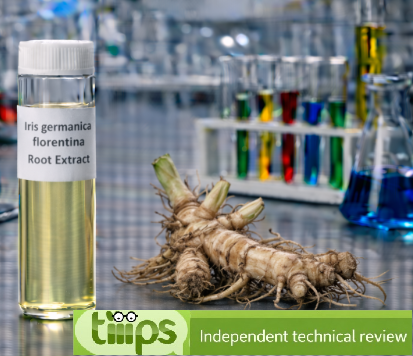
Chemical composition and structure
From a chemical standpoint, Iris germanica florentina root extract contains a complex mixture of functional and aromatic compounds, including:
Irone
The main aromatic compounds responsible for the characteristic violet-like scent of orris; they develop slowly during rhizome drying.Fatty acids
Contribute to emollient and conditioning properties, improving skin comfort.Tannins
Present in moderate amounts, providing a gentle astringent effect, useful for skin toning.
Table 1 – Main components and cosmetic function
| Component | Source | Main function |
|---|---|---|
| Irone | Aromatic derivatives of rhizomes | Fragrance, base note |
| Fatty acids | Lipid fraction | Emollient, conditioning |
| Tannins | Plant polyphenols | Gentle astringent, toning |
Physical properties
Appearance: liquid from pale yellow to light brown
Odor: rich, floral, and earthy, with a pronounced violet note
Solubility: soluble in alcohols, oils, and organic solvents; generally insoluble in water
Density: variable depending on concentration and extraction method
Production process
Harvesting
Rhizomes are harvested after several years of growth, when aromatic potential is optimal.Drying
A critical phase lasting months to years, required for the development of irones.Extraction
Performed by maceration, infusion, or solvent extraction.Filtration and purification
To remove impurities and standardize aromatic content.Packaging and storage
In airtight containers, often dark glass, protected from light and heat.
Applications
Cosmetics
Used in skin care products for its soothing, toning, and sensory properties, contributing both to functionality and olfactory experience.
INCI functions
Perfuming
Indicates high-quality fragrance materials used as premium aromatic raw ingredients.
CAS: 90045-89-9
EC number: 289-954-9
Table 2 – Use areas and benefits
| Area | Product type | Main benefit |
|---|---|---|
| Skin care | Creams, serums, lotions | Soothing, toning, fragrance |
| Body care | Oils, balms, butters | Conditioning, sensory profile |
| Perfumery | Eau de parfum, extrait | Base note, persistence |
| Aromatherapy | Aromatic blends | Relaxing, balancing |
Environmental and safety considerations
Sustainability
Extraction of Iris germanica florentina root extract can be sustainable, especially when rhizomes are sourced from controlled cultivation and responsibly managed supply chains.
Safety
Generally considered safe for cosmetic and perfumery use when used at recommended concentrations.
Allergenicity
As with all botanical extracts, individual sensitization reactions cannot be excluded; use should follow good formulation practice.

