



Xylitol is a sugar alcohol with five carbon atoms and ethanol and water are used for its industrial extraction. It is produced naturally by mammalian metabolism.
Description of raw materials used in production:
Xylan extracted from lignocellulosic biomass such as wheat straw, wood waste, and corn cobs. Xylan is a polysaccharide that serves as a precursor for xylitol.
Hydrogen used in the hydrogenation process to reduce the functional groups of xylan into xylitol.
Industrial Chemical Synthesis
- Preparation: The mixture is prepared by hydrolyzing xylan to obtain a sugar solution, primarily xylose.
- Hydrogenation: The xylose solution is exposed to hydrogen in the presence of a catalyst, such as ruthenium or nickel. This process occurs under high pressure and temperature conditions.
- Cooling and Separation: After hydrogenation, the mixture is cooled. Xylitol separates from the solution as a viscous liquid.
- Purification: The xylitol solution is purified to remove the catalyst and other impurities. This can include filtration and crystallization.
- Concentration: The purified xylitol solution is concentrated to remove excess water, achieving a desired concentration.
- Crystallization and Drying: Xylitol can be further crystallized and dried to obtain a solid form.
It appears as a white crystalline powder.

What it is used for and where
Food
It is an artificial sweetener of vegetable origin that replaces sugar, labeled with the number E967 in the list of food additives, it is called "the sugar of wood" as it is made from some types of trees and corn. It is produced by the hydrogenation of Xylose in conditions of high temperature (80-140 ° C) and high pressure (up to 50 atm) (1).
It belongs to polyalcohols that have the characteristic of contrasting with acids that affect tooth enamel. This is why it is used in chewing gum and in the food and pharmaceutical fields.
After 1960, Xylitol has become a common ingredient in sugar-free baked goods, anticorrosive toothpaste and mouthwashes, oral care products and diabetic food.
Excessive intake may cause laxative effects.
Cosmetics
Anti-sebum. Controls and reduces emissions from the sebaceous glands, which are responsible for greasy, enlarged pores in the skin, where it occurs, particularly on the forehead, cheeks, nose and hair. Adjuvant in the treatment of acne.
Deodorant agent. When substances that give off an unpleasant odour are included in cosmetic formulations (typical examples are methyl mercaptan and hydrogen sulphide derived from garlic), deodorants attenuate or eliminate the unpleasant exhalation.
Flavoring agent. The purpose of this ingredient is to modify the solution to impart a certain flavour. Natural flavouring extracts are rather expensive, so the cosmetic and pharmaceutical industries resort to synthesised substances that have sensory characteristics mostly similar to natural flavourings or are naturally equivalent. This ingredient is isolated through chemical processes or is synthesised from chemicals. It is also referred to as Aroma.
Humectant. Hygroscopic compound used to minimise water loss in the skin and to prevent it from drying out by facilitating faster and greater absorption of water into the stratum corneum of the epidermis. The epidermis is the most superficial of the three layers that make up human skin (epidermis, dermis and hypodermis) and is the layer that maintains hydration in all three layers. In turn, the epidermis is composed of five layers: horny, the most superficial, granular, spinous, shiny, and basal. Humectants have the ability to retain the water they attract from the air in the stratum corneum and have the function of moisturising the skin. They are best used before emollients, which are oil-based.
Skin conditioning agent - Humectant. Humectants are hygroscopic substances used to minimise water loss in the skin and to prevent it from drying out by facilitating faster and greater absorption of water into the stratum corneum of the epidermis. The epidermis is the most superficial of the three layers that make up the human skin (epidermis, dermis and hypodermis) and is the layer that maintains hydration in all three layers. In turn, the epidermis is composed of five layers: corneum, the most superficial, lucidum, granulosum, spinosum and basale. Humectants have the ability to retain in the stratum corneum the water they attract from the air and have the function of moisturising the skin. It is better to use them before emollients that are oil-based.
Medical
It is used in the prevention of acute otitis media, respiratory diseases, parenteral nutrition, atopic dermatitis, wound repair, gastrointestinal infections, osteoporosis, anti-aging and inflammatory processes (2) and in food for diabetics.
Potential cardiovascular risks
In 2024, a study published in the European Heart Journal raised concerns about the cardiovascular safety of xylitol. In two cohorts comprising a total of 3,306 people, higher blood concentrations of xylitol were associated with a greater incidence, during the following three years, of major adverse cardiovascular events such as heart attack, stroke and cardiovascular death. In the validation cohort, individuals in the highest tertile had a 57% higher risk than those in the lowest tertile. Experiments conducted with human platelets and animal models also indicated that xylitol can increase platelet reactivity and promote thrombus formation. In a small study involving 10 healthy volunteers, consumption of 30 g of xylitol dissolved in water markedly increased blood xylitol concentrations and platelet reactivity (3).
These conclusions were challenged in 2025 by Valentine, Söderling and Milgrom, also in the European Heart Journal. They pointed out that participants in the 2024 study were predominantly individuals who already had a high cardiovascular risk and that xylitol is also naturally produced by the human body. According to this interpretation, high fasting xylitol concentrations could be, at least in part, a marker of underlying metabolic abnormalities or pre-existing disease, rather than their cause. They also stressed that the single 30 g dose used in the volunteer study is considerably higher than the small doses normally consumed in chewing gum and oral-care products, for which there is a long history of use (4).
Witkowski and Hazen, authors of the original study, replied that the safety of the low doses of xylitol used in oral care does not necessarily demonstrate the cardiovascular safety of the larger quantities used as a sugar substitute in foods. They also pointed out that no long-term studies specifically designed to determine the cardiovascular risk associated with habitual dietary consumption of xylitol are available and argued that the experimentally observed prothrombotic effects cannot be explained solely by underlying metabolic disease in the participants (5).
New data from 2026
In August 2026, at the European Society of Cardiology (ESC) Congress, new data were presented involving 17,710 participants from two large prospective cohorts of the general population: the Canadian Longitudinal Study on Aging (CLSA) and EPIC-Norfolk.
In the Canadian cohort, followed for 6 years, people with blood xylitol concentrations in the highest quartile had a 57% higher risk of cardiovascular death, heart attack or stroke compared with those in the lowest quartile, after adjustment for age, sex, smoking, lipid levels, diabetes and hypertension. In the British EPIC-Norfolk cohort, followed for up to 30 years, the corresponding increase in risk was 18%. In both populations, a dose-response relationship was also observed: higher blood xylitol concentrations were associated with a higher rate of cardiovascular events (6).
These findings strengthen the signal reported in 2024 because the association was observed in a much larger general population and over considerably longer follow-up periods. However, the new findings are also observational and, at the time they were presented, had not yet been published as a complete peer-reviewed study.
A fundamental question therefore remains unresolved: xylitol circulating in the blood is also produced naturally by the human body, and high blood concentrations do not necessarily demonstrate high dietary consumption of xylitol. Consequently, the available evidence does not establish that normal consumption of xylitol directly causes heart attacks or strokes.
Overall, the evidence suggesting a possible cardiovascular risk is now stronger than it was in 2024 and warrants further investigation and some caution, particularly regarding the habitual consumption of large amounts of xylitol as a sugar substitute. At present, however, there is insufficient evidence to attribute the same risk to the small quantities used in chewing gum and oral-care products.
The most relevant studies on this ingredient have been selected with a summary of their contents:
Xylitol studies
Typical commercial product characteristics Xylitol
| Appearance | White powder |
| Boiling Point | 494.5±40.0°C at 760 mmHg |
| Melting Point | 94-97°C(lit.) |
| Flash Point | 261.9±21.9°C |
| Loss on Drying | 5% |
| Sulphated Ash | 5% |
| Conductivity ash | 0.007 |
| Particle size > 2.4mm | 0 |
| Heavy Metal | 5ppm |
| As | 2ppm |
| Lead | <0.3 |
| Nickel | <1 |
| Total Plate | 1000/g Max |
| Yeast & Mold | 100/g Max |
| pH 10% w/v | 5.5 |
| Other polyols HPLC | <0.4 |
| Reducing sugars | 0.03 |
 |  |
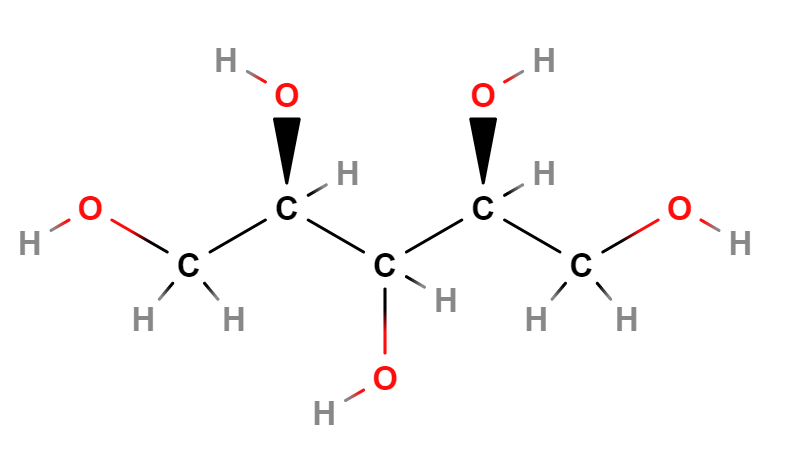 | 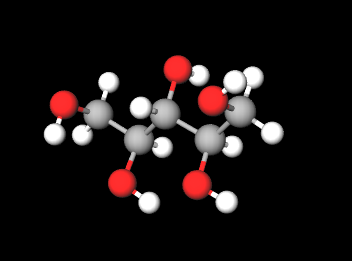 |
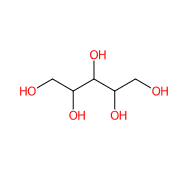
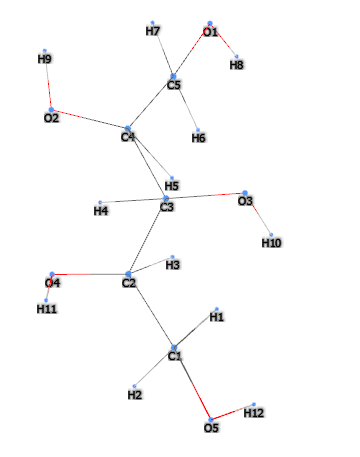
- Molecular Formula C5H12O5
- Condensed Formula HOCH2[CH(OH)]3CH2OH
- Molecular Weight 152.15
- MExact Mass 152.068466
- CAS 87-99-0
- UNII VCQ006KQ1E
- IUPAC (2S,4R)-pentane-1,2,3,4,5-pentol
- InChI=1S/C5H12O5/c6-1-3(8)5(10)4(9)2-7/h3-10H,1-2H2/t3-,4+,5?
- InChl Key HEBKCHPVOIAQTA-NGQZWQHPSA-N
- SMILES C(C(C(C(CO)O)O)O)O
- EC Number: 207-685-7 201-788-0
- DSSTox Substance ID: DTXSID7042514
- MDL number MFCD00064292
- PubChem Substance ID 24902140
- Beilstein 1720523
- NACRES: NA.25
- RTECS ZF0800000
Synonyms:
- Xylite
- ribitol
- D.ribitol
- D-Xylitol
- (2S,4R)-pentane-1,2,3,4,5-pentol
- 1,2,3,4,5-Pentahydroxypentane

