



Cloridrato di tiamina, o tiamina cloridrato, noto anche come cloridrato di vitamina B1, è una vitamina idrosolubile che svolge un ruolo cruciale nel metabolismo energetico e nella funzione del sistema nervoso. È la forma salina cloridrato di tiamina (Vitamina B1) ed è comunemente utilizzato in integratori alimentari, fortificazione degli alimenti e trattamenti medici grazie alla sua stabilità e solubilità.
Il nome definisce la struttura della molecola:
- La tiamina, come abbiamo visto, anche conosciuta come vitamina B1, è una vitamina idrosolubile coinvolta nel metabolismo energetico e nella funzione del sistema nervoso.
- cloridrato indica la presenza del sale di cloridrato nella molecola. Il cloridrato è la forma salina di un composto organico, in questo caso, della tiamina.
Processo industriale di sintesi chimica
- Sintesi. La produzione di Tiamina cloridrato inizia con la sintesi chimica della tiamina attraverso una serie di reazioni che coinvolgono precursori come il cloruro di tiamina. Queste reazioni sono attentamente controllate per ottenere il prodotto desiderato.
- Conversione. Dopo aver ottenuto la tiamina, questa viene convertita nella sua forma di cloridrato aggiungendo acido cloridrico. Questo passaggio migliora la solubilità e la stabilità della vitamina, rendendola più adatta per l'uso in formulazioni orali e iniettabili.
- Purificazione. Il prodotto grezzo di Tiamina cloridrato viene purificato per rimuovere impurità e sottoprodotti della reazione. Questo può includere processi di cristallizzazione, filtrazione e cromatografia.
- Controllo Qualità. Tiamina cloridrato purificato è sottoposto a rigorosi controlli di qualità per verificare la sua purezza, potenza e conformità agli standard farmaceutici. Questi test possono includere analisi spettroscopiche, cromatografiche e test di potenza.
- Formulazione. Tiamina cloridrato può essere formulato in varie forme, come polvere, compresse, capsule o soluzioni iniettabili, a seconda dell'uso finale. Questo passaggio include l'aggiunta di eccipienti per migliorare la stabilità e l'assorbimento.
Industrialmente si presenta in forma di polvere bianca, è solubile in acqua e si caratterizza per un odore acuto.

Si trova nella crusca, nei prodotti cereali, nelle patate, riso e verdure.
A cosa serve e dove si usa
Cosmetica
Agente condizionante della pelle - Misto. Questo ingrediente ha il compito di modificare le condizioni della pelle quando è danneggiata o secca ridimensionandone la sfogliatura e restituendone elasticità.
Fragranza. Ha un ruolo decisamente importante nella formulazione di prodotti cosmetici in quanto consente di migliorare, mascherare o aggiungere profumo al prodotto finale aumentandone la commerciabilità. Il consumatore si aspetta sempre di trovare un profumo gradevole in un prodotto cosmetico.
Medicina
Ha la funzione di bruciare gli zuccheri. Soffrono di carenza di questa vitamina coloro che fanno uso eccessivo di zuccheri e di alcol (1).
Molti studi si sono concentrati sulla possibilità di benefici metabolici sul diabete mellito (2).
Viene usata per curare una malattia delle terminazioni nervose che si chiama Beri Beri.
Utilizzi principali e benefici:
- Integratore alimentare. Il cloridrato di tiamina è ampiamente utilizzato in supplementi vitaminici per prevenire e trattare la carenza di tiamina, che può portare a condizioni come il beriberi, la sindrome di Wernicke-Korsakoff e un generale malessere.
- Metabolismo Energetico. Gioca un ruolo vitale nel metabolismo dei carboidrati, aiutando a convertire i nutrienti in energia, essenziale per mantenere i livelli di energia e supportare le funzioni corporee.
- Sistema nervoso. Il cloridrato di tiamina è importante per la salute del sistema nervoso, aiutando nel corretto funzionamento dei neuroni e supportando attività cognitive come la memoria e l'apprendimento.
- Supporto cardiovascolare. Aiuta a mantenere una funzione cardiaca sana supportando il sistema nervoso che regola i muscoli cardiaci e la funzione vascolare.
- Assorbimento. La forma cloridrato di tiamina assicura una migliore solubilità e assorbimento da parte del corpo rispetto alla tiamina nella sua forma pura, rendendola più efficace nella prevenzione e nel trattamento delle carenze.
- Alimenti. Il cloridrato di tiamina viene aggiunto a una varietà di alimenti, come pane, cereali e alimenti per bambini, per migliorarne il valore nutrizionale e prevenire la carenza di tiamina nella popolazione generale.
Su questa vitamina sono stati selezionati gli studi più rilevanti con una sintesi dei contenuti:
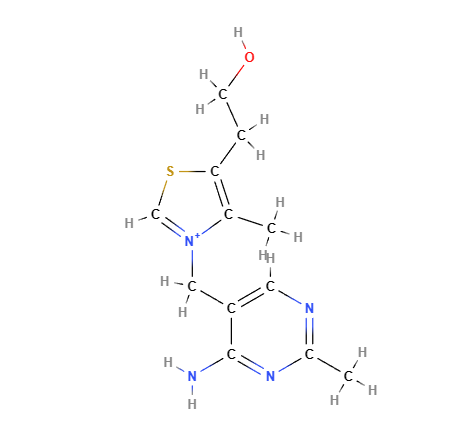 | 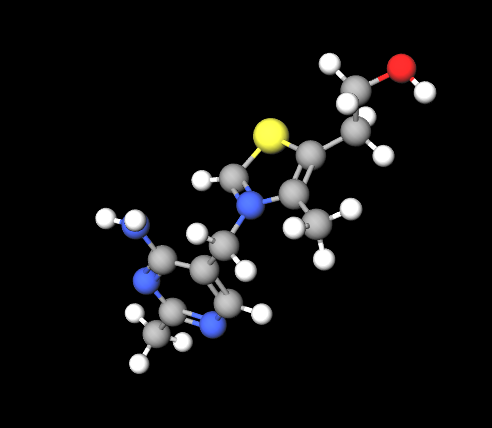 |
- Formula molecolare: C12H17N4OS+
- Empirical Formula (Hill Notation): C12H17ClN4OS · HCl
- Peso molecolare: 265.355 g/mol
- CAS: 70-16-6 59-43-8 67-03-8
- EC Number: 200-425-3
- UNII: 4ABT0J945J
- PubChem Substance ID 24871525
- MDL number: MFCD00012780
- Beilstein Registry Number: 3851771
Sinonimi:
- vitamin B1
- thiamin
- Thiamine hydrochloride
- Vitamin B1 hydrochloride
- Aneurine hydrochloride
- 3-[(4-amino-2-methylpyrimidin-5-yl)methyl]-5-(2-hydroxyethyl)-4-methyl-1,3-thiazol-3-ium
- Thiamine monohydrochloride
- Vitamin B1 hydrochloride (VAN)
- Thiamine, chloride, hydrochloride
- 2-[3-[(4-amino-2-methyl-pyrimidin-5-yl)methyl]-4-methyl-thiazol-3-ium-5-yl]ethanol
- Thiamin HCL

