



Oryzanol is a natural compound found mainly in rice bran oil, but also in other cereals and plants. It is known for its antioxidant properties and is used in a variety of applications, both in the food industry and in cosmetics and pharmaceuticals.
Industrial Production Process
- Extraction from Rice Bran. Production begins with the collection of rice bran, a by-product of rice milling. The bran undergoes an extraction process, usually with solvents such as ethanol or hexane, to separate the rice bran oil, which is rich in oryzanol.
- Oil Concentration. The extracted oil is then concentrated to increase the oryzanol content. This can be achieved through vacuum distillation or other purification methods that remove solvents and concentrate the desired compounds.
- Purification of Oryzanol. Oryzanol is purified from rice bran oil through processes such as chromatography, which separates oryzanol from other components present in the oil.
- Crystallization. The purified product can be further refined through crystallization, a process that allows obtaining oryzanol in a solid and pure form.
- Quality Control. The final product undergoes rigorous quality control checks to verify purity, oryzanol concentration, and the absence of contaminants. These tests can include spectroscopy, high-performance liquid chromatography (HPLC), and chemical analyses.
What it is for and where
Cosmetics - INCI Functions
Antistatic agent. Static electricity build-up has a direct influence on products and causes electrostatic adsorption. The antistatic ingredient reduces static build-up and surface resistivity on the surface of the skin and hair.
Skin conditioning agent. It is the mainstay of topical skin treatment as it has the function of restoring, increasing or improving skin tolerance to external factors, including melanocyte tolerance. The most important function of the conditioning agent is to prevent skin dehydration, but the subject is rather complex and involves emollients and humectants that can be added in the formulation.
Commercial Applications
Food Industry. Oryzanol is used as a food additive for its antioxidant properties, helping to extend the shelf life of foods and maintain the freshness of vegetable oils.
Dietary Supplements. Due to its antioxidant properties (1), oryzanol is often used in dietary supplements to promote cardiovascular health, improve metabolism, and support hormonal function but has been shown not to affect performance or related physiological parameters in adult male subjects during training workouts. (2).
Cosmetic Products. In the cosmetic industry, oryzanol is valued for its ability to protect the skin from UV damage and oxidative stress, helping to prevent premature aging. It is used in sunscreen creams, moisturizing lotions, and anti-aging products.
Hair Care. In hair care products, such as shampoos and conditioners, oryzanol helps to nourish and strengthen the hair, protecting it from environmental damage and enhancing its shine.
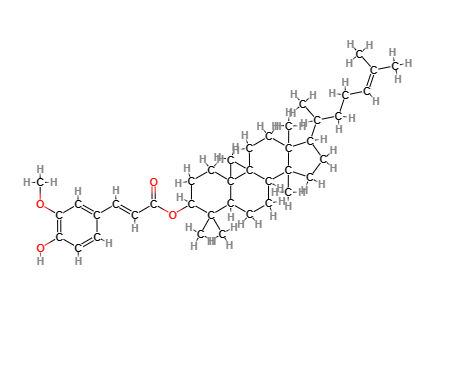 | 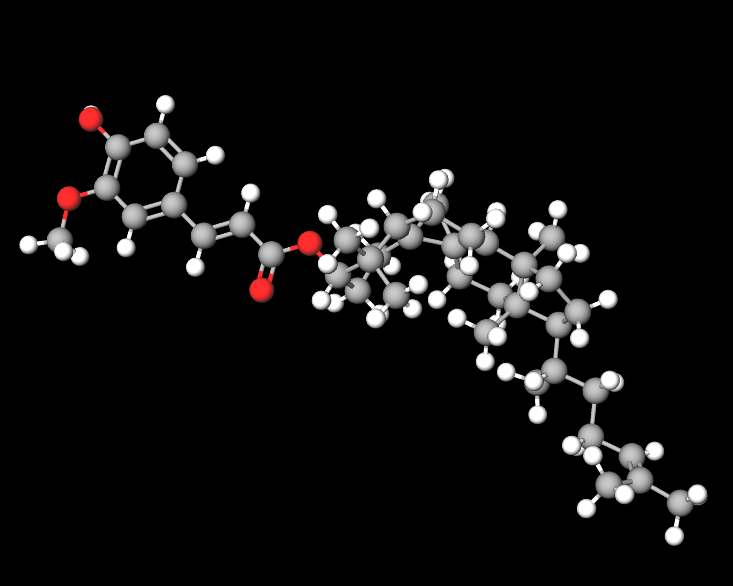 |
Molecular Formula C40H58O4
Molecular Weight 602.9 g/mol
CAS 12738-23-7 11042-64-1
UNII SST9XCL51M
EC Number

