



Methyltrimethoxysilane is an organosilicon compound primarily used as a surface treatment agent and as a starting material in the production of silicone polymers. Due to its ability to form bonds with silicon, it is employed in a variety of industrial applications, including protective coatings, sealants, and as a component in cross-linking systems for polymers.
Composition. Methyltrimethoxysilane is a silane with three methoxy groups attached to a silicon atom, which can hydrolyze to form cross-linked siloxane structures.
Properties. This compound is known for its volatility and the ability to act as a hydrophobizing agent, increasing the water and moisture resistance of treated materials.
The name describes the structure of the molecule:
Methyl. This indicates the presence of the methyl group in the molecule. Methyl is a functional group composed of a carbon atom bonded to three hydrogen atoms (-CH₃).
trimethoxysilane. This indicates the presence of a trimethoxysilane group in the molecule.
Chemical Industrial Synthesis Process
The production of Methyltrimethoxysilane (MTMS), an organosilicon compound used as a silane coupling agent and starting material for the synthesis of silicone polymers, follows a chemical process that involves the reaction of methanol with silicon chloride under controlled conditions. Here is a detailed overview of the process.
- Basic Synthesis. Production begins with the reaction between silicon chloride (SiCl4) and methanol (CH3OH) to form Methyltrimethoxysilane. This reaction requires the use of a catalyst, typically a base, to facilitate the substitution of chloride groups with methoxy groups.
- Control of Reaction Conditions. The reaction is carried out under controlled temperature and pressure conditions to optimize the yield and purity of the product. Careful management of the reactant ratio and reaction time is crucial.
- Distillation. After the reaction, the reaction mixture contains Methyltrimethoxysilane along with by-products and reactant residues. Distillation is used to separate and purify Methyltrimethoxysilane from the other components of the mixture.
- Further Purification. Additional purification steps may be necessary to remove the last traces of impurities and achieve high-quality Methyltrimethoxysilane. These can include filtration, crystallization, or further distillations.
- Quality Control. The purified Methyltrimethoxysilane undergoes quality control checks to verify its purity, chemical composition, and physical properties. These tests can include spectroscopy, chromatography, and thermogravimetric analysis.
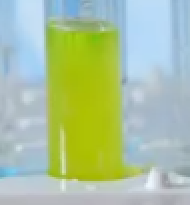
Form and Color. Methyltrimethoxysilane is a colorless to slightly yellow liquid.
What it is for and where
The function of this compound can vary depending on the context in which it is used. Methyltrimethoxysilane is often used as a binding agent or surface modifier in various industrial applications and materials such as resins and composites, where it can contribute to increased adhesion and corrosion resistance.
Applications. Used as a surface treatment agent, it promotes adhesion between organic and inorganic materials. It is employed in the production of silicones and as an intermediary in the synthesis of organosilicon compounds.
Benefits. Enhances thermal stability and water-repellent properties of the treated materials, also helping to improve adhesion between different substrates.
Cosmetics - INCI Functions
- Film-forming agent. It produces, upon application, a very thin continuous film with an optimal balance of cohesion, adhesion and stickiness on skin, hair or nails to counteract or limit damage from external phenomena such as chemicals, UV rays and pollution.
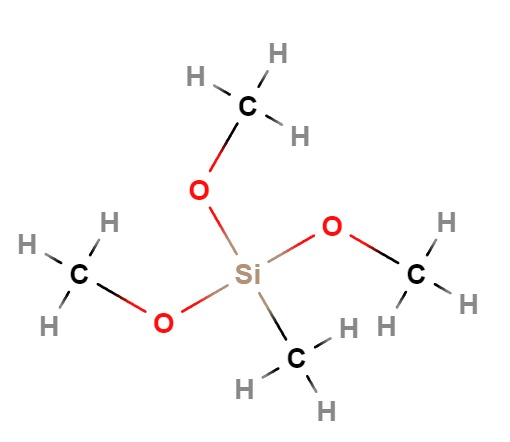 | 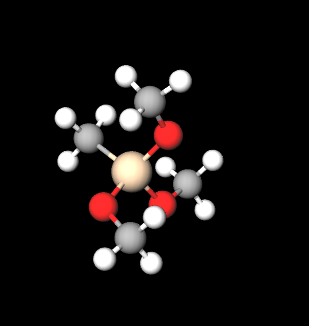 |
Molecular Formula C4H12O3Si
Molecular Weight
CAS 1185-55-3
UNII 0HI0D71MCI
EC Number 214-685-0
DTXSID3027370
Nikkaji J13.152K
Synonyms:
- Trimethoxymethylsilane
- Trimethoxy(methyl)silane

