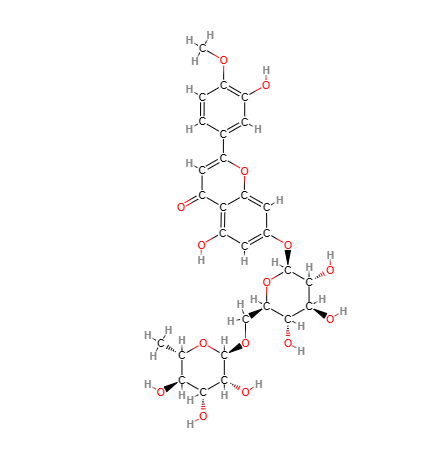
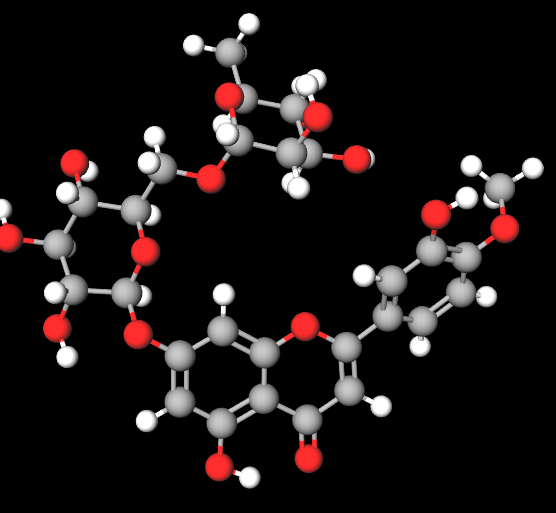
Diosmina è un bioflavonoide con specifiche proprietà farmacologiche che lo rendono efficace nel trattamento di varie patologie venose e capillari. La sua azione si estende oltre la semplice riduzione della permeabilità capillare e l'aumento del tono venoso, toccando meccanismi cellulari e molecolari complessi.
Azione antiossidante. La diosmina riduce lo stress ossidativo nei vasi sanguigni (1), neutralizzando i radicali liberi e proteggendo l'endotelio vascolare dai danni ossidativi. Questo effetto antiossidante contribuisce a mantenere l'integrità dei vasi sanguigni e a prevenire l'infiammazione.
Effetto antinfiammatorio. Agisce modulando l'attività di vari mediatori infiammatori, come le citochine e le metalloproteasi, riducendo così l'infiammazione nei tessuti circostanti i vasi sanguigni (2). Questo è particolarmente utile nel trattamento delle emorroidi e dell'insufficienza venosa cronica.
Miglioramento della microcircolazione. La diosmina migliora la microcircolazione ottimizzando il flusso sanguigno attraverso i capillari e riducendo la viscosità del sangue (3). Questo facilita l'ossigenazione dei tessuti e la rimozione delle scorie metaboliche.
Fonti. Sebbene la diosmina sia sintetizzata industrialmente per uso farmaceutico, è naturalmente presente in piccole quantità in alcune piante e alimenti, come gli agrumi e le erbe aromatiche. La sua forma sintetica è ottimizzata per garantire una maggiore biodisponibilità e efficacia terapeutica.
Applicazioni terapeutiche. Oltre al trattamento dell'insufficienza venosa e delle emorroidi, la diosmina è stata studiata per potenziali effetti benefici in altre condizioni, come le malattie cardiovascolari, grazie alle sue proprietà antiossidanti e antinfiammatorie.
Processo di produzione industriale
Estrazione - La Diosmina è inizialmente estratta da fonti vegetali, principalmente dalle bucce degli agrumi, attraverso processi di estrazione che possono includere l'uso di solventi.
Purificazione - Dopo l'estrazione, la Diosmina grezza viene purificata per rimuovere impurità e migliorare la sua qualità. Questo può includere tecniche come la cristallizzazione, la filtrazione e la cromatografia.
Sintesi - In alcuni casi, la Diosmina può essere sintetizzata o modificata chimicamente per migliorarne la biodisponibilità. Questo può includere la conversione della Diosmina in forme micronizzate o l'aggiunta di gruppi idrossilici per formare derivati più solubili.
Controllo - La Diosmina purificata è sottoposta a rigorosi controlli di qualità per garantire la sua purezza, potenza e conformità con le specifiche farmaceutiche. Questo include test per identificare la presenza di metalli pesanti, solventi residui e altri contaminanti.
Forma e Colore
Tipicamente disponibile sotto forma di compresse o capsule, la diosmina è una polvere cristallina di colore arancione pallido.
Applicazioni commerciali
Industria Farmaceutica. La diosmina è ampiamente utilizzata in farmacologia per il trattamento di insufficienza venosa, emorroidi e varici. Contribuisce a migliorare il tono delle vene e la circolazione sanguigna.
Integratori Alimentari. Spesso inclusa in integratori destinati a supportare la salute circolatoria e venosa.
Sicurezza
Generalmente considerata sicura quando usata secondo le indicazioni. Tuttavia, come per tutti i farmaci e integratori, è consigliabile consultare un medico prima dell'uso, specialmente in gravidanza o in presenza di condizioni mediche preesistenti.
Molecular Formula C28H32O15
Molecular Weight 608.5 g/mol
CAS 520-27-4
UNII 7QM776WJ5N
EC Number 208-289-7
DTXSID4045892
Synonyms
- Barosmin
- Buchu Resin
- Daflon
- Diosmine
- Resin, Buchu
- Venosmine
Bibliografia_____________________________________________________________________
(1) Wójciak M, Feldo M, Borowski G, Kubrak T, Płachno BJ, Sowa I. Antioxidant Potential of Diosmin and Diosmetin against Oxidative Stress in Endothelial Cells. Molecules. 2022 Nov 25;27(23):8232. doi: 10.3390/molecules27238232. PMID: 36500323; PMCID: PMC9739697.
Abstract. Phlebotropic flavonoids, including diosmin and its aglycone diosmetin, are natural polyphenols widely used in the prevention and treatment of chronic venous insufficiency (CVI). As oxidative stress plays an important role in the development of pathophysiology of the cardiovascular system, the study aimed to investigate the protective effects of diosmin and diosmetin on hydrogen peroxide (H2O2)-induced oxidative stress in endothelial cells. The cells were pretreated with different concentrations of the flavonoid prior to the H2O2 exposure. The cell viability, the level of intracellular reactive oxygen species (ROS), the activity of cellular antioxidant enzymes-including superoxide dismutase (SOD), catalase (CAT), and glutathione peroxidase GPx-and the malondialdehyde (MDA) level were assessed. It was found that the H2O2-induced oxidative stress was ameliorated by diosmin/diosmetin in a concentration-dependent manner. The flavonoids restored the activity of cellular antioxidant enzymes and lowered the MDA level upregulated by the H2O2 exposure. These results indicate that diosmin and diosmetin may prevent oxidative stress in endothelial cells; therefore, they may protect against the development and progression of oxidative-stress-related disorders.
(2) Mitra R, Nersesyan A, Pentland K, Melin MM, Levy RM, Ebong EE. Diosmin and its glycocalyx restorative and anti-inflammatory effects on injured blood vessels. FASEB J. 2022 Dec;36(12):e22630. doi: 10.1096/fj.202200053RR.
Abstract. The endothelium, a crucial homeostatic organ, regulates vascular permeability and tone. Under physiological conditions, endothelial stimulation induces vasodilator endothelial nitric oxide (eNO) release and prevents adhesion molecule accessibility and leukocyte adhesion and migration into vessel walls. Endothelium dysfunction is a principal event in cardiovascular disorders, including atherosclerosis. Minimal attention is given to an important endothelial cell structure, the endothelial glycocalyx (GCX), a negatively charged heterogeneous polysaccharide that serves as a protective covering for endothelial cells and enables endothelial cells to transduce mechanical stimuli into various biological and chemical activities. Endothelial GCX shedding thus plays a role in endothelial dysfunction, for example by increasing vascular permeability and decreasing vessel tone. Consequently, there is increasing interest in developing therapies that focus on GCX repair to limit downstream endothelium dysfunction and prevent further downstream cardiovascular events. Here, we present diosmin (3',5,7-trihydroxy-4'-methoxyflavone-7-rhamnoglucoside), a flavone glycoside of diosmetin, which downregulates adhesive molecule expression, decreases inflammation and capillary permeability, and upregulates eNO expression. Due to these pleiotropic effects of diosmin on the vasculature, a possible unidentified mechanism of action is through GCX restoration. We hypothesize that diosmin positively affects GCX integrity along with GCX-related endothelial functions. Our hypothesis was tested in a partial ligation left carotid artery (LCA) mouse model, where the right carotid artery was the control for each mouse. Diosmin (50 mg/kg) was administered daily for 7 days, 72 h after ligation. Within the ligated mice LCAs, diosmin treatment elevated the activated eNO synthase level, inhibited inflammatory cell uptake, decreased vessel wall thickness, increased vessel diameter, and increased GCX coverage of the vessel wall. ELISA showed a decrease in hyaluronan concentration in plasma samples of diosmin-treated mice, signifying reduced GCX shedding. In summary, diosmin supported endothelial GCX integrity, to which we attribute diosmin's preservation of endothelial function as indicated by attenuated expression of inflammatory factors and restored vascular tone. © 2022 Federation of American Societies for Experimental Biology.
(3) Feldo M, Wójciak-Kosior M, Sowa I, Kocki J, Bogucki J, Zubilewicz T, Kęsik J, Bogucka-Kocka A. Effect of Diosmin Administration in Patients with Chronic Venous Disorders on Selected Factors Affecting Angiogenesis. Molecules. 2019 Sep 12;24(18):3316. doi: 10.3390/molecules24183316. PMID: 31547271; PMCID: PMC6767141.
Abstract. Diosmin is a natural compound with a wide range of biological activity, e.g., it improves lymphatic drainage, supports microcirculation, and increases venous tone, and venous elasticity, hence, it is applied in the pharmacotherapy of chronic venous disorders (CVD). The aim of this study was to assess the correlation between diosmin administration (2 × 600 mg daily) in patients suffering from CVD and the levels of selected factors influencing angiogenesis, which are involved in CVD pathophysiology. Thirty-five CVD patients were examined. Levels of plasma tumor necrosis factor alpha (TNF alpha), vascular endothelial growth factor (VEGF-A and VEGF-C); angiostatin, interleukin 6 (IL-6), fibroblast growth factor 2 (FGF2); and plasminogen (PLG) were measured with an Elisa assay before and after three months of diosmin administration. The clinical symptoms of CVD were monitored using ultrasound images, echo Doppler assay, visual analogue scale (VAS), and measurement of the leg circumference. The average content of TNF alpha, VEGF-C, VEGF-A IL-6, and FGF2 decreased after the therapy with diosmin in a significant manner; with p < 0.001, p < 0.05, p < 0.05, p < 0.01, and p < 0.01, respectively, and a significant (p < 0.05) increase in the plasma angiostatin level after the three-month treatment was found. A significant (p < 0.05) decrease in edema and the average leg circumference of the patients was observed after the therapy. Diosmin influences the angiogenic and inflammatory mechanisms involved in the pathophysiology of edema presented in patients with a different class of CVD.