Il Salmerino Artico Islandese o Arctic Char (Salvelinus alpinus) è un pesce d'acqua dolce appartenente alla famiglia dei Salmonidi. È noto per la sua carne tenera e saporita, ed è allevato in Islanda in condizioni che imitano il suo ambiente naturale.
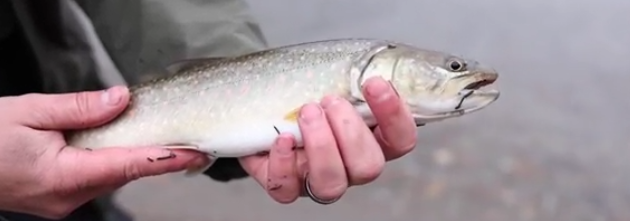
Materie prime utilizzate nella produzione:
- Uova di Salmerino Artico. Selezionate per l'allevamento.
- Acqua pulita e fredda. Fondamentale per simulare l'habitat naturale del salmerino.
- Mangime di qualità. Composto da proteine, grassi, vitamine e minerali per garantire una crescita sana.
- Tecnologie di allevamento. Sistemi di filtraggio dell'acqua, controllo della temperatura e monitoraggio ambientale.
Processo di produzione industriale
- Preparazione. Le uova di salmerino vengono incubate in condizioni controllate.
- Sviluppo. Dopo la schiusa, i giovani pesci vengono trasferiti in vasche di crescita.
- Alimentazione. I pesci vengono alimentati con mangimi bilanciati per promuovere una crescita sana.
- Monitoraggio. La salute e la crescita dei pesci vengono monitorate costantemente.
- Raccolta. Una volta raggiunta la maturità, i pesci vengono raccolti.
- I pesci vengono puliti, e preparati per la conservazione in frigoriferi
Utilizzi Culinari
Grigliatura
L'Arctic Char viene spesso grigliato, sia su fiamme aperte che su una piastra. La sua carne soda si presta bene alla grigliatura, e la pelle croccante è molto gradevole.
Cottura al Forno
La cottura al forno è un metodo di cottura popolare per l'Arctic Char. Può essere cotto intero, in filetti o in sacchetti di carta pergamena da forno (attenzione non usare mai fogli di alluminio non ricoperti perché molto pericolosi per la salute) con erbe e condimenti per ottenere un risultato appetitoso.
Sauté in Padella
La sauté in padella dell'Arctic Char in una padella calda con un po' d'olio crea la pelle croccante mantenendo la carne tenera e umida.
L'Arctic Char può essere utilizzato per preparare il gravlax, un piatto scandinavo simile al salmone affumicato. Il pesce viene curato con una miscela di sale, zucchero e aneto, risultando in una delizia leggermente dolce e salata.
Sushi e Sashimi
L'Arctic Char viene talvolta utilizzato nella preparazione di sushi e sashimi grazie al suo sapore e alla sua attraente carne rosa-arancione.
Poaching
Cuocere in brodo o in court-bouillon l'Arctic Char.
Affumicatura
Affumicare l'Arctic Char conferisce al pesce un sapore affumicato, rendendolo una scelta popolare per piatti a base di pesce affumicato. Attenzione comunque perché l'affumicatura non è un metodo salutare.
Tartare
È possibile preparare il tartare di Arctic Char tritando finemente il pesce e mescolandolo con erbe, spezie e altri ingredienti per creare un antipasto fresco ed elegante.
Abbinamenti Culinari
L'Arctic Char si abbina bene a varie erbe, come l'aneto, il dragoncello e il prezzemolo.
I sapori agrumati, come il limone e l'arancia, completano il sapore delicato del pesce.
Si sposa bene anche con ingredienti come i capperi, scalogno e l'olio d'oliva con contorni di verdure arrosto, purè di patate o un'insalata fresca.
Altre Applicazioni
Conservazione
L'Arctic Char è una specie preziosa per gli sforzi di conservazione di fronte ai cambiamenti climatici e alla degradazione dell'habitat. Le organizzazioni per la conservazione lavorano per proteggere le popolazioni di Arctic Char e i loro habitat.
Acquacoltura
L'Arctic Char viene allevato in molte regioni, tra cui l'Islanda. Pratiche di acquacoltura sostenibile contribuiscono a soddisfare la domanda di questo pesce riducendo la pressione sulle popolazioni selvatiche.
Ricerca
L'Arctic Char è oggetto di studio da parte di scienziati e ricercatori per comprendere meglio la sua biologia, il suo comportamento e la sua adattabilità agli ambienti freddi, fornendo informazioni sugli impatti dei cambiamenti climatici sugli ecosistemi d'acqua dolce.
Bibliografia__________________________________________________________________________
Petersen K, Hultman MT, Bytingsvik J, Harju M, Evenset A, Tollefsen KE. Characterizing cytotoxic and estrogenic activity of Arctic char tissue extracts in primary Arctic char hepatocytes. J Toxicol Environ Health A. 2017;80(16-18):1017-1030. doi: 10.1080/15287394.2017.1357277.
Abstract. Contaminants from various anthropogenic activities are detected in the Arctic due to long-range atmospheric transport, ocean currents, and living organisms such as migrating fish or seabirds. Although levels of persistent organic pollutants (POPs) in Arctic fish are generally low, local hot spots of contamination were found in freshwater systems such as Lake Ellasjøen at Bjørnøya (Bear Island, Norway). Higher concentrations of organic halogenated compounds (OHC), and higher levels of cytochrome P450 and DNA-double strand breaks were reported in Arctic char (Salvelinus alpinus) from this lake compared to fish from other lakes on Bjørnøya. Although several of the measured contaminants are potential endocrine disrupters, few studies have investigated potential endocrine disruptive effects of the contaminant cocktail in this fish population. The aim of this study was to compare acutely toxic and estrogenic potency of the cocktail of pollutants as evidenced by cytotoxic and/or estrogenic effects in vitro using extracts of Arctic char livers from contaminated Lake Ellasjøen with those from less contaminated Lake Laksvatn at Bjørnøya. This was performed by in situ sampling and contaminant extraction from liver tissue, followed by chemical analysis and in vitro testing of the following contaminated tissue extracts: F1-nonpolar OHC, F2-polar pesticides and metabolites of OHC, and F3-polar OHC. Contaminant levels were highest in extracts from Ellasjøen fish. The F2 and F3 extracts from Lake Laksvatn and Lake Ellasjøen fish reduced in vitro cell viability at a concentration ratio of 0.03-1 relative to tissue concentration in Arctic char. Only the F3 liver extract from Ellasjøen fish increased in vitro vitellogenin protein expression. Although compounds such as estrogenic OH-PCBs were quantified in Ellasjøen F3 extracts, it remains to be determined which compounds were inducing estrogenic effects.
Hamilton EF, Element G, van Coeverden de Groot P, Engel K, Neufeld JD, Shah V, Walker VK. Anadromous Arctic Char Microbiomes: Bioprospecting in the High Arctic. Front Bioeng Biotechnol. 2019 Feb 26;7:32. doi: 10.3389/fbioe.2019.00032.
Abstract. Northern populations of Arctic char (Salvelinus alpinus) can be anadromous, migrating annually from the ocean to freshwater lakes and rivers in order to escape sub-zero temperatures. Such seasonal behavior demands that these fish and their associated microbiomes adapt to changes in salinity, temperature, and other environmental challenges. We characterized the microbial community composition of anadromous S. alpinus, netted by Inuit fishermen at freshwater and seawater fishing sites in the high Arctic, both under ice and in open water. Bacterial profiles were generated by DNA extraction and high-throughput sequencing of PCR-amplified 16S ribosomal RNA genes. Results showed that microbial communities on the skin and intestine of Arctic char were statistically different when sampled from freshwater or saline water sites. This association was tested using hierarchical Ward's linkage clustering, showing eight distinct clusters in each of the skin and intestinal microbiomes, with the clusters reflecting sampling location between fresh and saline environments, confirming a salinity-linked turnover. This analysis also provided evidence for a core composition of skin and intestinal bacteria, with the phyla Proteobacteria, Firmicutes, and Cyanobacteria presenting as major phyla within the skin-associated microbiomes. The intestine-associated microbiome was characterized by unidentified genera from families Fusobacteriaceae, Comamonadaceae, Pseudomonadaceae, and Vibrionaceae. The salinity-linked turnover was further tested through ordinations that showed samples grouping based on environment for both skin- and intestine-associated microbiomes. This finding implies that core microbiomes between fresh and saline conditions could be used to assist in regulating optimal fish health in aquaculture practices. Furthermore, identified taxa from known psychrophiles and with nitrogen cycling properties suggest that there is additional potential for biotechnological applications for fish farm and waste management practices.
Mansour N, McNiven MA, Richardson GF. The effect of dietary supplementation with blueberry, alpha-tocopherol or astaxanthin on oxidative stability of Arctic char (Salvelinus alpinus) semen. Theriogenology. 2006 Jul 15;66(2):373-82. doi: 10.1016/j.theriogenology.2005.12.002.
Abstract. The objective was to determine the oxidative stability of Arctic char (Salvelinus alpinus) semen following dietary supplementation with lowbush blueberry (Vaccinium angustifolium) product, alpha-tocopherol, alpha-tocopherol+blueberry product, or alpha-tocopherol+astaxanthin. Sperm lipid peroxidation was initiated by challenging with ferrous sulphate/ascorbic acid (Fe(++)/Asc) at level of 0.04/0.2 mmol/L. Addition of blueberry, alpha-tocopherol, or both to char diets inhibited semen lipid peroxidation by: (a) decreasing the rate of sperm lipid peroxidation, an effect which was more pronounced with alpha-tocopherol treatments; and (b) increasing the antioxidant potential of seminal plasma, based on the lipid peroxidation process of sperm and an in vitro chicken brain tissue model. Dietary supplementation with astaxanthin and alpha-tocopherol had the same effect as the supplementation with alpha-tocopherol alone on inhibiting the lipid peroxidation process of sperm and chicken brain. Catalase-like activity increased significantly in sperm of fish fed alpha-tocopherol, blueberry, or both. There was a negative correlation (r= -0.397, P < 0.05) between catalase-like activity in sperm cells and the rate of sperm lipid peroxidation. Seminal plasma alpha-tocopherol levels increased significantly in fish supplemented with alpha-tocopherol alone or in combination with blueberry or astaxanthin. There were negative correlations between seminal plasma alpha-tocopherol levels and lipid peroxidation rates of sperm cells (r= -0.625, P < 0.01) and brain tissue (r= -0.606, P < 0.01). In conclusion, dietary supplementation of blueberry product or alpha-tocopherol inhibited lipid peroxidation in Arctic char semen. Further experiments are needed to test the effect of dietary blueberry and antioxidants on Arctic char semen quality during liquid and cryopreserved storage.
Barst BD, Wooller MJ, O'Brien DM, Santa-Rios A, Basu N, Köck G, Johnson JJ, Muir DCG. Dried Blood Spot Sampling of Landlocked Arctic Char (Salvelinus alpinus) for Estimating Mercury Exposure and Stable Carbon Isotope Fingerprinting of Essential Amino Acids. Environ Toxicol Chem. 2020 Apr;39(4):893-903. doi: 10.1002/etc.4686.
Abstract. Dried blood spots (DBS), created by applying and drying a whole blood sample onto filter paper, provide a simple and minimally invasive procedure for collecting, transporting, and storing blood. Because DBS are ideal for use in field and resource-limited settings, we aimed to develop a simple and accurate DBS-based approach for assessing mercury (Hg) exposure and dietary carbon sources for landlocked Arctic char, a sentinel fish species in the Arctic. We collected liquid whole blood (from the caudal vein), muscle, liver, and brains of Arctic char (n = 36) from 8 lakes spanning a Hg gradient in the Canadian High Arctic. We measured total Hg concentrations ([THg]) of field-prepared DBS and Arctic char tissues. Across a considerable range, [THg] of DBS (0.04-3.38 μg/g wet wt) were highly correlated with [THg] of all tissues (r2 range = 0.928-0.996). We also analyzed the compound-specific carbon isotope ratios (expressed as δ13 C values) of essential amino acids (EAAs) isolated from DBS, liquid whole blood, and muscle. The δ13 C values of 5 EAAs (δ13 CEAAs ; isoleucine [Ile], leucine [Leu], phenylalanine [Phe], valine [Val], and threonine [Thr]) from DBS were highly correlated with δ13 CEAAs of liquid whole blood (r2 range = 0.693-0.895) and muscle (r2 range = 0.642-0.881). The patterns of δ13 CEAAs of landlocked Arctic char were remarkably consistent across sample types and indicate that EAAs are most likely of algal origin. Because a small volume of blood (~50 µL) dried on filter paper can be used to determine Hg exposure levels of various tissues and to fingerprint carbon sources, DBS sampling may decrease the burdens of research and may be developed as a nonlethal sampling technique. Environ Toxicol Chem 2020;39:893-903. © 2020 SETAC.




