



1-Hexadecanol (Cetyl Alcohol) is a long chain fatty alcohol. It is a long chain fatty alcohol and it is also called palmityl alcohol, discovered by the chemist Michel Chevreul in France in 1817.
The name describes the structure of the molecule:
- Cetyl is derived from the Latin "cetus", meaning whale. Cetyl alcohol was originally isolated from whale oil, but today it is primarily produced from vegetable oils and petroleum.
Raw Materials Used in Production.
- Oils and fats, notably palm oil or coconut oil, are often the primary source for cetyl alcohol.
Step-by-step Summary of Industrial Production Process.
- Hydrogenation: Fatty acids obtained from oils and fats are subjected to a hydrogenation process.
- Reduction: The resulting fatty acid esters are then reduced with hydrogen in the presence of a catalyst to form alcohols, including cetyl alcohol.
- Distillation: Cetyl alcohol is then separated from the other alcohols via distillation.
- Refinement: It is further purified to remove any remaining impurities.
Form and Color.
Cetyl alcohol typically appears as a white wax or flakes.
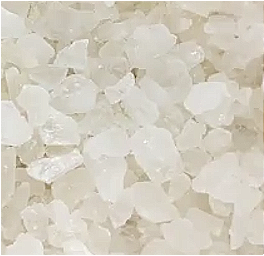
What is it for?
It is a chemical substance frequently used in cosmetics as a non-ionic emollient, emulsifier or thickening agent as a pharmaceutical excipient and in medicine.
Cosmetics
Skin conditioning agent - Emollient. Emollients have the characteristic of enhancing the skin barrier through a source of exogenous lipids that adhere to the skin, improving barrier properties by filling gaps in intercorneocyte clusters to improve hydration while protecting against inflammation. In practice, they have the ability to create a barrier that prevents transepidermal water loss. Emollients are described as degreasing or refreshing additives that improve the lipid content of the upper layers of the skin by preventing degreasing and drying of the skin. The problem with emollients is that many have a strong lipophilic character and are identified as occlusive ingredients; they are oily and fatty materials that remain on the skin surface and reduce transepidermal water loss. In cosmetics, emollients and moisturisers are often considered synonymous with humectants and occlusives.
Surfactant - Emulsifying agent. Emulsions are thermodynamically unstable and are used to soothe or soften the skin and emulsify, so they need a specific, stabilising ingredient. This ingredient forms a film, lowers the surface tension and makes two immiscible liquids miscible. A very important factor affecting the stability of the emulsion is the amount of the emulsifying agent. Emulsifiers have the property of reducing the oil/water or water/oil interfacial tension, improving the stability of the emulsion and also directly influencing the stability, sensory properties and surface tension of sunscreens by modulating the filmometric performance.
Emulsion stabiliser. Emulsions are thermodynamically unstable. Emulsion stabilisers improve the formation and stability of single and double emulsions. as well as their shelf-life. It should be noted that in the structure-function relationship, the molar mass of the ingredient used plays an important role.
Surfactant - Foam booster. It has the effect of introducing gas bubbles into the water and affects the cleaning process by helping to spread the cleanser. Since sebum has an inhibiting effect on the bubble, more foam is produced in the second shampoo.
Fragrance. It plays a very important role in the formulation of cosmetic products as it provides the possibility of enhancing, masking or adding fragrance to the final product, increasing its marketability. It is able to create a perceptible pleasant odour, masking a bad smell. The consumer always expects to find a pleasant or distinctive scent in a cosmetic product.
Opacifying agent. It is useful into formulations that may be translucent or transparent to make them opaque and less permeable to light.
Surfactant - Cleansing agent. Cosmetic products used to cleanse the skin utilise the surface-active action that produces a lowering of the surface tension of the stratum corneum, facilitating the removal of dirt and impurities.
Viscosity control agent. It controls and adapts, Increasing or decreasing, viscosity to the required level for optimal chemical and physical stability of the product and dosage in gels, suspensions, emulsions, solutions.
Commercial Applications:
Cosmetics Industry. Cetyl alcohol is widely used in cosmetics as an emollient, emulsion stabilizer, and thickener. It's often found in creams, lotions, and hair conditioners.
Pharmaceutical. It can be used as an auxiliary agent in the formulation of medicinal creams and ointments.
Soap Production. Cetyl alcohol can be used to enhance the consistency and emulsifying properties of soaps.
Food Industry. While less common, it can be used as an additive in some food formulations.
Most significant studies
Cetyl alcohol has been used to produce soporolipids, glycolipid biosurfactants that have been shown to exhibit antitumor activity (1).
Drug release. Based on this study, it can be concluded that cetyl alcohol microspheres and indomethacin capsule (Microcid SR) capsule are bioequivalent in terms of the rate and extent of absorption (2).
The protective effects of synthetic lung surfactant Exosurf® (containing cetyl alcohol) against endotoxin-induced inflammation have been demonstrated (3).
 |  |
- Molecular Formula C16H34O or [CH3(CH2)14CH2OH]
- Molecular Weight 242.447 g/mol
- CAS 36653-82-4
- EINECS 253-149-0
Synonyms
- cetylalcohol
- 1-Hexadecanol
- Hexadecan-1-ol
- Normal primary hexadecyl alcohol
- N-Hexadecanol
- n-Hexadecyl alcohol
- n-1-Hexadecanol
- Loxanwachs SK
- Crodacol C

