



Fig (Ficus carica)
Description
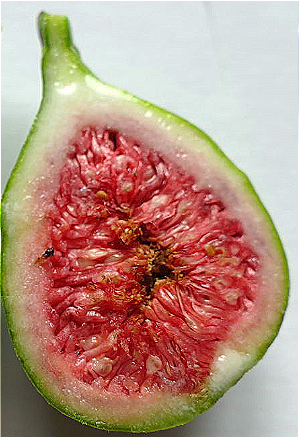
The fig, fruit of Ficus carica (family Moraceae), is technically a “false fruit” (syconium) of generally pear-shaped or rounded form, with a thin, delicate skin that can range in colour from light green or yellow to dark violet or almost black in more pigmented varieties. Inside, the fig is hollow and lined with soft, sweet, fleshy tissue packed with hundreds of tiny achenes (the true seeds), which give the characteristic slight crunchiness during chewing. It is a fruit traditionally associated with Mediterranean landscapes and is eaten fresh in late summer and early autumn, or in dried form throughout the year. Fresh figs are moderately energy-dense but very rich in water, natural sugars, fibre and bioactive compounds; dried figs concentrate energy, sugars, minerals and fibre and are therefore a very dense food from both a caloric and nutritional point of view. Figs are used as fresh fruit, in jams and preserves, bakery products, snacks and sweet-and-sour savoury preparations.
Botanical classification
Common name: fig (tree and fruit)
Botanical name: Ficus carica
Family: Moraceae
Origin: Mediterranean basin and Western Asia, now widely grown in warm temperate and subtropical regions
General features: Small tree or large deciduous shrub with broad, irregular canopy, large deeply lobed leaves, and fleshy infructescences (syconia) rich in sugars. Fruits can be eaten fresh or dried. Xerophilous species, well adapted to dry, rocky and coastal environments.
Cultivation and growing conditions
Climate
Typical crop of warm temperate and Mediterranean climates, with mild winters and hot, dry summers.
Tolerates summer heat and drought very well; benefits from long, warm summers for full fruit ripening.
Mature trees withstand short periods of sub-zero temperatures, but young plants and tender shoots are more sensitive to frost.
In colder regions it is preferable to plant in sheltered positions (near walls, south-facing slopes).
Exposure
Strongly sun-loving: needs full sun for most of the day to produce sweet, well-ripened fruits.
Shade markedly reduces yield and fruit sugar content.
Sheltered sites, protected from cold winds, improve fruit set and winter survival.
Soil
Adapts to a wide range of soils, including poor, stony, and shallow soils, provided they are well drained.
Prefers medium-textured soils (loam, sandy loam or loam–silt) with pH from slightly acidic to moderately alkaline.
Tolerates calcareous soils, but suffers under prolonged waterlogging, which leads to root rot and poor vigour.
In very fertile soils, the fig may produce excessive vegetative growth at the expense of fruiting if not properly pruned and managed.
Irrigation
Under traditional Mediterranean conditions, figs are often grown without irrigation, relying on seasonal rainfall.
In intensive orchards or in particularly dry climates, supplementary irrigation improves fruit size, yield, and regular cropping, especially:
during fruit enlargement,
in prolonged drought periods.
Over-irrigation increases the risk of fruit splitting and fungal diseases, and can reduce sugar concentration.
Temperature
Optimal growth temperature: roughly 18–30 °C.
Adult trees in full dormancy can endure some degree of frost, but very low or prolonged cold can damage branches and scaffold limbs.
Young shoots in spring can be harmed by late frosts.
High summer temperatures combined with severe drought may cause fruit drop and leaf shedding if soil moisture is extremely low.
Fertilization
On deep, fertile soils the fig generally needs only moderate fertilization.
Periodic applications of organic matter (well-matured manure, compost) help maintain fertility and soil structure.
Mineral fertilization should be balanced:
limited nitrogen to avoid overly vigorous vegetative growth,
phosphorus and potassium to support flowering, fruit set, fruit quality and stress tolerance.
On very poor soils, a light annual application at the beginning of the growing season is often sufficient.
Crop care
Pruning is usually light, as fig naturally develops a broad canopy; it is mainly aimed at:
controlling tree size and height,
removing dead, diseased or damaged branches,
improving internal light penetration and air circulation.
For fruit production, trees can be trained as bush or open vase, or fan-trained against a wall in colder areas.
Weed control is especially important in the establishment phase, until the canopy shades the soil.
Generally a rustic species with limited need for phytosanitary treatments, though fruit rots, insect pests and birds can locally affect production.
Harvest
Depending on cultivar and climate, ripening occurs from late summer to early autumn, sometimes with two crops (early “breba” crop and main crop).
Fruits should be harvested when they reach full colour, soft texture and high sweetness; fully ripe figs are delicate and must be handled carefully.
Harvest is mainly manual, with several pickings to gather fruit at the correct stage of ripeness.
Part of the crop is often destined for drying, allowing long-term storage and concentration of sugars and flavours.
Propagation
Easily propagated by hardwood or semi-hardwood cuttings, usually taken and rooted in late winter or early spring.
Can also be propagated by layering or air-layering; seed propagation is used mainly for breeding and selection.
Young trees are planted in autumn or late winter, using spacings suited to the expected canopy size and training system.
Indicative nutritional values per 100 g (fresh, raw figs)
(Average values; may vary with variety and ripeness.)
Energy: ~65–75 kcal
Water: ~78–80 g
Protein: ~0.8–1.2 g
Total carbohydrates: ~16–18 g
Simple sugars (glucose, fructose, sucrose): ~15–16 g
Dietary fibre: ~2.5–3 g
Total fat: ~0.3 g
First occurrence of lipid acronyms: SFA (saturated fatty acids, which should be kept under control within overall dietary intake), MUFA (monounsaturated fatty acids, generally favourable to lipid profile when they replace saturates), PUFA (polyunsaturated fatty acids, involved in vascular and inflammatory functions). Later in the text these acronyms will appear without bold.
SFA: traces
MUFA: traces
PUFA: ~0.1–0.2 g
Minerals (typical ranges)
Potassium: ~200–250 mg
Calcium: ~30–40 mg
Magnesium: ~15–20 mg
Phosphorus: ~20–25 mg
Vitamins
Small amounts of vitamin C
Trace levels of B-group vitamins
Some carotenoids and phenolic compounds with antioxidant activity
(Dried figs, on a weight basis, contain much higher levels of energy, sugars, fibre and minerals, with water reduced to about 20–30%.)
Key constituents
Carbohydrates
Readily available simple sugars (glucose, fructose, sucrose).
Fraction of complex carbohydrates and soluble fibre (e.g. pectins).
Dietary fibre
Soluble fraction (pectins) contributing to intestinal viscosity and modulation of sugar and lipid absorption.
Insoluble fraction mainly associated with the tiny seeds, providing bulk and supporting intestinal transit.
Micronutrients
Potassium as the predominant mineral.
Calcium, magnesium and phosphorus in moderate amounts.
Bioactive compounds
Polyphenols (phenolic acids, flavonoids) with antioxidant activity.
Pigments (anthocyanins in dark-skinned varieties, carotenoids in part of the pulp).
Lipids
Trace lipids in the pulp and slightly higher levels in the seeds (largely mufa and pufa, with a small sfa fraction).
Production process
Cultivation
Typical tree of Mediterranean and subtropical climates, adaptable to relatively poor soils provided they are well drained.
Requires good sun exposure and tolerates moderate drought.
Harvest
Performed in summer and early autumn when fruit is fully ripe, soft to the touch and intensely coloured.
Harvest is often manual to avoid damage to the very delicate skin.
Post-harvest handling of fresh figs
Selection of intact fruits, removal of cracked or damaged ones.
Gentle washing as needed, packing in shallow trays and refrigerated storage.
Drying (dried figs)
Cutting or scoring the fruit and, in some cases, partial removal of the stalk.
Traditional sun-drying on racks or controlled hot-air drying.
Possible final stabilisation in low-temperature ovens to ensure microbiological safety and target moisture.
Industrial processing
Jams and fruit spreads: fruit cooked with sugar (sometimes blended with other fruits).
Snacks and bakery products: whole dried figs, filled figs (e.g. with nuts), chocolate-coated figs, use in fillings and doughs.
Juices, purées, ingredients for yogurts, desserts, bars and breakfast cereals.
Physical properties
Fresh figs
Variable size (from about 30–40 g up to more than 70 g), very thin, easily damaged skin.
Inner pulp from pink to red–purple with numerous small seeds.
High water content, very soft, creamy texture.
Dried figs
Flattened or compressed appearance, yellow–brown to dark brown colour.
Soft–elastic texture, sometimes with surface sugar crystals.
Reduced moisture, high energy density.
Sensory and technological properties
Flavour
Fresh: sweet with a slight acidity and notes of floral, honey and caramel.
Dried: very sweet, with more intense caramel, honey and overripe fruit notes.
Aroma
Intense, fruity, with a clear floral component; more concentrated in dried figs.
Texture
Fresh figs: soft, almost melting pulp with a fine granular sensation from the seeds.
Dried figs: chewy, with more bite and longer persistence in the mouth.
Technological functionality
The pulp, rich in sugars and pectins, is suitable for jams, spreads and fillings.
Dried figs provide natural sweetness and moistness in bakery products, bars and snacks.
They can act as a binder thanks to their dense, sticky pulp, useful in products “sweetened only with fruit” and no added sugar.
Food applications
Fresh
Eaten as is, in fruit salads and fruit platters.
Savoury pairings with cheeses (especially goat cheeses, blue cheeses and pecorino), cured meats, mixed salads, grains and nuts.
Dried
Snack on their own or in mixes with other dried fruits and nuts.
Ingredient in breads, flatbreads, cakes, pastries, bars, muesli and granola.
Filled figs (with almonds, walnuts, chocolate, almond paste).
Processed products
Fig jams and fruit spreads.
Figs in syrup, mostarda-style condiments, chutneys and sweet-and-sour sauces.
Purées and concentrates for yogurts, desserts and flavoured dairy products.
Nutrition and health
Energy and sugars
Fresh figs are moderately energy-dense; dried figs are much more energy-rich and high in sugars and therefore require attention to portion size, especially in weight-management or glycaemic-control contexts.
Fibre
Good fibre content in fresh figs and high fibre content in dried figs help promote bowel regularity, satiety and modulation of postprandial glycaemic response.
Micronutrients
Potassium supports electrolyte balance and normal muscle function, including cardiac function.
Calcium, magnesium and phosphorus contribute to bone health and energy metabolism.
Phytochemicals
Polyphenols and pigments contribute to the fruit’s antioxidant potential and may play a protective role against oxidative stress and low-grade inflammation.
Fats
Very low fat in fresh figs; slightly higher in dried figs, but overall contributions of sfa, mufa and pufa remain modest compared with other fat sources.
Portion note
Fresh figs: indicative portion 2–3 medium fruits (~100–120 g).
Dried figs: indicative portion ~30 g (around 2–3 dried figs), to be adapted to energy needs and dietary context.
Allergens and intolerances
Possible reactions in individuals allergic to other fruits or in those with oral allergy syndrome (cross-reactivity with pollens, particularly birch and related species).
Some people may be sensitive to fig latex or plant latex, with oral or skin manifestations.
Dried figs may contain sulphites when treated as preservatives: sulphites must be declared on labels above a defined threshold and can trigger reactions in sensitive individuals (e.g. some asthmatics).
Storage and shelf-life
Fresh figs
Highly perishable due to delicate skin and high moisture content.
Store in the refrigerator (4–8 °C) for only a few days (typically 2–4 days after harvest/purchase).
Avoid stacking in thick layers in crates and trays to reduce bruising.
Dried figs
Store in a cool, dry, dark place in well-closed containers.
Typical shelf-life: several months (often up to 12 months or more) if properly dried and packaged.
Processed products
Jams: sealed jars usually keep for 1–2 years, according to best-before date; once opened, refrigerate and consume within a few weeks.
Snacks and bakery products: follow the expiry date or best-before date indicated on the label.
Safety and regulatory
Figs are considered safe in traditional food use, both fresh and dried.
Dried figs are subject to controls for mycotoxins, microbial load and pesticide residues according to current regulations.
The use of sulphites in dried figs is regulated, with maximum allowed levels and mandatory label declaration above a defined threshold.
Any nutrition claims (e.g. “source of fibre”, “source of potassium”) must meet the conditions laid down in nutrition-claims regulations.
Labelling
Typical product names: “figs”, “fresh figs”, “dried figs”, “fig jam”, “figs in syrup”.
Labels must show: ingredient list, presence of sulphites if used, net weight, batch number, best-before/use-by date and storage conditions.
For jams and jellies: indication of fruit content and sugar content according to specific jam regulations.
Troubleshooting
Fresh figs ferment or mould quickly
Causes: storage temperature too high; fruit very ripe and damaged.
Solutions: refrigerate quickly after purchase/harvest; consume promptly; discard damaged fruits.
Dried figs too hard or rubbery
Causes: very intense drying or prolonged storage in a very dry environment.
Solutions: rehydrate in warm water, juice or wine for a few hours before use; adjust time/temperature of drying during production.
Sugar crystals on the surface
Natural phenomenon due to migration and crystallisation of sugars.
Can be mitigated by controlling residual moisture and storage conditions; it does not pose a safety problem but may affect sensory perception.
Jam too thick or too sweet
Causes: excessive evaporation during cooking or high fruit/sugar ratio; use of very sweet dried figs.
Solutions: reduce added sugar, add a proportion of higher-moisture fruit, or shorten cooking time while ensuring safe preservation.
Sustainability and supply chain
Fig trees are typical of low-input Mediterranean farming systems, often found in mixed orchards or as scattered trees in small plots.
With good agronomic practices, they require moderate irrigation and limited chemical inputs, which improves their environmental profile compared with more intensive crops.
Processing into dried figs, jams and bakery products allows surplus production and substandard fruit (not suitable for the fresh market) to be valorised, reducing food waste.
By-products (peels, non-commercial parts) can be used in feed, compost or as raw material for functional ingredients, fitting well into circular economy models.
Main INCI functions (cosmetics)
(For ingredients such as Ficus Carica Fruit Extract, Ficus Carica (Fig) Extract, Ficus Carica Fruit Juice, derived from fresh or dried fig.)
Skin conditioning: fruit extracts help keep skin hydrated and soft thanks to natural sugars and humectant substances.
Moisturising/humectant: sugars and mucilaginous components can improve water retention in formulations and in the stratum corneum.
Antioxidant: presence of polyphenols and other compounds with potential antioxidant activity.
Mild soothing: some extracts are used in products for dry or stressed skin to provide comfort and a pleasant feel.
Fragrance/flavour: sweet, fruity notes in personal-care and hair-care products.
Conclusion
The fig (Ficus carica) is an emblematic Mediterranean fruit that combines unique sensory characteristics, great versatility and an interesting nutritional profile. In its fresh form it provides moderate energy, natural sugars, fibre, potassium and phenolic compounds; in dried form it becomes a highly concentrated source of energy and micronutrients, best enjoyed with attention to portion size. From simple fresh consumption to jams, baked goods, snacks and sweet-and-sour preparations, figs lend themselves to a wide range of culinary applications. In cosmetics, fig extracts contribute to skin hydration, comfort and a pleasant fruity fragrance. When integrated into a well-managed and sustainable supply chain, figs represent an ingredient that enhances local territory, tradition and modern nutrition.
Mini-glossary
SFA – Saturated fatty acids; fats that, when consumed in excess, are associated with higher LDL cholesterol and cardiovascular risk.
MUFA – Monounsaturated fatty acids; fats that can improve lipid profiles when they replace saturated fats in the diet.
PUFA – Polyunsaturated fatty acids; include omega-3 and omega-6 families, important for cell membranes, inflammation regulation and cardiovascular health.

