Celery juice refers to the liquid extracted from celery, a plant commonly used in global cuisine.
Description of raw materials used in production.
- The primary raw material is fresh celery, which can be grown in various climates but prefers cool conditions. Ideally, the celery used for juicing should be organic and free from pesticides.
Step-by-step summary of its industrial production process.
- Celery is harvested and then washed to remove dirt and residues.
- It's then chopped or crushed to facilitate juice extraction.
- The chopped celery undergoes pressing or centrifugation to extract the juice.
- The extracted juice may be filtered to remove solid particles and impurities.
- Finally, the juice may be pasteurized or refrigerated before packaging to ensure its freshness and safety.
Form and color: Celery juice is a light green liquid.
Commercial applications.
Celery juice is popular as a health beverage and is often touted for its potential nutritional and detox benefits. It can also be used as an ingredient in sauces, soups, and other dishes.
Celery studies
Celery (Apium graveolens)
Celery is an aromatic herbaceous plant belonging to the species Apium graveolens, in the botanical family Apiaceae. It is characterized by fleshy, crunchy stalks, green or pale (blanched) depending on the variety and cultivation method, with deeply divided leaves that have an intense, distinctive aroma. It is cultivated in many temperate regions and is available in several forms, including stalk celery, celeriac (where the swollen root is eaten) and leaf celery (grown mainly for its foliage).
As a food ingredient, celery is appreciated for its fresh, aromatic and slightly pungent flavor, as well as its crisp texture. It has a high water content, is low in calories, and provides dietary fiber, vitamin K, some B-group vitamins and minerals such as potassium. In the kitchen it is eaten raw in salads and crudité platters, or cooked as an aromatic base together with carrot and onion in the classic “soffritto” used for soups, risottos, sauces and stews. The leaves can be used to flavor broths and soups, while celeriac, with its milder and slightly sweet taste, is well suited to purées, creamy soups and roasted side dishes.
Horticultural groups: stalk/celery (var. dulce), celeriac (var. rapaceum), leaf/cutting celery (var. secalinum).
Edible parts: petioles (“stalks”) and leaves; swollen root (celeriac); seeds (spice); essential oil.
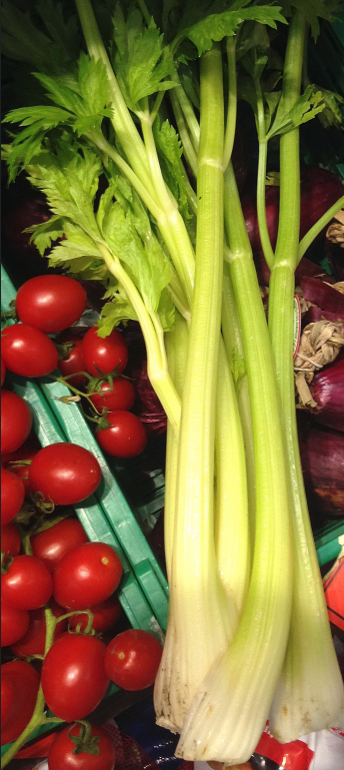
Common name: Celery
Parent plant: Apium graveolens L.
Kingdom: Plantae
Clade: Angiosperms
Clade: Eudicots
Order: Apiales
Family: Apiaceae
Genus: Apium
Species: Apium graveolens L.
Note: There are three main cultivated varieties of the same species:
Celery stalk / Pascal celery (A. graveolens var. dulce)
Leaf celery (A. graveolens var. secalinum)
Celeriac (celery root) (A. graveolens var. rapaceum)
Cultivation and growth conditions
Climate
Celery is a crop adapted to cool to mild temperate climates.
Optimal temperatures: 15–22 °C.
It tolerates cool weather but not prolonged frost.
High temperatures (>30 °C) cause water stress, fiber formation, and strong off-flavors.
High humidity and consistent irrigation favor uniform growth.
Sun exposure
Prefers full sun, but grows well in light partial shade.
Soil
Celery prefers soils that are:
moist, deep, and well drained,
rich in organic matter,
medium-textured or slightly moist,
with pH 6.2–7.0.
Avoid dry, sandy soils that lack moisture.
Celery performs best in soils consistently moist but not waterlogged.
Irrigation
Celery has high and regular water requirements.
Soil should remain constantly slightly moist.
Irregular watering leads to tough, stringy stalks and overly strong flavor.
In summer, frequent irrigation is essential.
Mulching helps conserve soil moisture and improves stalk quality.
Temperature
Fertilization
Celery is a nutrient-demanding crop:
Nitrogen: crucial for vigorous leaf and stalk growth.
Phosphorus: supports root formation and general vigor.
Potassium: improves texture, flavor, and stress tolerance.
Abundant compost or well-rotted manure is recommended before planting.
Nutrient deficiencies quickly result in pale, stunted plants.
Crop care
Light hoeing to control weeds and aerate the soil.
Mulching to maintain moisture and reduce weed pressure.
For stalk celery, blanching (tying or shielding stalks from light) is often practiced to reduce bitterness and increase tenderness.
Monitoring for aphids, celery flies, septoria leaf spot, and fungal diseases favored by stagnant humidity.
Harvest
Harvest depends on the type of celery:
Stalk celery: harvested when stalks are well developed, crisp, and tender (60–100 days from transplant).
Celeriac: harvested when the swollen root reaches 8–12 cm in diameter.
Leaf celery: harvested gradually by cutting outer leaves or entire bunches.
For best quality, harvest is done in the morning when plants are fully turgid.
Propagation
Celery is propagated by seed.
Seeds are tiny and need light to germinate (do not bury them deeply).
Sowing in seedbeds in late winter–early spring.
Transplant when seedlings have 3–4 true leaves.
Depending on the variety, the full cycle requires 3–4 months.
Caloric value (raw stalks)
~16 kcal per 100 g.
Indicative composition (stalks, per 100 g)
Water ~95%
Carbohydrate ~3 g (sugars ~1.3 g)
Fiber ~1.5–2 g
Protein ~0.7–1 g; fat negligible
Micronutrients: high vitamin K, folate, some vitamin C (heat-labile), potassium; naturally low sodium (varies by soil).
Key aroma & phytochemistry
Phthalide lactones: 3-n-butylphthalide, sedanolide → signature celery aroma.
Terpenes: limonene, β-selinene, pinene.
Furocoumarins (especially in seeds/leaves): e.g., bergapten—photosensitizing at high exposure.
Nitrates: naturally high (depends on cultivar/season/fertilization).
Sensory & technological properties
Texture: crisp due to cellulose/hemicellulose; inner stalks are more tender.
Culinary roles: cornerstone of mirepoix/soffritto with onion & carrot; provides aroma, crunch, and moisture; excellent raw (crudités/salads).
Stability: cutting accelerates aroma loss and loss of crispness (volatile evaporation, moisture loss).
Celeriac (brief)
Caloric value: ~40–45 kcal/100 g.
Uses: raw remoulade, roasted, puréed, in soups; flavor is sweeter–earthier than stalk celery.
Seeds & derivatives
Celery seeds: potent spice in pickles, cure blends, sauces.
Celery salt: salt blended with seed/extract.
Essential oil: flavoring; mind furocoumarins and potential photosensitization in topical uses.
Processing & cooking
Raw: keep in ice-cold acidulated water to limit browning and maintain snap.
Blanch 1–2 min to soften bitterness; sauté/braise for aromatic bases; roast for sweet–caramel notes; dry for seasoning powders.
Nutrition
Very low energy and high hydration → supports satiety at minimal calories.
Fiber aids regularity and may support microbiota.
Dietary nitrates can contribute to nitric oxide formation (vasodilation/endothelial function); evaluate within overall diet.
Allergens, safety & tolerance
In the EU, celery is a major allergen: IgE-mediated reactions can be severe (including anaphylaxis).
Pollen–food syndromes: cross-reactivity with birch/mugwort pollens and some spices.
Photosensitization (rare, high exposure) from furocoumarins in leaves/seeds/essential oil.
FODMAPs: large portions may be moderate in polyols (mannitol/sorbitol)—individual tolerance varies.
Quality, purchase & prep
Choose firm, crisp stalks with bright color and fresh leaves; avoid limp stalks or brown streaking.
Trim/peel stringy outer ribs with a peeler; remove oxidized bases; wash crevices thoroughly.
To reduce bitterness: prefer inner stalks, brief blanching, and pair with acidity (lemon/vinegar) and fat (olive oil, dairy).
Storage & shelf life
Refrigerate at 0–2 °C, 95–100% RH, in a perforated bag or wrapped cloth; highly desiccation-sensitive.
Ethylene-sensitive: keep away from ethylene emitters (apples, pears) to prevent yellowing/bitterness.
Cut celery: use within 1–3 days; hold in ice-cold acidulated water under refrigeration.
Applications
Kitchen: mirepoix, stocks/broths, ragù, risotti, salads, crudités, juices.
Industry: dehydrated soup bases, ready-to-eat snacks, fresh-cut (fourth range).
Foodservice: fine brunoise, pickled ribs, dehydrated powders.
Sustainability & supply chain
Troubleshooting
Flaccid stalks: re-crisp in ice water 10–20 min; trim oxidized base.
Stringiness: peel convex edges of outer ribs.
Flat aroma in long cooks: add a portion near the end or use fresh leaves as a finishing herb.
Browning: acidulate water (lemon/vinegar) or use ascorbic acid in production settings.
Labeling (allergen)
Conclusion
Celery is a versatile, low-energy vegetable delivering crunch, moisture, and a distinctive phthalide-driven aroma. It contributes fiber and useful micronutrients but requires attention to allergenicity, nitrates, and photosensitizers in certain derivatives. With proper selection, preparation, and storage, celery elevates bases, sides, and industrial applications while maintaining sensory quality and safety.
Studies
Its seeds have an anti-inflammatory action and positive effects on arterial hypertension (1).
The results of this study confirm that the phenolic compounds and flavonoids present in the celery leaves, such as apigenin and luteolin, exert antioxidant activity (2).
An 8-month study with administration of celery leaf extract has been shown to reduce blood glucose levels, however a lack of association between blood glucose levels and plasma insulin levels in elderly pre-diabetics was found (3).
A mixture of celery and ajowan has been shown to be effective in reducing the frequency and symptoms of dyspepsia (4).
Allergy
The celery is one of the main foods that can trigger allergic reactions (5).
Celery studies
References_________________________________________________________________________
(1) Moghadam MH, Imenshahidi M, Mohajeri SA. Antihypertensive effect of celery seed on rat blood pressure in chronic administration. J Med Food. 2013 Jun;16(6):558-63. doi: 10.1089/jmf.2012.2664.
Abstract. This study investigated the effects of different celery (Apium graveolens) seed extracts on blood pressure (BP) in normotensive and deoxycorticosterone acetate-induced hypertensive rats. The hexanic, methanolic, and aqueous-ethanolic extracts were administered intraperitoneally and their effects on BP and heart rate (HR) were evaluated in comparison with spirnolactone as a diuretic and positive control. Also, the amount of n-butylphthalide (NBP), as an antihypertensive constituent, in each extract was determined by HPLC. The results indicated that all extracts decreased BP and increased the HR in hypertensive rats, but had no effect on normotensive rats. The data showed that administration of 300 mg/kg of hexanic, methanolic, and aqueous-ethanolic (20/80, v/v) extracts of the celery seed caused 38, 24, and 23 mmHg reduction in BP and 60, 25, and 27 beats per minute increase in the HR, respectively. Also, the HPLC analysis data revealed that the content of NBP in the hexanic extract was 3.7 and 4 times greater than methanolic and aqueous-ethanolic extracts. It can be concluded that celery seed extracts have antihypertensive properties, which appears to be attributable to the actions of its active hydrophobic constitutes such as NBP and can be considered as an antihypertensive agent in chronic treatment of elevated BP.
(2) Han L, Gao X, Xia T, Zhang X, Li X, Gao W. Effect of digestion on the phenolic content and antioxidant activity of celery leaf and the antioxidant mechanism via Nrf2/HO-1 signaling pathways against Dexamethasone. J Food Biochem. 2019 Jul;43(7):e12875. doi: 10.1111/jfbc.12875. Epub 2019 May 17. PMID: 31353732.
(3) Yusni Y, Zufry H, Meutia F, Sucipto KW. The effects of celery leaf (apium graveolens L.) treatment on blood glucose and insulin levels in elderly pre-diabetics. Saudi Med J. 2018 Feb;39(2):154-160. doi: 10.15537/smj.2018.2.21238.
Abstract. To analyze the effect of celery leaf extract on blood glucose and plasma insulin levels in elderly pre-diabetics. Methods: This study was conducted between March and November 2014 at the Faculty of Medicine, Syiah Kuala University, Banda Aceh, Indonesia. A quasi-experimental pretest-posttest with a control group was conducted with elderly pre-diabetic volunteers. The subjects included 16 elderly pre-diabetics older than 60 (6 males and 10 females). The subjects were randomly divided into 2 groups: a control group (placebo-treated) and a treatment group (celery-treated). The treatment consisted of celery leaf extract capsules at the dose of 250 mg, 3 times per day (morning, afternoon and evening), 30 minutes before a meal, for 12 days. Data analysis was performed using the t-test (p less than 0.05). Results: There was a significant decrease in pre-prandial plasma glucose levels (p=0.01) and post-prandial plasma glucose levels (p=0.00), but no significant increase in plasma insulin levels (p=0.15) after celery leaf treatment in elderly pre-diabetics. Conclusion: Celery was effective at reducing blood glucose levels, but there was a lack of association between blood glucose levels and plasma insulin levels in elderly pre-diabetics.
(4) Azimi M, Zahedi MJ, Mehrabani M, Tajadini H, Zolala F, Baneshi MR, Choopani R, Sharififar F, Asadipour A, Hayatbakhsh MM, Ahmadi B. Effect of Apium graveolens and Trachyspermum copticom on clinical symptoms of patients with functional dyspepsia. Avicenna J Phytomed. 2017 Nov-Dec;7(6):554-564.
Abstract. Objectives: This study aimed at investigating the effect of Iranian traditional remedy prepared from Apium graveolens and Trachyspermum copticom (AT) on the severity and frequency of symptoms in patients with functional dyspepsia (FD). Material and methods: In total, 150 FD patients were included in this randomized double-blind trial, based on the ROME III diagnostic criteria, and they were divided into three intervention groups namely, AT, Placebo and omeprazole. Then, severity and frequency of symptoms during this eight-week trial were measured. Obtained information was analyzed using Chi-square test and repeated measures test. Result: In general, the severity and frequency of symptoms after the 4th week significantly decreased in the AT group as compared to the omeprazole and placebo groups, and continued to reduce by the end of the eighth week. General reduction of symptom severity and frequency in the omeprazole group was significantly different from the placebo group by the end of the 4th and 8th weeks. With respect to each individual symptom, AT markedly improved symptoms, such as burning, pain, early satiation, fullness, bloating, belching and nausea, as compared to placebo-treated group. Moreover, AT significantly improved symptoms, like vomiting, and nausea, except for pain, as compared to omeprazole-treated subjects. Conclusion: According to the results, AT, as Iranian traditional remedy, was more effective than omeprazole and placebo in reducing the symptoms in FD patients.
(5) Daems D, Peeters B, Delport F, Remans T, Lammertyn J, Spasic D. Identification and Quantification of Celery Allergens Using Fiber Optic Surface Plasmon Resonance PCR. Sensors (Basel). 2017 Jul 31;17(8):1754. doi: 10.3390/s17081754.
Abstract: Accurate identification and quantification of allergens is key in healthcare, biotechnology and food quality and safety. Celery (Apium graveolens) is one of the most important elicitors of food allergic reactions in Europe. Currently, the golden standards to identify, quantify and discriminate celery in a biological sample are immunoassays and two-step molecular detection assays in which quantitative PCR (qPCR) is followed by a high-resolution melting analysis (HRM). In order to provide a DNA-based, rapid and simple detection method suitable for one-step quantification, a fiber optic PCR melting assay (FO-PCR-MA) was developed to determine different concentrations of celery DNA (1 pM-0.1 fM). The presented method is based on the hybridization and melting of DNA-coated gold nanoparticles to the FO sensor surface in the presence of the target gene (mannitol dehydrogenase, Mtd). The concept was not only able to reveal the presence of celery DNA, but also allowed for the cycle-to-cycle quantification of the target sequence through melting analysis. Furthermore, the developed bioassay was benchmarked against qPCR followed by HRM, showing excellent agreement (R² = 0.96). In conclusion, this innovative and sensitive diagnostic test could further improve food quality control and thus have a large impact on allergen induced healthcare problems.




