



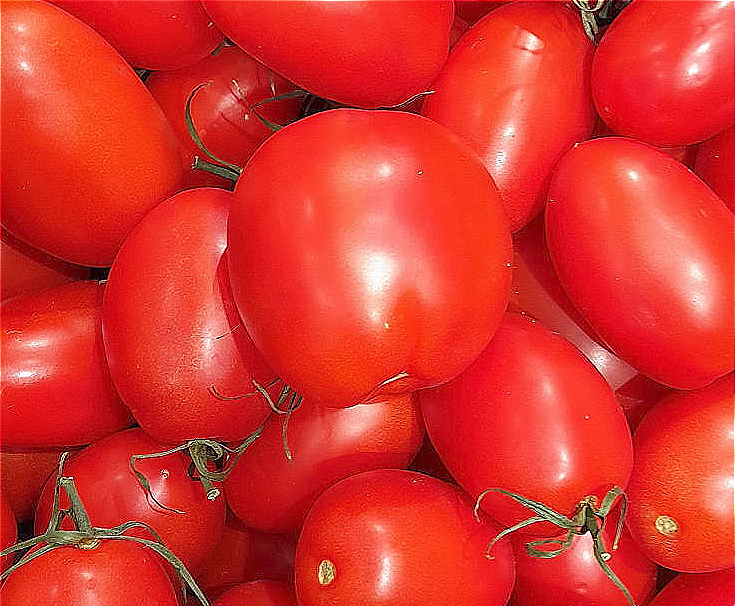
The tomato (Solanum lycopersicum) is a vegetable belonging to the Solanaceae family. It's known for its juicy flesh and is used in many culinary preparations worldwide.
Nutritional Value
Tomatoes are rich in vitamins, minerals, and antioxidant compounds. One of the most notable compounds present in tomatoes is lycopene, a carotenoid with antioxidant and anti-inflammatory properties.
Uses
Tomatoes are widely used in cuisines in sauces, salads, soups, and many other dishes. They can be consumed raw, cooked, or processed into products like tomato sauce.
Beyond its use in the kitchen, the tomato has a long history of use in traditional medicine to treat various ailments.
Varieties and Types
There are many varieties of tomatoes, each with its unique characteristics in terms of flavor, texture, and culinary use. Some varieties have been developed to have a high content of anthocyanins, giving tomatoes colors like crimson, magenta, and indigo.
Environmental Impact
Growing conditions, such as light intensity, soil type, and temperature, can impact the nutritional value of the tomato and its beneficial properties.
Tomato – technical food ingredient sheet
(Fruit of Solanum lycopersicum, family Solanaceae)
Description
Tomato is the fruit of Solanum lycopersicum, widely cultivated and processed worldwide.
It is consumed fresh, cooked, concentrated, dried, as juice, purée/passata, canned pulp/diced, or as an ingredient in a wide variety of ready meals and sauces.
Key characteristics:
red colour due to carotenoids (mainly lycopene),
balanced sweet–acid taste,
high juiciness,
very high culinary and industrial versatility.
Tomato is a core ingredient of the Mediterranean diet and one of the main raw materials of the Italian food industry.
Indicative nutritional values per 100 g
(raw tomato – average values)
Energy: 15–20 kcal
Carbohydrates: 3–4 g
sugars: 2–3 g
Fibre: 1–1.5 g
Protein: 0.7–1.0 g
Lipids: 0.1–0.3 g
SFA (first occurrence – saturated fatty acids): ~0.03 g (high dietary SFA intake is associated with cardiovascular risk, but tomato contributes negligible amounts)
MUFA: traces
PUFA: traces
TFA: not naturally present
Vitamins: vitamin C, provitamin A (β-carotene), vitamin K, folate
Minerals: potassium, magnesium, small amounts of calcium
Bioactives: lycopene, phenolic acids, flavonoids
Values vary with variety, ripeness, growing conditions and processing.
Key constituents
Water (approx. 94–95%)
Carotenoids: lycopene, β-carotene
Vitamin C
Organic acids: citric acid, malic acid
Dietary fibre: cellulose, pectins, hemicelluloses
Phenolic compounds
Minerals: potassium, magnesium
Simple sugars (glucose, fructose) in small amounts
Production process
Cultivation
open-field or greenhouse cultivation;
harvest at technological or full ripeness depending on end use.
Harvest
mechanical (industry) or manual (fresh market).
Sorting and washing
removal of non-conforming fruit;
washing with potable water.
Processing (depending on final product):
chopping, crushing, pulping, sieving;
concentration for double/triple concentrates;
peeling (mechanical, steam or lye) for peeled products;
drying for sun-dried or dehydrated tomatoes.
Heat treatment
pasteurisation or sterilisation for shelf-stable products.
Packaging
cans, glass jars, pouches, Tetra-style cartons, MAP trays.
All stages are carried out under GMP/HACCP.
Physical properties
Colour: from orange-red to deep red depending on cultivar and ripeness.
Texture: from juicy and soft (fresh salad types) to firmer (industrial/plum types).
pH: approx. 4.0–4.5 (acid food).
Density/viscosity: strongly dependent on degree of concentration (purée, pulp, concentrate).
Sensory and technological properties
Flavour: sweet–acid, characteristic ripe tomato taste.
Aroma: fresh, green, slightly fruity.
Technological behaviour:
good performance in cooking and simmering;
heat treatment increases lycopene bioaccessibility;
concentrates provide strong colour and body to sauces;
excellent as a base for soups, sauces and stews.
Food applications
Fresh: salads, bruschetta, sandwiches, side dishes, Mediterranean-style recipes.
Cooked: pasta sauces, ragù, soups, stews, braised dishes, pizza toppings.
Industrial: passata/purée, chopped pulp, diced tomatoes, concentrates, juices, canned tomato products, ready sauces, frozen meals.
Dried: sun-dried tomatoes, tomato flakes/powders, oil-preserved tomatoes.
Nutrition & health
Naturally low in calories and fat.
Source of vitamin C, folate and potassium.
Contains lycopene, a carotenoid widely studied in nutrition science when consumed as part of a varied diet.
High water content contributes to hydration.
Generally well tolerated, though some individuals sensitive to organic acids or to Solanaceae may experience gastric discomfort or mild reactions.
Portion note
Typical serving: 100 g of fresh or cooked tomato as vegetable portion.
In processed products, common amounts are 50–150 g per serving depending on recipe (sauce, soup, ready meal, etc.).
Allergens & intolerances
Tomato is not a major allergen, but:
may provoke reactions in individuals with nightshade (Solanaceae) sensitivity,
may contribute to oral allergy syndrome in some pollen-allergic individuals,
may aggravate reflux or gastritis in sensitive people due to its acidity.
Storage & shelf-life
Fresh tomatoes:
4–10 days at ambient temperature depending on ripeness;
refrigeration may extend shelf-life but can affect texture and flavour of some varieties.
Canned/passata/pulp:
18–36 months unopened at ambient temperature.
After opening:
2–3 days refrigerated in a non-metallic container.
Concentrates:
long shelf-life (24–36 months unopened).
Frozen products:
12–24 months at –18 °C.
Safety & regulatory
Key control points:
pesticide residues,
heavy metals where relevant,
microbiological criteria (pathogens, yeasts, moulds),
container integrity and heat process validation for canned products.
Permitted additives in certain products:
citric acid (acidity regulator),
calcium chloride (firming agent),
ascorbic acid (antioxidant) in specific categories.
All operations must comply with GMP/HACCP and local food legislation.
Labeling
Typical names: “tomato”, “tomatoes”, “tomato pulp”, “tomato purée”, “tomato concentrate”, etc.
Ingredients listed in descending order of weight.
Any additives (acidity regulators, antioxidants, firming agents) must be clearly declared according to regulations.
Troubleshooting
Syneresis (liquid separation):
natural in tomato-based products; can be reduced by using purée/concentrate or optimising formulation.
Dull or brownish colour:
oxidation or excessive heating → improve oxygen exclusion (vacuum), packaging and process conditions.
Excessive softening:
overripe fruit, unsuitable variety or overcooking → use processing varieties and optimise time/temperature.
Weak flavour:
under-ripe or low-brix tomatoes → choose suitable varieties and harvest at optimal ripeness; use concentrates to reinforce taste.
Sustainability & supply chain
Critical factors:
water use (irrigation),
fertiliser and plant protection product management,
soil-conservation practices.
Processing by-products (peels, seeds, off-grade fruit) can be valorised as:
dietary fibre ingredients,
lycopene-rich extracts,
biomass for energy or feed.
Processing effluents should be managed and monitored using indicators such as BOD/COD.
Local sourcing can reduce transport emissions and improve raw material quality.
Main INCI functions (cosmetics)
(typically declared as “Solanum Lycopersicum Fruit Extract”)
Antioxidant (thanks to lycopene, vitamin C and other phytochemicals)
Skin conditioning
Perceived revitalising and brightening effects in facial care formulations
Used in botanical-themed and antioxidant cosmetic products.
Conclusion
Tomato is an essential, highly versatile, nutrient-containing ingredient, central to Mediterranean cuisine and widely used worldwide.
Its colour, structure and flavour profile make it irreplaceable in many sauces, soups and ready meals.
Within properly managed supply chains operating under GMP/HACCP, tomatoes and tomato products offer a safe, stable and high-quality raw material for both household and industrial applications.
Mini-glossary
SFA – Saturated fatty acids: dietary fats to be moderated; tomatoes contain only very small amounts.
MUFA – Monounsaturated fatty acids: present only in traces in tomatoes.
PUFA – Polyunsaturated fatty acids: also present in traces in tomatoes.
TFA – Trans fatty acids: not naturally present in tomatoes.
GMP/HACCP – Good Manufacturing Practices / Hazard Analysis and Critical Control Points, systems for managing food quality, hygiene and safety.
BOD/COD – Biological / Chemical Oxygen Demand, indicators of the organic and chemical load of wastewater.
Lycopene – Red carotenoid pigment typical of tomato, with antioxidant activity.
Syneresis – Separation of free liquid from the solid phase in cut or gel-like foods.
Studies
Tomatoes have been associated with various health benefits, including the prevention of chronic diseases such as cancer, cardiovascular, and neurodegenerative diseases. The presence of antioxidants like lycopene plays a key role in these benefits.
Tomatoes have been associated with various health benefits, including the prevention of chronic diseases such as cancer, cardiovascular and neurodegenerative diseases. The presence of antioxidants such as lycopene plays a key role in these benefits.
Tomatoes are rich in vitamins A and C and lycopene, the pigment that produces the characteristic red coloring and is being studied for the prevention of many types of cancer, as it has antioxidant properties and plays a protective role for cardiovascular disease (1).
It is indicated by many studies as a prevention for prostate cancer (2), inhibits serum lipid peroxide production by improving the lipid profile (3)
GMO tomatoes. Tomatoes have also been genetically modified, but European legislation requires that the term GMO be indicated on the label. There is no distinction in the USA. In terms of the components contained in the transgenic tomato Calcium and Magnesium are more abundant than the natural tomato.

