Hypnea Musciformis Extract è un composto di origine naturale ottenuto dall'alga rossa Hypnea musciformis, famiglia Hypneaceae.
Il nome definisce la struttura della molecola
- "Hypnea musciformis" si riferisce a questa specie di alga rossa che cresce in molte parti del mondo, in particolare nelle regioni tropicali e subtropicali.
- "Extract" indica che il prodotto è una sostanza ottenuta estraendo componenti desiderati dall'alga, solitamente attraverso processi come l'infusione, la decozione o la percolazione.
Descrizione delle materie prime utilizzate nella produzione
- Hypnea musciformis - L'alga rossa da cui viene estratto l'ingrediente attivo.
- Solventi - Tipicamente l'acqua o l'etanolo sono utilizzati per estrarre i componenti benefici dalle alghe.
Processo di sintesi chimica industriale passo per passo
- Raccolta - L'Hypnea musciformis viene raccolta, preferibilmente da fonti sostenibili.
- Pulizia e preparazione - L'alga viene pulita da impurità e preparata per l'estrazione.
- Estrazione - L'alga viene posta in un solvente per estrarre i componenti benefici.
- Filtrazione - La soluzione estratta viene filtrata per rimuovere particelle solide.
- Concentrazione - Il filtrato viene poi concentrato, se necessario, per ottenere l'estratto desiderato.
- Essiccazione - Se necessario, l'estratto viene essiccato per ottenere una polvere.
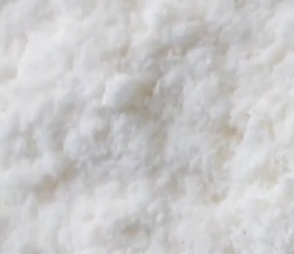
Si presenta in forma di polvere bianca o rossastra.
A cosa serve e dove si usa
Medicina
Hypnea Musciformis Extract ha dimostrato effetti citotossici su varie linee cellulari tumorali. Si ritiene che gli effetti antitumorali di questi estratti siano dovuti alla presenza di composti bioattivi (1). Hypnea Musciformis ha anche mostrato una decisa attività antinfiammatoria (2) e proprietà farmacologiche dovute ai polisaccaridi solfatati presenti nel suo interno (3).
Cosmetica
Protettivo della pelle. Crea una barriera protettiva sulla pelle per difenderla da sostanze nocive, irritanti, allergeni, agenti patogeni che possono provocare varie condizioni infiammatorie. Questi prodotti possono anche migliorare la barriera cutanea naturale e nella maggior parte dei casi ne occorrono più di uno per raggiungere un risultato efficace.
CAS 223751-71-1
Bibliografia_____________________________________________________________________
(1) Begolli R, Chatziangelou M, Samiotaki M, Goutas A, Barda S, Goutzourelas N, Kevrekidis DP, Malea P, Trachana V, Liu M, Lin X, Kollatos N, Stagos D, Giakountis A. Transcriptome and proteome analysis reveals the anti-cancer properties of Hypnea musciformis marine macroalga extract in liver and intestinal cancer cells. Hum Genomics. 2023 Jul 31;17(1):71. doi: 10.1186/s40246-023-00517-0. PMID: 37525271; PMCID: PMC10388463.
Abstract. Background: Marine seaweeds are considered as a rich source of health-promoting compounds by the food and pharmaceutical industry. Hypnea musciformis is a marine red macroalga (seaweed) that is widely distributed throughout the world, including the Mediterranean Sea. It is known to contain various bioactive compounds, including sulfated polysaccharides, flavonoids, and phlorotannins. Recent studies have investigated the potential anticancer effects of extracts from H. musciformis demonstrating their cytotoxic effects on various cancer cell lines. The anticancer effects of these extracts are thought to be due to the presence of bioactive compounds, particularly sulfated polysaccharides, which have been shown to have anticancer and immunomodulatory effects. However, further studies are needed to fully understand the molecular mechanisms that underlie their anticancer effects and to determine their potential as therapeutic agents for cancer treatment.... © 2023. The Author(s).
(2) de Brito TV, Prudêncio Rda S, Sales AB, Vieira Fd Jr, Candeira SJ, Franco ÁX, Aragão KS, Ribeiro Rde A, Ponte de Souza MH, Chaves Lde S, Freitas AL, Medeiros JV, dos Reis Barbosa AL. Anti-inflammatory effect of a sulphated polysaccharide fraction extracted from the red algae Hypnea musciformis via the suppression of neutrophil migration by the nitric oxide signalling pathway. J Pharm Pharmacol. 2013 May;65(5):724-33. doi: 10.1111/jphp.12024.
Abstract. Objectives: The aim of this study was to evaluate the anti-inflammatory effect of a sulphated polysaccharide fraction (PLS) extracted from the alga Hypnea musciformis and investigate the possible involvement of the nitric oxide (NO) pathway in this effect....Conclusions: PLS reduced the inflammatory response by modulating neutrophil migration, which appeared to be dependent on the NO pathway. © 2013 The Authors. JPP © 2013 Royal Pharmaceutical Society.
(3) V Brito T, Barros FCN, Silva RO, Dias Júnior GJ, C Júnior JS, Franco ÁX, Soares PMG, Chaves LS, Abreu CMWS, de Paula RCM, Souza MHLP, Freitas ALP, R Barbosa AL. Sulfated polysaccharide from the marine algae Hypnea musciformis inhibits TNBS-induced intestinal damage in rats. Carbohydr Polym. 2016 Oct 20;151:957-964. doi: 10.1016/j.carbpol.2016.06.047.




