



Rosmarinus officinalis flower/leaf/stem extract: properties, uses, pros, cons, safety
Rosmarinus officinalis flower/leaf/stem extract is a botanical ingredient obtained from the evergreen plant of the same name that belongs to the Lamiaceae family.
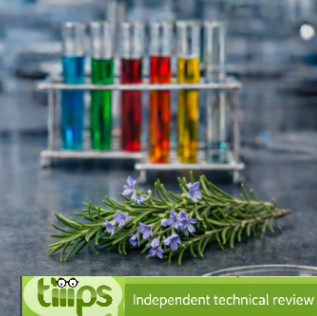
The extract from the flower/leaf/stem of Rosmarinus officinalis, known as rosemary, is derived from various parts of the rosemary plant. Here's a detailed description of the extract and its extraction process.
Decomposition of the name and function of the components
- Rosmarinus - The genus of plants to which rosemary belongs.
- officinalis - Adjective indicating a plant with traditional medicinal properties.
- Flower/Leaf/Stem Extract - Specifies that the extract is obtained from the flowers, leaves, and/or stems of the plant.
Description and function of the raw materials used in production
- Rosemary flowers, leaves, and stems - These parts of the plant contain essential oils, flavonoids, phenolic acids, and tannins that have antimicrobial, antioxidant, and anti-inflammatory properties.
- Solvents - (such as ethanol, water, or supercritical CO₂) used to extract active compounds from various rosemary parts.
Summary of the extraction process
- Harvesting - Rosemary flowers, leaves, and stems are harvested from the plant.
- Cleaning - The harvested parts are washed to remove impurities and contaminants.
- Grinding - The cleaned parts are ground to increase surface contact and improve extraction efficiency.
- Extraction - The ground material is exposed to a solvent to extract the active compounds.
- Filtration - The obtained extract is filtered to remove any remaining solid particles.
- Evaporation - If a solvent is used, it's removed by evaporation, leaving behind the concentrated extract.
- Storage - The concentrated extract is stored in suitable containers to maintain its freshness and efficacy.
What it is for and where
Cosmetics
Fragrance. It plays a decisive and important role in the formulation of cosmetic products as it provides the possibility of enhancing, masking or adding fragrance to the final product, increasing its marketability. It is able to create a perceptible pleasant odour, masking a bad smell. The consumer always expects to find a pleasant or distinctive scent in a cosmetic product.
Skin conditioning agent. It is the mainstay of topical skin treatment as it has the function of restoring, increasing or improving skin tolerance to external factors, including melanocyte tolerance. The most important function of the conditioning agent is to prevent skin dehydration, but the subject is rather complex and involves emollients and humectants that can be added in the formulation.
CAS 84604-14-8
EC number 283-291-9
Applications:
- Culinary: Rosemary extract, especially from the leaves, is widely used to season a variety of dishes, from chicken to stews and breads.
Cosmetic:
- Hair Care: Can assist in preventing hair loss, enhancing scalp health, and adding shine.
- Skin Care: Due to its antioxidant and antimicrobial properties, it's employed in a range of products like creams, lotions, and soaps.
Medicinal:
- Digestion: Rosemary is known to promote digestion and reduce bloating.
- Circulation: It can boost blood circulation and has anti-inflammatory qualities.
Properties:
- Antimicrobial: Protects against a spectrum of bacteria and fungi.
- Antioxidant: Packed with compounds like rosmarinic acid that combat free radicals.
- Anti-inflammatory: Features compounds like carnosol and ursolic acid with anti-inflammatory attributes.
Studies
In the rosemary's phytochemical analysis, 18 components were identified, namely 13 flavones, two organic acids and three diterpenes. A total of 82 components were found in the volatile fractions, including hydrocarbon monoterpenes and 1,8-cineole, camphor, borneol and verbenone as dominant components, α-pinene and camphene among the oxygenated monoterpenes (1).
Among the polyphenolic components present in rosemary, carnosic acid has antioxidant and antimicrobial properties and rosmarinic acid has neuroprotective and anti-inflammatory properties.
Rosmarinic acid also has anti-oxidative properties.
Rosemary extract exerts a relaxing action on the muscles of the trachea and intestines and has therapeutic potential in the prevention of various diseases including cataracts, atherosclerosis, peptic ulcer disease, and cardiovascular disorders (2).
Rosemary essential oil obtained from leaves or flowers is used in dermatology to treat wounds and minor skin eruptions, in gastrointestinal disorders as an anti-dispeptic, diuretic and antispasmodic in renal colic (3), in neurology for headaches and circulation problems, in pneumology as an expectorant.
Cosmetics
This oil is included in cosmetic formulations as an emollient and as a fragrance and can activate, through the flavonoids it contains, different pharmacological effects useful in cosmetics such as antimicrobial action, skin relaxing. disinfectant.
Food
Used as a spice and seasoning in foods and as a natural preservative in the food industry

