



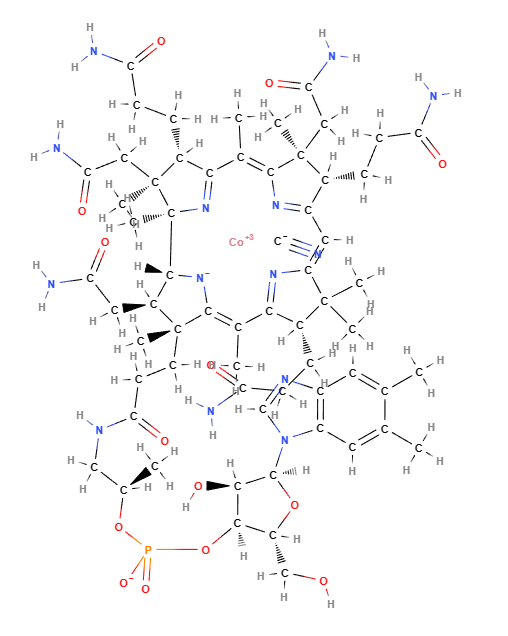
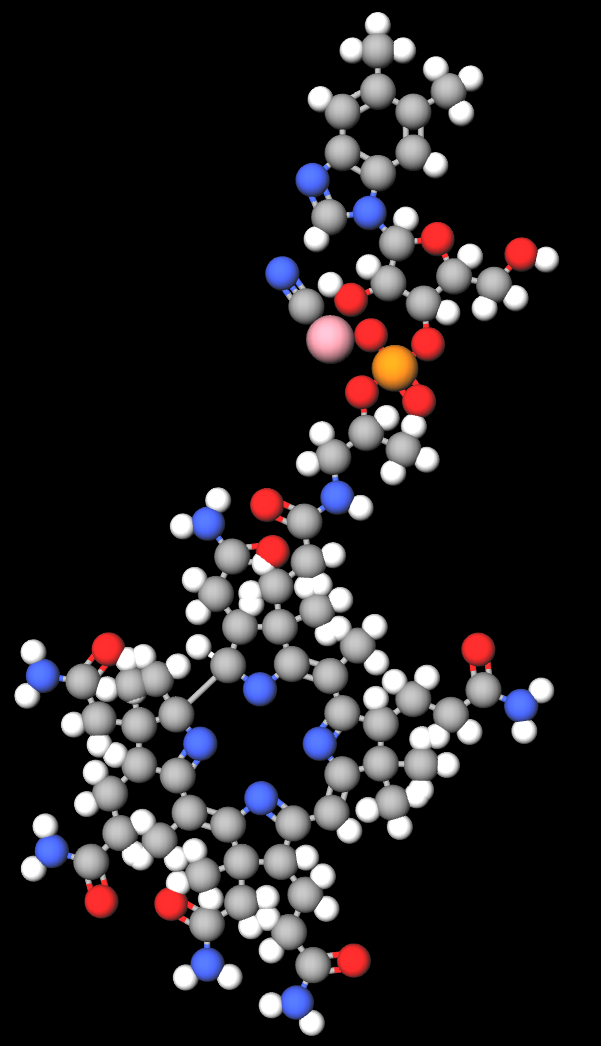
Cianocobalamina è una forma sintetica della vitamina B12, che è essenziale per vari processi biologici nel corpo umano, tra cui la formazione dei globuli rossi e il funzionamento del sistema nervoso. Scomponiamo il nome e discutiamo il processo di sintesi della cianocobalamina in fasi.
Il nome definisce la struttura della molecola:
- "Ciano-" si riferisce al gruppo cianuro (CN-), che viene attaccato alla cobalamina durante il processo di sintesi.
- "Cobalamina" si riferisce alla famiglia di composti che contengono cobalto al centro della loro struttura molecolare. La vitamina B12 è uno di questi composti e viene comunemente chiamata cobalamina.
Processo di sintesi della cianocobalamina:
La sintesi della cianocobalamina coinvolge diverse fasi, tra cui la fermentazione, la purificazione e la modifica chimica. Versione semplificata del processo di sintesi:
Fase 1: Fermentazione Il primo passaggio prevede la coltivazione di determinati ceppi di batteri, come Propionibacterium freudenreichii o Pseudomonas denitrificans, che producono naturalmente la cobalamina. Questi batteri vengono coltivati in grandi serbatoi di fermentazione in condizioni controllate, fornendo loro un ambiente adatto per la crescita e la produzione di cobalamina. I batteri consumano vari nutrienti e precursori forniti nel mezzo di crescita e, attraverso le loro vie metaboliche, sintetizzano la cobalamina.
Fase 2: Purificazione Dopo il processo di fermentazione, viene raccolta la coltura batterica e viene estratta la cobalamina desiderata. La miscela estratta contiene impurità, come altri composti prodotti dai batteri, detriti cellulari e componenti del mezzo di coltura. Tecniche di purificazione come filtrazione, centrifugazione, cromatografia e precipitazione vengono utilizzate per separare e isolare la cobalamina dalle impurità.
Fase 3: Modifica chimica Una volta purificata, la cobalamina subisce una modifica chimica per convertirla in cianocobalamina. In questo passaggio, viene aggiunto un gruppo cianuro (CN-) alla molecola di cobalamina, dando luogo alla formazione della cianocobalamina. L'aggiunta del gruppo cianuro stabilizza la molecola e ne migliora la conservazione, rendendo la cianocobalamina una forma comunemente utilizzata di vitamina B12 in integratori e preparati farmaceutici.
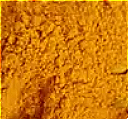
Si presenta in forma di polvere marrone o gialla.
A cosa serve e dove si usa
La cianocobalamina è una forma sintetica di vitamina B12. La vitamina B12 è importante per la crescita, la riproduzione cellulare, la formazione del sangue, e la sintesi di proteine e tessuti. Ecco alcune delle sue applicazioni:
Alimentazione.
La cianocobalamina viene utilizzata come integratore alimentare per aiutare a trattare o prevenire la carenza di vitamina B12, una condizione che può portare a anemia, danni ai nervi e stanchezza.
Medicina
La cianocobalamina viene utilizzata nel settore medico per trattare certe condizioni come l'anemia perniciosa e la carenza di vitamina B12 legata a una cattiva alimentazione o a certe malattie. Una carenza di vitamina B12 può portare a diversi problemi di salute degli occhi, tra cui la neuropatia ottica.
La cianocobalamina è fondamentale per il funzionamento del sistema nervoso e può aiutare a ridurre il livello di omocisteina nel sangue, un aminoacido che, se presente in quantità eccessive, può aumentare il rischio di malattie cardiache.
Cosmetica
Agente condizionante della pelle. Rappresenta il perno del trattamento topico della pelle in quanto ha la funzione di ripristinare, aumentare o migliorare la tolleranza cutanea a fattori esterni, compresa la tolleranza dei melanociti. La funzione più importante dell'agente condizionante è prevenire la disidratazione della pelle, ma il tema è piuttosto complesso e coinvolge emollienti ed umettanti che possono essere aggiunti nella formulazione.
Nutrizione Animale
Viene utilizzata nell'alimentazione animale per garantire che gli animali ricevano una quantità adeguata di vitamina B12 nella loro dieta.
 |  |
 | 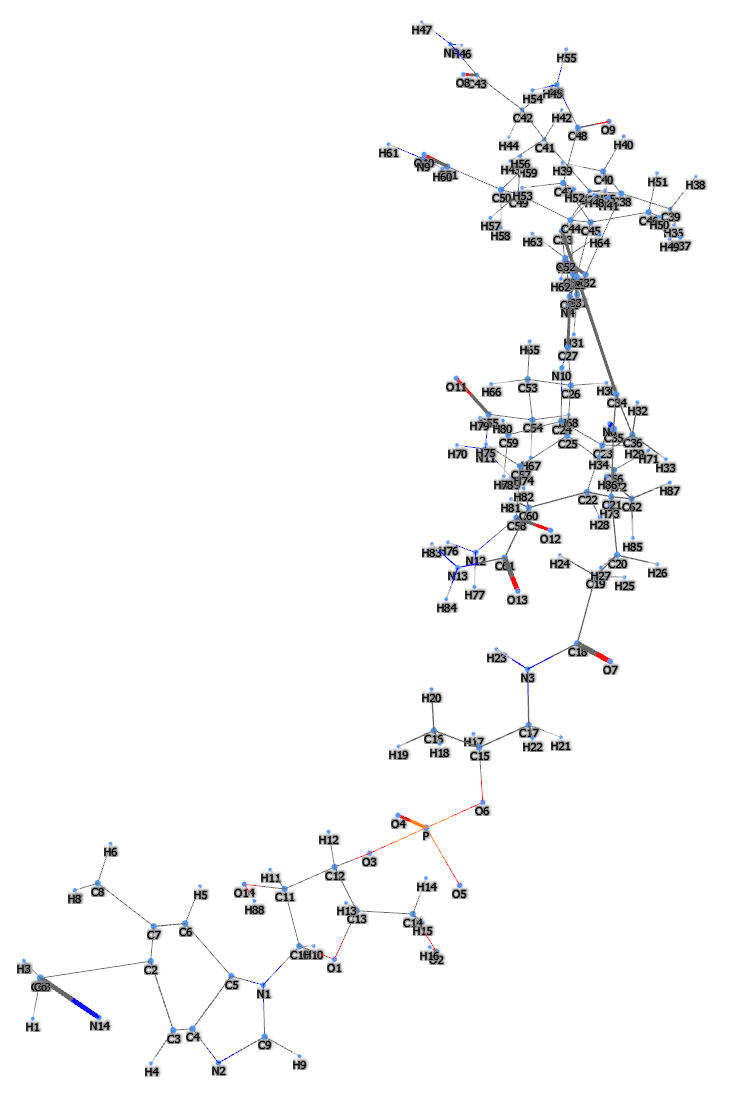 |
- Molecular Formula C63H88CoN14O14P
- Molecular Weight 1355.4 g/mol
- CAS 68-19-9 13408-78-1
- UNII P6YC3EG204
- EC Number 200-680-0
Compendio degli studi più significativi con riferimento a proprietà, assunzione, effetti.
Buesing S, Costa M, Schilling JM, Moeller-Bertram T. Vitamin B12 as a Treatment for Pain. Pain Physician. 2019 Jan;22(1):E45-E52.
Abstract. Background: First isolated as cyanocobalamin in 1948, vitamin B12 has been explored for pain treatment almost since its discovery. With the advent of the opioid epidemic, safer treatments for pain are needed.....Objectives: Our objective was to compile the latest information on potential mechanisms from animal studies and clinical trial data on vitamin B12 for the treatment of pain conditions.....Results: Animal studies support multiple beneficial effects of vitamin B12 including the regeneration of nerves and the inhibition of cyclooxygenase enzymes and other pain-signaling pathways. In addition, animal studies have demonstrated synergistic benefits of vitamin B12 combined with other pain medications, including nonsteroidal anti-inflammatory drugs and opiates. Clinical trials provide evidence for the effectiveness of vitamin B12 for the treatment of low back pain and neuralgia, although data is still fairly limited and optimal treatment regimens have not been identified. Limitations: More large, double-blind placebo-controlled trials are needed to fully establish efficacy and best dosing parameters. Conclusion: Vitamin B12 may prove to be an adjunctive or integrative treatment for pain conditions. While more research is needed, considering the low incidence of side effects and overall safety, B12 may be an additional tool to consider for pain treatment.
Andrès E, Vogel T, Federici L, Zimmer J, Kaltenbach G. Update on oral cyanocobalamin (vitamin B12) treatment in elderly patients. Drugs Aging. 2008;25(11):927-32. doi: 10.2165/0002512-200825110-00003.
Abstract. The objective of this review is to evaluate the usefulness of oral cobalamin (vitamin B12) treatment in elderly patients. PubMed was systematically searched for English and French articles published from January 1990 to January 2007. Prospective randomized studies (n=3), a systematic review by the Cochrane group (n=1) and prospective studies in a well defined population (n=5) provide evidence that oral cobalamin therapy may adequately treat cobalamin deficiency in elderly patients. However, the current literature does not suggest a strategy in terms of the form (hydroxy- or cyanocobalamin), frequency and duration of the treatment. This review confirms the previously reported efficacy of oral cobalamin treatment in elderly patients. Oral cobalamin treatment avoids the discomfort, inconvenience and cost of monthly injections.
Gulcan E, Toker S, Hatipoğlu H, Gulcan A, Toker A. Cyanocobalamin may be beneficial in the treatment of recurrent aphthous ulcers even when vitamin B12 levels are normal. Am J Med Sci. 2008 Nov;336(5):379-82. doi: 10.1097/MAJ.0b013e31816a05f2.
Abstract. Objective: To evaluate the efficacy of cyanocobalamin treatment in patients having recurrent aphthous ulcers (RAUs) with normal or decreased serum vitamin B12 (cobalamin) levels. Methods: Seventy-two patients with RAU were included in the study. In addition to serum cobalamin levels, hemanitic and biochemistrical parameters were measured. Patients with serum cobalamin levels < 140 pg/mL were defined as the cobalamin deficient group (CDG) whereas patients with cobalamin levels > or = 140 pg/mL were defined as the cobalamin normal group (CNG). The degree of aphthous ulcer healing was determined according to serum cobalamin levels at the first and sixth month after cyanocobalamin treatment protocol. Results: Of the 72 participants, 37 were in the CDG whereas 35 were considered to have normal cobalamin levels. In the first admission the cobalamin levels were 215.8 +/- 116.90 pg/mL in CNG and 107.43 +/- 29.35 pg/mL in the CDG. The frequency of aphthous ulcers was defined numerically according to monthly occurrence of the lesions. The mean aphthous ulcer frequency in CNG group was 1.9 +/- 0.7, whereas it was 2.4 +/- 0.9 in the CDG. A significant increase in cobalamin levels was observed after cyanocobalamin treatment in both groups. A significant decrease in aphthous ulcer frequency was also concurrently observed. 96% of the patients showed good response to replacement treatment, 4% of the study population did not respond to the treatment. Conclusion: Cyanocobalamin treatment maybe beneficial for patients with RAU even when serum cobalamin levels are normal. We suggest that higher serum cobalamin levels should be attained in patients with RAU for mucosal protection.
Greibe E, Mahalle N, Bhide V, Heegaard CW, Naik S, Nexo E. Increase in circulating holotranscobalamin after oral administration of cyanocobalamin or hydroxocobalamin in healthy adults with low and normal cobalamin status. Eur J Nutr. 2018 Dec;57(8):2847-2855. doi: 10.1007/s00394-017-1553-5.
Abstract. Purpose: To investigate the absorption of synthetic cyanocobalamin and natural occurring hydroxocobalamin in populations with low and normal cobalamin (vitamin B12) status. Methods: We included adults with low (n = 59) and normal (n = 42) cobalamin status and measured the change in serum holotranscobalamin (ΔholoTC) before and after 2 day administration of different doses of cyanocobalamin and hydroxocobalamin (CobaSorb test). In the low status group, the test was performed using a cross-over design with identical doses of both cobalamin forms (1.5, 3, and 6 µg, respectively). In the normal status group, the test was performed with either 3, 6, and 9 µg cyanocobalamin (n = 28), or with 9 µg cyanocobalamin and 9 µg hydroxocobalamin (n = 14). Results: In both groups, median ΔholoTC (pmol/L) was higher after intake of cyanocobalamin compared to (hydroxocobalamin) [low status: 1.5 µg: 19 (6); 3 µg: 23 (7); 6 µg: 30 (14); normal status: 9 µg: 30 (13) pmol/L]. Independent of B12 form, no difference was observed in ΔholoTC between those receiving 1.5 and 3 µg in the low status group or 6 and 9 µg cyanocobalamin in the normal status group. However, in both groups, administration of 6 µg cobalamin resulted in a significant higher ΔholoTC than did 3 µg [low status: p = 0.02 (0.009) for cyanocobalamin (hydroxocobalamin); normal status: p = 0.03 for cyanocobalamin]. Conclusions: Administration of cyanocobalamin resulted in a more than twofold increase in holoTC in comparison with hydroxocobalamin. The absorptive capacity was reached only by doses above 3 µg cobalamin. Our results underscore the importance of using the same form of cobalamin when comparing uptake under different conditions.
Nava-Ocampo AA, Pastrak A, Cruz T, Koren G. Pharmacokinetics of high doses of cyanocobalamin administered by intravenous injection for 26 weeks in rats. Clin Exp Pharmacol Physiol. 2005 Jan-Feb;32(1-2):13-8. doi: 10.1111/j.1440-1681.2005.04145.x.
Abstract. 1. High doses of vitamin B12 (cyanocobalamin) may be therapeutically effective to treat neurological alterations secondary to a wide range of disease states. The aim of the present study was to evaluate the effect of dose and repeated administration on the pharmacokinetics of cyanocobalamin in rats. 2. Forty-eight rats were randomly assigned to receive 1, 5, 25 or 100 mg/kg cyanocobalamin for 182 days (26 weeks). Cyanocobalamin plasma levels were quantified by HPLC on days 1, 85 and 182 of treatment and were analysed by means of non-compartment pharmacokinetic (PK) analysis. In addition, population PK analysis was used to fit cyanocobalamin plasma concentrations to time by means of a two-compartment model for intravascular administration. 3. The half-life of cyanocobalamin ranged from approximately 20 to 50 min, clearance ranged from 4.5 to 9 mL/min and the volume of distribution at steady state ranged from 140 to 470 mL. A statistically significant negative relationship existed between the dose of cyanocobalamin and the normalized area under the plasma concentration-time curve (AUC). This non-linearity was not exhibited in population PK analysis. No evidence of toxicity was observed. 4. At very high and prolonged doses (up to 100 mg/kg for 26 weeks), intravascular administration of cyanocobalamin in rats follows a two-compartment kinetic model and cyanocobalamin undergoes extensive extravascular distribution. The negative relationship between dose and normalized AUC is compatible with possible saturation of tubular reabsorption, thus increasing renal clearance at higher doses.

