REVIEW
Description

Frank123 (11985 pt) • 2023-Apr-27 14:11
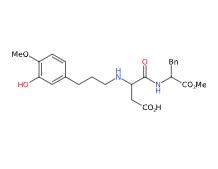
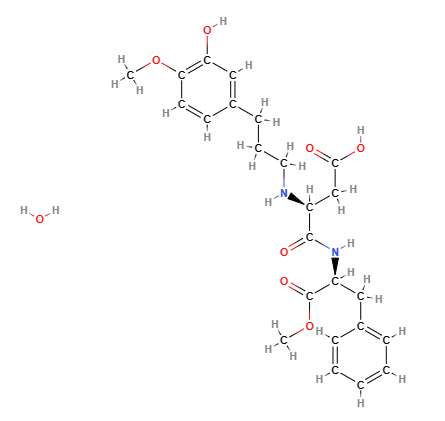
E969 (Advantame) è un derivato N-sostituito (porzione di acido aspartico) dell'aspartame o un'ammina secondaria dell'aspartame. La produzione si svolge in diverse fasi: produzione del componente 3-hydroxy-4-methoxycinnamaldehyde che viene successivamente sottoposto a idrogenazione per formare un alcol HMPA, filtrato in soluzione metanolica e miscelato con aspartame per ottenere l'advantame. E' anche usato come intermedio nella produzione il 3-hydroxy-4-methoxy benzal acrolein. Un altro metodo di produzione è la sintesi chimica da isovanillina e aspartame.
Si presenta in forma di polvere dal colore bianco o giallo.
A cosa serve e dove si usa
Alimentazione
Ingrediente inserito nella lista degli additivi alimentari europei come E969 con funzione di edulcorante. Il suo potere edulcorante è circa 90-120 volte più dolce dell'aspartame e circa 37.000 volte più dolce del saccarosio. E' stato approvato dalla FDA per l'uso negli alimenti nel 1981 ed è ritenuto generalmente sicuro (GRAS).
Sicurezza
Il gruppo di esperti scientifici sugli additivi alimentari e le fonti di nutrienti aggiunti agli alimenti dell'EFSA ha concluso che Advantame non desta preoccupazioni per quanto riguarda la genotossicità e la cancerogenicità. L'effetto critico osservato negli studi sugli animali è stata la tossicità materna (disturbi gastrointestinali) nello studio di tossicità prenatale sullo sviluppo nei conigli. Il gruppo di esperti scientifici ha stabilito una DGA di 5 mg/kg p.c./giorno (1).
- Formula molecolare C24H30N2O7·H2O (monohydrate)
- Peso molecolare 476.5
- CAS 714229-20-6 245650-17-3
- UNII 3ZA6810AWX
- EC Number
Sinonimi:
Bibliografia_____________________________________________________________________
(1) EFSA Panel on Food Additives and Nutrient Sources added to Food (ANS), 2013. Scientific Opinion on the safety of advantame for the proposed uses as a food additive. EFSA Journal, 11(7), p.3301.
Abstract. The Panel on Food Additives and Nutrient Sources added to Food (ANS) provides a scientific opinion on the safety of advantame as a sweetener for use in the food categories specified in the dossier. Advantame is stable under normal storage conditions. The Panel noted that there is an indication of advantame instability in acidic beverages and thermally treated foods. Metabolism and toxicokinetics of advantame and its main metabolite, ANS9801-acid, have been studied in mice, rats, rabbits, dogs and humans. Advantame is rapidly but poorly absorbed and the main excretion route is via faeces. The Panel concluded that advantame does not raised concern with regards to genotoxicity and carcinogenicity. The critical effect observed in animal studies was maternal toxicity (gastrointestinal disturbances) in the prenatal developmental toxicity study in rabbits. The NOAEL for this effect was 500 mg advantame/kg bw/day. Advantame was well tolerated in single or repeated doses up to 0.5 mg/kg bw/day by normo-glycemic or diabetic subjects. The Panel established an ADI of 5 mg/kg bw/day based on the application of a 100-fold uncertainty factor to the NOAEL of 500 mg/kg bw/day for maternal toxicity from the prenatal developmental toxicity study in the rabbit. Conservative estimates of advantame exposure for high level adults and children consumers were below the ADI for the proposed use levels.