



Sulfuric Acid is a chemical compound produced by the contact process of sulphur trioxide with sulphur-containing raw materials or as a by-product of the smelting of non-ferrous metals or metal sulphide concentrates. It is obtained by the absorption of SO3 and water into H2SO4 (at a concentration of at least 98%) (1) or as a raw material SO2 gas.
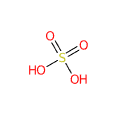
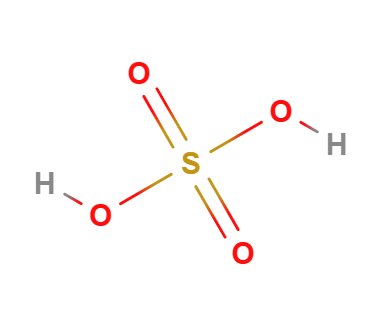
The name describes the structure of the molecule:
- Sulfuric - The root word "sulfur" indicates the presence of a sulfur atom in the molecule. The suffix "-ic" denotes that it's an acid, specifically one with a higher oxidation state of the central atom (in this case, sulfur).
- Acid - This term indicates that the compound can donate protons (H⁺ ions) in a solution. In the context of molecular structure, it suggests the presence of hydrogen atoms that can be ionized.
Description of the raw materials used in its production:
- Sulfur is the main raw material for the production of sulfuric acid. It can be obtained from natural sources such as volcanic deposits or as a by-product of petroleum refining and natural gas processing.
- Air and water are also involved in the production of sulfuric acid. The process requires the oxidation of sulfur dioxide (SO2) to form sulfur trioxide (SO3), which is then dissolved in water to produce sulfuric acid.
Industrial chemical synthesis step-by-step:
- Sulfur Burning - Sulfur is burned in the presence of oxygen to produce sulfur dioxide (SO2) gas.
- Conversion to Sulfur Trioxide - The sulfur dioxide gas is further reacted with oxygen in the presence of a catalyst, typically vanadium pentoxide (V2O5), to convert it into sulfur trioxide (SO3).
- Absorption in Water - The sulfur trioxide is then absorbed into concentrated sulfuric acid or water, forming sulfuric acid (H2SO4). This step involves a highly exothermic reaction.
- Dilution and Purification - The sulfuric acid produced may undergo dilution with water and purification steps to remove impurities and adjust the concentration as required for specific applications.
- Storage and Distribution - The final sulfuric acid product is stored and distributed in appropriate containers for use in various industrial processes or as a raw material for the production of other chemicals.
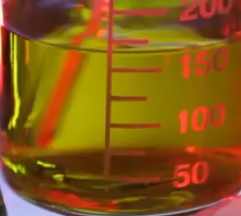
It appears as a colourless or yellow-brown oily liquid, corrosive, soluble in water and ethanol.
What it is used for and where
Food
Ingredient included in the list of European food additives as E513, acidity regulator
Cosmetics
Buffering agent. It is an iingredient that can bring an alkaline or acid solution to a certain pH level and prevent it from changing, in practice a pH stabiliser that can effectively resist instability and pH change.
Safety
EFSA's Panel on Food Additives provided a scientific opinion reviewing the safety of sulphuric acid (E513) and its salts of sodium (E514), potassium (E515), calcium (E516) and ammonium (E517) when used as food additives. The Panel observed that exposure to sulphates at the mean and 95th percentile in the non-labelled scenario, as well as in the other scenarios, is far below the 300 mg/kg dose that induced a laxative effect in humans. On the basis of the available toxicological database, the Panel concluded that exposure to sulphuric acid (E513), sodium sulphate (E514), potassium sulphates (E515), calcium sulphate (E516) and ammonium sulphate (E517) does not raise safety concerns for the stated uses and use levels and no numerical Acceptable Daily Intake (ADI) is required (2).
Other uses
- Slurry acidification
- Anodising
- Electrocatalytic oxidation
The most relevant studies on this ingredient have been selected with a summary of their contents:
 |  |
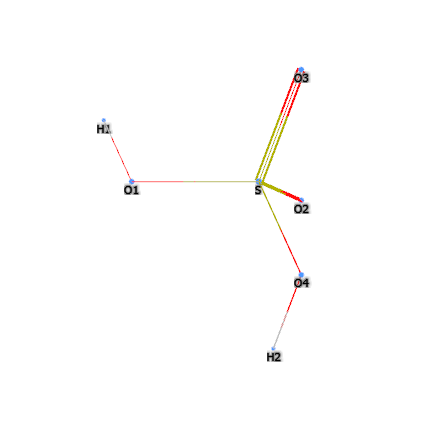 | 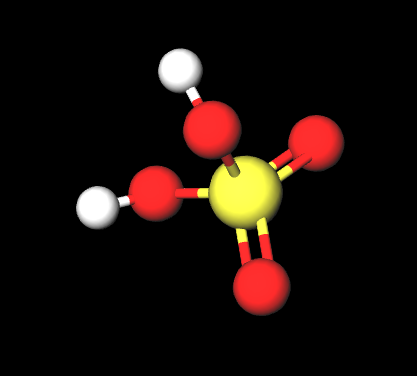 |
- Molecular Formula H2SO4 H2O4S
- Molecular Weight 98.08
- CAS 7664-93-9
- UNII O40UQP6WCF
- EC Number 231-639-5
- DSSTox ID DTXSID5029683
- IUPAC sulfuric acid
- InChl=1S/H2O4S/c1-5(2,3)4/h(H2,1,2,3,4)
- InChl Key QAOWNCQODCNURD-UHFFFAOYSA-N
- SMILES OS(=O)(=O)O
- Nikkaji J3.749D
- MDL number MFCD00064589
- PubChem Substance ID 329752826
- Beilstein 2037554
- ChEBI 26836
- RTECS WS5600000
- RXCUI 10231
- NCI C28191
- ICSC 0362
- NSC 248648 38965
- UN 1830 1831 1832
Synonyms:
- Acid Mist
- dippingacid

