



E309 (Delta tocopherol) is one of the four isomer components that make up tocopherol: alpha-tocopherol, beta-tocopherol, delta-tocopherol and/or gamma-tocopherol.
Delta tocopherol occurs naturally in cereals, in oils and, in particular in:
- olive oil
- wheat germ oil
- palm oil
- soybean oil
- corn oil
- sunflower oil
- eggs
- butter
- peanuts
- almonds and other dried fruit
It is a fundamental antioxidant and can be created using a synthesis procedure.
What it is used for and where
Medical
Its antioxidant action has effects on the brain (1), when, in the cardiovascular system, there are problems of diabetes caused by LDL cholesterol (2) and in liver diseases (3)
In the medical field it is an adjuvant to treat vascular diseases, as prevention for cellular diseases and for a correct functioning of the immune system.
δ-tocopherol is more active than α- or γ-tocopherol in inhibiting tumour growth (4).
Food
Ingredient included in the list of European food additives as E309, antioxidant.
Cosmetics
Antioxidant agent. Ingredient that counteracts oxidative stress and prevents cell damage. Free radicals, pathological inflammatory processes, reactive nitrogen species and reactive oxygen species are responsible for the ageing process and many diseases caused by oxidation.
Fragrance. It plays a decisive and important role in the formulation of cosmetic products as it provides the possibility of enhancing, masking or adding fragrance to the final product, increasing its marketability. The consumer always expects to find a pleasant or distinctive scent in a cosmetic product.
Skin conditioning agent - Miscellaneous. This ingredient has the task of modifying the condition of the skin when it is damaged or dry by reducing its flakiness and restoring its elasticity.
Skin conditioning agent - Occlusive. This ingredient has the task of modifying the condition of the skin when it is damaged or dry by reducing flaking and restoring elasticity. It has a strong lipophilic character and is identified as an occlusive ingredient; it is generally composed of oily and fatty materials that remain on the skin surface and reduce trans epidermal water loss.
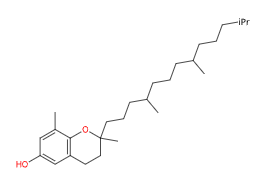
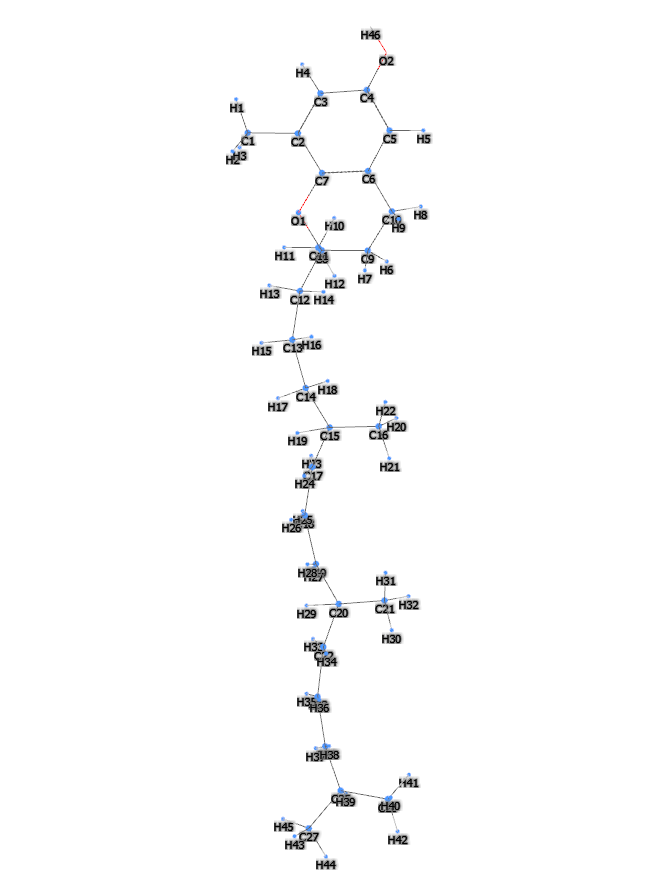
Molecular Formula: C27H46O2
Molecular Weight: 402.7 g/mol
 |  |
- CAS: 119-13-1
- EC Number: 204-299-0
- UNII: JU84X1II0N
- PubChem Substance ID 24900009
- MDL number MFCD20486794
- eCl@ss 34058016
- NACRES NA.79
- DSSTox ID DTXSID1046263
- IUPAC (2R)-2,8-dimethyl-2-[(4R,8R)-4,8,12-trimethyltridecyl]-3,4-dihydrochromen-6-ol
- InChl=1S/C27H46O2/c1-20(2)10-7-11-21(3)12-8-13-22(4)14-9-16-27(6)17-15-24-19-25(28)18-23(5)26(24)29-27/h18-22,28H,7-17H2,1-6H3/t21-,22-,27-/m1/s1
- InChl Key GZIFEOYASATJEH-VHFRWLAGSA-N
- SMILES CC1=CC(=CC2=C1OC(CC2)(C)CCCC(C)CCCC(C)CCCC(C)C)O
- ChEBI 47772
- Nikkaji J5.309K
- Metabolomics Workbench 29107
- NCI C63645
Synonyms:
- (+)-δ-Tocopherol
Sakr HF, Abbas AM, El Samanoudy AZ.
J Physiol Pharmacol. 2015 Apr;66(2):191-202.
Shirpoor A, Norouzi L, Nemati S, Khadem Ansari MH.
Iran Biomed J. 2015 Apr;19(2):117-23.
Miyanishi K, Hoki T, Tanaka S, Kato J.
World J Hepatol. 2015 Mar 27;7(3):593-9. doi: 10.4254/wjh.v7.i3.593. Review.
Khastar H. Ren Fail. 2015 Feb 2:1-3.

