



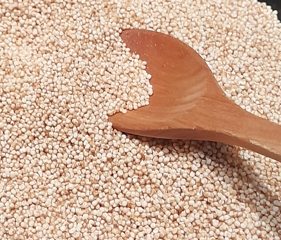
Puffed amaranth is made by heating amaranth seeds until they "pop" to produce a light and crispy cereal. This puffing process enhances its lightness and digestibility while retaining most of the nutritional properties of the whole grain. It is commonly used in breakfast cereals, added to energy bars, or as a topping for yogurt and salads.
Nutritional Profile (per 100 grams):
- Calories Approximately 354 kcal.
- Protein About 13 grams, providing a good source of complete protein, which includes all essential amino acids.
- Fat About 7 grams, with a mix of monounsaturated and polyunsaturated fatty acids.
- Carbohydrates About 65 grams, with a moderate fiber content.
- Fiber About 6.7 grams, aiding in digestion and satiety control.
- Vitamins and Minerals Rich in iron, calcium, magnesium, phosphorus, and B vitamins.
Industrial Production Process
The production of puffed amaranth involves a series of steps to transform amaranth grains into a light, airy product that can be used in a variety of culinary applications, such as breakfast cereals, snacks, and toppings. Puffing amaranth enhances its digestibility and provides a unique texture that is both crunchy and fluffy.
- Grain selection and cleaning. Amaranth grains are selected and cleaned to remove impurities and debris.
- Heating. The cleaned grains are quickly heated in an oven or a special skillet at very high temperatures.
- Puffing. During rapid heating, the internal moisture of the grains vaporizes, causing the grains to expand and puff. This process must be done swiftly to prevent the grains from burning.
- Cooling. After puffing, the puffed grains are quickly cooled to stabilize their expanded shape and maintain a crunchy texture.
- Packaging. Finally, the puffed amaranth is packaged in airtight containers to preserve its freshness and crunchiness.
Considerations
Puffed amaranth is valued for its versatility and nutritional benefits, including its ability to provide sustained energy, support muscle and bone health, and promote cardiovascular health due to its healthy fats.
Culinary Use Ideal for breakfast mixed with fruits and yogurt, in homemade energy bars, as a crunchy addition to salads, or in desserts.
Health Benefits Supports immune function and reduces inflammation thanks to its richness in antioxidants and essential nutrients.
Storage Store in an airtight container in a cool, dry place to maintain crispness and freshness.
Amaranth is a plant belonging to the large family of the Amarantaceae.

Amaranth contains a good content of amino acids including lysine, an essential amino acid.
Some species of amaranth:
- Amaranthus palmeri
- Amaranthus caudatus
- Amaranthus quitensis
- Amaranthus cruentus
- Amaranthus hypochondriacus
- Amaranthus mangostanus
Amaranth is an ancient grain, considered a superfood due to its outstanding nutritional profile and for the presence of some interesting peptides(2). It is not a true cereal like wheat or rice but is related to plants like quinoa. It is gluten-free and rich in protein, fiber, essential minerals, and amino acids, making it particularly suitable for vegetarian and vegan diets.
Nutritional Profile (per 100 grams):
- Calories Approximately 371 kcal.
- Protein About 14 grams, making it one of the richest plant sources of complete protein, containing all essential amino acids.
- Fat About 7 grams, including beneficial polyunsaturated fatty acids like linoleic acid.
- Carbohydrates About 65 grams, with a high fiber content.
- Fiber About 7 grams, contributing to digestive health and blood sugar control.
- Vitamins and Minerals Rich in magnesium, iron, phosphorus, calcium, and B vitamins.
Amaranth is notable for its high content of lysine, an amino acid often lacking in many grains, making it particularly valuable in a vegetarian diet. Additionally, it has anti-inflammatory properties and can help reduce cholesterol.
Considerations
Culinary Use Can be cooked and used similarly to rice or quinoa, in soups, stews, salads, or as a base for hot dishes. Its seeds can also be popped like popcorn for a light and nutritious snack.
Health Benefits Supports cardiovascular health, improves digestion (3), helps prevent osteoporosis due to its high calcium content, and can be useful in weight management due to its satiating effect.
Storage Store in an airtight container in a cool, dry place to preserve its nutritional qualities and extend its shelf life.

