Sweet Almond Oil Polyglyceryl-4 Esters is a product obtained by the transesterification of Prunus Amygdalus Dulcis (Sweet Almond) Oil and Polyglycerin-4. This ester is widely used in the cosmetic industry for its emollient, moisturizing, and conditioning properties, enhancing various skincare and haircare products.
Chemical Composition and Structure
Sweet Almond Oil Polyglyceryl-4 Esters combines the benefits of sweet almond oil, known for its high content of unsaturated fatty acids, vitamins E and B, and minerals, with the moisturizing and emulsifying properties of Polyglycerin-4. The resulting ester improves the stability of emulsions and provides excellent conditioning and moisturizing properties for the skin.
Physical Properties
Sweet Almond Oil Polyglyceryl-4 Esters typically appear as a viscous or semi-solid substance, with a color ranging from clear to pale yellow. They are soluble in oils and have limited water solubility, making them ideal for use in both oil-in-water and water-in-oil emulsions. They contribute to a rich and non-greasy texture, enhancing the sensory experience of cosmetic products.
Production Process
Transesterification: The production involves the transesterification of sweet almond oil with Polyglycerin-4. This process requires precise control of reaction conditions to ensure the formation of stable and effective esters.
Purification: Following transesterification, the product undergoes extensive purification to remove any unreacted materials and by-products, ensuring its purity and suitability for cosmetic use.
Quality Control: Rigorous testing is conducted on the final product to assess its purity, stability, and performance in various cosmetic formulations. These tests often include evaluations of emulsion stability, viscosity, and compatibility with other cosmetic ingredients.
Applications
- Cosmetic Products: Widely used in creams, lotions, and serums for its emollient and moisturizing properties, improving the texture and feel of the product on the skin.
- Skin Care: Ideal for moisturizing and nourishing products, providing a smooth and enriching feel to the skin due to its emollient properties.
- Hair Care: Incorporated into conditioners and hair masks, contributing to the nourishment, softening, and conditioning of the hair.
INCI Functions
- Solvent. It is the substance for dissolving or dispersing surfactants, oils, dyes, flavourings, bactericidal preservatives in solution.In fact, it dissolves other components present in a cosmetic formulation. Solvents are generally liquid (aqueous and non-aqueous).
- Surfactant - Cleansing agent. Cosmetic products used to cleanse the skin utilise the surface-active action that produces a lowering of the surface tension of the stratum corneum, facilitating the removal of dirt and impurities.
CAS: 1072006-19-9
Environmental and Safety Considerations
Sweet Almond Oil Polyglyceryl-4 Esters are considered safe for use in cosmetic products and are generally well-tolerated by the skin. They are non-irritating and suitable for all skin types, including sensitive skin. Proper use within recommended concentrations is essential to ensure safety and maximize effectiveness.
Studies
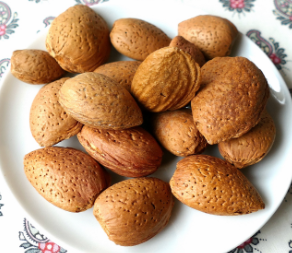
The sweet almond is rich in monounsaturated fats, fiber, magnesium.
Its components can regulate the homeostasis of glucose. It is hypocholesterolemic (1), has an antioxidant action (2) and is an adjuvant for cardiovascular risks (3).
This study found a statistically significant association between high frequency of peanuts, pine nuts, and almonds consumption and reduced risk of colorectal cancer (4).
From the sweet almond you get :
- almond milk. Energy drink
- almond oil. Soothing and anti-itching
For a rather common industrial by-product of almonds, almond milk, especially sweetened versions, care must be taken because they have a cariogenic potential (5).
While the sweet almond has many beneficial properties for human health, the bitter almond is toxic: even at relatively small doses as 5 or 6 are sufficient to cause poisoning. It can be fatal at higher doses. The bitter taste, connected to a component, the amygdalin, fortunately, discourages from ingestion.
The bitter almond is obtained after purification of the hydrocyanic acid it contains:
- almond oil. Used in cosmetics for skin care
- almond butter. Used in skin care cosmetics
- almond extract Used for shampooing and cosmetics.
This study reviews and comments on almond clinical trials with particular reference to biomarkers of health and the gut micrtobiota (6).
Almond studies
References__________________________________________________________________
(1) Kamil A, Chen CY. Health Benefits of Almonds beyond Cholesterol Reduction. J Agric Food Chem. 2012 Feb 17. J Agric Food Chem. 2012 Jul 11;60(27):6694-702. doi: 10.1021/jf2044795.
Abstract. Almonds are rich in monounsaturated fat, fiber, α-tocopherol, minerals such as magnesium and copper, and phytonutrients, albeit being energy-dense. The favorable fat composition and fiber contribute to the hypocholesterolemic benefit of almond consumption. By virtue of their unique nutrient composition, almonds are likely to benefit other modifiable cardiovascular and diabetes risks, such as body weight, glucose homeostasis, inflammation, and oxidative stress. This paper briefly reviews the nutrient composition and hypocholesterolemic benefits; the effects of almond consumption on body weight, glucose regulation, oxidative stress, and inflammation, based on the data of clinical trials, will then be discussed. Although more studies are definitely warranted, the emerging evidence supports that almond consumption beneficially influences chronic degenerative disease risk beyond cholesterol reduction, particularly in populations with metabolic syndrome and type 2 diabetes mellitus.
(2) Barreira JC, Ferreira IC, Oliveira MB, Pereira JA. Antioxidant potential of chestnut (Castanea sativa L.) and almond (Prunus dulcis L.) by-products. Food Sci Technol Int. 2010 Jun;16(3):209-16. doi: 10.1177/1082013209353983.
Abstract. The antioxidant properties of almond green husks (Cvs. Duro Italiano, Ferraduel, Ferranhês, Ferrastar and Orelha de Mula), chestnut skins and chestnut leaves (Cvs. Aveleira, Boa Ventura, Judia and Longal) were evaluated through several chemical and biochemical assays in order to provide a novel strategy to stimulate the application of waste products as new suppliers of useful bioactive compounds, namely antioxidants. All the assayed by-products revealed good antioxidant properties, with very low EC(50) values (lower than 380 μg/mL), particularly for lipid peroxidation inhibition (lower than 140 μg/mL). The total phenols and flavonoids contents were also determined. The correlation between these bioactive compounds and DPPH (2,2-diphenyl-1-picrylhydrazyl) radical scavenging activity, reducing power, inhibition of β-carotene bleaching and inhibition of lipid peroxidation in pig brain tissue through formation of thiobarbituric acid reactive substances, was also obtained. Although, all the assayed by-products proved to have a high potential of application in new antioxidants formulations, chestnut skins and leaves demonstrated better results.
(3) Lairon D. Intervention studies on Mediterranean diet and cardiovascular risk. Mol Nutr Food Res. 2007 Oct;51(10):1209-14. doi: 10.1002/mnfr.200700097. PMID: 17879996.
Abstract. The traditional Mediterranean diet, as studied in the 1950s to 1960s in the South of Europe, is characterized by moderate energy intake, low animal fat, high olive oil, high cereals, high legumes, nuts and vegetables, and regular and moderate wine. A Mediterranean-type diet is being developed to mimic the traditional one and fit with present life style. While numerous epidemiological studies have supported the concept that adherence to the traditional Mediterranean diet is beneficial for health and particularly protects against cardiovascular disease, the limited number of intervention studies in this field have not yet provided major support. Nevertheless, the dietary interventions performed until now have demonstrated that adoption of a Mediterranean-type diet reduces several cardiovascular risk factors in subjects at risk (primary prevention) and/or cardiovascular events or mortality in patients after a first cardiac event (secondary prevention). Among numerous foodstuffs characterizing the Mediterranean diet, virgin olive oil has been shown to display beneficial effects on a wide range of risk factors.
(4) Lee J, Shin A, Oh JH, Kim J. The relationship between nut intake and risk of colorectal cancer: a case control study. Nutr J. 2018 Mar 7;17(1):37. doi: 10.1186/s12937-018-0345-y.
Abstract. Background: Nut consumption is known to reduce the risk of obesity, diabetes mellitus, and cardiovascular disease. However, in previous studies, portion sizes and categories of nut consumption have varied, and few studies have assessed the association between colorectal cancer risk and nut consumption. In this study, we investigated the relationship between nut consumption and colorectal cancer risk. Methods: A case-control study was conducted among 923 colorectal cancer patients and 1846 controls recruited from the National Cancer Center in Korea. Information on dietary intake was collected using a semi-quantitative food frequency questionnaire with 106 items, including peanuts, pine nuts, and almonds (as 1 food item). Nut consumption was categorized as none, < 1 serving per week, 1-3 servings per week, and ≥3 servings per week. A binary logistic regression model was used to estimate odds ratios (OR) and their 95% confidence intervals (CI) for the association between nut consumption and colorectal cancer risk, and a polytomous logistic regression model was used for sub-site analyses. Results: High nut consumption was strongly associated with reduced risk of colorectal cancer among women (adjusted ORs: 0.30, 95%CI: 0.15-0.60 for the ≥3 servings per week group vs. none). A similar inverse association was observed for men (adjusted ORs: 0.28, 95% CI: 0.17-0.47). In sub-site analyses, adjusted ORs (95% CIs) comparing the ≥3 servings per week group vs none were 0.25 (0.09-0.70) for proximal colon cancer, 0.39 (0.19-0.80) for distal colon cancer, and 0.23 (0.12-0.46) for rectal cancer among men. An inverse association was also found among women for distal colon cancer (OR: 0.13, 95% CI: 0.04-0.48) and rectal cancer (OR: 0.40, 95% CI: 0.17-0.95). Conclusions: We found a statistically significant association between high frequency of nut consumption and reduced risk of colorectal cancer. This association was observed for all sub-sites of the colon and rectum among both men and women, with the exception of proximal colon cancer for women.
(5) Lee J, Townsend JA, Thompson T, Garitty T, De A, Yu Q, Peters BM, Wen ZT. Analysis of the Cariogenic Potential of Various Almond Milk Beverages using a Streptococcus mutans Biofilm Model in vitro. Caries Res. 2018;52(1-2):51-57. doi: 10.1159/000479936.




