



Almond (Prunus dulcis or Prunus amygdalus dulcis) has Asian origins and belongs to the Rosaceae family.
Description
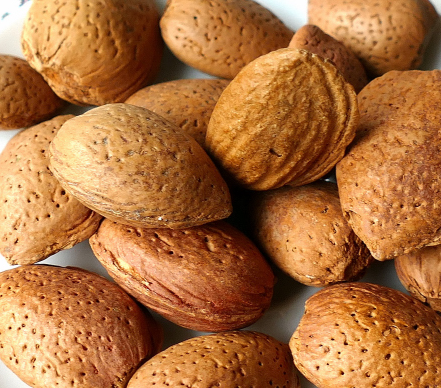
The almond is the edible seed of the almond tree (Prunus dulcis), a member of the Rosaceae family, closely related to peach, apricot and cherry. Native to the arid and semi-arid regions of Southwest Asia, almond cultivation has been established for centuries around the Mediterranean basin, in California and in other warm, dry areas, where it has become a true pillar of traditional agriculture.
The almond tree is a deciduous tree of medium height, with a spreading crown and numerous fine branches. In early spring, often before the leaves appear, it is covered in white to pale-pink blossoms, highly ornamental and traditionally seen as a symbol of renewal and the start of the growing season. After pollination, the flowers develop into fruits: a green, fleshy outer hull surrounds a hard, woody, porous shell, which encloses one (sometimes two) seeds – the almonds.
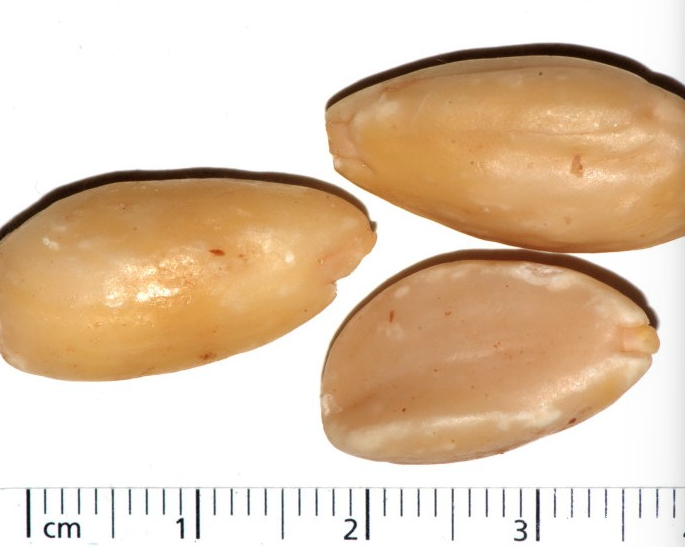
The edible part is therefore the seed inside the shell: a small, elongated “drop” of ivory-cream colour, wrapped in a thin, light-brown skin. When raw, the almond has a crisp yet friable texture, a delicate aroma and a mild, slightly sweet taste with soft, vegetal notes. With roasting, the texture becomes more brittle and the flavour intensifies, revealing clearly toasted, nutty, marzipan- and biscuit-like notes, which make the almond one of the most versatile bases in confectionery and food manufacture.
The almond is regarded both as a food with high nutritional density and as an ingredient of great sensory richness. Deeply linked to sun-drenched, stony landscapes and low-rainfall orchards, it transforms limited environmental resources into a dense, oily and aromatic seed. For this reason, and for its economic and culinary importance, it is often seen as a symbol of Mediterranean simplicity, concentrated energy and pastry tradition
 |  |
The terms "Prunus dulcis" and "Prunus amygdalus dulcis" both refer to the almond tree. However, they represent slightly different naming conventions and can sometimes cause confusion.
- Prunus dulcis is a more modern and accepted scientific name for the almond tree. It's the name used to classify the species that produce the almond nuts we commonly eat.
- Prunus amygdalus dulcis is a bit more complicated, as it breaks down into two main forms. "Prunus amygdalus" is an older classification, and the "dulcis" part was used to specify the sweet almond variety (as opposed to "Prunus amygdalus amara," which refers to the bitter almond variety).
It has many varieties, but the best known are
- sweet almonds - used in the food industry.
- bitter almond - used in cosmetics and other - very dangerous if ingested.
Botanical classification
Common name: Almond tree, almond
Clade: Angiospermae
Order: Rosales
Family: Rosaceae
Genus: Prunus
Species: Prunus dulcis (Mill.) D.A. Webb
Climate
The almond tree is typical of Mediterranean climates, with mild winters and hot, dry summers. It prefers areas with low air humidity and good ventilation. It is fairly tolerant of drought, but sensitive to late frosts, because it flowers very early: drops in temperature during flowering or fruit set can significantly compromise almond production.
Exposure
The ideal exposure is full sun, on well-ventilated slopes and, if possible, slightly elevated positions, which reduce the risk of cold air stagnation. Good light availability is essential for abundant flowering, proper bud differentiation and regular production. Sites that are too shaded reduce fruiting and encourage excessive shoot elongation.
Soil
Almond adapts well to light, well-drained soils, even poor and calcareous, where other fruit trees may struggle. It is sensitive to waterlogging and to very compact soils, which favour root problems. Medium-textured, slightly subalkaline soils with a reasonable level of organic matter provide a good balance between vegetative growth and fruiting.
Irrigation
Traditionally grown under rainfed conditions, almond still benefits from supplementary irrigation at critical stages (fruit enlargement, very dry summers), especially in intensive orchards. It is important to avoid excessive water and sudden changes in soil moisture, which can cause fruit splitting or collar rot. On light soils, small, frequent irrigations are preferable to a few very heavy ones.
Temperature
The optimal temperature range for vegetative growth is generally between 15 and 28 °C. Almond tolerates hot, dry summers quite well, but is more sensitive to prolonged cold, damp conditions. Its early flowering makes it vulnerable to spring frosts: to reduce risk, it is best planted in well-exposed sites with good air circulation, avoiding valley bottoms prone to cold air pooling.
Fertilization
Almond has moderate nutrient requirements, but good fertilization management is important to support flowering and regular cropping. Periodic applications of organic matter (well-matured manure, compost) improve soil structure and fertility. The key elements are nitrogen, phosphorus and potassium: nitrogen should be supplied without excess, to avoid too much vegetative growth at the expense of fruiting, while phosphorus and potassium support flowering, fruit set and almond quality (kernel size and oil content).
Crop care
Crop care includes control of weeds around the trunk area, proper training pruning in the early years, and light but regular production pruning later on, to maintain an airy, well-lit canopy. Monitoring of pests (such as fruit-boring insects) and fungal diseases is important, using integrated pest management principles and favouring rotations and good agronomic practices. An overly dense canopy increases disease risk and reduces fruit quality.
Harvest
Almonds are harvested when the hull (outer fleshy layer) begins to split and the woody shell is dry and well formed. Once ripe, almonds can be shaken from the tree onto nets or sheets, then collected and quickly dehulled to avoid mould development. Proper drying of in-shell or shelled almonds, in a dry, well-ventilated environment, is essential to ensure good storage, preserve aroma and maintain kernel quality.
Propagation
Almond is propagated mainly by grafting onto compatible rootstocks (seedling almond, hybrids with peach or related species), chosen according to soil type and growing area. Rootstocks are produced from seed, while cultivars are propagated by budding or grafting. Seed propagation of cultivars is not used for fruit production, because it does not guarantee true-to-type plants; it is mainly used to obtain basic material for rootstock production.
Indicative nutritional values per 100 g
(dry, unsalted almonds)
Energy: ~ 570–600 kcal
Water: ~ 4–6 g
Total carbohydrates: ~ 20 g
Dietary fiber: ~ 10–13 g
Protein: ~ 20–22 g
Total fat: ~ 50–55 g
SFA (saturated fatty acids): ~ 4–5 g
MUFA (monounsaturated fatty acids, mainly oleic acid): predominant fraction
PUFA (polyunsaturated fatty acids, mainly linoleic acid): significant fraction
Minerals: calcium, magnesium, phosphorus, potassium, zinc, copper, manganese
Vitamins: vitamin E, riboflavin (B2), niacin (B3), folate, and small amounts of other B vitamins
Actual values vary with cultivar, growing region and processing (raw, roasted, blanched).
Key constituents
Lipids (around half of the seed weight), mainly unsaturated fatty acids (MUFA and PUFA)
Plant proteins with a reasonably balanced amino acid profile for a nut
Dietary fiber, especially concentrated in the skin
Carbohydrates (starch and small amounts of sugars)
Minerals: calcium, magnesium, phosphorus, potassium, zinc, copper, manganese
Vitamins: especially vitamin E (tocopherols), B vitamins (B2, B3, folate)
Phytocompounds: phytosterols, polyphenols and other antioxidant molecules linked to the lipid fraction and the skin
Production process
Cultivation
prefers Mediterranean or warm, dry climates, with mild winters and hot, sunny summers
does best in light, well-drained soils, often shallow and stony
early flowering means risk of damage from late frosts
Fruit development and harvesting
post-flowering, fruits develop with hull, shell and seed
harvesting is manual or mechanical when the hull splits and fruits are fully mature
fruits are dried to reduce moisture content
Shelling and grading
removal of hull, then shelling to release the edible seed
sorting by size, integrity and visual quality
Processing
whole almonds (raw, roasted, salted, blanched)
almond flour and granules
almond milk / almond drinks
almond oil for culinary and cosmetic use
pastes and spreads (including almond butter and confectionery pastes)
Physical properties
seeds are elongated, slightly flattened
inner kernel: ivory-cream; outer skin: light to mid-brown
texture: solid, dense, crisp when dry
high density due to lipid and protein content
excellent aptitude for grinding into flour, paste or cream
Sensory and technological properties
flavour: mild and sweet when raw; nutty, toasted, marzipan-like when roasted
aroma: rich and persistent, highly valued in pastry and confectionery
high fat content → creamy, smooth mouthfeel in pastes and spreads
good ability to form stable emulsions in creams, fillings and spreads (with appropriate formulation)
almond flour: fine structure, ideal for cakes, biscuits, macarons and desserts
suitable for gluten-free products as part of the dry mix, often combined with other flours or starches
Food applications
direct consumption as a snack (raw, roasted, salted or plain)
baking and confectionery: cakes, biscuits, macarons, nougat, brittle, pralines, marzipan
almond butter and nut spreads
almond milk / almond drink and other plant-based beverages
flakes, slivers or chopped almonds as topping for yoghurt, ice cream, salads and savoury dishes
savoury cooking: sauces, pestos, coatings, fillings; crusts for fish or meat
high-energy and high-protein products (bars, snack mixes, sports nutrition formulations)
Nutrition and health
Almonds are a high-calorie food but also rich in nutrients:
Plant proteins: contribute meaningfully to daily protein intake, useful especially for people reducing animal protein.
Fats: rich in unsaturated fatty acids (particularly oleic acid in the MUFA fraction), generally considered favourable in the context of a balanced diet when they replace excessive saturated fat.
Dietary fiber: supports satiety and digestive well-being.
Vitamin E: contributes to antioxidant defence.
Minerals such as magnesium, calcium and potassium support neuromuscular, bone and metabolic functions.
Because of their energy density, almonds should be eaten in moderate portions, especially in calorie-controlled diets. Their allergenic potential also needs to be taken into account (see below).
Portion note
A typical daily portion of almonds is about 20–30 g (roughly a small handful), to be adjusted according to individual energy needs and overall dietary context.
Allergens and intolerances
almonds are classified as tree nuts and can cause allergic reactions, potentially severe
individuals with tree nut allergy must be extremely cautious, even with traces
cross-contamination is common in industrial facilities handling multiple kinds of nuts
for some people, large amounts of almonds may be harder to digest or cause discomfort
Storage and shelf-life
store almonds in a cool, dry place, away from light and heat
high fat content makes them susceptible to oxidative rancidity
almonds with their skin intact generally show better stability than blanched kernels
under good storage conditions, they can keep for several months; if rancid smell or off-taste appears, they should not be consumed
Safety and regulatory
almonds fall under the group of mandatory allergens that must be clearly declared on labels
levels of contaminants (e.g. pesticides, mycotoxins) must comply with food safety regulations
almond oil, flours and derived products are subject to the same standards of hygiene, traceability and quality as other foods
in specific markets (e.g. infant foods, specialised products), additional rules may apply
Labeling
For almond-based products (whole almonds, flours, creams, beverages), the label should include:
product name (e.g. almonds, almond drink, almond butter)
explicit indication of almond as an allergen
country or region of origin (when declared)
lot number, best-before date
storage instructions
for composite products: full ingredient list in descending order by weight, with almond clearly highlighted as an allergen
Troubleshooting
In the kitchen
“old” or bitter taste → possible rancidity due to fat oxidation: do not use
chewy or rubbery texture → excessive moisture or poor storage; product quality is compromised
weak structure in baked goods with almond flour → the recipe may need additional starches or other flours to strengthen the crumb and support the structure
In storage
rancid or metallic off-notes → oxidative degradation of fats; discard the product
insects or larvae inside packaging → storage in warm, humid environments; discard and improve storage conditions (cool, dry, well-sealed containers)
Main INCI functions (cosmetics)
Several cosmetic ingredients derive from almonds, especially sweet almond oil (Prunus amygdalus dulcis oil).
Main functions:
emollient: softens and nourishes the skin, improving smoothness and comfort
skin conditioning: helps maintain skin hydration and a pleasant feel
used in creams and lotions, massage oils, body care and baby care products
sometimes included in hair care as a nourishing and shine-enhancing oil
Skin conditioning agent. It is the mainstay of topical skin treatment as it has the function of restoring, increasing or improving skin tolerance to external factors, including melanocyte tolerance. The most important function of the conditioning agent is to prevent skin dehydration, but the subject is rather complex and involves emollients and humectants that can be added in the formulation.
Hair conditioning agent. A significant number of ingredients with specific and targeted purposes may co-exist in hair shampoo formulations: cleansers, conditioners, thickeners, matting agents, sequestering agents, fragrances, preservatives, special additives. However, the indispensable ingredients are the cleansers and conditioners as they are necessary and sufficient for hair cleansing and manageability. The others act as commercial and non-essential auxiliaries such as: appearance, fragrance, colouring, etc. Hair conditioning agents have the task of increasing shine, manageability and volume, and reducing static electricity, especially after treatments such as colouring, ironing, waving, drying and brushing. They are, in practice, dispersants that may contain cationic surfactants, thickeners, emollients, polymers. The typology of hair conditioning agents includes: intensive conditioners, instant conditioners, thickening conditioners, drying conditioners. They can perform their task generally accompanied by other different ingredients.
Skin protectant. It creates a protective barrier on the skin to defend it from harmful substances, irritants, allergens, pathogens that can cause various inflammatory conditions. These products can also improve the natural skin barrier and in most cases more than one is needed to achieve an effective result.
Humectant. Hygroscopic compound used to minimise water loss in the skin and to prevent it from drying out by facilitating faster and greater absorption of water into the stratum corneum of the epidermis. The epidermis is the most superficial of the three layers that make up human skin (epidermis, dermis and hypodermis) and is the layer that maintains hydration in all three layers. In turn, the epidermis is composed of five layers: horny, the most superficial, granular, spinous, shiny, and basal. Humectants have the ability to retain the water they attract from the air in the stratum corneum and have the function of moisturising the skin. They are best used before emollients, which are oil-based.
Potential allergenicity for individuals sensitised to tree nuts must be considered, although the effective risk depends on the degree of refinement and the type of cosmetic product.
Conclusion
The almond (Prunus dulcis) is a tree nut that exemplifies the union of nutritional value, culinary versatility and sensory richness. Originating from dry, sun-exposed environments, it produces a seed dense in unsaturated fats, protein, fiber, minerals and vitamin E, which has become one of the pillars of Mediterranean cuisine and global confectionery.
Used as a snack, in baking, as a base for plant-based beverages, creams and oils, almonds are a valuable resource when consumed with good portion control and attention to allergies and proper storage. They remain a leading ingredient among oilseeds, symbolising concentrated energy, tradition and refined taste.
Studies
The sweet almond is rich in monounsaturated fats, fiber, magnesium.
Its components can regulate the homeostasis of glucose. It is hypocholesterolemic (1), has an antioxidant action (2) and is an adjuvant for cardiovascular risks and in the treatment of gastroesophageal reflux disease (3).
This study found a statistically significant association between high frequency of peanuts, pine nuts, and almonds consumption and reduced risk of colorectal cancer (4).
From the sweet almond you get :
- almond milk. Energy drink
- almond oil. Soothing and anti-itching
For a rather common industrial by-product of almonds, almond milk, especially sweetened versions, care must be taken because they have a cariogenic potential (5).
While the sweet almond has many beneficial properties for human health, the bitter almond is toxic: even at relatively small doses as 5 or 6 are sufficient to cause poisoning. It can be fatal at higher doses. The bitter taste, connected to a component, the amygdalin, fortunately, discourages from ingestion.
The bitter almond is obtained after purification of the hydrocyanic acid it contains:
- almond oil. Used in cosmetics for skin care
- almond butter. Used in skin care cosmetics
- almond extract Used for shampooing and cosmetics.
This study reviews and comments on almond clinical trials with particular reference to biomarkers of health and the gut micrtobiota (6).

