Cardamomo (Elettaria cardamomum)
Descrizione
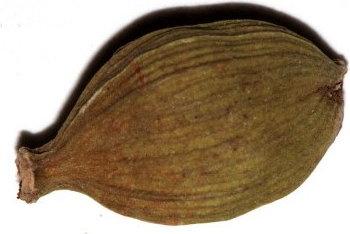
Il cardamomo è una spezia aromatica ottenuta dai frutti della pianta Elettaria cardamomum (famiglia Zingiberaceae), originaria dell’Asia meridionale. I frutti, chiamati baccelli, sono piccole capsule verdi che racchiudono semi neri molto profumati. È considerata una delle spezie più pregiate al mondo per il suo aroma complesso: fresco, balsamico, agrumato, leggermente dolce e pungente. È impiegato in pasticceria, cucina asiatica, panificazione, bevande, infusioni e miscele di spezie.
Nome comune: Cardamomo
Regno: Plantae
Clado: Angiosperme
Clado: Monocotiledoni
Ordine: Zingiberales
Famiglia: Zingiberaceae
Genere: Elettaria / Amomum
Specie più nota: Elettaria cardamomum (cardamomo verde, il più usato a livello commerciale)
Coltivazione e condizioni di crescita
Clima: predilige climi tropicali caldi e molto umidi; necessita di temperature elevate e costanti, senza forti escursioni termiche.
Esposizione: preferisce ombra parziale o luce filtrata, tipica del sottobosco tropicale; luce diretta e intensa può danneggiare foglie e fiori.
Terreno: ideale un suolo ricco di sostanza organica, profondo, sciolto e ben drenato; preferisce pH leggermente acido o neutro.
Irrigazione: richiede abbondante umidità e irrigazioni regolari; non tollera il ristagno idrico prolungato ma neppure la siccità.
Temperatura: cresce al meglio tra 18 e 30 °C; temperature inferiori ai 10–12 °C rallentano fortemente la crescita.
Concimazione: necessita di buone quantità di potassio e sostanza organica; utile l’apporto periodico di compost o letame ben maturo.
Cure colturali: pacciamatura consigliata per mantenere l’umidità; importante proteggere il rizoma dall’eccesso di acqua stagnante.
Moltiplicazione: principalmente tramite divisione dei rizomi; la semina è possibile ma più lenta e con variabilità elevata.
Valori nutrizionali indicativi per 100 g (semi)
Energia: 300–320 kcal
Acqua: ≈ 8–10%
Carboidrati: 55–60 g
Proteine: 10–12 g
Grassi totali: 5–7 g
SFA: 1–1.5 g
MUFA: 1–2 g
PUFA: 2–3 g
Fibre: 25–30 g
Vitamine: B1, B2, B6
Minerali: calcio, ferro, magnesio, potassio, manganese
(Valori variabili secondo origine e lavorazione.)
Principali sostanze contenute
Olio essenziale (4–8%):
1,8-cineolo, α-terpineolo, linalolo, acetato di terpinile
Terpeni aromatici: limonene, sabinene
Polifenoli e flavonoidi
Fibre solubili e insolubili
Piccole quantità di proteine, lipidi e minerali
Processo di produzione
Coltivazione
Necessita di clima tropicale umido, ombra parziale e suoli ricchi.
Coltivazioni principali: India, Guatemala, Sri Lanka.
Raccolta
Post-raccolta
Lavaggio e selezione dei baccelli.
Essiccazione al sole o in essiccatori controllati.
Confezionamento dei baccelli interi o decorticazione per vendere i semi.
Distillazione in corrente di vapore per l’olio essenziale.
Proprietà fisiche
Baccelli verdi o beige, di forma ovale-allungata.
Semi neri, duri, molto aromatici.
Elevata volatilità dell’olio essenziale.
Umidità bassa → buona conservabilità.
Proprietà sensoriali e tecnologiche
Aroma: fresco, balsamico, leggermente canforato, con note agrumate.
Sapore: dolce, speziato, aromatico, leggermente pungente.
Resiste abbastanza bene alla cottura, ma l’aroma è massimizzato quando aggiunto a fine preparazione.
I baccelli interi rilasciano aroma gradualmente in infusione.
Impieghi alimentari
Dolci, biscotti, creme, cioccolato.
Bevande calde (chai, caffè arabo, tisane).
Piatti salati indiani, mediorientali e nordici.
Risotti, riso basmati, carni bianche.
Miscela in masala, curry, garam masala.
Liquori e amari aromatici.
Nutrizione e salute
Fonte di antiossidanti (terpeni e flavonoidi).
Tradizionalmente considerato digestivo, carminativo e rinfrescante dell’alito.
L’olio essenziale presenta attività antimicrobiche in vitro.
Apporto calorico irrilevante nelle quantità culinarie.
Possibili benefici su digestione e alito secondo uso tradizionale (non sostituisce parere medico).
Nota porzione
Allergeni e intolleranze
Non contiene allergeni principali UE.
Rari casi di sensibilità individuale a spezie della famiglia Zingiberaceae.
L’olio essenziale può risultare irritante se usato puro.
Conservazione e shelf-life
Baccelli interi: 12–24 mesi in contenitori ermetici al riparo da luce e calore.
Semi decorticati: 6–12 mesi (aroma più volatile).
Polvere di cardamomo: 3–6 mesi (degrada rapidamente).
Olio essenziale: 1–2 anni in vetro scuro, chiuso ermeticamente.
Sicurezza e regolatorio
Deve rispettare limiti UE per:
La lavorazione deve seguire GMP e HACCP.
L’olio essenziale è regolamentato per uso cosmetico e alimentare, specialmente per componenti potenzialmente irritanti.
Etichettatura
Denominazione: “cardamomo” / Elettaria cardamomum.
Origine geografica.
Forma del prodotto: baccelli, semi, polvere, olio essenziale.
Lotto, TMC, condizioni di conservazione.
Per miscele: elenco ingredienti.
Troubleshooting
Aroma debole → prodotto vecchio o conservato male.
Baccelli gialli o marroni → essiccazione scorretta o qualità inferiore.
Semi secchi e polverosi → perdita di oli essenziali.
Polvere con sapore spento → ossidazione; preferire macinatura fresca.
Sostenibilità e filiera
Il cardamomo richiede agricoltura tropicale → impatto variabile secondo irrigazione e gestione delle foreste.
Coltivazioni ombreggiate (agroforestali) sono più sostenibili.
Il commercio equo-solidale contribuisce a condizioni di lavoro migliori nei paesi produttori.
Imballaggi preferibili: vetro o metalli riciclabili per preservare aroma e ridurre impatto.
Principali funzioni INCI (cosmesi)
Derivati del cardamomo usati nei cosmetici includono:
Elettaria Cardamomum Seed Oil → fragrante, tonificante, purificante.
Elettaria Cardamomum Extract → antiossidante, aromatico.
Usato in profumeria per note speziate e fresche.
Impiegato in prodotti per il corpo a funzione stimolante o aromaterapica.
Conclusione
Il cardamomo è una spezia altamente pregiata e versatile, caratterizzata da un profilo aromatico complesso e ricco di composti bioattivi. È impiegato in numerosi contesti culinari, erboristici e cosmetici, offrendo valore sensoriale e funzionale. Una corretta essiccazione e conservazione è fondamentale per preservarne aroma, qualità e proprietà.
Mini-glossario
SFA: grassi saturi
MUFA: grassi monoinsaturi
PUFA: grassi polinsaturi
MRL: Maximum Residue Level
GMP: Good Manufacturing Practices
HACCP: Hazard Analysis and Critical Control Points
Studi
La coltivazione intensiva può avere un impatto sull'ambiente, soprattutto se le pratiche agricole non sono sostenibili. Tuttavia, ci sono iniziative per promuovere la coltivazione sostenibile del cardamomo.
Ha proprietà antiossidanti (1), contribuisce all'abbassamento della pressione sanguigna (2) e proprietà sedative (3).
Sostanze presenti : Limonene, Fenchone, Valerianol (4), Kaempferol, Quercetin (5).
L'olio di cardamomo funge da potenziale proteico del grano uccidendo varie fasi di vita degli insetti che attaccano il grano, come Tribolium castaneum e Sitophilus zeamais , tramite contatto e azione fumigante (6).
Cardamomo studi
Bibliografia_________________________________________________________________________
(1) Das I, Acharya A, Berry DL, Sen S, Williams E, Permaul E, Sengupta A, Bhattacharya S, Saha T. Antioxidative effects of the spice cardamom against non-melanoma skin cancer by modulating nuclear factor erythroid-2-related factor 2 and NF-κB signalling pathways. Br J Nutr. 2012 Sep 28;108(6):984-97. doi: 10.1017/S0007114511006283.
Abstract. The role of dietary factors in inhibiting or delaying the development of non-melanoma skin cancer (NMSC) has been investigated for many years. Cardamom, which is a dietary phytoproduct, has been commonly used in cuisines for flavour and has numerous health benefits, such as improving digestion and stimulating metabolism and having antitumorigenic effects. We have investigated the efficacy of dietary cardamom against 7,12-dimethylbenz[a]anthracene (DMBA)-induced skin papillomatogenesis in Swiss albino mice that closely resembles human NMSC. Mice were grouped into normal wild type (untreated), vehicle-treated (acetone), carcinogen-treated (DMBA), and DMBA and cardamom-treated (DMBA+CARD) to delineate the role of cardamom against DMBA-induced papillomatogenesis. Oral administration of cardamom to DMBA-treated mice up-regulated the phase II detoxification enzymes, such as glutathione-S-transferase and glutathione peroxidase, probably via activation of nuclear factor erythroid-2-related factor 2 transcription factor in 'DMBA+CARD' mice. Furthermore, reduced glutathione, glutathione reductase, superoxide dismutase and catalase were also up-regulated by cardamom in the same 'DMBA+CARD' group of mice compared with DMBA-treated mice. Cardamom ingestion in DMBA-treated mice blocked NF-κB activation and down-regulated cyclo-oxygenase-2 expression. As a consequence, both the size and the number of skin papillomas generated on the skin due to the DMBA treatment were reduced in the 'DMBA+CARD' group. Thus, the results from the present study suggest that cardamom has a potential to become a pivotal chemopreventive agent to prevent papillomagenesis on the skin.
(2) Verma SK, Jain V, Katewa SS. Blood pressure lowering, fibrinolysis enhancing and antioxidant activities of cardamom (Elettaria cardamomum). Indian J Biochem Biophys. 2009 Dec;46(6):503-6.
Abstract. Elettaria cardamomum (L.) Maton. (Small cardamom) fruit powder was evaluated for its antihypertensive potential and its effect on some of the cardiovascular risk factors in individuals with stage 1 hypertension. Twenty, newly diagnosed individuals with primary hypertension of stage 1 were administered 3 g of cardamom powder in two divided doses for 12 weeks. Blood pressure was recorded initially and at 4 weeks interval for 3 months. Blood samples were also collected initially and at 4 weeks interval for estimation of lipid profile, fibrinogen and fibrinolysis. Total antioxidant status, however, was assessed initially and at the end of the study. Administration of 3 g cardamom powder significantly (p<0.001) decreased systolic, diastolic and mean blood pressure and significantly (p<0.05) increased fibrinolytic activity at the end of 12th week. Total antioxidant status was also significantly (p<0.05) increased by 90% at the end of 3 months. However, fibrinogen and lipid levels were not significantly altered. All study subjects experienced a feeling of well being without any side-effects. Thus, the present study demonstrates that small cardamom effectively reduces blood pressure, enhances fibrinolysis and improves antioxidant status, without significantly altering blood lipids and fibrinogen levels in stage 1 hypertensive individuals.
(3) Gilani AH, Jabeen Q, Khan AU, Shah AJ. Gut modulatory, blood pressure lowering, diuretic and sedative activities of cardamom. J Ethnopharmacol. 2008 Feb 12;115(3):463-72.
Abstract. Ethnopharmacological relevance: Cardamom (Elettaria cardamomum) is traditionally used in various gastrointestinal, cardiovascular and neuronal disorders. Aim of the study: To rationalize cardamom use in constipation, colic, diarrhea, hypertension and as diuretic. Materials and methods: Cardamom crude extract (Ec.Cr) was studied using in vitro and in vivo techniques. Results: Ec.Cr caused atropine-sensitive stimulatory effect in isolated guinea-pig ileum at 3-10mg/ml. In rabbit jejunum preparations, Ec.Cr relaxed spontaneous and K+ (80 mM)-induced contractions as well as shifted Ca++ curves to right, like verapamil. Ec.Cr (3-100mg/kg) induced fall in the arterial blood pressure (BP) of anaesthetized rats, partially blocked in atropinized animals. In endothelium-intact rat aorta, Ec.Cr relaxed phenylephrine (1 microM)-induced contractions, partially antagonized by atropine and also inhibited K+ (80 mM) contractions. In guinea-pig atria, Ec.Cr exhibited a cardio-depressant effect. Ec.Cr (1-10mg/kg) produced diuresis in rats, accompanied by a saluretic effect. It enhanced pentobarbital-induced sleeping time in mice. Bio-assay directed fractionation revealed the separation of spasmogenic and spasmolytic components in the aqueous and organic fractions respectively. Conclusion: These results indicate that cardamom exhibits gut excitatory and inhibitory effects mediated through cholinergic and Ca++ antagonist mechanisms respectively and lowers BP via combination of both pathways. The diuretic and sedative effects may offer added value in its use in hypertension and epilepsy.
(4) Asakawa Y, Ludwiczuk A, Sakurai K, Tomiyama K, Kawakami Y, Yaguchi Y. Comparative Study on Volatile Compounds of Alpinia japonica and Elettaria cardamomum. J Oleo Sci. 2017 Aug 1;66(8):871-876. doi: 10.5650/jos.ess17048.
Abstract. The volatile compounds obtained from the ether extracts, headspace gases and steam distillates of Alpinia japonica and Elettaria cardamomum were analyzed by GC/MS. Both species were rich sources of naturally rare fenchane-type monoterpenoids, fenchene, fenchone, fenchyl alcohol and its acetate, together with 1,8-cineole. The distributions of volatile sesquiterpenoids were very poor in both species. Chiralities of fenchone in A. japonica and E. cardamomum were 99% of (1S,4R)-(+)-form. Camphor in A. japonica is composed of a mixture of (1R,4R)-(+)-form (94.3%) and (1S,4S)-(-)-form (5.7%). On the other hand, E. cardamomum produced only (1R,4R)-(+)-camphor (99%).
(5) Masoumi-Ardakani Y, Mandegary A, Esmaeilpour K, Najafipour H, Sharififar F, Pakravanan M, Ghazvini H. - Chemical Composition, Anticonvulsant Activity, and Toxicity of Essential Oil and Methanolic Extract of Elettaria cardamomum. - Planta Med. 2016 Nov;82(17):1482-1486.
Abstract. Elettaria cardamomum is an aromatic spice (cardamom) native to the humid Asian areas, which contains some compounds with a potential anticonvulsant activity. Various pharmacological properties such as anti-inflammatory, analgesic, antioxidant, and antimicrobial effects have been related to this plant. This research was conducted to examine the probable protective impact of the essential oil and methanolic extract of E. cardamomum against chemically (pentylentetrazole)- and electrically (maximal electroshock)-induced seizures in mice. In addition, neurotoxicity, acute lethality, and phytochemistry of the essential oil and methanolic extract were estimated. The TLC method showed the presence of kaempferol, rutin, and quercetin in the extract, and the concentration of quercetin in the extract was 0.5 µg/mL. The major compounds in the essential oil were 1,8-cineole (45.6 %), α-terpinyl acetate (33.7 %), sabinene (3.8 %), 4-terpinen-4-ol (2.4 %), and myrcene (2.2 %), respectively. The extract and essential oil showed significant neurotoxicity in the rotarod test at the doses of 1.5 g/kg and 0.75 mL/kg, respectively. No mortalities were observed up to the doses of 2 g/kg and 0.75 mL/kg for the extract and essential oil. The essential oil was effective in both the pentylentetrazole and maximal electroshock models; however, the extract was only effective in the pentylentetrazole model. The study suggested that E. cardamomum methanolic extract had no significant lethality in mice. Both the essential oil and methanolic extract showed movement toxicity. Anticonvulsant effects of E. cardamomum were negligible against the seizures induced by pentylentetrazole and maximal electroshock. Georg Thieme Verlag KG Stuttgart · New York.
(6) Abbasipour H, Mahmoudvand M, Rastegar F, Hosseinpour MH. - Fumigant toxicity and oviposition deterrency of the essential oil from cardamom, Elettaria cardamomum, against three stored–product insects. - J Insect Sci. 2011;11:165. doi: 10.1673/031.011.16501.
Abstract. Use of insecticides can have disruptive effects on the environment. Replacing the chemical compounds in these insecticides with plant materials, however, can be a safe method with low environmental risk. In the current study, chemical composition and insecticidal activities of the essential oil from cardamom, Elettaria cardamomum L. (Maton) (Zingiberales: Zingiberaceae) on the adults of three stored product pests was investigated. Results indicated that essential oil of E. cardamomum toxic to the bruchid beetle, Callosobruchus maculatus Fabricius (Coleoptera: Bruchidae), the red flour beetle, Tribolium castaneum Herbst (Coleoptera: Tenebrionidae), and the flour moth, Ephestia kuehniella Zeller (Lepidoptera: Pyralidae). Adults of E. kuehniella were more sensitive than the Coleoptera. Also, the highest mortality of these insects was seen after 12 hours. Results of the LT₅₀ tests showed that the lethal time of mortality occurred between 10-20 hours in various test concentrations. Essential oil of E. cardamomum had a good efficacy on oviposition deterrence of C. maculatus females, too. The chemical constituents of the essential oils were analyzed by gas chromatography-mass spectrometry. The major constituents of cardamom were identified as 1,8-cineol, α-terpinyl acetate, terpinene and fenchyl alcohol. These results suggest that essential oil of E. cardamomum is a good choice for control of stored product pests.




